Zhang Xin, Li Jing, Qin Juan-Juan, Cheng Wen-Lin, Zhu Xueyong, Gong Fu-Han, She Zhigang, Huang Zan, Xia Hao, Li Hongliang
Department of Cardiology, Renmin Hospital, Wuhan University, Wuhan, China.
Institute of Model Animals, Wuhan University, Wuhan, China.
J Lipid Res. 2017 May;58(5):895-906. doi: 10.1194/jlr.M074112. Epub 2017 Mar 3.
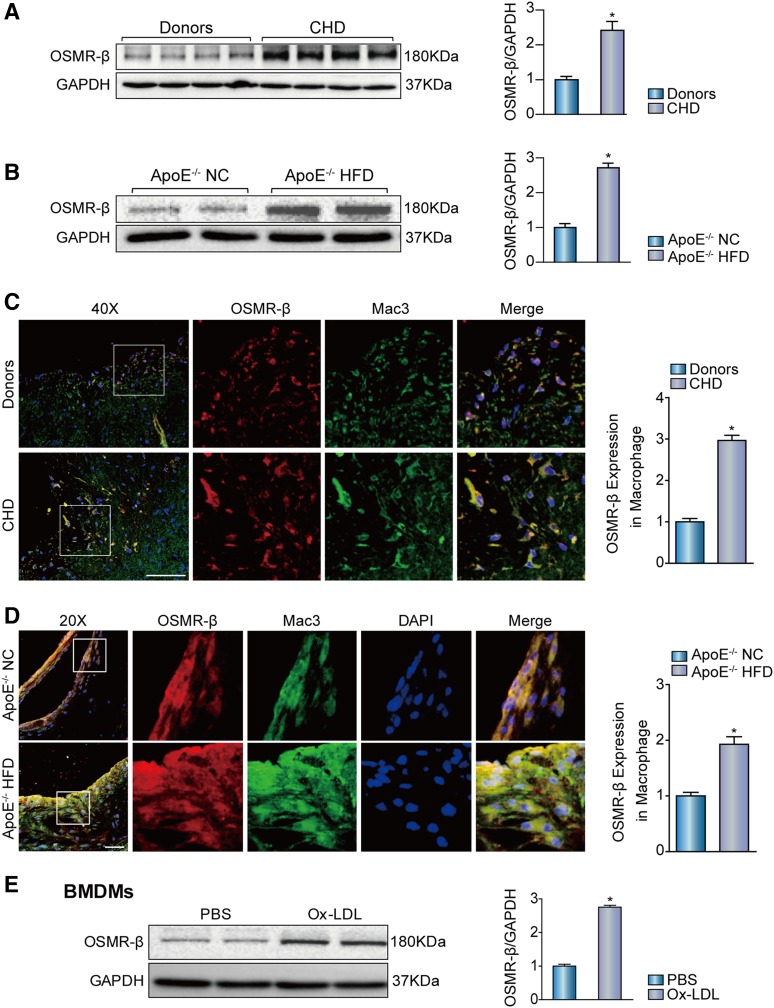
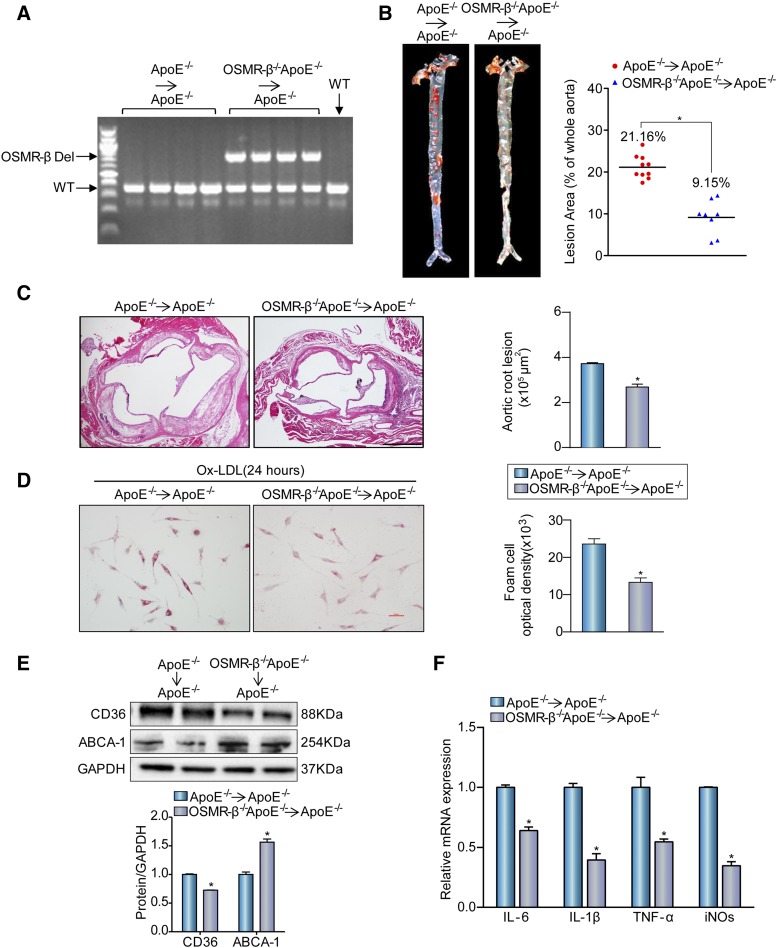
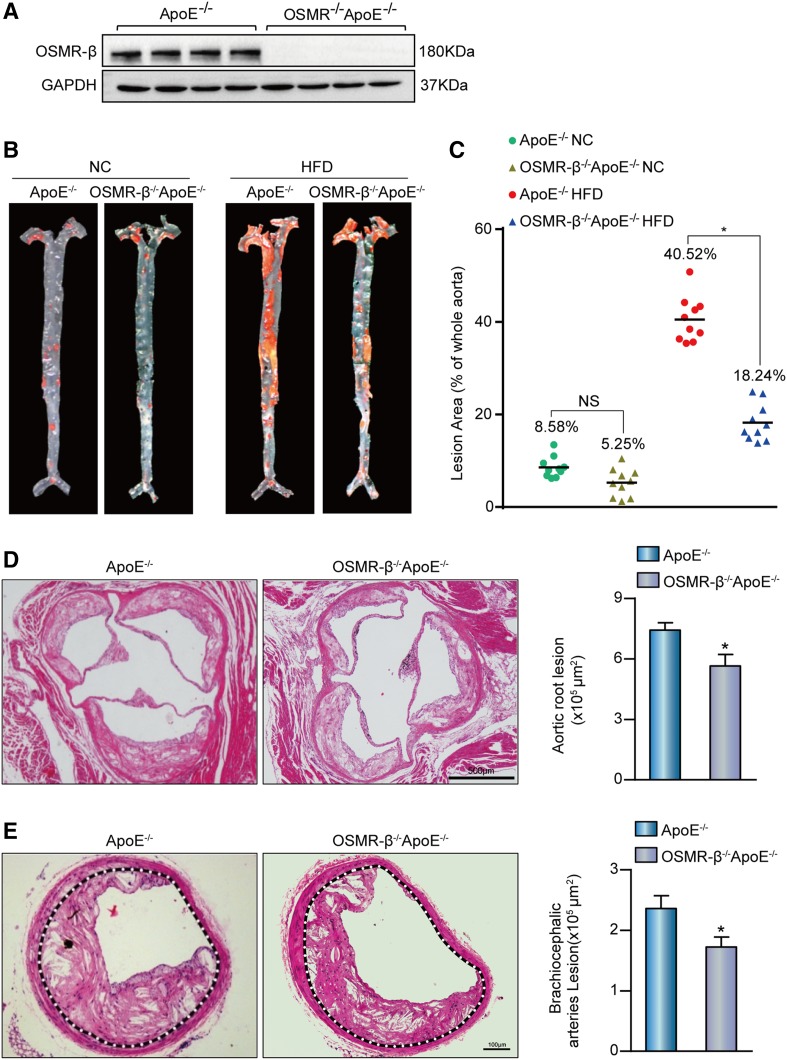
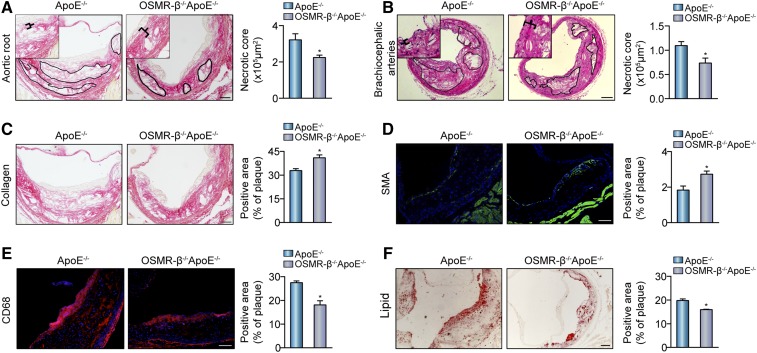
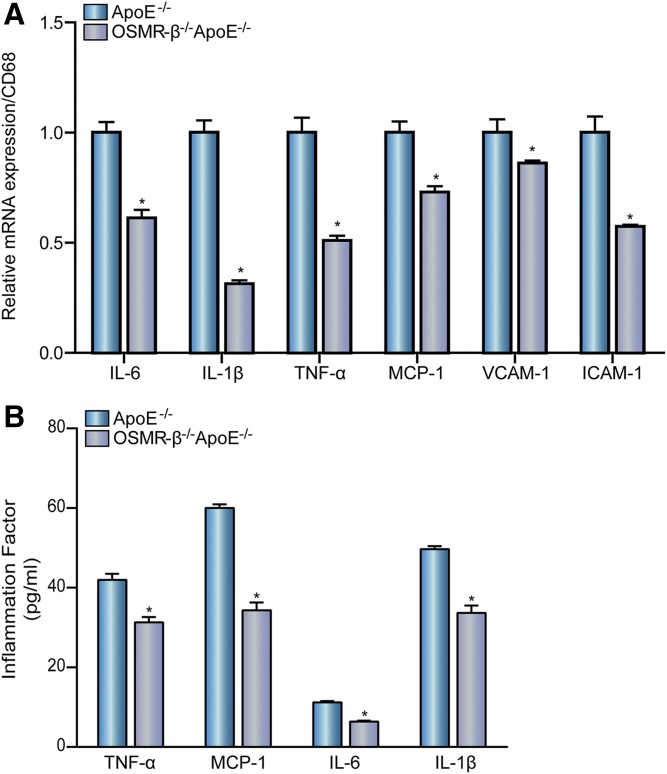
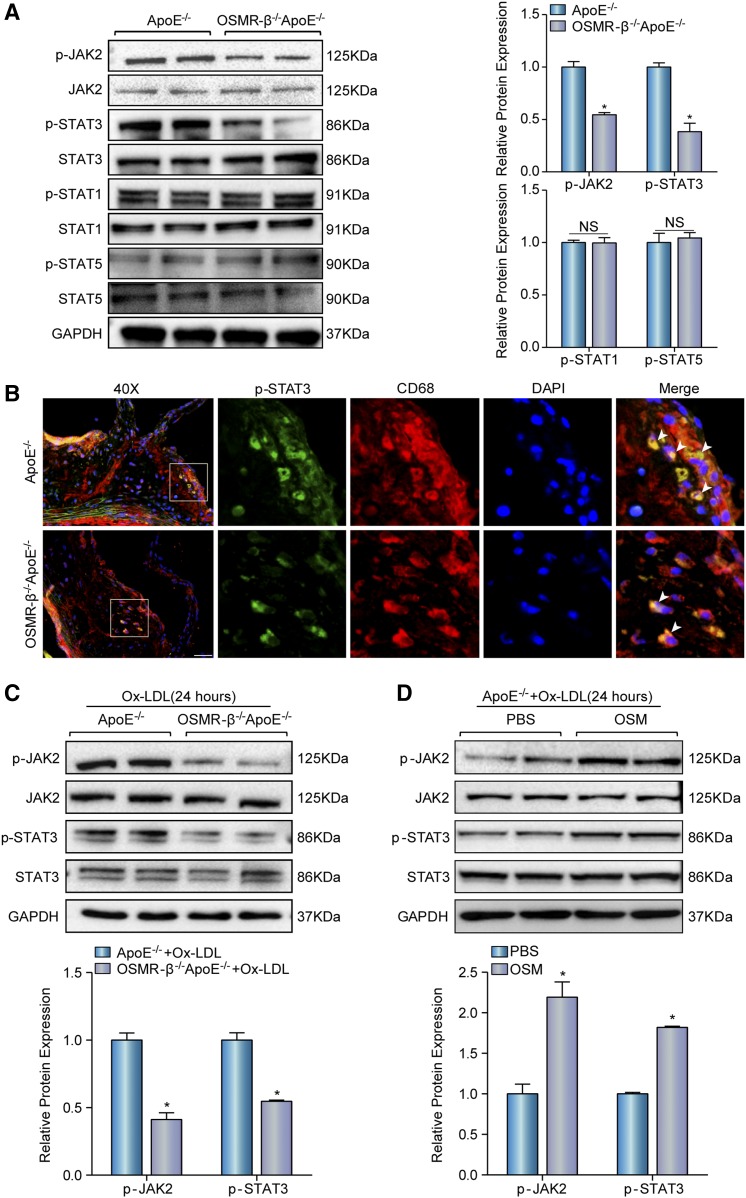
Oncostatin M (OSM) is a secreted cytokine mainly involved in chronic inflammatory and cardiovascular diseases through binding to OSM receptor β (OSMR-β). Recent studies demonstrated that the presence of OSM contributed to the destabilization of atherosclerotic plaque. To investigate whether OSMR-β deficiency affects atherosclerosis, male OSMR-βApoE mice were generated and utilized. Here we observed that OSMR-β expression was remarkably upregulated in both human and mouse atherosclerotic lesions, which were mainly located in macrophages. We found that OSMR-β deficiency significantly ameliorated atherosclerotic burden in aorta and aortic root relative to ApoE-deficient littermates and enhanced the stability of atherosclerotic plaques by increasing collagen and smooth muscle cell content, while decreasing macrophage infiltration and lipid accumulation. Moreover, bone marrow transplantation of OSMR-β hematopoietic cells to atherosclerosis-prone mice displayed a consistent phenotype. Additionally, we observed a relatively reduced level of JAK2 and signal transducer and activator of transcription (STAT)3 in vivo and under Ox-LDL stimulation in vitro. Our findings suggest that OSMR-β deficiency in macrophages improved high-fat diet-induced atherogenesis and plaque vulnerability. Mech-anistically, the protective effect of OSMR-β deficiency on atherosclerosis may be partially attributed to the inhibition of the JAK2/STAT3 activation in macrophages, whereas OSM stimulation can activate the signaling pathway.
抑瘤素M(OSM)是一种分泌型细胞因子,主要通过与OSM受体β(OSMR-β)结合参与慢性炎症和心血管疾病。最近的研究表明,OSM的存在会导致动脉粥样硬化斑块的不稳定。为了研究OSMR-β缺乏是否会影响动脉粥样硬化,我们构建并使用了雄性OSMR-βApoE小鼠。在此我们观察到,在人和小鼠的动脉粥样硬化病变中,OSMR-β的表达均显著上调,且主要位于巨噬细胞中。我们发现,与载脂蛋白E缺乏的同窝小鼠相比,OSMR-β缺乏显著减轻了主动脉和主动脉根部的动脉粥样硬化负担,并通过增加胶原蛋白和平滑肌细胞含量,同时减少巨噬细胞浸润和脂质积累,增强了动脉粥样硬化斑块的稳定性。此外,将OSMR-β造血细胞骨髓移植到易患动脉粥样硬化的小鼠中也表现出一致的表型。另外,我们观察到体内以及体外氧化型低密度脂蛋白(Ox-LDL)刺激下,Janus激酶2(JAK2)和信号转导及转录激活因子(STAT)3的水平相对降低。我们的研究结果表明,巨噬细胞中OSMR-β缺乏改善了高脂饮食诱导的动脉粥样硬化和斑块易损性。从机制上来说,OSMR-β缺乏对动脉粥样硬化的保护作用可能部分归因于对巨噬细胞中JAK2/STAT3激活的抑制,而OSM刺激可激活该信号通路。