Department of Experimental Medicine, TOR, University of Rome Tor Vergata, Rome, Italy.
The First Affiliated Hospital of Soochow University, Institutes for Translational Medicine, State Key Laboratory of Radiation Medicine and Protection, Suzhou Medical College of Soochow University, Suzhou, China.
Cell Death Dis. 2023 Oct 20;14(10):691. doi: 10.1038/s41419-023-06206-z.
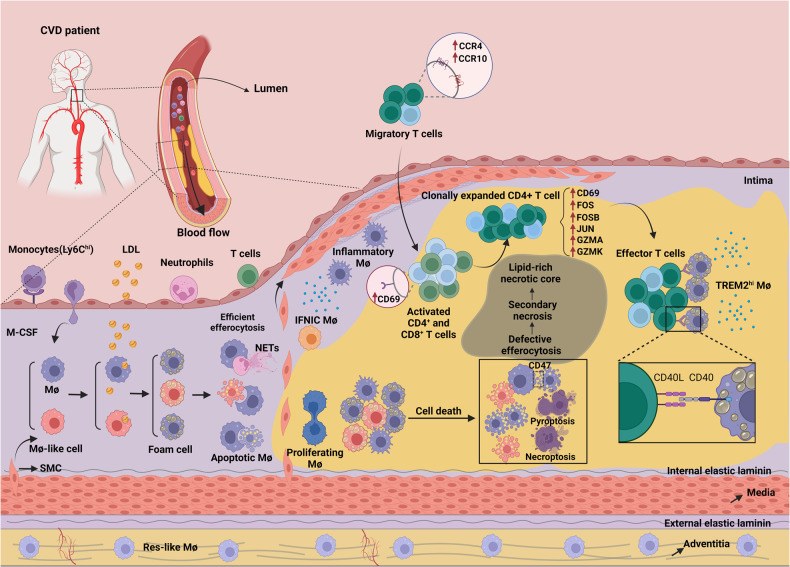
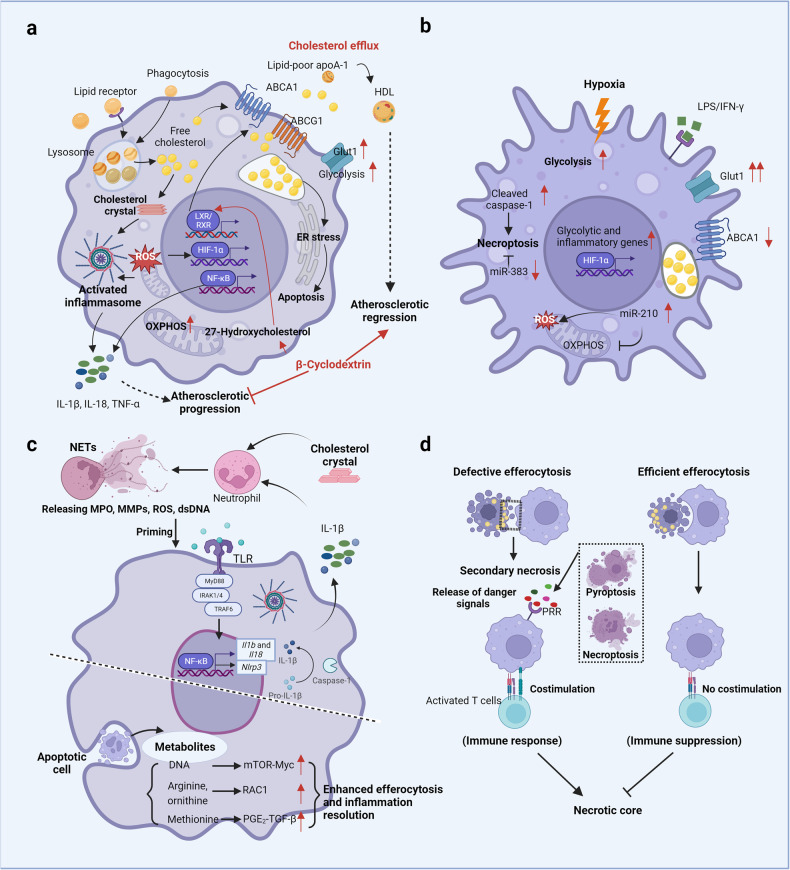
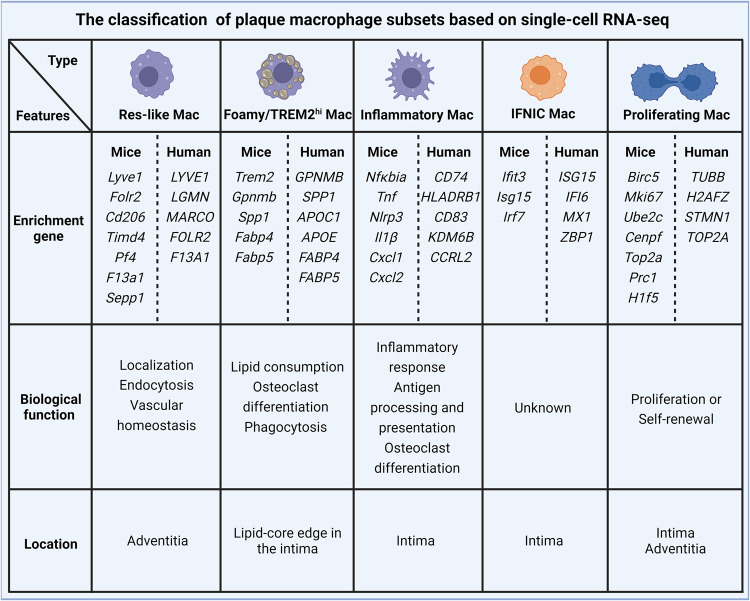
Atherosclerosis is a chronic inflammatory disease characterized by the accumulation of fatty deposits in the inner walls of vessels. These plaques restrict blood flow and lead to complications such as heart attack or stroke. The development of atherosclerosis is influenced by a variety of factors, including age, genetics, lifestyle, and underlying health conditions such as high blood pressure or diabetes. Atherosclerotic plaques in stable form are characterized by slow growth, which leads to luminal stenosis, with low embolic potential or in unstable form, which contributes to high risk for thrombotic and embolic complications with rapid clinical onset. In this complex scenario of atherosclerosis, macrophages participate in the whole process, including the initiation, growth and eventually rupture and wound healing stages of artery plaque formation. Macrophages in plaques exhibit high heterogeneity and plasticity, which affect the evolving plaque microenvironment, e.g., leading to excessive lipid accumulation, cytokine hyperactivation, hypoxia, apoptosis and necroptosis. The metabolic and functional transitions of plaque macrophages in response to plaque microenvironmental factors not only influence ongoing and imminent inflammatory responses within the lesions but also directly dictate atherosclerotic progression or regression. In this review, we discuss the origin of macrophages within plaques, their phenotypic diversity, metabolic shifts, and fate and the roles they play in the dynamic progression of atherosclerosis. It also describes how macrophages interact with other plaque cells, particularly T cells. Ultimately, targeting pathways involved in macrophage polarization may lead to innovative and promising approaches for precision medicine. Further insights into the landscape and biological features of macrophages within atherosclerotic plaques may offer valuable information for optimizing future clinical treatment for atherosclerosis by targeting macrophages.
动脉粥样硬化是一种慢性炎症性疾病,其特征是血管内壁脂肪沉积的积累。这些斑块限制了血液流动,并导致心脏病发作或中风等并发症。动脉粥样硬化的发展受到多种因素的影响,包括年龄、遗传、生活方式以及高血压或糖尿病等潜在健康状况。稳定形式的动脉粥样硬化斑块的特征是生长缓慢,导致管腔狭窄,栓塞潜力低,或不稳定形式,导致血栓和栓塞并发症的风险高,临床发病迅速。在动脉粥样硬化的这种复杂情况下,巨噬细胞参与了整个过程,包括动脉斑块形成的起始、生长,最终破裂和伤口愈合阶段。斑块中的巨噬细胞表现出高度异质性和可塑性,这会影响不断演变的斑块微环境,例如导致过量脂质积累、细胞因子过度激活、缺氧、细胞凋亡和坏死性凋亡。斑块巨噬细胞对斑块微环境因素的代谢和功能转换不仅影响病变内正在进行和即将发生的炎症反应,而且直接决定动脉粥样硬化的进展或消退。在这篇综述中,我们讨论了斑块内巨噬细胞的起源、它们的表型多样性、代谢转变以及命运,以及它们在动脉粥样硬化动态进展中的作用。它还描述了巨噬细胞如何与其他斑块细胞(特别是 T 细胞)相互作用。最终,靶向涉及巨噬细胞极化的途径可能为精准医学提供创新和有前途的方法。深入了解动脉粥样硬化斑块内巨噬细胞的景观和生物学特征,可能为通过靶向巨噬细胞优化未来动脉粥样硬化的临床治疗提供有价值的信息。