Chen Wei, Swanson Benjamin J, Frankel Wendy L
Department of Pathology, The Ohio State University Wexner Medical Center, S301 Rhodes Hall, 450 W. 10th Ave, Columbus, Ohio, 43210, USA.
Department of Pathology, The Ohio State University Wexner Medical Center, 129 Hamilton Hall, Columbus, Ohio, 43210, USA.
Diagn Pathol. 2017 Mar 4;12(1):24. doi: 10.1186/s13000-017-0613-8.
Microsatellite-unstable colorectal cancers (CRC) that are due to deficient DNA mismatch repair (dMMR) represent approximately 15% of all CRCs in the United States. These microsatellite-unstable CRCs represent a heterogenous group of diseases with distinct oncogenesis pathways. There are overlapping clinicopathologic features between some of these groups, but many important differences are present. Therefore, determination of the etiology for the dMMR is vital for proper patient management and follow-up.
Epigenetic inactivation of MLH1 MMR gene (sporadic microsatellite-unstable CRC) and germline mutation in an MMR gene (Lynch syndrome, LS) are the two most common mechanisms in the pathogenesis of microsatellite instability in CRC. However, in a subset of dMMR CRC cases that are identified by screening tests, no known LS-associated genetic alterations are appreciated by current genetic analysis. When the etiology for dMMR is unclear, it leads to patient anxiety and creates challenges for clinical management.
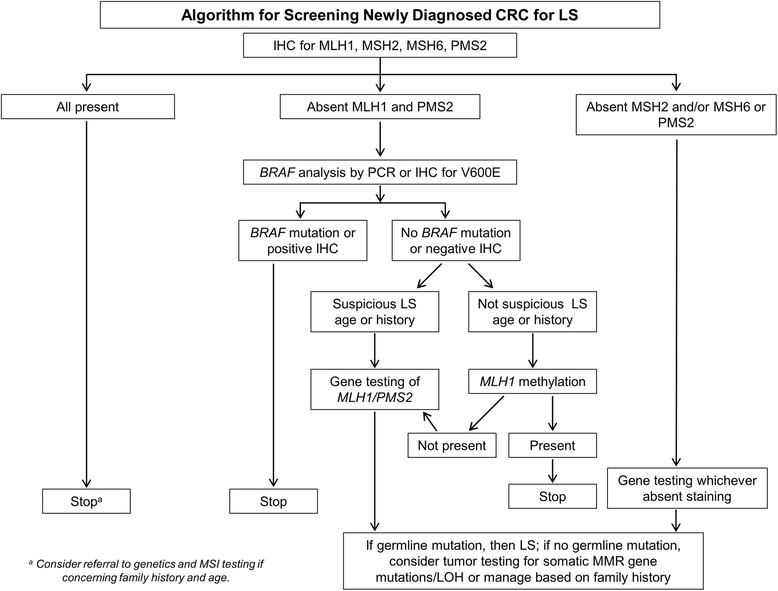
It is critical to distinguish LS patients from other patients with tumors due to dMMR, so that the proper screening protocol can be employed for the patients and their families, with the goal to save lives while avoiding unnecessary anxiety and costs. This review summarizes the major pathogenesis pathways of dMMR CRCs, their clinicopathologic features, and practical screening suggestions. In addition, we include frequently asked questions for MMR immunohistochemistry interpretation.
由于DNA错配修复缺陷(dMMR)导致的微卫星不稳定型结直肠癌(CRC)约占美国所有CRC的15%。这些微卫星不稳定型CRC代表了一组具有不同肿瘤发生途径的异质性疾病。其中一些组之间存在重叠的临床病理特征,但也存在许多重要差异。因此,确定dMMR的病因对于正确的患者管理和随访至关重要。
MLH1错配修复基因的表观遗传失活(散发性微卫星不稳定型CRC)和错配修复基因中的种系突变(林奇综合征,LS)是CRC中微卫星不稳定发病机制的两种最常见机制。然而,在通过筛查试验确定的一部分dMMR CRC病例中,目前的基因分析未发现已知的与LS相关的基因改变。当dMMR的病因不明时,会导致患者焦虑,并给临床管理带来挑战。
将LS患者与其他因dMMR导致肿瘤的患者区分开来至关重要,以便为患者及其家属采用适当的筛查方案,目标是挽救生命,同时避免不必要的焦虑和费用。本综述总结了dMMR CRC的主要发病机制途径、其临床病理特征以及实际筛查建议。此外,我们还包括了MMR免疫组化解读的常见问题。