Wu Sheng-Hua, Wang Ming-Jie, Lü Jing, Chen Xiao-Qing
Department of Pediatrics, The First Affiliated Hospital with Nanjing Medical University, Nanjing, Jiangsu 210029, P.R. China.
Mol Med Rep. 2017 Apr;15(4):1682-1692. doi: 10.3892/mmr.2017.6195. Epub 2017 Feb 13.
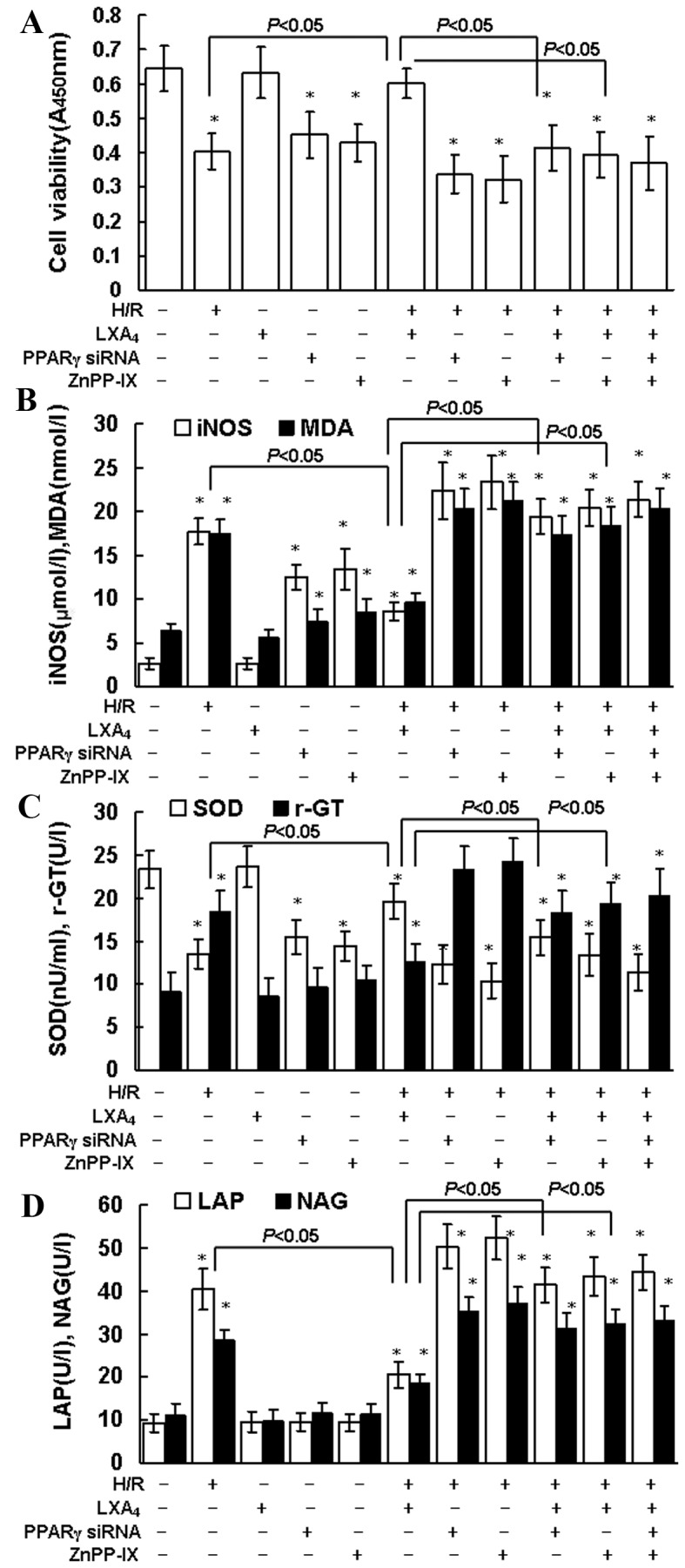
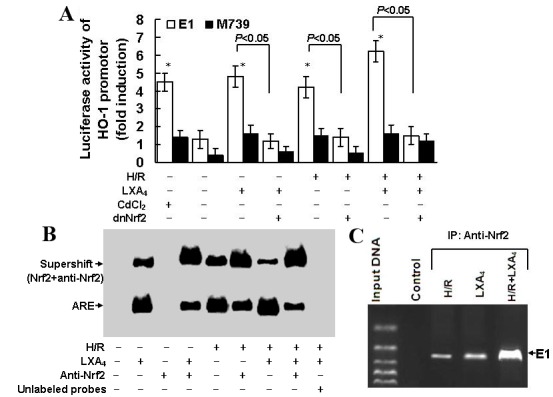
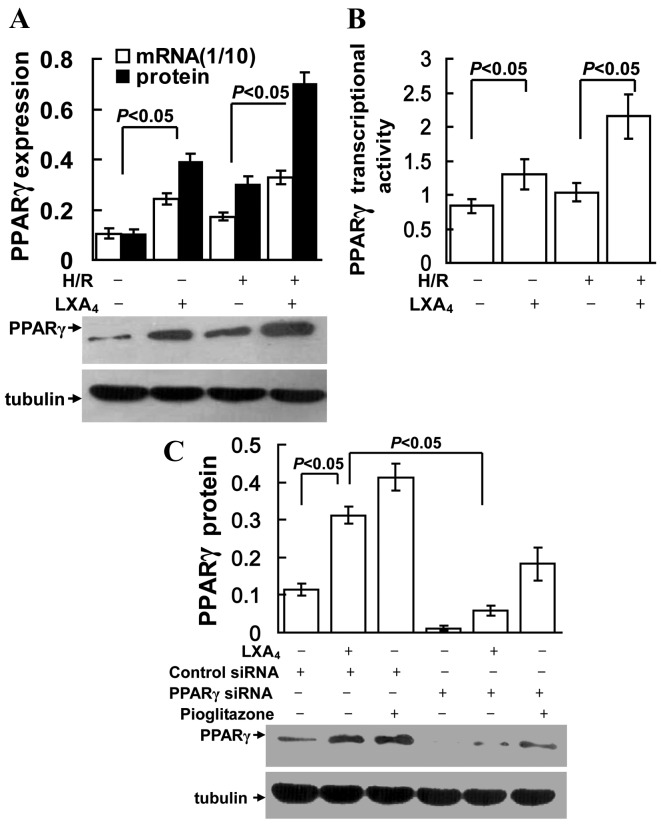
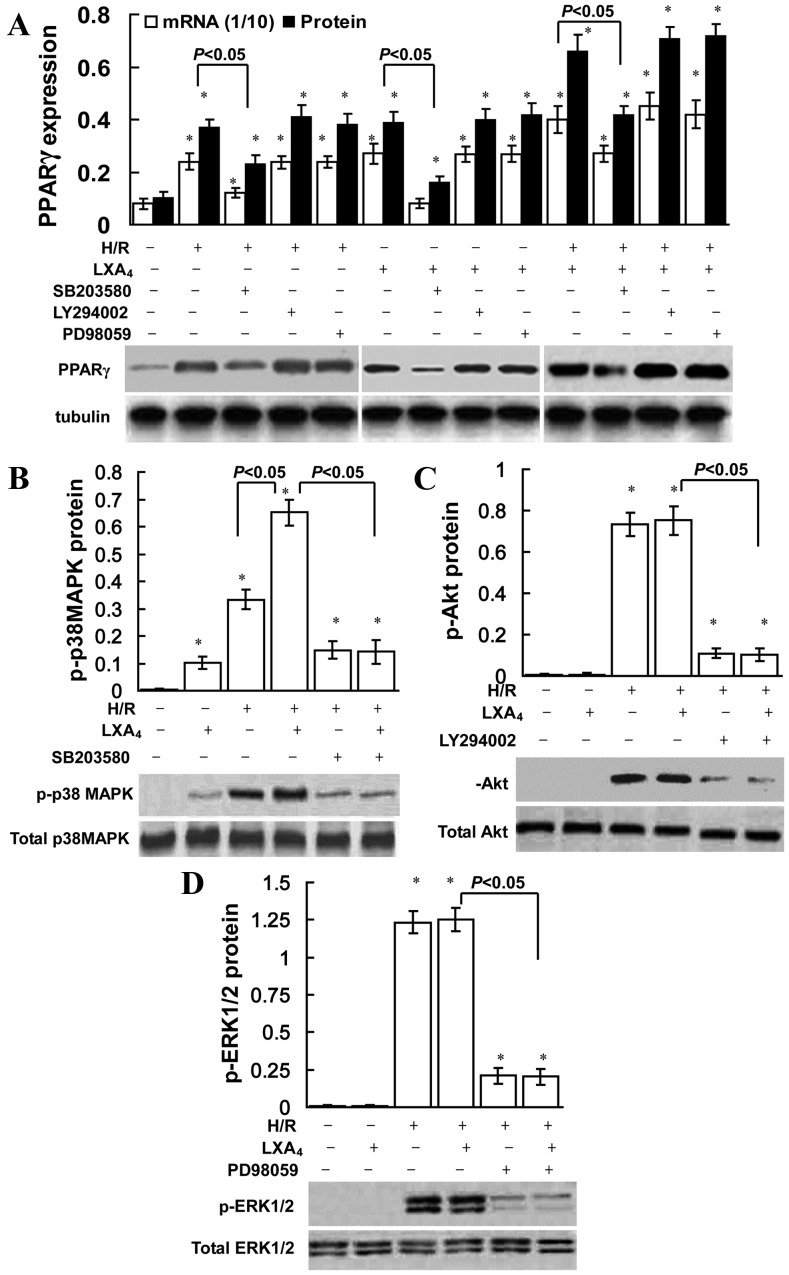
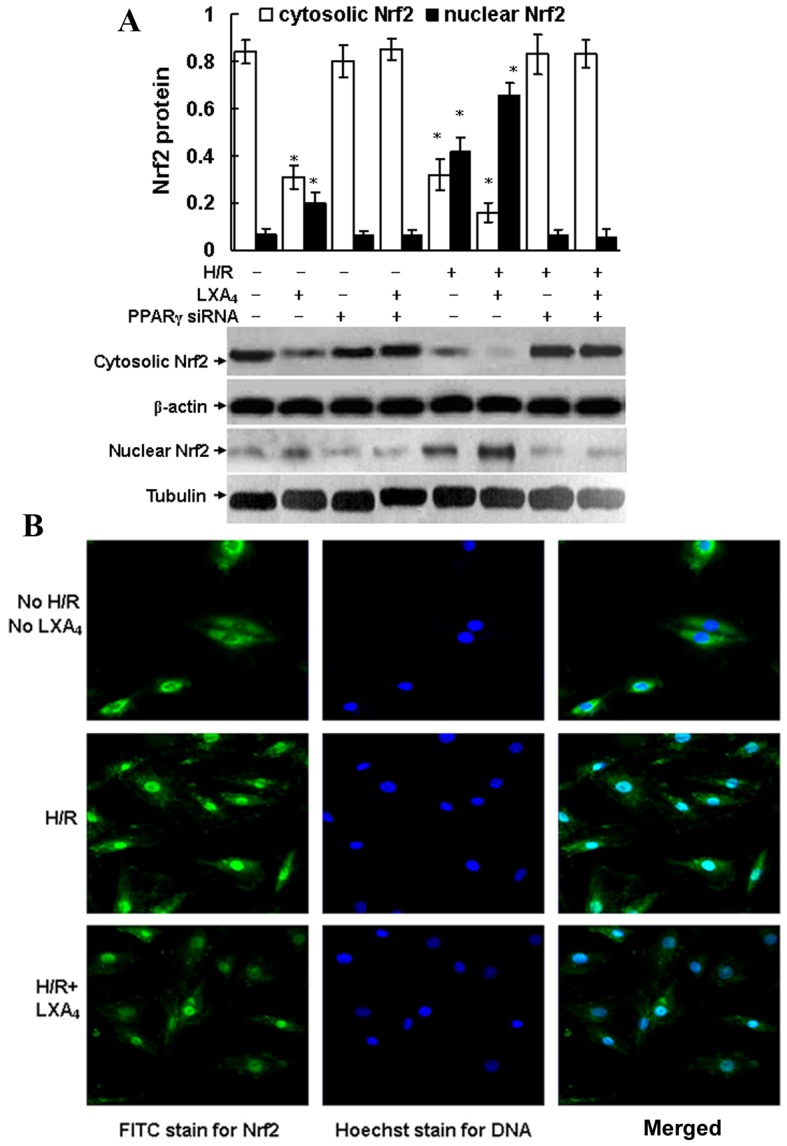
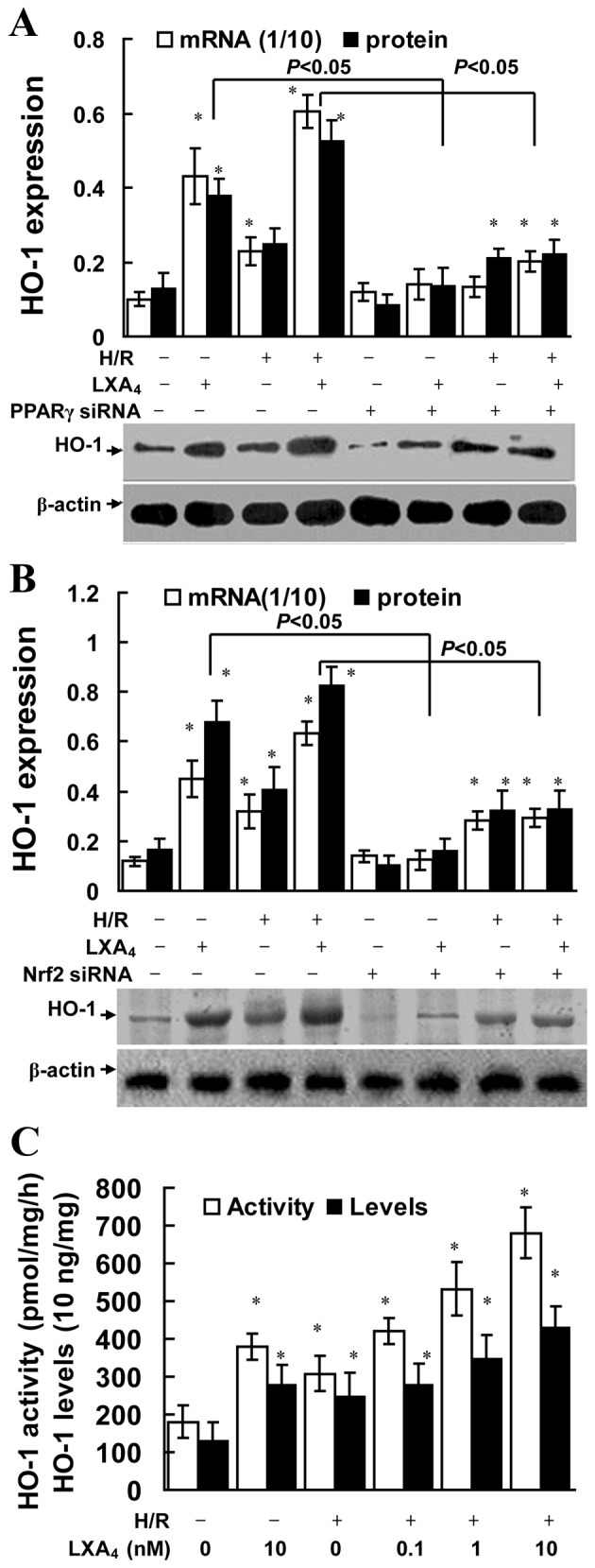
Previous studies have reported that lipoxin A4 (LXA4) may exert a renoprotective effect on ischemia/reperfusion injury in various animal models. The underlying mechanism of LXA4‑induced renoprotection during ischemia/reperfusion injury remains to be elucidated. The present study investigated LXA4‑induced protection on renal tubular cells subjected to hypoxia/reoxygenation (H/R) injury, and determined the effects of peroxisome proliferator‑activated receptor‑γ (PPARγ) and heme oxygenase‑1 (HO‑1) on LXA4 treatment. HK‑2 human tubular epithelial cells exposed to H/R injury were pretreated with LXA4, signal molecule inhibitors or the HO‑1 inhibitor zinc protoporphyrin‑IX, or were transfected with PPARγ small interfering RNA (siRNA) or nuclear factor E2‑related factor 2 (Nrf2) siRNA. The protein and mRNA expression levels of PPARγ and HO‑1 were analyzed using western blotting and reverse transcription‑quantitative polymerase chain reaction. Binding activity of Nrf2 to the HO‑1 E1 enhancer was determined using chromatin immunoprecipitation. Nrf2 binding to the HO‑1 antioxidant responsive element (ARE) was assessed using electrophoretic mobility shift assay. Preincubation of cells with LXA4 exposed to H/R injury led to a decreased production of inducible nitrogen oxide synthase, malondialdehyde, γ‑glutamyl transpeptidase, leucine aminopeptidase and N‑acetyl‑β‑glucosaminidase. In addition, LXA4 pretreatment increased cell viability, protein and mRNA expression levels of PPARγ and HO‑1 and PPARγ and HO‑1 promoter activity. SB20358 is a p38 mitogen‑activated protein kinase (p38 MAPK) pathway inhibitor, which reduced LXA4‑induced PPARγ expression levels. LXA4 treatment upregulated p38 MAPK activation, Nrf2 nuclear translocation and increased binding activity of Nrf2 to HO‑1 ARE and E1 enhancer in cells exposed to H/R injury. Transfection of the cells with PPARγ siRNA reduced the LXA4‑induced Nrf2 translocation. Transfection of the cells with PPARγ siRNA or Nrf2 siRNA also reduced the LXA4‑induced increase in HO‑1 expression. In conclusion, LXA4‑induced protection of renal tubular cells against H/R injury was associated with the induction of PPARγ and HO‑1, via activation of the p38 MAPK pathway, as well as Nrf2 nuclear translocation and binding to HO‑1 ARE and E1 enhancer. Therefore, LXA4‑induced renoprotection is associated with activation of the p38 MAPK/PPARγ/Nrf2‑ARE/HO‑1 pathway.
先前的研究报道,脂氧素A4(LXA4)可能对多种动物模型的缺血/再灌注损伤发挥肾脏保护作用。LXA4在缺血/再灌注损伤期间诱导肾脏保护的潜在机制仍有待阐明。本研究调查了LXA4对遭受缺氧/复氧(H/R)损伤的肾小管细胞的保护作用,并确定了过氧化物酶体增殖物激活受体γ(PPARγ)和血红素加氧酶-1(HO-1)在LXA4治疗中的作用。将暴露于H/R损伤的HK-2人肾小管上皮细胞用LXA4、信号分子抑制剂或HO-1抑制剂锌原卟啉-IX预处理,或用PPARγ小干扰RNA(siRNA)或核因子E2相关因子2(Nrf2)siRNA转染。使用蛋白质印迹法和逆转录-定量聚合酶链反应分析PPARγ和HO-1的蛋白质和mRNA表达水平。使用染色质免疫沉淀法测定Nrf2与HO-1 E1增强子的结合活性。使用电泳迁移率变动分析评估Nrf2与HO-1抗氧化反应元件(ARE)的结合。用LXA4对暴露于H/R损伤的细胞进行预孵育导致诱导型一氧化氮合酶、丙二醛、γ-谷氨酰转肽酶、亮氨酸氨肽酶和N-乙酰-β-葡萄糖苷酶的产生减少。此外,LXA4预处理增加了细胞活力、PPARγ和HO-1的蛋白质和mRNA表达水平以及PPARγ和HO-1启动子活性。SB20358是一种p38丝裂原活化蛋白激酶(p38 MAPK)途径抑制剂,它降低了LXA4诱导的PPARγ表达水平。LXA4处理上调了暴露于H/R损伤的细胞中的p38 MAPK激活、Nrf2核转位,并增加了Nrf2与HO-1 ARE和E1增强子的结合活性。用PPARγ siRNA转染细胞减少了LXA4诱导的Nrf2转位。用PPARγ siRNA或Nrf2 siRNA转染细胞也减少了LXA4诱导的HO-1表达增加。总之,LXA4诱导的肾小管细胞对H/R损伤的保护作用与通过激活p38 MAPK途径诱导PPARγ和HO-1以及Nrf2核转位并与HO-1 ARE和E1增强子结合有关。因此,LXA4诱导的肾脏保护作用与p38 MAPK/PPARγ/Nrf2-ARE/HO-1途径的激活有关。