Sikorska-Wiśniewska Małgorzata, Mika Adriana, Śledziński Tomasz, Małgorzewicz Sylwia, Stepnowski Piotr, Rutkowski Bolesław, Chmielewski Michał
a Department of Nephrology , Transplantology and Internal Medicine, Medical University of Gdańsk , Gdańsk , Poland.
b Department of Environmental Analysis, Faculty of Chemistry , University of Gdańsk , Gdańsk , Poland.
Ren Fail. 2017 Nov;39(1):406-412. doi: 10.1080/0886022X.2017.1295870.
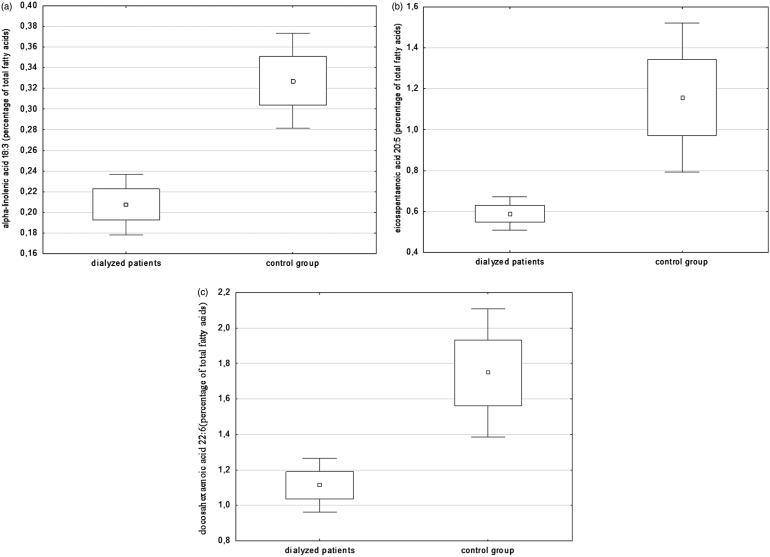
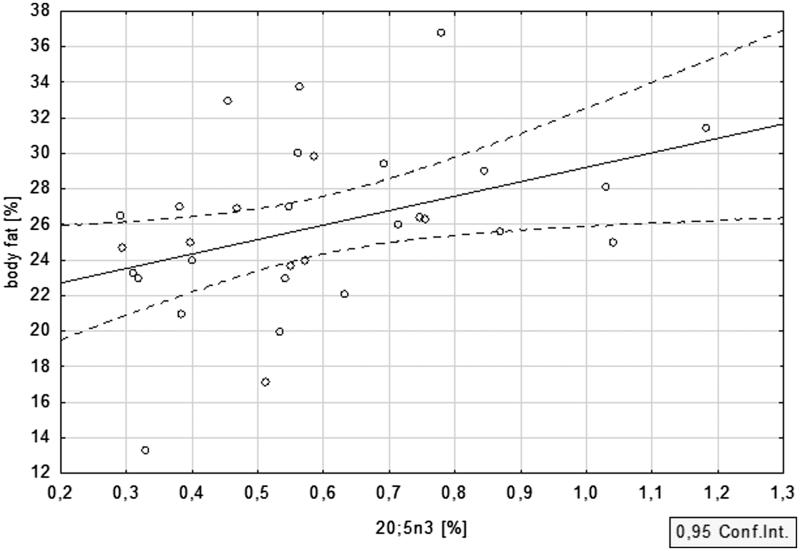
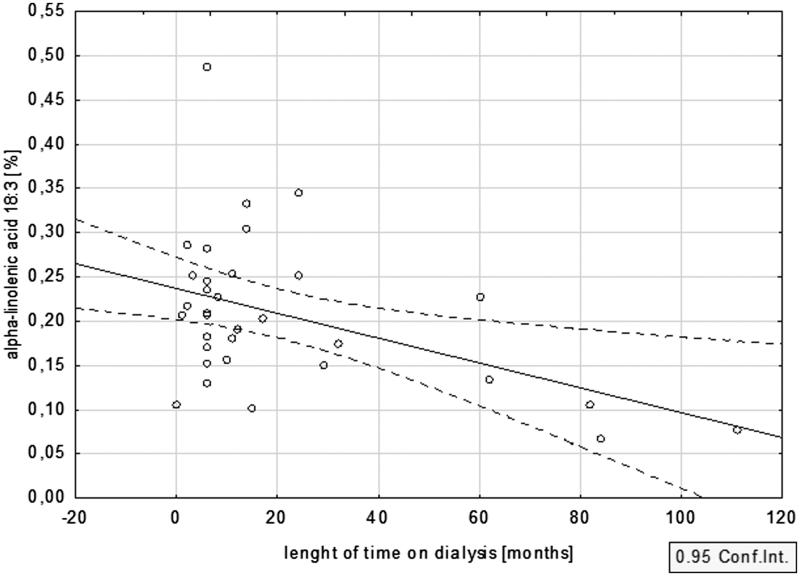
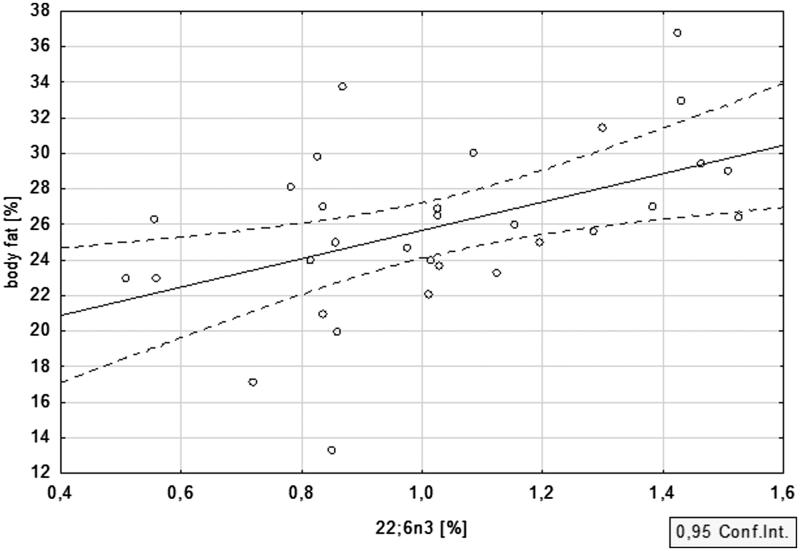
Patients with chronic kidney disease (CKD) are at increased risk of cardiovascular mortality. Lipid disorders, a constant feature of CKD, might contribute to this state. The aim of this study was to evaluate n-3 polyunsaturated fatty acids (PUFA) composition in CKD patients treated with dialysis, in comparison to the general population and to assess possible associations between the n-3 PUFA profile and anthropometric variables. Thirty-three prevalent dialysis patients were studied and compared with an age- and sex-adjusted control group of 22 patients. Fatty acid composition in serum was analyzed by gas chromatography with a mass spectrometer detector (GC-MS) and anthropometric measures were assessed by bioimpedance spectroscopy. The fatty acid profile of dialyzed patients was characterized by a significantly lower percentage content of n-3 PUFA. For α-linolenic acid (ALA), it was 0.21 ± 0.09% in dialysis patients versus 0.33 ± 0.11% in the control group (p < .001). For eicosapentanoic acid (EPA), 0.59 ± 0.23% versus 1.15 ± 0.87% (p < .001), and for docosahexaenoic acid (DHA) 1.11 ± 0.50% versus 1.75 ± 0.87% (p < .001), respectively. The amount of n-3 PUFA decreased with time on dialysis and it correlated positively with body fat mass. For DHA, this correlation was r = .48 (p < .01) and for EPA r = .40 (p < .05). Patients with CKD have a relatively low content of n-3 PUFA which may contribute to their high cardiovascular risk. Patients with a higher content of body fat are characterized by a favorable fatty acid composition.
慢性肾脏病(CKD)患者心血管疾病死亡风险增加。脂质紊乱是CKD的一个常见特征,可能导致这种情况。本研究的目的是评估接受透析治疗的CKD患者中n-3多不饱和脂肪酸(PUFA)的组成,并与普通人群进行比较,同时评估n-3 PUFA谱与人体测量变量之间的可能关联。研究了33例维持性透析患者,并与22例年龄和性别匹配的对照组进行比较。采用气相色谱-质谱联用仪(GC-MS)分析血清中的脂肪酸组成,通过生物电阻抗光谱法评估人体测量指标。透析患者的脂肪酸谱特征是n-3 PUFA的百分比含量显著降低。对于α-亚麻酸(ALA),透析患者为0.21±0.09%,而对照组为0.33±0.11%(p<0.001)。二十碳五烯酸(EPA)分别为0.59±0.23%和1.15±0.87%(p<0.001),二十二碳六烯酸(DHA)分别为1.11±0.50%和1.75±0.87%(p<0.001)。n-3 PUFA的含量随透析时间的延长而降低,且与体脂量呈正相关。对于DHA,这种相关性为r=0.48(p<0.01),对于EPA,r=0.40(p<0.05)。CKD患者的n-3 PUFA含量相对较低,这可能是其心血管疾病风险较高的原因之一。体脂含量较高的患者脂肪酸组成较为有利。