Kapplinger Jamie D, Erickson Anders, Asuri Sirisha, Tester David J, McIntosh Sarah, Kerr Charles R, Morrison Julie, Tang Anthony, Sanatani Shubhayan, Arbour Laura, Ackerman Michael J
Mayo Medical School, Mayo Clinic, Rochester, Minnesota, USA.
Department of Molecular Pharmacology & Experimental Therapeutics, Windland Smith Rice Sudden Death Genomics Laboratory, Mayo Clinic, Rochester, Minnesota, USA.
J Med Genet. 2017 Jun;54(6):390-398. doi: 10.1136/jmedgenet-2016-104153. Epub 2017 Mar 6.
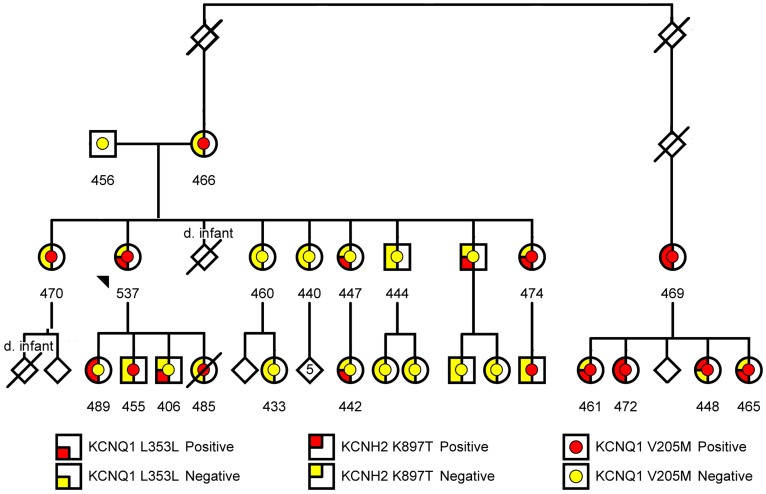
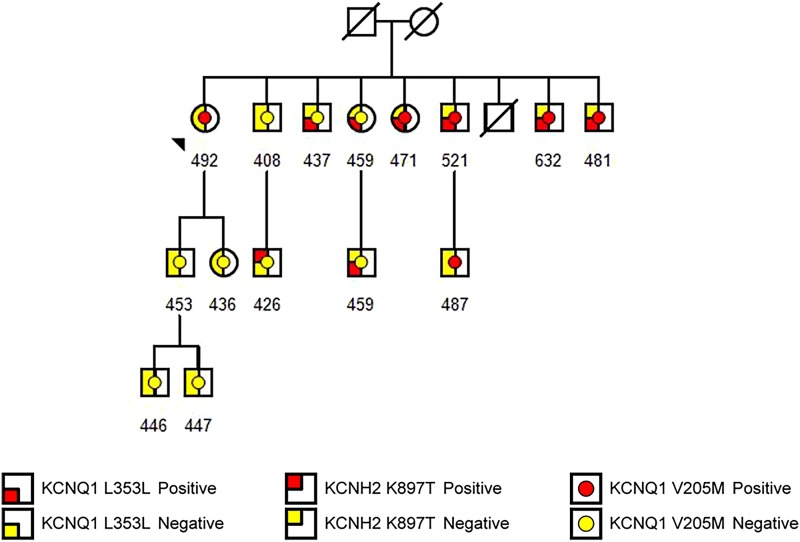
Variable expressivity and incomplete penetrance between individuals with identical long QT syndrome (LQTS) causative mutations largely remain unexplained. Founder populations provide a unique opportunity to explore modifying genetic effects. We examined the role of a novel synonymous p.L353L variant on the splicing of exon 8 and on heart rate corrected QT interval (QTc) in a population known to have a pathogenic LQTS type 1 (LQTS1) causative mutation, p.V205M, in -encoded Kv7.1.
419 adults were genotyped for p.V205M, p.L353L and a previously described QTc modifier (p.K897T). Adjusted linear regression determined the effect of each variant on QTc, alone and in combination. In addition, peripheral blood RNA was extracted from three controls and three p.L353L-positive individuals. The mutant transcript levels were assessed via qPCR and normalised to overall transcript levels to assess the effect on splicing.
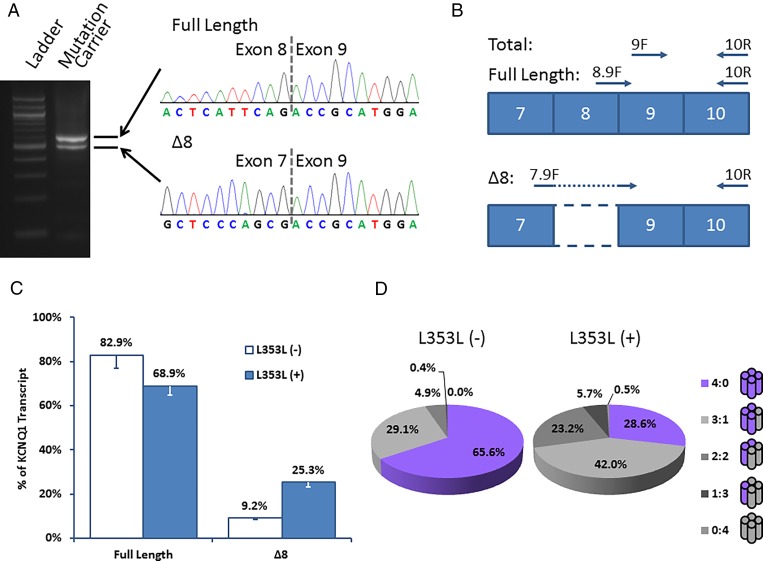
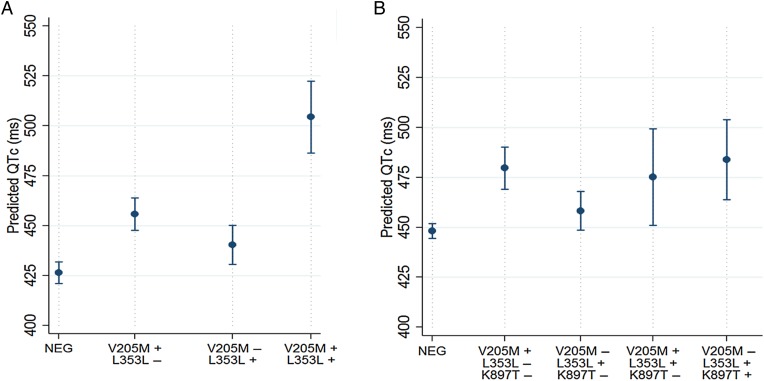
For women and men, respectively, p.L353L alone conferred a 10.0 (p=0.064) ms and 14.0 (p=0.014) ms increase in QTc and in men only a significant interaction effect in combination with the p.V205M (34.6 ms, p=0.003) resulting in a QTc of ∼500 ms. The mechanism of p.L353L's effect was attributed to approximately threefold increase in exon 8 exclusion resulting in ∼25% mutant transcripts of the total transcript levels.
Our results provide the first evidence that synonymous variants outside the canonical splice sites in can alter splicing and clinically impact phenotype. Through this mechanism, we identified that p.L353L can precipitate QT prolongation by itself and produce a clinically relevant interactive effect in conjunction with other LQTS variants.
相同长QT综合征(LQTS)致病突变个体之间的可变表达性和不完全外显率在很大程度上仍无法解释。奠基者群体为探索修饰基因效应提供了独特的机会。我们在一个已知具有致病性1型长QT综合征(LQTS1)致病突变p.V205M(编码Kv7.1)的群体中,研究了一种新的同义p.L353L变异对外显子8剪接和心率校正QT间期(QTc)的作用。
对419名成年人进行p.V205M、p.L353L和先前描述的QTc修饰因子(p.K897T)基因分型。调整后的线性回归确定了每个变异单独及联合对QTc的影响。此外,从3名对照和3名p.L353L阳性个体中提取外周血RNA。通过qPCR评估突变转录本水平,并将其标准化为总转录本水平,以评估对剪接的影响。
对于女性和男性,p.L353L单独使QTc分别增加10.0(p = 0.064)ms和14.0(p = 0.014)ms,且仅在男性中,与p.V205M联合时有显著的交互作用(34.6 ms,p = 0.003),导致QTc约为500 ms。p.L353L的作用机制归因于外显子8排除增加约三倍,导致突变转录本占总转录本水平的约25%。
我们的结果提供了首个证据,即编码区外的同义变异可改变剪接并在临床上影响表型。通过这种机制,我们发现p.L353L可自身导致QT延长,并与其他LQTS变异产生临床相关的交互作用。