Wang Ming, Rong Shaofeng, Tian Peng, Zhou Yue, Guan Shimin, Li Qianqian, Wang Dapeng
Department of Bioengineering, Shanghai Institute of Technology Shanghai, China.
Produce Safety and Microbiology Research Unit, Western Regional Research Center, Agricultural Research Service - United States Department of Agriculture, Albany CA, USA.
Front Microbiol. 2017 Feb 20;8:251. doi: 10.3389/fmicb.2017.00251. eCollection 2017.
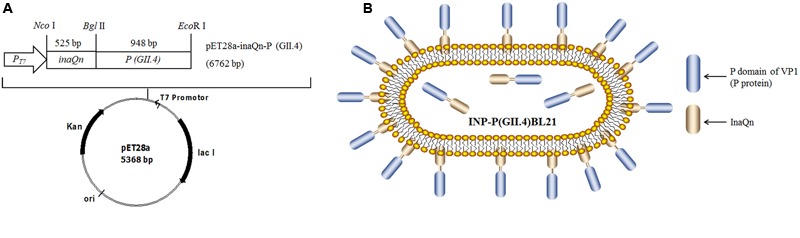
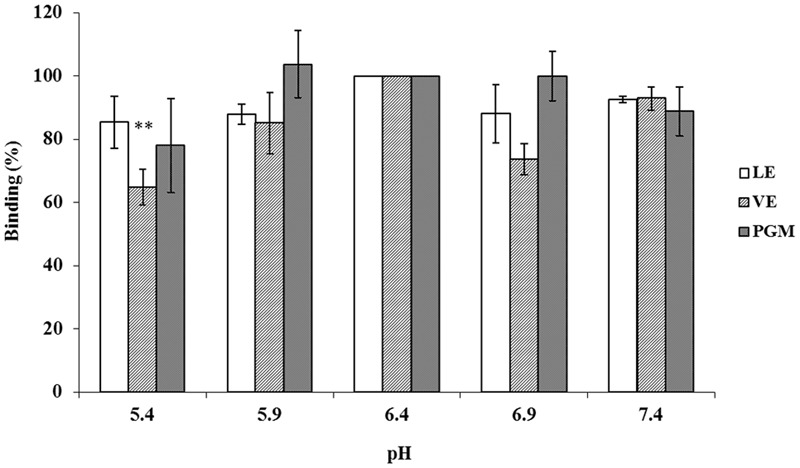
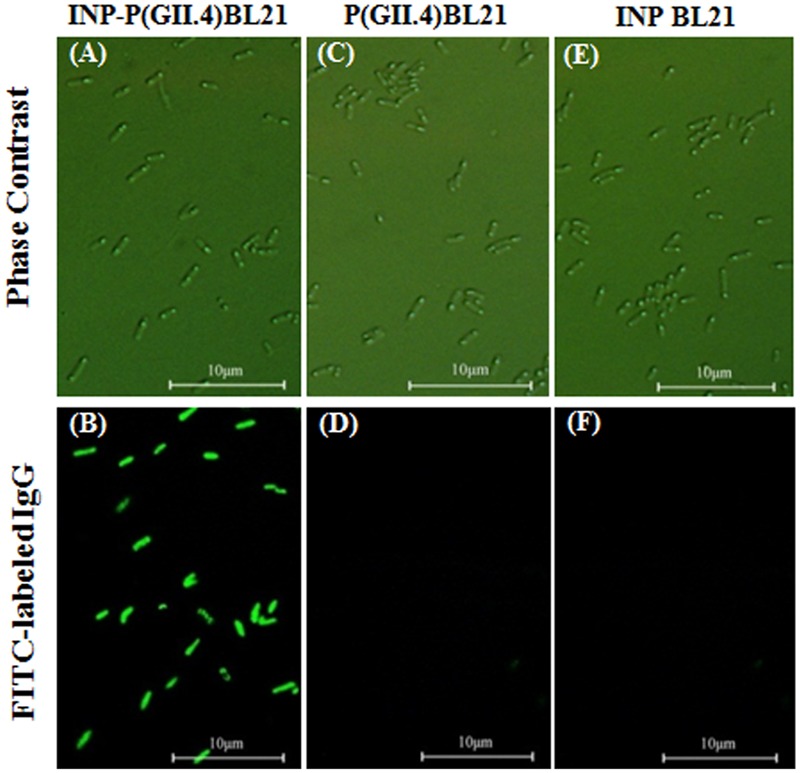
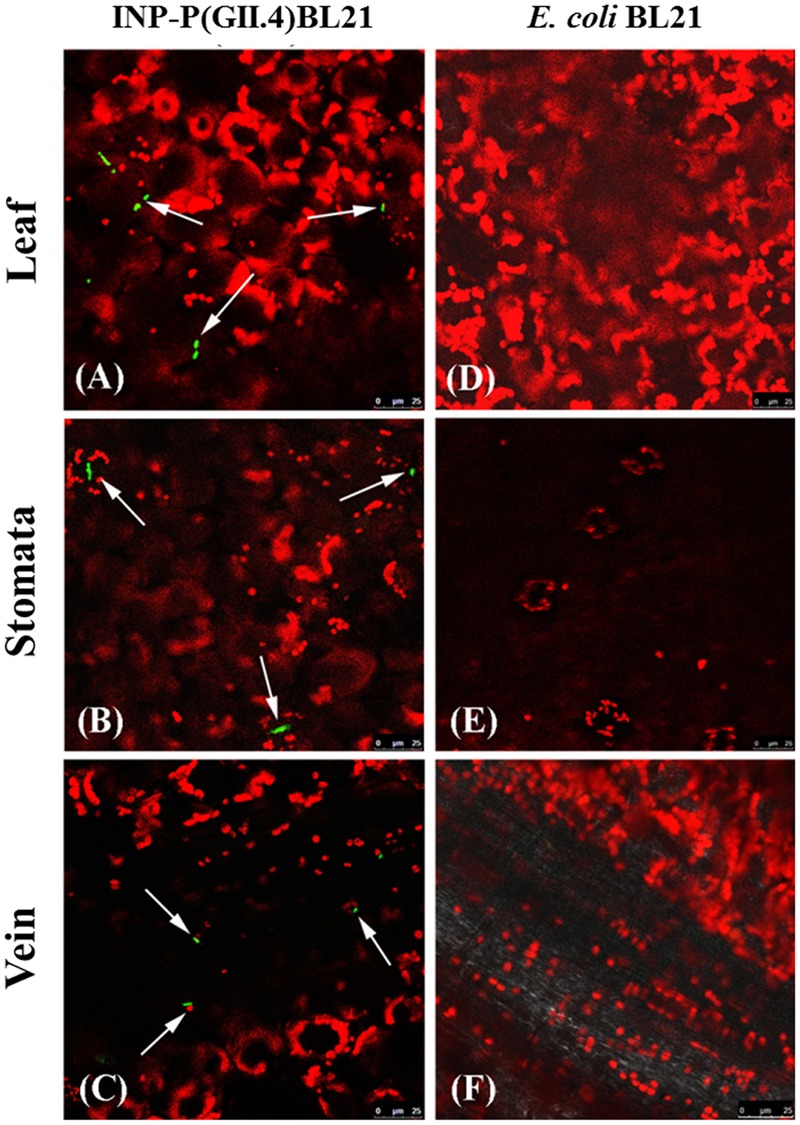
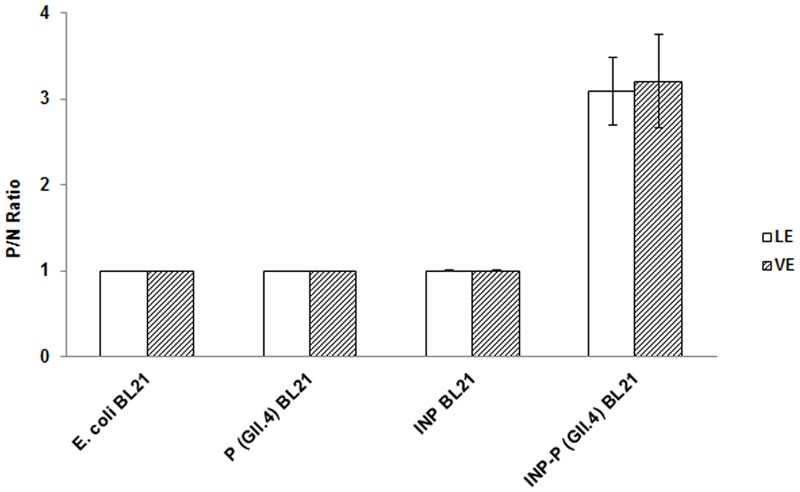
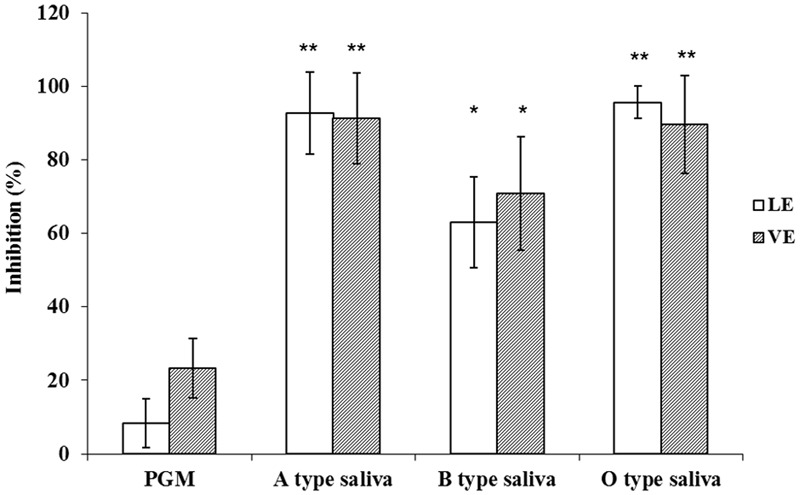
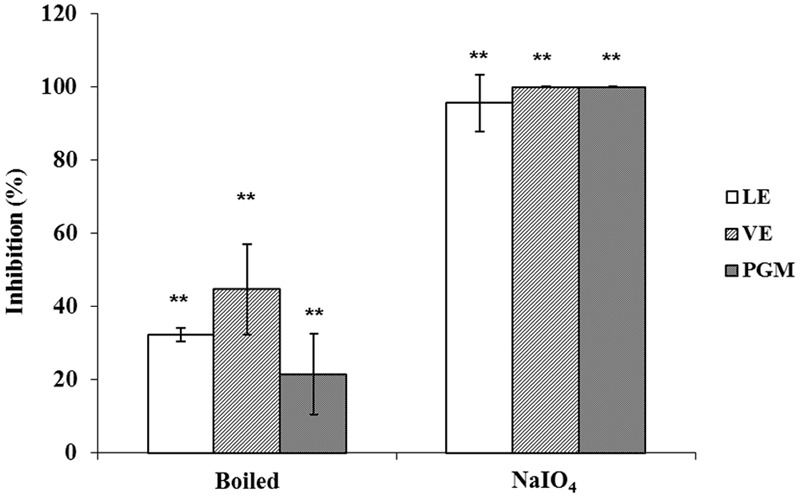
Human Noroviruses (HuNoVs) are the main cause of non-bacterial gastroenteritis. Contaminated produce is a main vehicle for dissemination of HuNoVs. In this study, we used an ice nucleation protein mediated surface display system to present the protruding domain of GII.4 HuNoV capsid protein on bacterial surface and used it as a new strategy to explore interaction between HuNoV protein and receptor candidates from romaine lettuce. The surface-displayed HuNoV proteins were confirmed on the surface of the transformed bacteria by an immunofluorescence assay. The distribution patterns of the surface-displayed HuNoV proteins in romaine lettuce were identified through a confocal immunofluorescence assay. The surface-displayed HuNoV proteins could be found in the stomata, and the surfaces of vein and leaf of romaine lettuce. The surface-displayed HuNoV proteins could be captured by an ELISA assay utilizing extract from leaf (LE) or vein (VE). The binding of the surface-displayed HuNoV proteins to LE or VE could be competitively blocked by histo-blood group antigens from human saliva. In addition, the binding of the surface-displayed HuNoV proteins to LE or VE could also be attenuated by heat denaturation of lettuce proteins, and abolished by oxidation of lettuce carbohydrates. The results indicated that histo-blood group antigen-like molecules in LE or VE were involved in the binding of the surface-displayed HuNoV proteins to romaine lettuce. All data demonstrated that the surface-displayed HuNoV proteins could be utilized in a new and simple system for investigation of the interaction between the HuNoVs and their candidate ligands.
人诺如病毒(HuNoVs)是非细菌性肠胃炎的主要病因。受污染的农产品是HuNoVs传播的主要载体。在本研究中,我们使用冰核蛋白介导的表面展示系统,将GII.4 HuNoV衣壳蛋白的突出结构域呈现在细菌表面,并将其作为一种新策略,用于探索HuNoV蛋白与生菜中候选受体之间的相互作用。通过免疫荧光测定法在转化细菌表面证实了表面展示的HuNoV蛋白。通过共聚焦免疫荧光测定法确定了表面展示的HuNoV蛋白在生菜中的分布模式。在生菜的气孔、叶脉和叶片表面都能发现表面展示的HuNoV蛋白。利用叶片提取物(LE)或叶脉提取物(VE)的酶联免疫吸附测定(ELISA)可以捕获表面展示的HuNoV蛋白。人唾液中的组织血型抗原可竞争性阻断表面展示的HuNoV蛋白与LE或VE的结合。此外,生菜蛋白的热变性也可减弱表面展示的HuNoV蛋白与LE或VE的结合,而生菜碳水化合物的氧化则可消除这种结合。结果表明,LE或VE中的组织血型抗原样分子参与了表面展示的HuNoV蛋白与生菜的结合。所有数据表明,表面展示的HuNoV蛋白可用于一个新的简单系统,以研究HuNoVs与其候选配体之间的相互作用。