Jørgensen Silje B, Søraas Arne, Sundsfjord Arnfinn, Liestøl Knut, Leegaard Truls M, Jenum Pål A
Department of Laboratory Medicine, Section for Medical Microbiology, Vestre Viken Hospital Trust, Bærum, Norway.
Department of Clinical Microbiology and Infection Control, Akershus University Hospital, Lørenskog, Norway.
PLoS One. 2017 Mar 7;12(3):e0173510. doi: 10.1371/journal.pone.0173510. eCollection 2017.
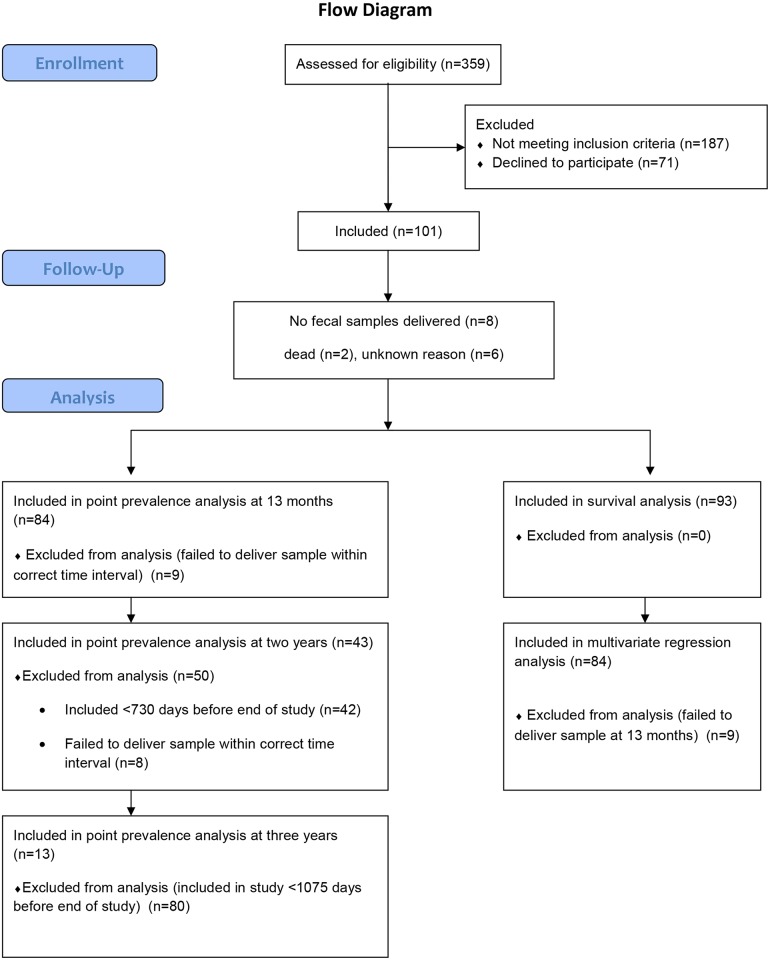
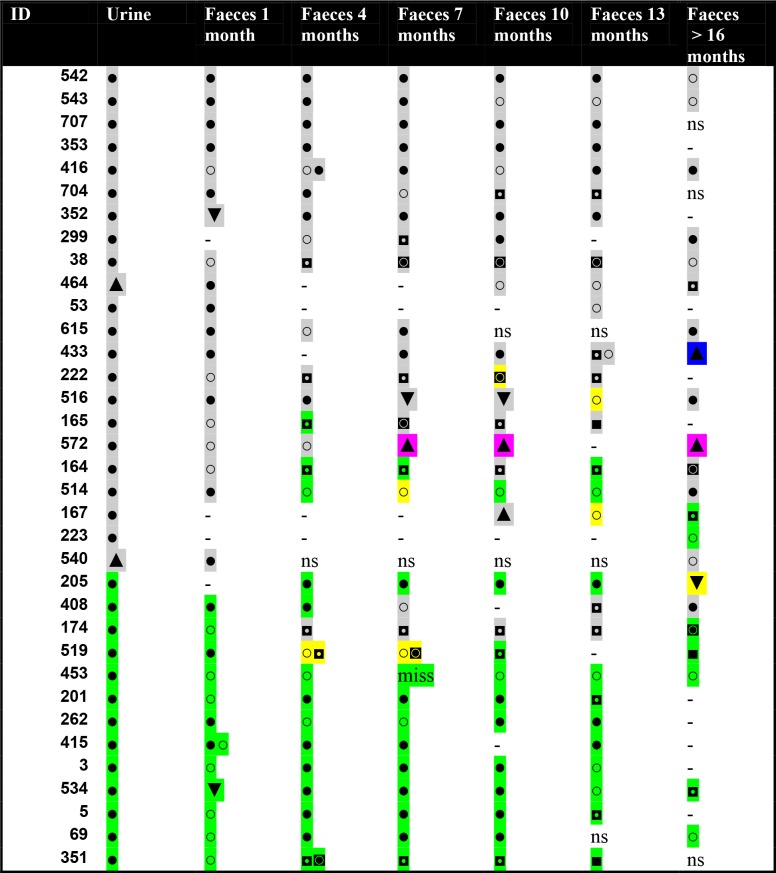
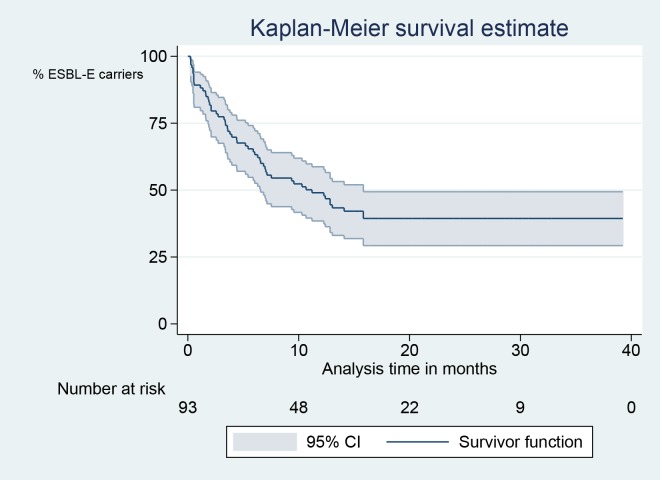
We have performed a prospective cohort study to investigate the duration of and risk factors for prolonged fecal carriage of ESBL-producing Escherichia coli or Klebsiella pneumoniae in patients with community acquired urinary tract infection caused by these bacteria. From 2009 to 2011, 101 Norwegian patients were recruited. Stool swabs and questionnaires were collected every three months for one year and at the end of the study in 2012. Information on antibiotic prescriptions was collected from the Norwegian Prescription Database. Stool samples were cultured directly on ChromID ESBL agar as well as in an enrichment broth, and culture positive isolates were examined by blaCTX-M multiplex PCR. Isolates without blaCTX-M were investigated for alternative ESBL-determinants with a commercial microarray system. Time to fecal clearance of ESBL producing Enterobacteriaceae was also analysed using Kaplan-Meier estimates. Uni- and multivariate logistic regression was used to compare groups according to previously described risk factors. The ESBL point prevalence of fecal carriage were 61% at 4 months, 56% at 7 months, 48% at 10 months, 39% at 13 months, 19% after two years, and 15% after three years or more. We found no correlation between duration of carriage, comorbidity, antibiotic use or travel to ESBL high-prevalence countries. Prolonged carriage was associated with E. coli isolates of phylogroup B2 or D. Importantly, comparative MLST and MLVA analyses of individual paired urine and fecal E. coli isolates revealed that ESBL production commonly occurred in diverse strains within the same host. When investigating cross-transmission of ESBL producing bacteria in health care institutions, this notion should be taken into account.
我们进行了一项前瞻性队列研究,以调查由产超广谱β-内酰胺酶(ESBL)的大肠埃希菌或肺炎克雷伯菌引起的社区获得性尿路感染患者中,这些细菌粪便携带时间延长的情况及其危险因素。2009年至2011年,招募了101名挪威患者。在一年中每三个月收集一次粪便拭子和问卷,并在2012年研究结束时收集。从挪威处方数据库收集抗生素处方信息。粪便样本直接接种于ChromID ESBL琼脂以及增菌肉汤中培养,培养阳性分离株通过blaCTX-M多重PCR检测。对无blaCTX-M的分离株使用商业微阵列系统检测其他ESBL决定簇。还使用Kaplan-Meier估计分析产ESBL肠杆菌科细菌粪便清除时间。根据先前描述的危险因素,使用单因素和多因素逻辑回归比较各组。粪便携带ESBL的点患病率在4个月时为61%,7个月时为56%,10个月时为48%,13个月时为39%,两年后为19%,三年或更长时间后为15%。我们发现携带时间、合并症、抗生素使用或前往ESBL高流行国家之间无相关性。携带时间延长与B2或D系统发育群的大肠埃希菌分离株有关。重要的是,对个体配对的尿液和粪便大肠埃希菌分离株进行的比较多位点序列分型(MLST)和多位点可变数目串联重复分析(MLVA)显示,ESBL产生通常发生在同一宿主内的不同菌株中。在调查医疗机构中产ESBL细菌的交叉传播时,应考虑这一观点。