Yang Jing-Wen, Ye Yang, Wang Xue-Rui, Li Fang, Xiao Ling-Yong, Shi Guang-Xia, Liu Cun-Zhi
Acupuncture and Moxibustion Department, Beijing Hospital of Traditional Chinese Medicine Affiliated to Capital Medical University, 23 Meishuguanhou Street, Dongcheng District, Beijing 100010, China.
Beijing University of Chinese Medicine, 11 Beisanhuan East Road, Chaoyang District, Beijing 100029, China.
Neural Plast. 2017;2017:8696402. doi: 10.1155/2017/8696402. Epub 2017 Feb 8.
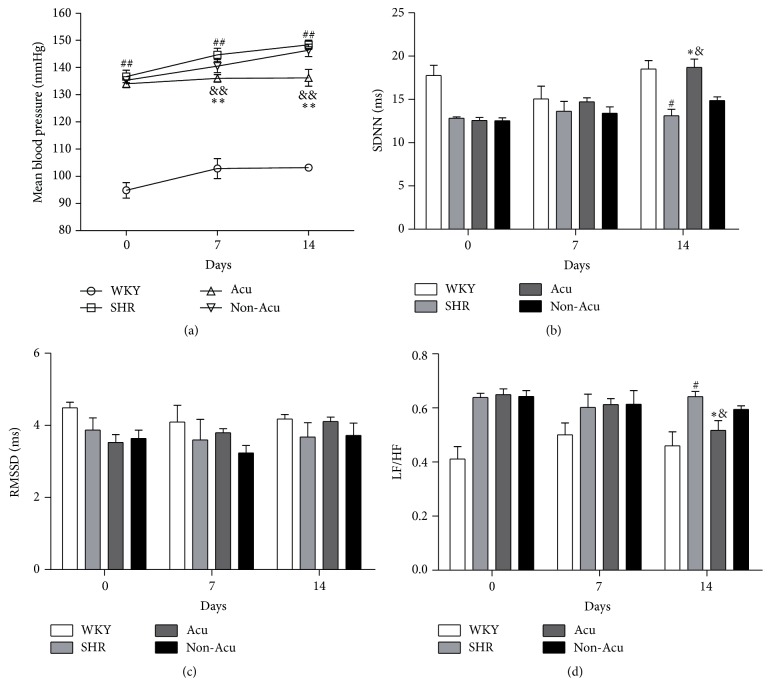
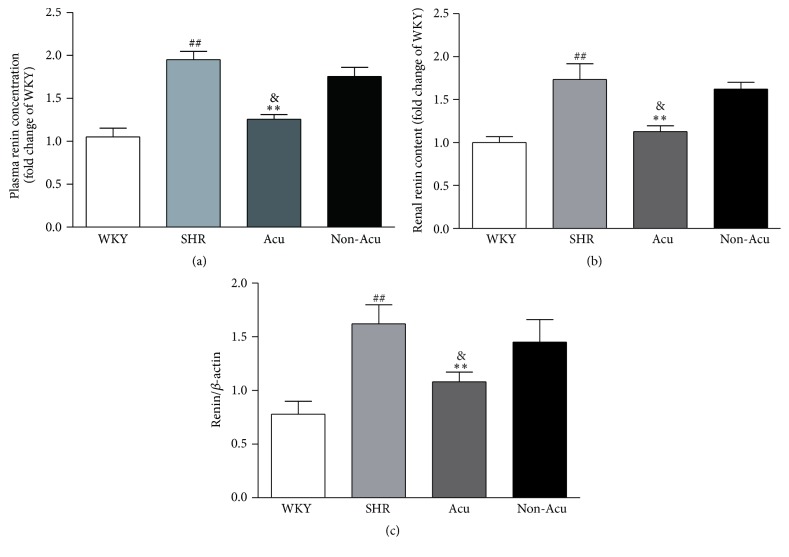
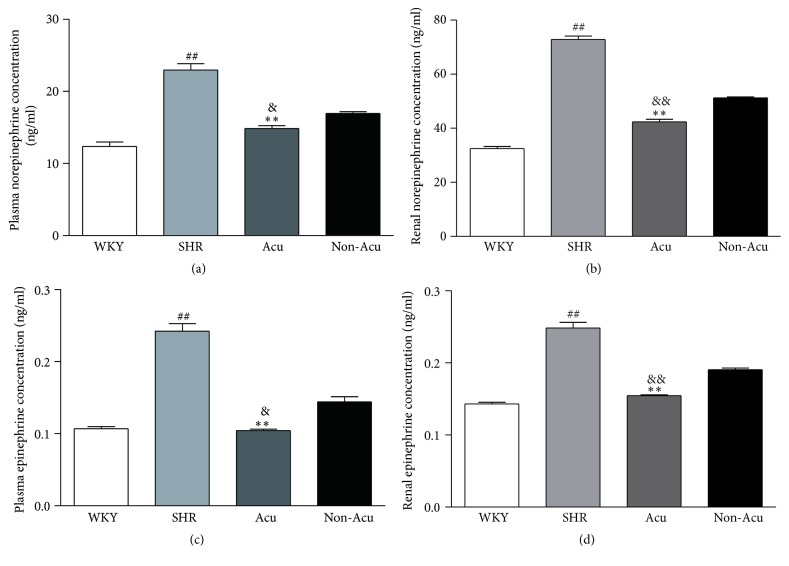
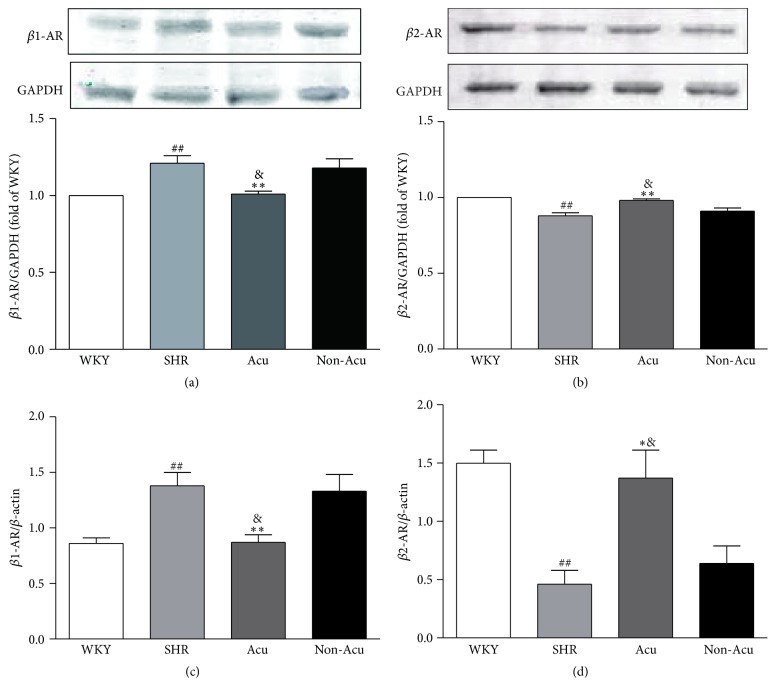
The sympathetic nervous system, via epinephrine and norepinephrine, regulates -adrenergic receptor (-AR) expression, and renal sympathetic activation causes sustained increases in blood pressure by enhanced renin release. In this study, we aim to investigate the effect and underlying mechanism of acupuncture at Taichong (LR3) on renal sympathetic activity in spontaneously hypertensive rats. Unanesthetized rats were subject to daily acupuncture for 2 weeks. Mean blood pressure (MBP) and heart rate variability (HRV) were monitored at days 0, 7, and 14 by radiotelemetry. After euthanasia on the 14th day, blood and the kidneys were collected and subject to the following analyses. Epinephrine and norepinephrine were detected by ELISA. The expression of -ARs was studied by western blotting and PCR. The renin content was analyzed by radioimmunoassay. 14-day acupuncture significantly attenuates the increase of MBP. The HRV indices, the standard deviation of all normal NN intervals (SDNN), and the ratio of the low-frequency component to the high-frequency component (LF/HF) were improved following acupuncture. Renal sympathetic activation induced upregulation of epinephrine, norepinephrine, and renin content were attenuated by acupuncture. In addition, acupuncture decreased 1-AR expression and improved 2-AR expression. These results indicated that acupuncture relieves the increased MBP via the regulation of renal sympathetic activity and -ARs.
交感神经系统通过肾上腺素和去甲肾上腺素调节β-肾上腺素能受体(β-AR)的表达,而肾交感神经激活通过增强肾素释放导致血压持续升高。在本研究中,我们旨在探讨针刺太冲(LR3)对自发性高血压大鼠肾交感神经活动的影响及潜在机制。未麻醉的大鼠每天接受针刺治疗2周。在第0、7和14天通过无线电遥测监测平均血压(MBP)和心率变异性(HRV)。在第14天安乐死后,采集血液和肾脏进行以下分析。通过酶联免疫吸附测定法检测肾上腺素和去甲肾上腺素。通过蛋白质印迹法和聚合酶链反应研究β-ARs的表达。通过放射免疫测定法分析肾素含量。14天的针刺显著减轻了MBP的升高。针刺后,HRV指标、所有正常NN间期的标准差(SDNN)以及低频成分与高频成分的比值(LF/HF)均得到改善。针刺减弱了肾交感神经激活诱导的肾上腺素、去甲肾上腺素和肾素含量的上调。此外,针刺降低了β1-AR的表达并改善了β2-AR的表达。这些结果表明,针刺通过调节肾交感神经活动和β-ARs来缓解升高的MBP。