Department of Acupuncture and Moxibustion, School of Acupuncture and Moxibustion, Guangzhou University of Chinese Medicine, Guangzhou, China.
PLoS One. 2012;7(9):e44216. doi: 10.1371/journal.pone.0044216. Epub 2012 Sep 12.
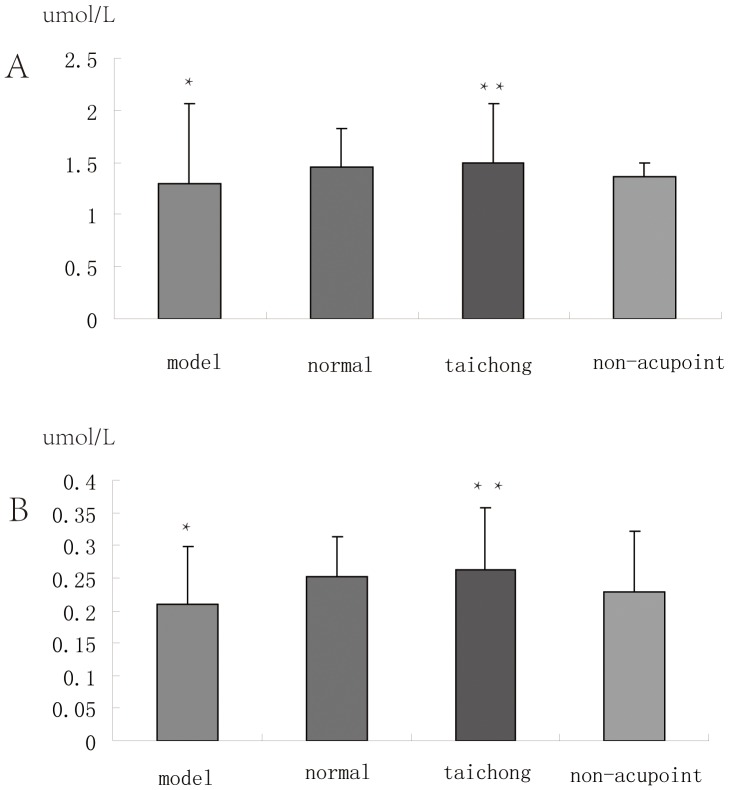
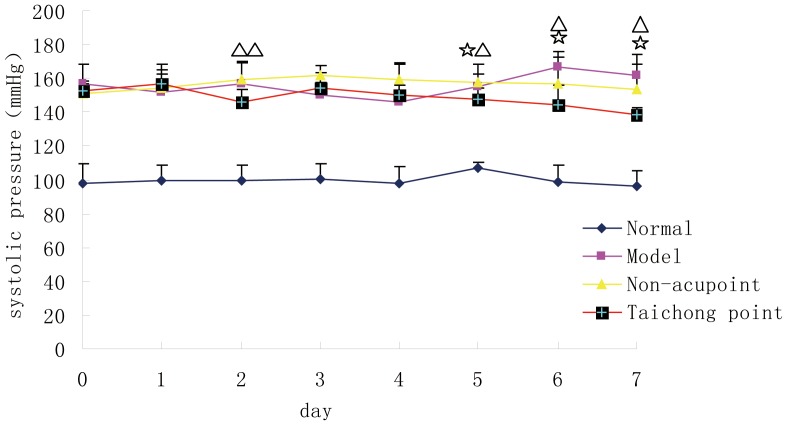
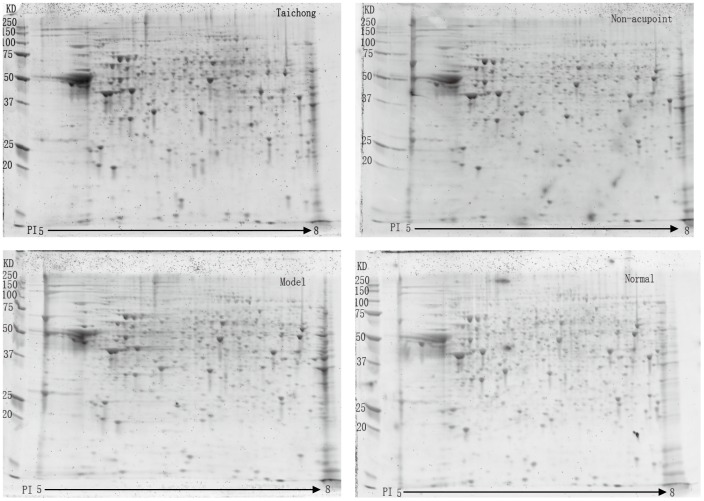
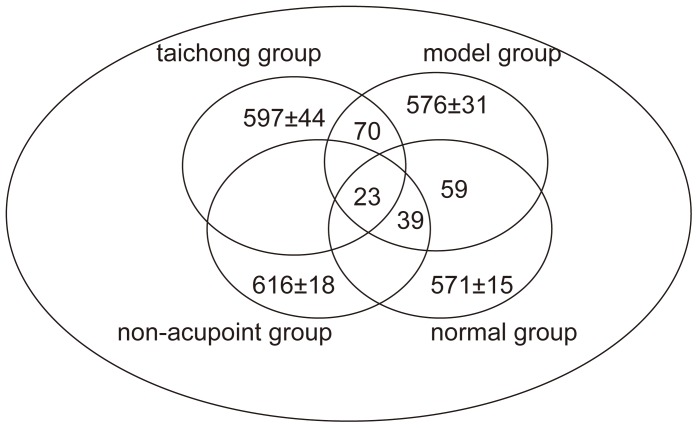
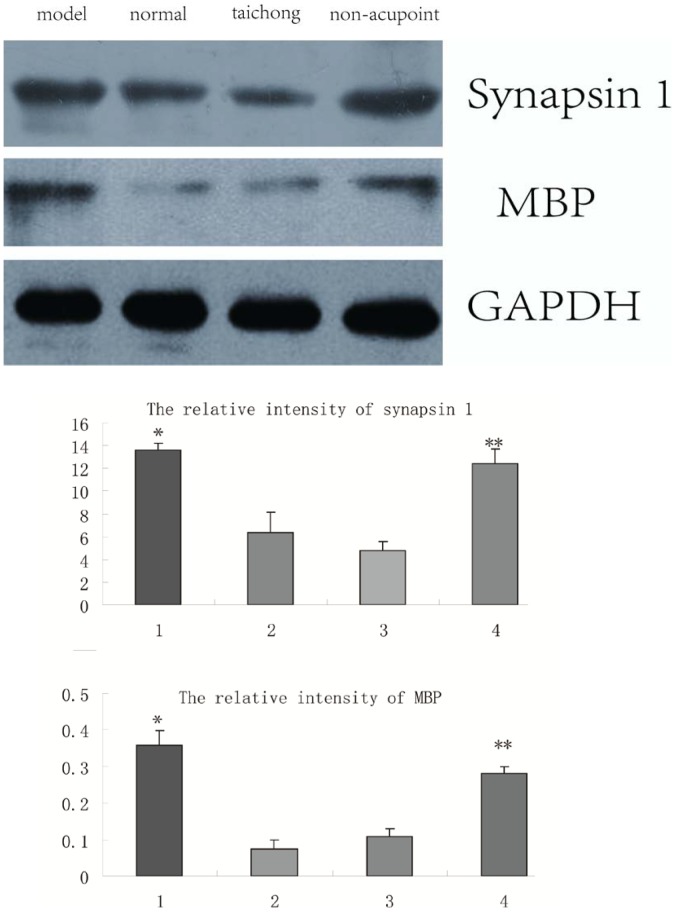
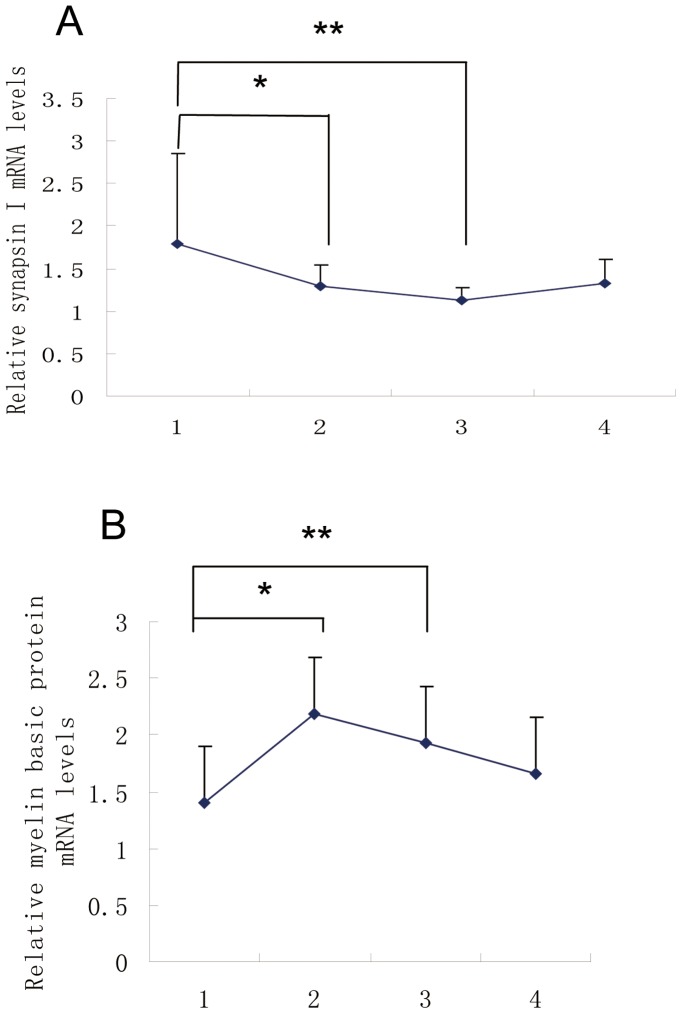
Previous animal and clinical studies have shown that acupuncture is an effective alternative treatment in the management of hypertension, but the mechanism is unclear. This study investigated the proteomic response in the nervous system to treatment at the Taichong (LR3) acupoint in spontaneously hypertensive rats (SHRs). Unanesthetized rats were subject to 5-min daily acupuncture treatment for 7 days. Blood pressure was monitored over 7 days. After euthanasia on the 7(th) day, rat medullas were dissected, homogenized, and subject to 2D gel electrophoresis and MALDI-TOF analysis. The results indicate that blood pressure stabilized after the 5th day of acupuncture, and compared with non-acupoint treatment, Taichong-acupunctured rat's systolic pressure was reduced significantly (P<0.01), though not enough to bring blood pressure down to normal levels. The different treatment groups also showed differential protein expression: the 2D images revealed 571 ± 15 proteins in normal SD rats' medulla, 576 ± 31 proteins in SHR's medulla, 597 ± 44 proteins in medulla of SHR after acupuncturing Taichong, and 616 ± 18 proteins in medulla of SHR after acupuncturing non-acupoint. In the medulla of Taichong group, compared with non-acupoint group, seven proteins were down-regulated: heat shock protein-90, synapsin-1, pyruvate kinase isozyme, NAD-dependent deacetylase sirtuin-2, protein kinase C inhibitor protein 1, ubiquitin hydrolase isozyme L1, and myelin basic protein. Six proteins were up-regulated: glutamate dehydrogenase 1, aldehyde dehydrogenase 2, glutathione S-transferase M5, Rho GDP dissociation inhibitor 1, DJ-1 protein and superoxide dismutase. The altered expression of several proteins by acupuncture has been confirmed by ELISA, Western blot and qRT-PCR assays. The results indicate an increase in antioxidant enzymes in the medulla of the SHRs subject to acupuncture, which may provide partial explanation for the antihypertensive effect of acupuncture. Further studies are warranted to investigate the role of oxidative stress modulation by acupuncture in the treatment of hypertension.
先前的动物和临床研究表明,针灸是治疗高血压的有效替代疗法,但机制尚不清楚。本研究探讨了针刺太冲(LR3)穴对自发性高血压大鼠(SHR)神经系统的蛋白质组反应。未麻醉大鼠每天接受 5 分钟的针刺治疗,共 7 天。7 天内监测血压。第 7 天处死大鼠后,取大鼠延髓进行解剖、匀浆,进行 2D 凝胶电泳和 MALDI-TOF 分析。结果表明,针刺后第 5 天血压稳定,与非穴位治疗相比,针刺太冲穴大鼠的收缩压显著降低(P<0.01),但不足以使血压降至正常水平。不同治疗组也显示出不同的蛋白质表达:2D 图像显示正常 SD 大鼠延髓中有 571±15 种蛋白质,SHR 延髓中有 576±31 种蛋白质,针刺太冲穴后的 SHR 延髓中有 597±44 种蛋白质,针刺非穴位后的 SHR 延髓中有 616±18 种蛋白质。在太冲组延髓中,与非穴位组相比,有 7 种蛋白质下调:热休克蛋白 90、突触素 1、丙酮酸激酶同工酶、NAD 依赖性去乙酰化酶 Sirtuin-2、蛋白激酶 C 抑制剂蛋白 1、泛素水解酶同工酶 L1、髓鞘碱性蛋白。6 种蛋白质上调:谷氨酸脱氢酶 1、醛脱氢酶 2、谷胱甘肽 S-转移酶 M5、Rho GDP 解离抑制剂 1、DJ-1 蛋白和超氧化物歧化酶。通过 ELISA、Western blot 和 qRT-PCR 检测,证实了针刺使 SHR 延髓中几种蛋白质的表达发生改变。这些结果表明,针刺可增加 SHR 延髓中抗氧化酶的表达,这可能为针灸的降压作用提供部分解释。需要进一步研究来探讨针灸对高血压的治疗作用中氧化应激调节的作用。