Strangward Patrick, Haley Michael J, Shaw Tovah N, Schwartz Jean-Marc, Greig Rachel, Mironov Aleksandr, de Souza J Brian, Cruickshank Sheena M, Craig Alister G, Milner Danny A, Allan Stuart M, Couper Kevin N
Faculty of Biology, Medicine and Health, University of Manchester, Manchester, United Kingdom.
Immunology Unit, Department of Infectious and Tropical Diseases, London School of Hygiene and Tropical Medicine, London, United Kingdom.
PLoS Pathog. 2017 Mar 8;13(3):e1006267. doi: 10.1371/journal.ppat.1006267. eCollection 2017 Mar.
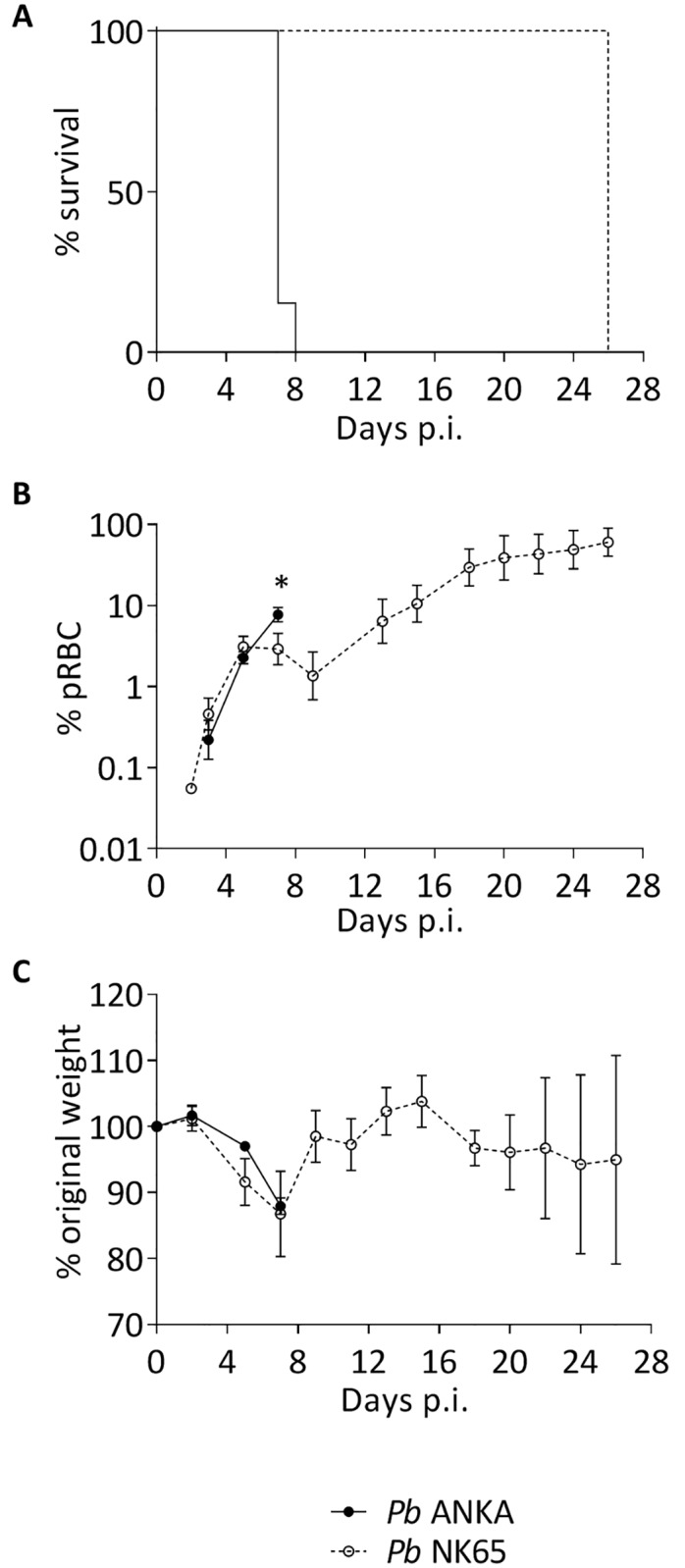
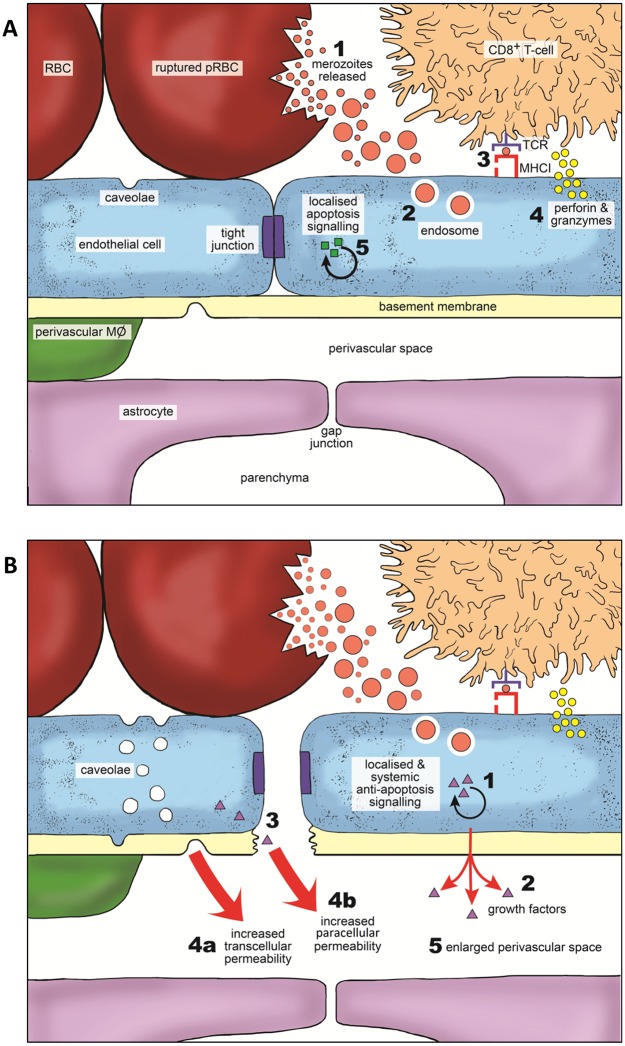
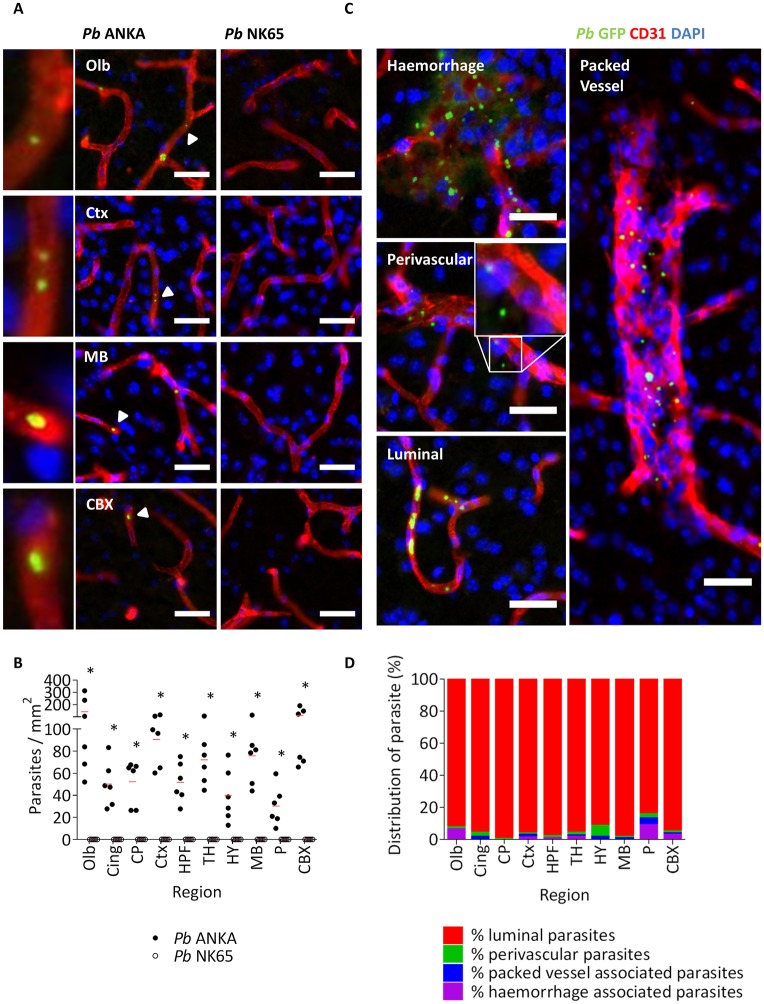
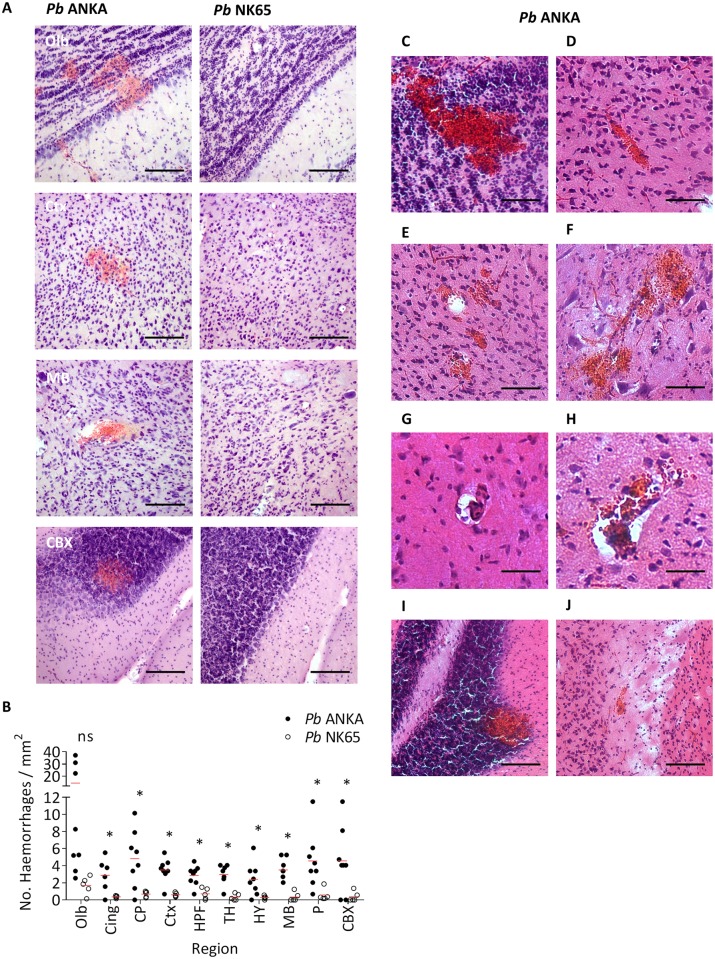
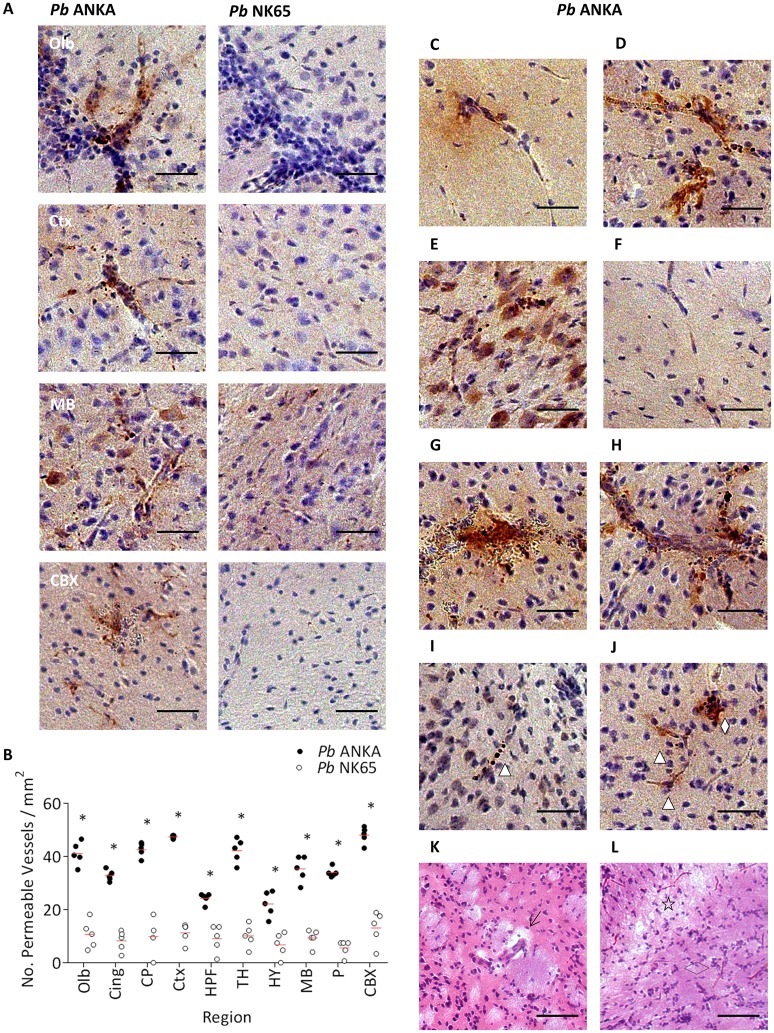
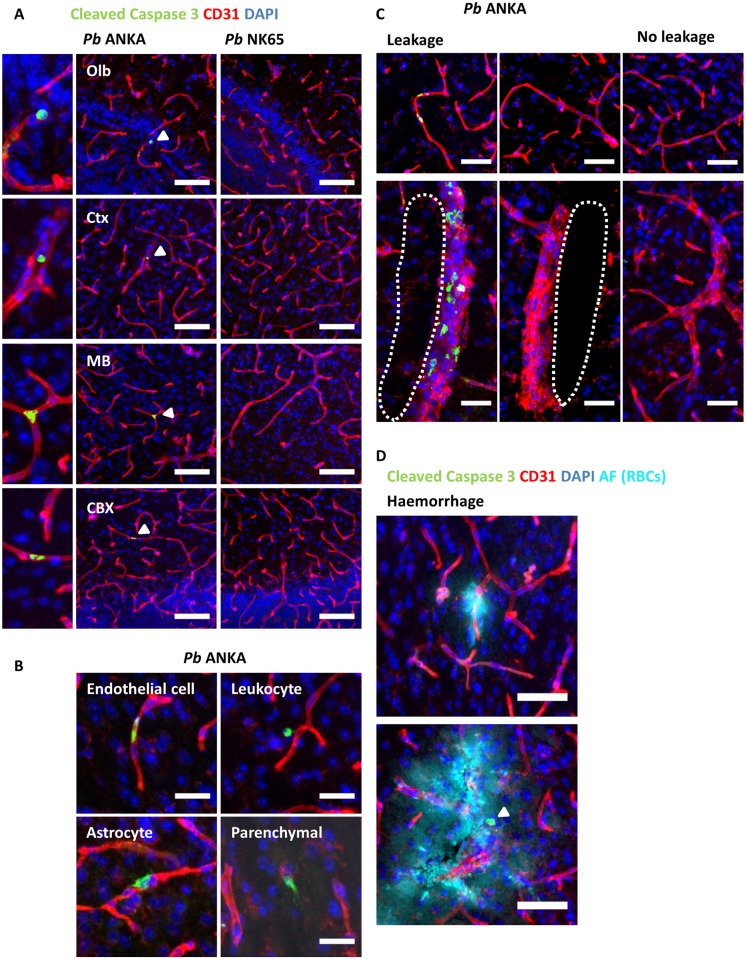
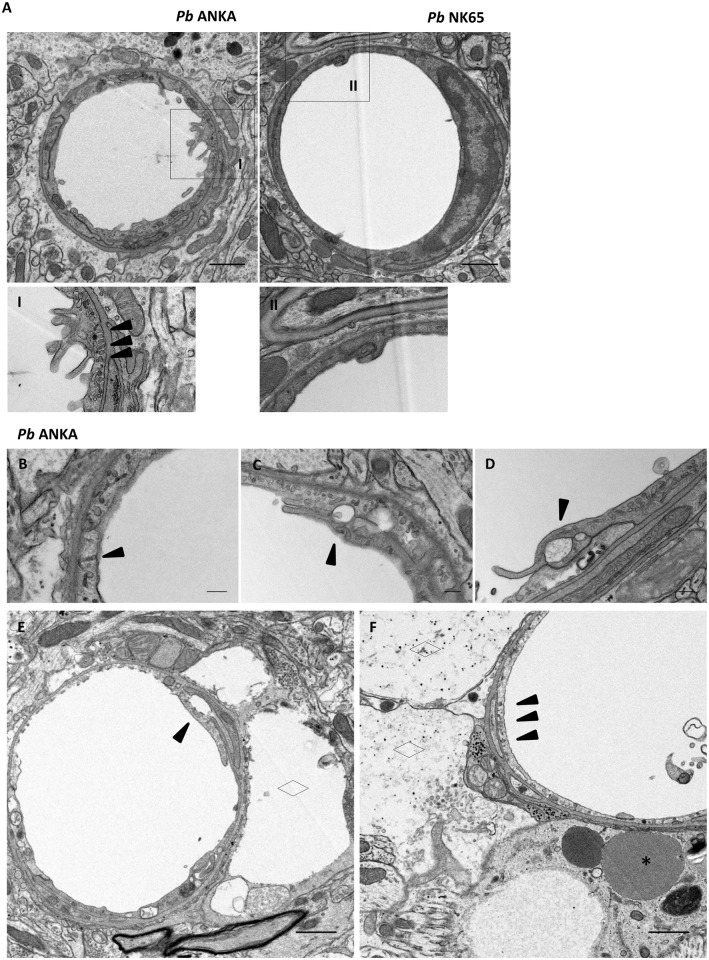
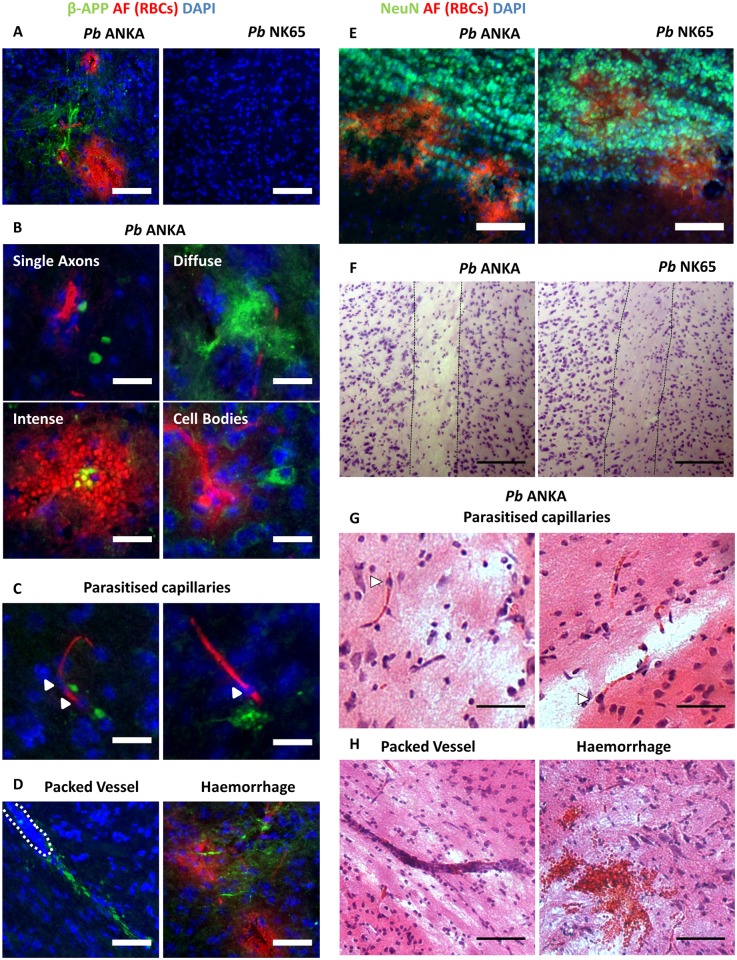
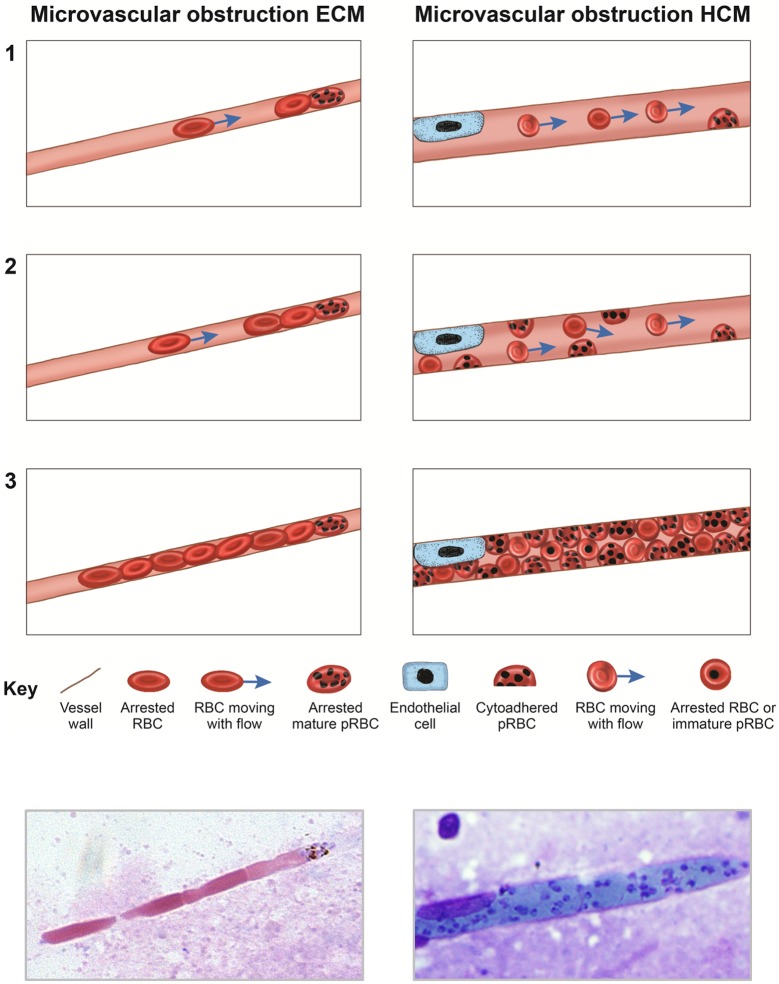
The murine model of experimental cerebral malaria (ECM) has been utilised extensively in recent years to study the pathogenesis of human cerebral malaria (HCM). However, it has been proposed that the aetiologies of ECM and HCM are distinct, and, consequently, no useful mechanistic insights into the pathogenesis of HCM can be obtained from studying the ECM model. Therefore, in order to determine the similarities and differences in the pathology of ECM and HCM, we have performed the first spatial and quantitative histopathological assessment of the ECM syndrome. We demonstrate that the accumulation of parasitised red blood cells (pRBCs) in brain capillaries is a specific feature of ECM that is not observed during mild murine malaria infections. Critically, we show that individual pRBCs appear to occlude murine brain capillaries during ECM. As pRBC-mediated congestion of brain microvessels is a hallmark of HCM, this suggests that the impact of parasite accumulation on cerebral blood flow may ultimately be similar in mice and humans during ECM and HCM, respectively. Additionally, we demonstrate that cerebrovascular CD8+ T-cells appear to co-localise with accumulated pRBCs, an event that corresponds with development of widespread vascular leakage. As in HCM, we show that vascular leakage is not dependent on extensive vascular destruction. Instead, we show that vascular leakage is associated with alterations in transcellular and paracellular transport mechanisms. Finally, as in HCM, we observed axonal injury and demyelination in ECM adjacent to diverse vasculopathies. Collectively, our data therefore shows that, despite very different presentation, and apparently distinct mechanisms, of parasite accumulation, there appear to be a number of comparable features of cerebral pathology in mice and in humans during ECM and HCM, respectively. Thus, when used appropriately, the ECM model may be useful for studying specific pathological features of HCM.
近年来,实验性脑型疟疾(ECM)的小鼠模型被广泛用于研究人类脑型疟疾(HCM)的发病机制。然而,有人提出ECM和HCM的病因不同,因此,通过研究ECM模型无法获得关于HCM发病机制的有用的机制性见解。因此,为了确定ECM和HCM病理学的异同,我们对ECM综合征进行了首次空间和定量组织病理学评估。我们证明,脑毛细血管中被寄生红细胞(pRBCs)的积累是ECM的一个特定特征,在轻度小鼠疟疾感染期间未观察到。至关重要的是,我们表明在ECM期间单个pRBCs似乎会阻塞小鼠脑毛细血管。由于pRBC介导的脑微血管充血是HCM的一个标志,这表明在ECM和HCM期间,寄生虫积累对脑血流的影响在小鼠和人类中最终可能相似。此外,我们证明脑血管CD8 + T细胞似乎与积累的pRBCs共定位,这一事件与广泛的血管渗漏的发展相对应。与HCM一样,我们表明血管渗漏不依赖于广泛的血管破坏。相反,我们表明血管渗漏与跨细胞和细胞旁转运机制的改变有关。最后,与HCM一样,我们在与各种血管病变相邻的ECM中观察到轴突损伤和脱髓鞘。因此,我们的数据总体表明,尽管寄生虫积累的表现非常不同且机制明显不同,但在ECM和HCM期间,小鼠和人类的脑病理学似乎有许多可比特征。因此,当适当使用时,ECM模型可能有助于研究HCM的特定病理特征。