• 文献检索
  • 文档翻译
  • 深度研究
  • 学术资讯
  • Suppr Zotero 插件Zotero 插件
  • 邀请有礼
  • 套餐&价格
  • 历史记录
应用&插件
Suppr Zotero 插件Zotero 插件浏览器插件Mac 客户端Windows 客户端微信小程序
定价
高级版会员购买积分包购买API积分包
服务
文献检索文档翻译深度研究API 文档MCP 服务
关于我们
关于 Suppr公司介绍联系我们用户协议隐私条款
关注我们

Suppr 超能文献

核心技术专利:CN118964589B侵权必究
粤ICP备2023148730 号-1Suppr @ 2026

文献检索

告别复杂PubMed语法,用中文像聊天一样搜索,搜遍4000万医学文献。AI智能推荐,让科研检索更轻松。

立即免费搜索

文件翻译

保留排版,准确专业,支持PDF/Word/PPT等文件格式,支持 12+语言互译。

免费翻译文档

深度研究

AI帮你快速写综述,25分钟生成高质量综述,智能提取关键信息,辅助科研写作。

立即免费体验

免疫治疗后免疫的袋獾面部肿瘤疾病消退。

Regression of devil facial tumour disease following immunotherapy in immunised Tasmanian devils.

机构信息

Menzies Institute for Medical Research, University of Tasmania, Hobart, Tasmania 7000, Australia.

Faculty of Veterinary Science, University of Sydney, Sydney, New South Wales 2006, Australia.

出版信息

Sci Rep. 2017 Mar 9;7:43827. doi: 10.1038/srep43827.

DOI:10.1038/srep43827
PMID:28276463
原文链接:https://pmc.ncbi.nlm.nih.gov/articles/PMC5343465/
Abstract

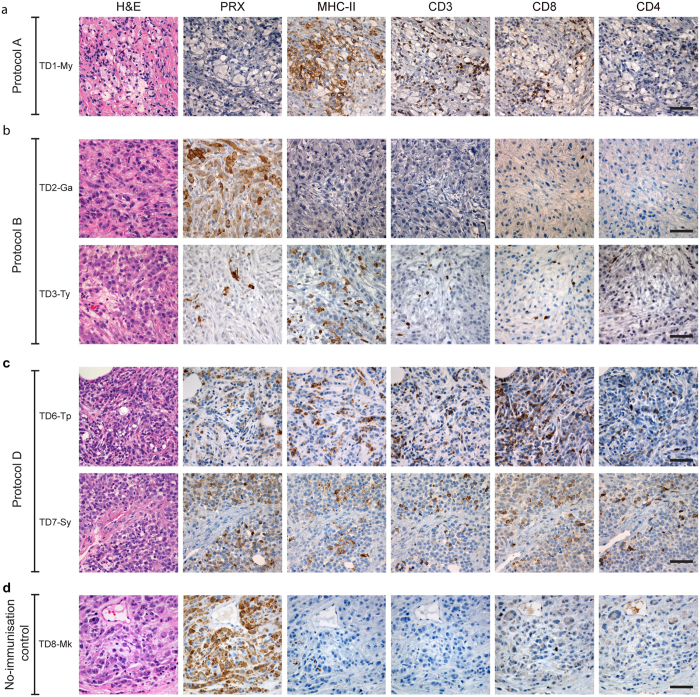
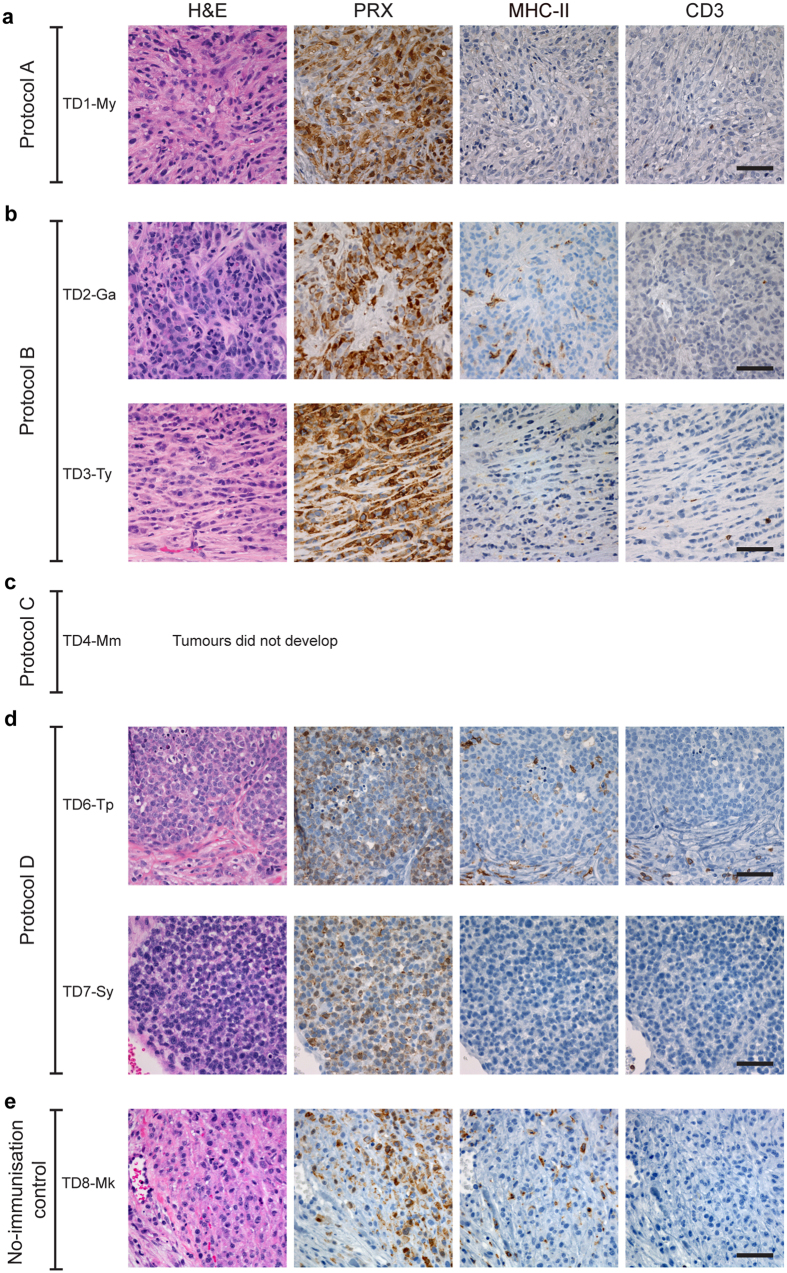
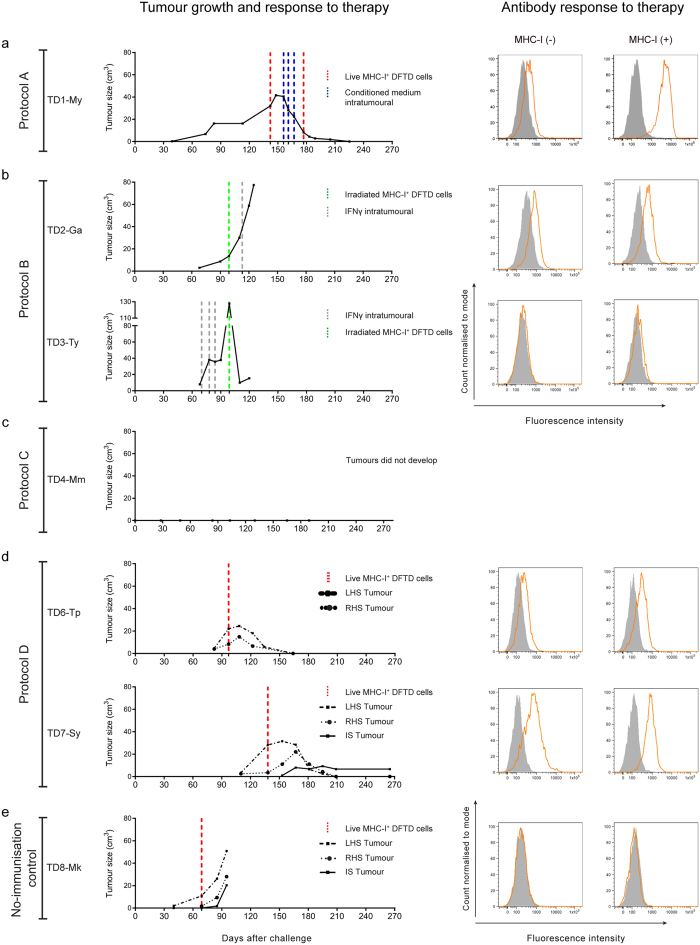
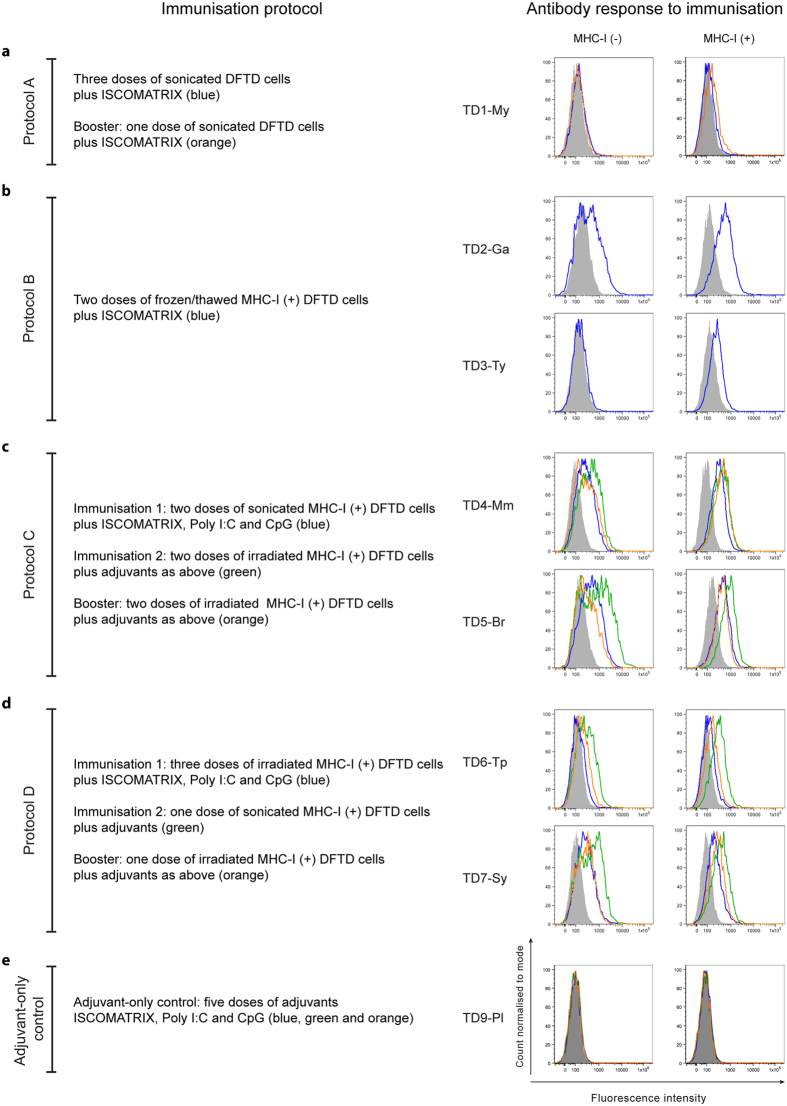
Devil facial tumour disease (DFTD) is a transmissible cancer devastating the Tasmanian devil (Sarcophilus harrisii) population. The cancer cell is the 'infectious' agent transmitted as an allograft by biting. Animals usually die within a few months with no evidence of antibody or immune cell responses against the DFTD allograft. This lack of anti-tumour immunity is attributed to an absence of cell surface major histocompatibility complex (MHC)-I molecule expression. While the endangerment of the devil population precludes experimentation on large experimental groups, those examined in our study indicated that immunisation and immunotherapy with DFTD cells expressing surface MHC-I corresponded with effective anti-tumour responses. Tumour engraftment did not occur in one of the five immunised Tasmanian devils, and regression followed therapy of experimentally induced DFTD tumours in three Tasmanian devils. Regression correlated with immune cell infiltration and antibody responses against DFTD cells. These data support the concept that immunisation of devils with DFTD cancer cells can successfully induce humoral responses against DFTD and trigger immune-mediated regression of established tumours. Our findings support the feasibility of a protective DFTD vaccine and ultimately the preservation of the species.

摘要

恶魔面部肿瘤病(DFTD)是一种具有传染性的癌症,正在摧毁塔斯马尼亚恶魔(Sarcophilus harrisii)种群。癌细胞是通过咬伤传播的“传染性”异体移植物。动物通常在几个月内死亡,没有针对 DFTD 异体移植物的抗体或免疫细胞反应的证据。这种缺乏抗肿瘤免疫力归因于缺乏细胞表面主要组织相容性复合体(MHC)-I 分子的表达。虽然恶魔种群的濒危状况排除了对大型实验组进行实验,但我们研究中检查的那些表明,用表达表面 MHC-I 的 DFTD 细胞进行免疫接种和免疫治疗与有效的抗肿瘤反应相对应。在五名免疫的塔斯马尼亚恶魔中,有一名没有发生肿瘤移植,在三名塔斯马尼亚恶魔中,实验诱导的 DFTD 肿瘤的治疗后出现了肿瘤消退。消退与免疫细胞浸润和针对 DFTD 细胞的抗体反应相关。这些数据支持了这样的概念,即用 DFTD 癌细胞对恶魔进行免疫接种可以成功诱导针对 DFTD 的体液反应,并触发已建立的肿瘤的免疫介导消退。我们的发现支持了一种保护性 DFTD 疫苗的可行性,并最终保护了该物种。
https://cdn.ncbi.nlm.nih.gov/pmc/blobs/35ca/5343465/0e396643dc7e/srep43827-f4.jpg
https://cdn.ncbi.nlm.nih.gov/pmc/blobs/35ca/5343465/89325a14c513/srep43827-f1.jpg
https://cdn.ncbi.nlm.nih.gov/pmc/blobs/35ca/5343465/7db4af2a2663/srep43827-f2.jpg
https://cdn.ncbi.nlm.nih.gov/pmc/blobs/35ca/5343465/c181e4c11329/srep43827-f3.jpg
https://cdn.ncbi.nlm.nih.gov/pmc/blobs/35ca/5343465/0e396643dc7e/srep43827-f4.jpg
https://cdn.ncbi.nlm.nih.gov/pmc/blobs/35ca/5343465/89325a14c513/srep43827-f1.jpg
https://cdn.ncbi.nlm.nih.gov/pmc/blobs/35ca/5343465/7db4af2a2663/srep43827-f2.jpg
https://cdn.ncbi.nlm.nih.gov/pmc/blobs/35ca/5343465/c181e4c11329/srep43827-f3.jpg
https://cdn.ncbi.nlm.nih.gov/pmc/blobs/35ca/5343465/0e396643dc7e/srep43827-f4.jpg

相似文献

1
Regression of devil facial tumour disease following immunotherapy in immunised Tasmanian devils.免疫治疗后免疫的袋獾面部肿瘤疾病消退。
Sci Rep. 2017 Mar 9;7:43827. doi: 10.1038/srep43827.
2
Immunization Strategies Producing a Humoral IgG Immune Response against Devil Facial Tumor Disease in the Majority of Tasmanian Devils Destined for Wild Release.免疫策略在大多数计划野外放归的袋獾中产生针对恶魔面部肿瘤疾病的体液 IgG 免疫应答。
Front Immunol. 2018 Feb 19;9:259. doi: 10.3389/fimmu.2018.00259. eCollection 2018.
3
Demonstration of immune responses against devil facial tumour disease in wild Tasmanian devils.野生塔斯马尼亚袋獾对袋獾面部肿瘤病免疫反应的证明。
Biol Lett. 2016 Oct;12(10). doi: 10.1098/rsbl.2016.0553.
4
Evidence for induction of humoral and cytotoxic immune responses against devil facial tumor disease cells in Tasmanian devils (Sarcophilus harrisii) immunized with killed cell preparations.用灭活细胞制剂免疫的袋獾(袋獾属哈里斯袋獾)中诱导出针对袋獾面部肿瘤病细胞的体液免疫和细胞毒性免疫反应的证据。
Vaccine. 2015 Jun 12;33(26):3016-25. doi: 10.1016/j.vaccine.2015.01.039. Epub 2015 Feb 20.
5
Natural killer cell mediated cytotoxic responses in the Tasmanian devil.在塔斯马尼亚恶魔中自然杀伤细胞介导的细胞毒性反应。
PLoS One. 2011;6(9):e24475. doi: 10.1371/journal.pone.0024475. Epub 2011 Sep 21.
6
Lessons learnt from the Tasmanian devil facial tumour regarding immune function in cancer.从袋獾面部肿瘤中汲取的关于癌症免疫功能的经验教训。
Mamm Genome. 2018 Dec;29(11-12):731-738. doi: 10.1007/s00335-018-9782-3. Epub 2018 Sep 17.
7
Devil Facial Tumor Disease.袋獾面部肿瘤病
Vet Pathol. 2016 Jul;53(4):726-36. doi: 10.1177/0300985815616444. Epub 2015 Dec 13.
8
Heat shock proteins expressed in the marsupial Tasmanian devil are potential antigenic candidates in a vaccine against devil facial tumour disease.在有袋动物袋獾中表达的热休克蛋白是针对袋獾面部肿瘤病疫苗的潜在抗原候选物。
PLoS One. 2018 Apr 27;13(4):e0196469. doi: 10.1371/journal.pone.0196469. eCollection 2018.
9
Mitogen-activated Tasmanian devil blood mononuclear cells kill devil facial tumour disease cells.有丝分裂原激活的袋獾血液单核细胞可杀死袋獾面部肿瘤病细胞。
Immunol Cell Biol. 2016 Aug;94(7):673-9. doi: 10.1038/icb.2016.38. Epub 2016 Apr 19.
10
Immunoglubolin dynamics and cancer prevalence in Tasmanian devils (Sarcophilus harrisii).袋獾(袋獾属哈里斯袋獾)的免疫球蛋白动态与癌症患病率
Sci Rep. 2016 Apr 29;6:25093. doi: 10.1038/srep25093.

引用本文的文献

1
NEUROENDOCRINE TUMORS NEARLY CAUSING EXTINCTION OF A MAMMAL.神经内分泌肿瘤险些导致一种哺乳动物灭绝。
Trans Am Clin Climatol Assoc. 2025;135:34-42.
2
Differentially expressed growth factors and cytokines drive phenotypic changes in transmissible cancers.差异表达的生长因子和细胞因子驱动可传播癌症的表型变化。
Discov Immunol. 2025 Jul 12;4(1):kyaf011. doi: 10.1093/discim/kyaf011. eCollection 2025.
3
No Evidence for Distinct Transcriptomic Subgroups of Devil Facial Tumor Disease (DFTD).无证据表明袋獾面部肿瘤病(DFTD)存在不同的转录组亚群。

本文引用的文献

1
Demonstration of immune responses against devil facial tumour disease in wild Tasmanian devils.野生塔斯马尼亚袋獾对袋獾面部肿瘤病免疫反应的证明。
Biol Lett. 2016 Oct;12(10). doi: 10.1098/rsbl.2016.0553.
2
PD-L1 Is Not Constitutively Expressed on Tasmanian Devil Facial Tumor Cells but Is Strongly Upregulated in Response to IFN-γ and Can Be Expressed in the Tumor Microenvironment.程序性死亡配体1(PD-L1)在袋獾面部肿瘤细胞上并非组成性表达,但在干扰素-γ的作用下会强烈上调,且可在肿瘤微环境中表达。
Front Immunol. 2016 Dec 9;7:581. doi: 10.3389/fimmu.2016.00581. eCollection 2016.
3
Widespread transmission of independent cancer lineages within multiple bivalve species.
Evol Appl. 2025 Apr 1;18(4):e70091. doi: 10.1111/eva.70091. eCollection 2025 Apr.
4
Complex associations between cancer progression and immune gene expression reveals early influence of transmissible cancer on Tasmanian devils.癌症进展与免疫基因表达之间的复杂关联揭示了传染性癌症对塔斯马尼亚恶魔的早期影响。
Front Immunol. 2024 Mar 7;15:1286352. doi: 10.3389/fimmu.2024.1286352. eCollection 2024.
5
Saving the Devils Is in the Details: Tasmanian Devil Facial Tumor Disease Can Be Eliminated with Interventions.拯救袋獾在于细节:袋獾面部肿瘤病可通过干预措施消除。
Lett Biomath. 2022 Feb 15;9(1):121-140. doi: 10.30707/LiB9.1.1681913305.269822. Epub 2022 Sep 1.
6
Tasmanian devil cathelicidins exhibit anticancer activity against Devil Facial Tumour Disease (DFTD) cells.塔斯马尼亚恶魔抗菌肽对恶魔面部肿瘤疾病(DFTD)细胞具有抗癌活性。
Sci Rep. 2023 Aug 4;13(1):12698. doi: 10.1038/s41598-023-39901-0.
7
Tasmanian devil cancer vaccine approved for testing.塔斯马尼亚袋獾癌症疫苗获批进行测试。
Nature. 2023 Jul;619(7969):233-234. doi: 10.1038/d41586-023-02124-4.
8
Class II transactivator induces expression of MHC-I and MHC-II in transmissible Tasmanian devil facial tumours.II 类转录激活因子诱导传染性塔斯马尼亚恶魔面部肿瘤中 MHC-I 和 MHC-II 的表达。
Open Biol. 2022 Oct;12(10):220208. doi: 10.1098/rsob.220208. Epub 2022 Oct 19.
9
Expression of the Nonclassical MHC Class I, Saha-UD in the Transmissible Cancer Devil Facial Tumour Disease (DFTD).非经典MHC I类分子Saha-UD在可传播性癌症袋獾面部肿瘤疾病(DFTD)中的表达
Pathogens. 2022 Mar 14;11(3):351. doi: 10.3390/pathogens11030351.
10
Disruption of Metapopulation Structure Reduces Tasmanian Devil Facial Tumour Disease Spread at the Expense of Abundance and Genetic Diversity.集合种群结构的破坏减少了袋獾面部肿瘤疾病的传播,但代价是数量和遗传多样性的降低。
Pathogens. 2021 Dec 8;10(12):1592. doi: 10.3390/pathogens10121592.
多个双壳贝类物种内独立癌症谱系的广泛传播。
Nature. 2016 Jun 30;534(7609):705-9. doi: 10.1038/nature18599. Epub 2016 Jun 22.
4
Mitogen-activated Tasmanian devil blood mononuclear cells kill devil facial tumour disease cells.有丝分裂原激活的袋獾血液单核细胞可杀死袋獾面部肿瘤病细胞。
Immunol Cell Biol. 2016 Aug;94(7):673-9. doi: 10.1038/icb.2016.38. Epub 2016 Apr 19.
5
A second transmissible cancer in Tasmanian devils.袋獾身上的第二种可传播癌症。
Proc Natl Acad Sci U S A. 2016 Jan 12;113(2):374-9. doi: 10.1073/pnas.1519691113. Epub 2015 Dec 28.
6
Toll-like receptor signaling is functional in immune cells of the endangered Tasmanian devil.Toll样受体信号传导在濒危袋獾的免疫细胞中发挥作用。
Dev Comp Immunol. 2015 Nov;53(1):123-33. doi: 10.1016/j.dci.2015.07.003. Epub 2015 Jul 13.
7
Horizontal transmission of clonal cancer cells causes leukemia in soft-shell clams.克隆癌细胞的水平传播导致软壳蛤患白血病。
Cell. 2015 Apr 9;161(2):255-63. doi: 10.1016/j.cell.2015.02.042.
8
The combination of ISCOMATRIX adjuvant and TLR agonists induces regression of established solid tumors in vivo.免疫刺激复合物基质佐剂(ISCOMATRIX)与Toll样受体(TLR)激动剂联合使用可在体内诱导已形成的实体瘤消退。
J Immunol. 2015 Mar 1;194(5):2199-207. doi: 10.4049/jimmunol.1402228. Epub 2015 Feb 2.
9
Identification of dendritic cells, B cell and T cell subsets in Tasmanian devil lymphoid tissue; evidence for poor immune cell infiltration into devil facial tumors.鉴定塔斯马尼亚恶魔淋巴组织中的树突状细胞、B 细胞和 T 细胞亚群;恶魔面部肿瘤中免疫细胞浸润不良的证据。
Anat Rec (Hoboken). 2014 May;297(5):925-38. doi: 10.1002/ar.22904. Epub 2014 Mar 24.
10
Reversible epigenetic down-regulation of MHC molecules by devil facial tumour disease illustrates immune escape by a contagious cancer.恶魔面部肿瘤病通过 MHC 分子的可逆表观遗传下调表明传染性癌症的免疫逃避。
Proc Natl Acad Sci U S A. 2013 Mar 26;110(13):5103-8. doi: 10.1073/pnas.1219920110. Epub 2013 Mar 11.