Liu Min, Feng Zhi, Ke Hongmei, Liu Ying, Sun Tianhui, Dai Jianli, Cui Wenhong, Pastor-Pareja José Carlos
School of Life Sciences, Tsinghua University, Beijing 100084, China.
School of Life Sciences, Tsinghua University, Beijing 100084, China
J Cell Biol. 2017 Apr 3;216(4):1035-1049. doi: 10.1083/jcb.201611088. Epub 2017 Mar 9.
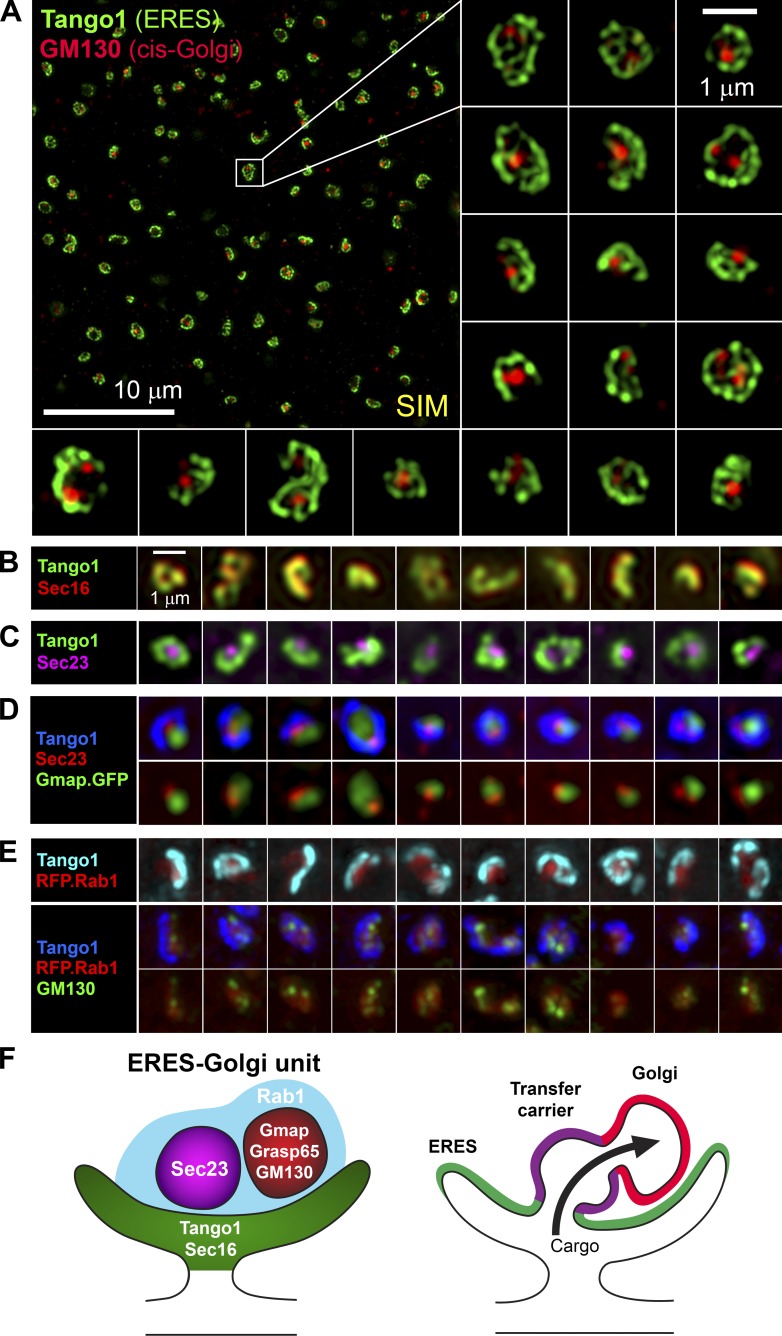
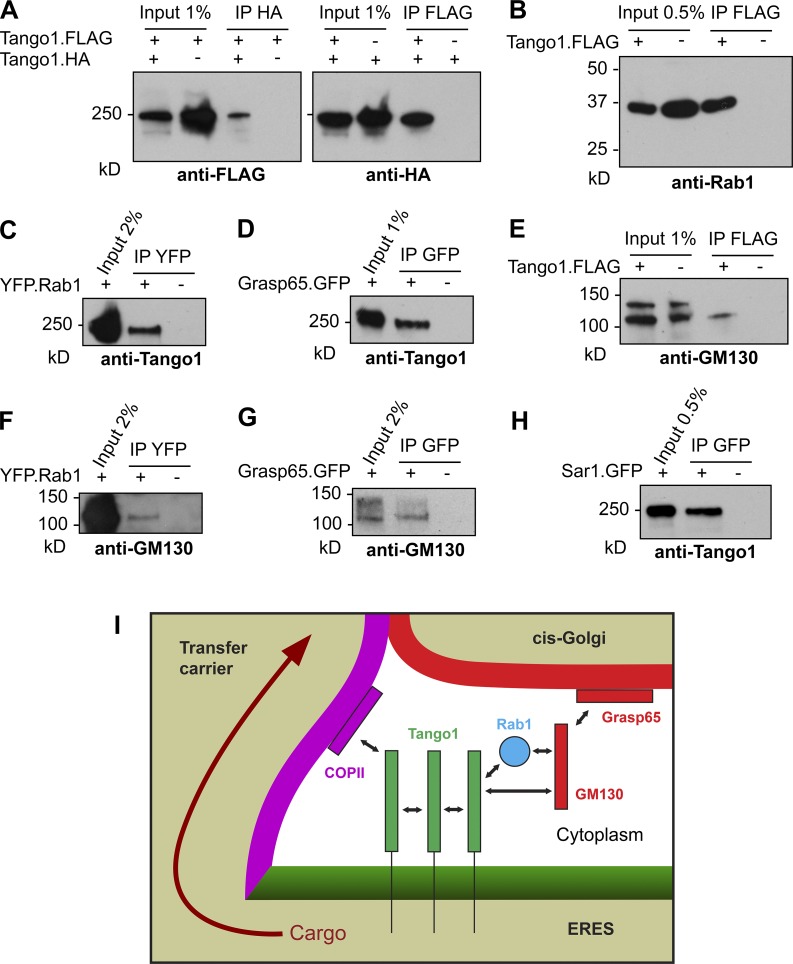
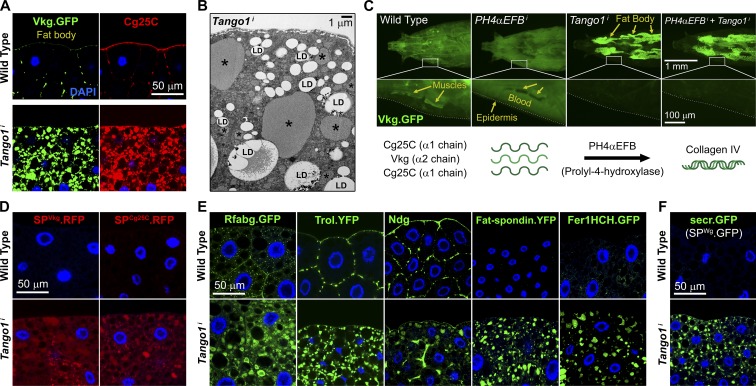
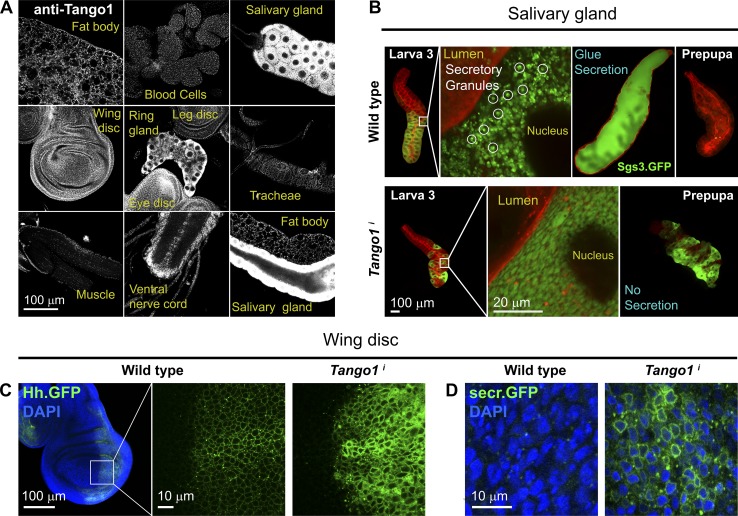
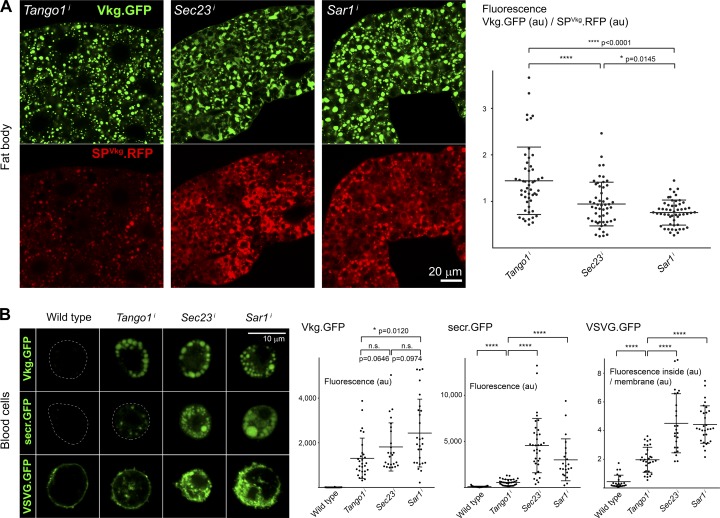
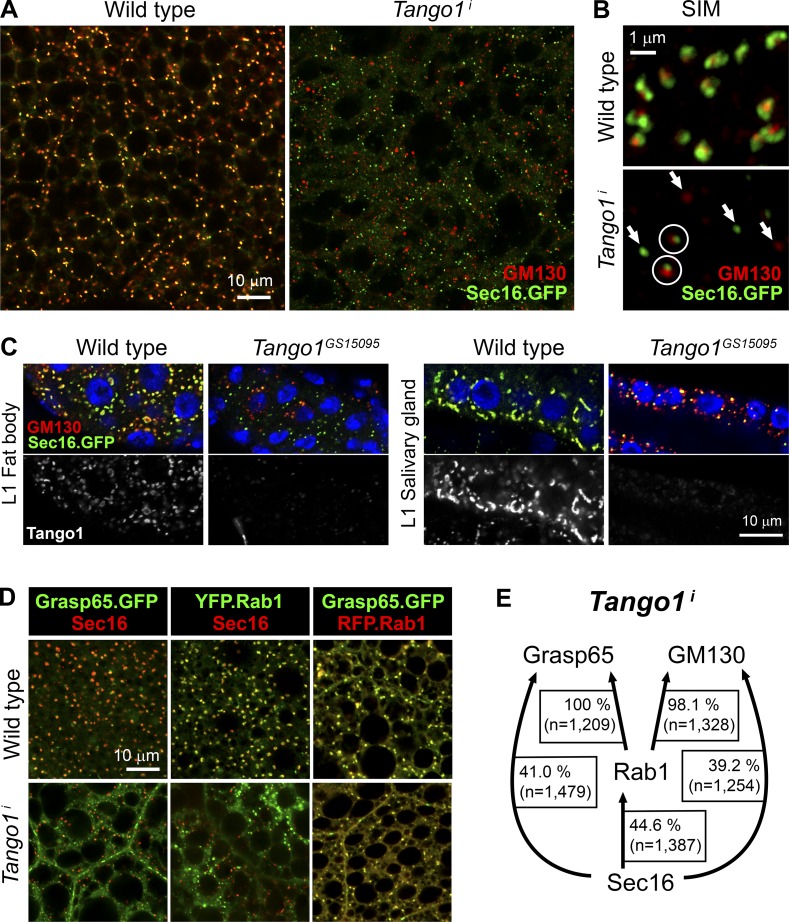
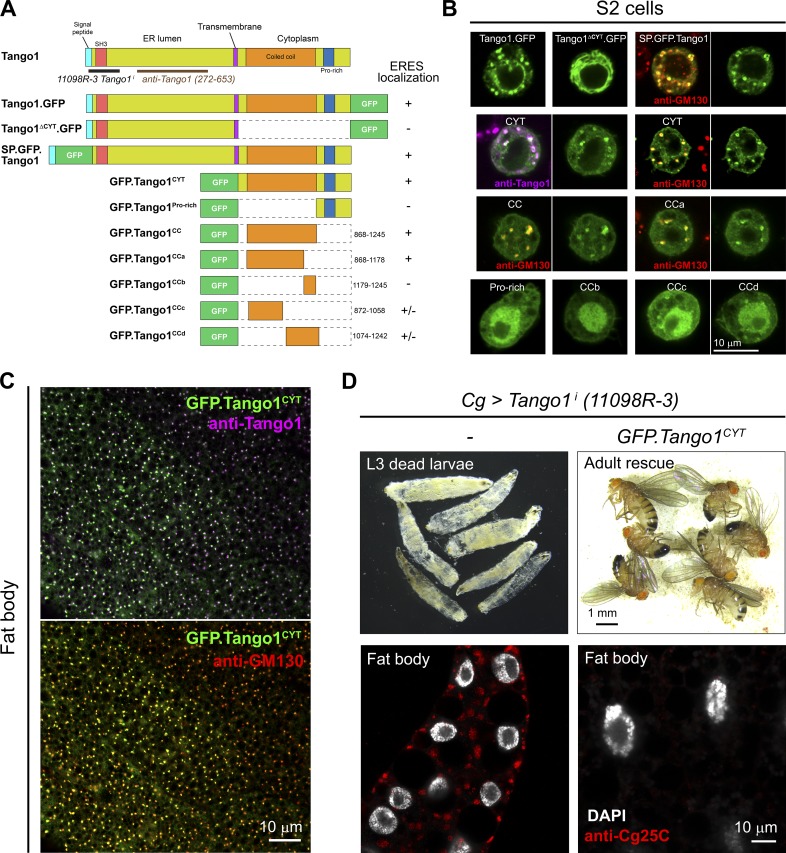
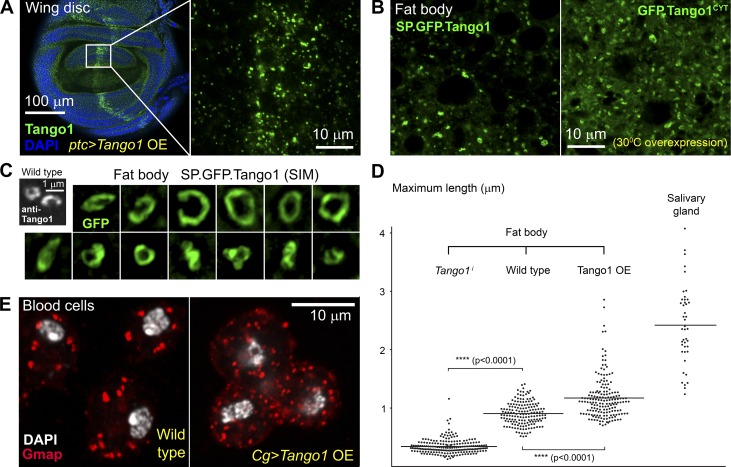
Exit of secretory cargo from the endoplasmic reticulum (ER) takes place at specialized domains called ER exit sites (ERESs). In mammals, loss of TANGO1 and other MIA/cTAGE (melanoma inhibitory activity/cutaneous T cell lymphoma-associated antigen) family proteins prevents ER exit of large cargoes such as collagen. Here, we show that Tango1, the only MIA/cTAGE family member in fruit flies, is a critical organizer of the ERES-Golgi interface. Tango1 rings hold COPII (coat protein II) carriers and Golgi in close proximity at their center. Loss of Tango1, present at ERESs in all tissues, reduces ERES size and causes ERES-Golgi uncoupling, which impairs secretion of not only collagen, but also all other cargoes we examined. Further supporting an organizing role of Tango1, its overexpression creates more and larger ERESs. Our results suggest that spatial coordination of ERES, carrier, and Golgi elements through Tango1's multiple interactions increases secretory capacity in and allows secretion of large cargo.
分泌性货物从内质网(ER)的输出发生在称为内质网输出位点(ERESs)的特化区域。在哺乳动物中,TANGO1和其他MIA/cTAGE(黑色素瘤抑制活性/皮肤T细胞淋巴瘤相关抗原)家族蛋白的缺失会阻止胶原蛋白等大型货物从内质网输出。在这里,我们表明,果蝇中唯一的MIA/cTAGE家族成员Tango1是ERES-高尔基体界面的关键组织者。Tango1环在其中心将COPII(衣被蛋白II)载体和高尔基体紧密结合在一起。在所有组织的ERESs中都存在的Tango1的缺失会减小ERES的大小,并导致ERES-高尔基体解偶联,这不仅会损害胶原蛋白的分泌,还会损害我们检测的所有其他货物的分泌。进一步支持Tango1的组织作用的是,它的过表达会产生更多更大的ERESs。我们的结果表明,通过Tango1的多重相互作用实现的ERES、载体和高尔基体元件的空间协调增加了分泌能力,并允许大型货物的分泌。