Hui Enfu, Cheung Jeanne, Zhu Jing, Su Xiaolei, Taylor Marcus J, Wallweber Heidi A, Sasmal Dibyendu K, Huang Jun, Kim Jeong M, Mellman Ira, Vale Ronald D
Department of Cellular and Molecular Pharmacology and the Howard Hughes Medical Institute, University of California, San Francisco, CA 94158, USA.
Department of Cancer Immunology, Genentech, South San Francisco, CA 94080, USA.
Science. 2017 Mar 31;355(6332):1428-1433. doi: 10.1126/science.aaf1292. Epub 2017 Mar 9.
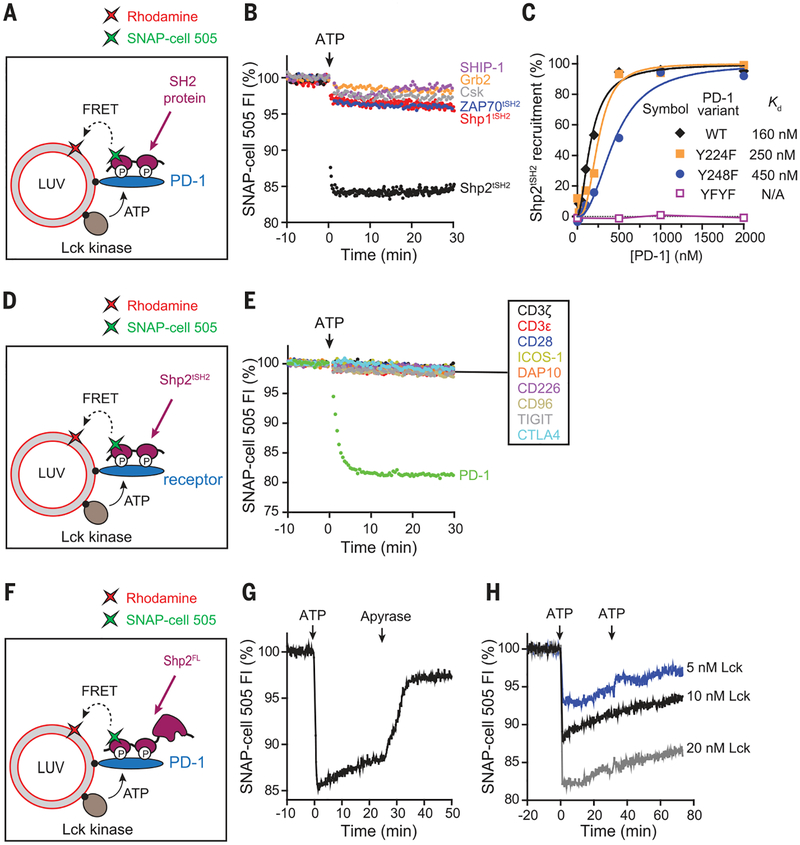
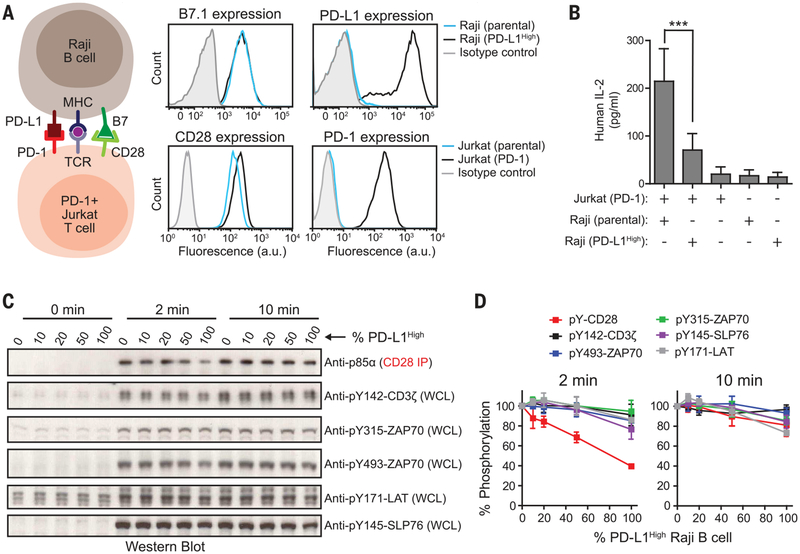
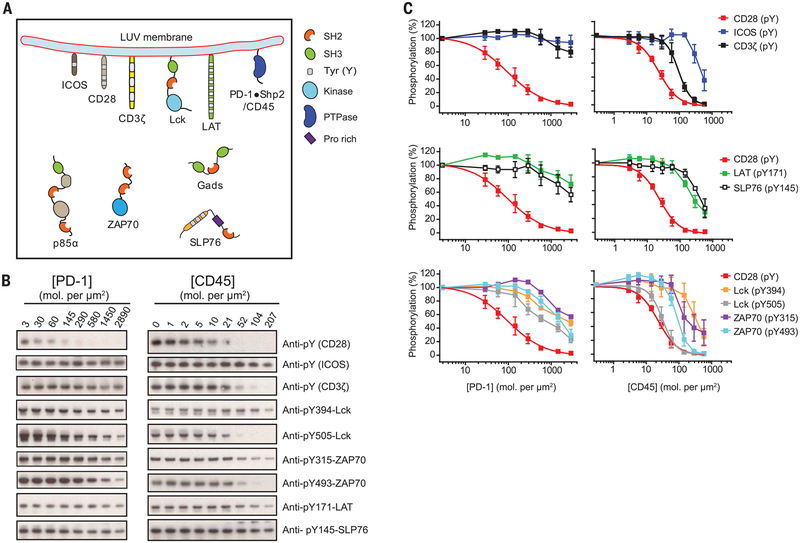
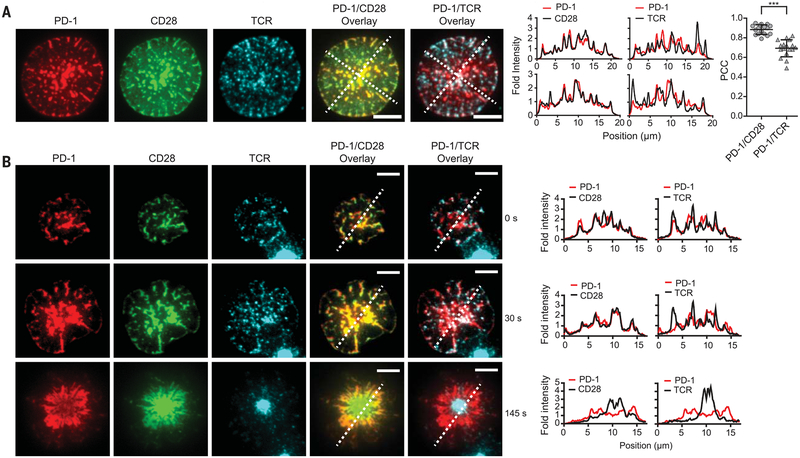
Programmed cell death-1 (PD-1) is a coinhibitory receptor that suppresses T cell activation and is an important cancer immunotherapy target. Upon activation by its ligand PD-L1, PD-1 is thought to suppress signaling through the T cell receptor (TCR). By titrating PD-1 signaling in a biochemical reconstitution system, we demonstrate that the co-receptor CD28 is strongly preferred over the TCR as a target for dephosphorylation by PD-1-recruited Shp2 phosphatase. We also show that CD28, but not the TCR, is preferentially dephosphorylated in response to PD-1 activation by PD-L1 in an intact cell system. These results reveal that PD-1 suppresses T cell function primarily by inactivating CD28 signaling, suggesting that costimulatory pathways play key roles in regulating effector T cell function and responses to anti-PD-L1/PD-1 therapy.
程序性细胞死亡蛋白1(PD-1)是一种共抑制受体,可抑制T细胞活化,是重要的癌症免疫治疗靶点。在被其配体PD-L1激活后,PD-1被认为可抑制通过T细胞受体(TCR)的信号传导。通过在生化重组系统中滴定PD-1信号,我们证明共受体CD28比TCR更强烈地被PD-1招募的Shp2磷酸酶作为去磷酸化靶点。我们还表明,在完整细胞系统中,响应PD-L1对PD-1的激活,CD28而非TCR优先被去磷酸化。这些结果揭示,PD-1主要通过使CD28信号失活来抑制T细胞功能,表明共刺激途径在调节效应T细胞功能和对抗PD-L1/PD-1治疗的反应中起关键作用。