Pauken Kristen E, Wherry E John
Institute for Immunology and Department of Microbiology, University of Pennsylvania Perelman School of Medicine, 421 Curie Blvd, Philadelphia, PA 19104, USA.
Institute for Immunology and Department of Microbiology, University of Pennsylvania Perelman School of Medicine, 421 Curie Blvd, Philadelphia, PA 19104, USA.
Trends Immunol. 2015 Apr;36(4):265-76. doi: 10.1016/j.it.2015.02.008. Epub 2015 Mar 18.
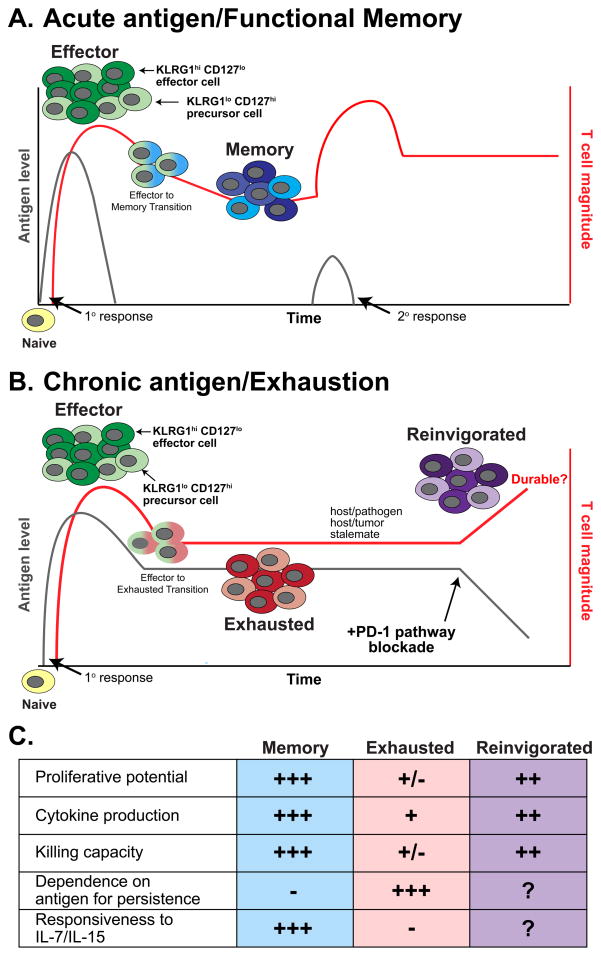
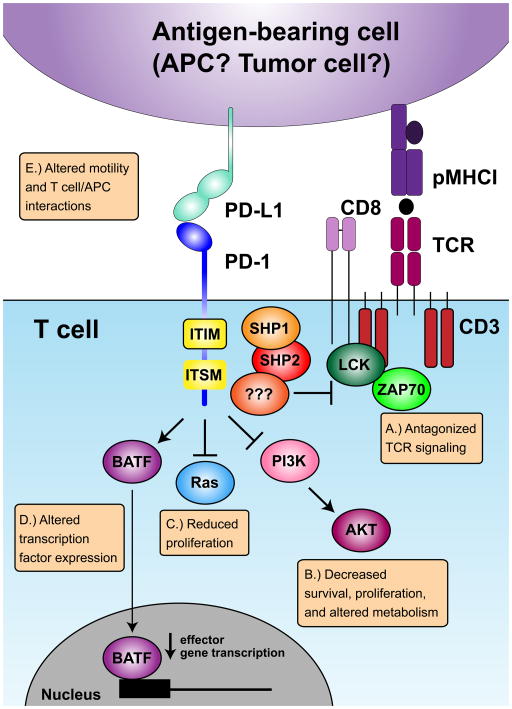
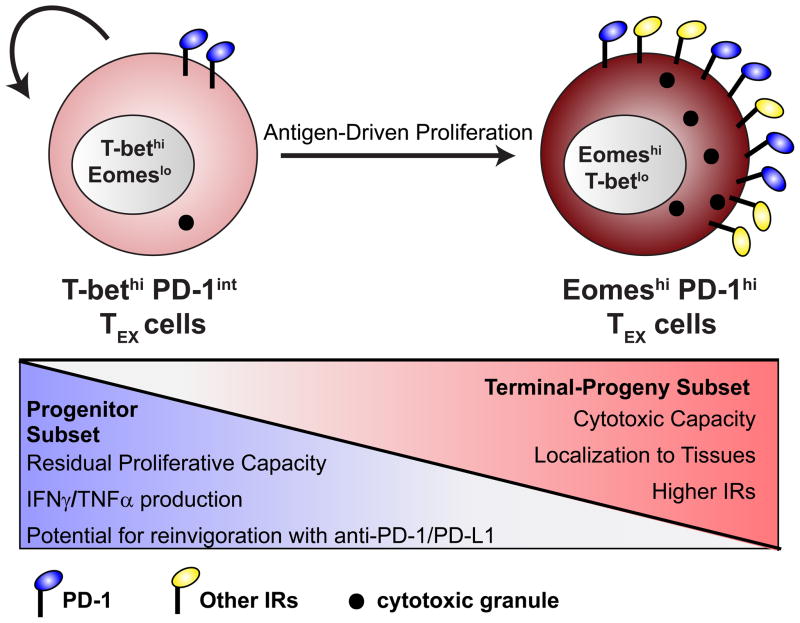
Inhibitors of the Programmed Cell Death 1: Programmed Cell Death 1 ligand 1 (PD-1:PD-L1) pathway, a central regulator of T cell exhaustion, have been recently shown to be effective for treatment of different cancers. However, clinical responses are mixed, highlighting the need to better understand the mechanisms of action of PD-1:PD-L1, the role of this pathway in immunity to different tumors, and the molecular and cellular effects of PD-1 blockade. Here, we review the molecular regulation of T cell exhaustion, placing recent findings on PD-1 blockade therapies in cancer in the context of the broader understanding of the roles of the PD-1:PD-L1 pathway in T cell exhaustion during chronic infection. We discuss the current understanding of the mechanisms involved in reversing T cell exhaustion, and outline critical areas of focus for future research, both basic and clinical.
程序性细胞死亡1(Programmed Cell Death 1, PD-1):程序性细胞死亡1配体1(PD-1:PD-L1)通路是T细胞耗竭的核心调节因子,最近已被证明对不同癌症的治疗有效。然而,临床反应不一,这凸显了更好地理解PD-1:PD-L1的作用机制、该通路在针对不同肿瘤的免疫中的作用以及PD-1阻断的分子和细胞效应的必要性。在此,我们回顾T细胞耗竭的分子调节,将癌症中PD-1阻断疗法的最新发现置于对PD-1:PD-L1通路在慢性感染期间T细胞耗竭中的作用有更广泛理解的背景下。我们讨论了目前对逆转T细胞耗竭所涉及机制的理解,并概述了未来基础和临床研究的关键重点领域。