Merino Jimenez Irene, Greenman John, Ieropoulos Ioannis
Bristol BioEnergy Centre, Bristol Robotics Laboratory, University of the West of England, BS16 1QY, UK.
Bristol BioEnergy Centre, Bristol Robotics Laboratory, University of the West of England, BS16 1QY, UK; Biological, Biomedical and Analytical Sciences, University of the West of England, BS16 1QY, UK.
Int J Hydrogen Energy. 2017 Jan 19;42(3):1791-1799. doi: 10.1016/j.ijhydene.2016.09.163.
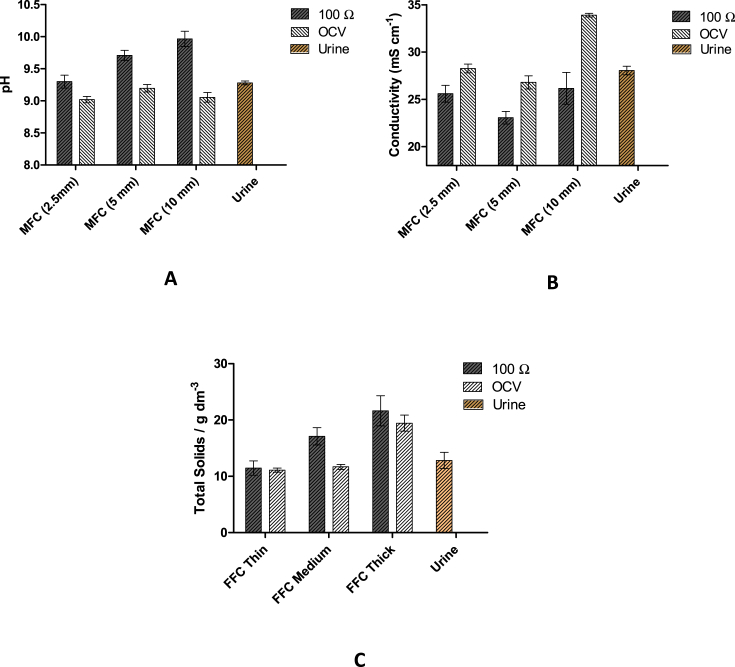
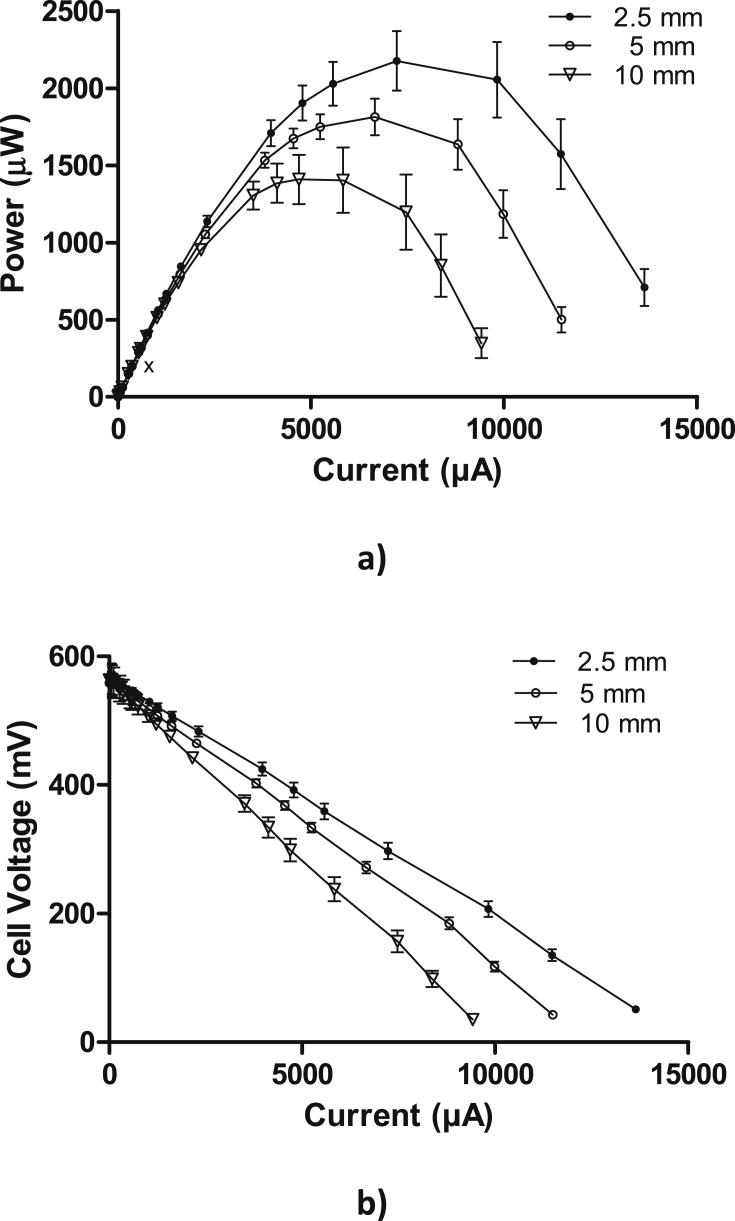
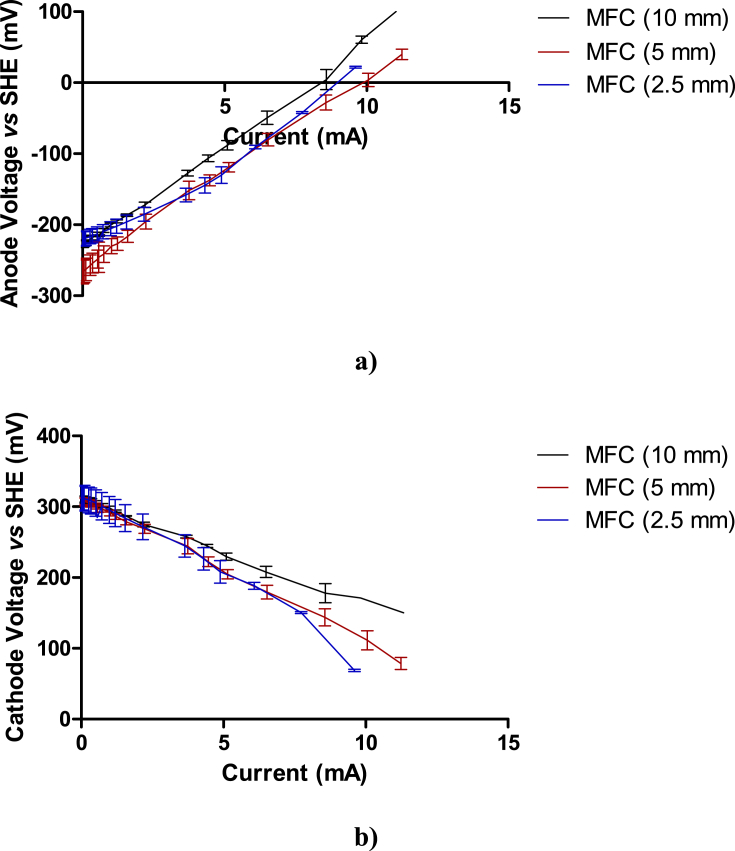
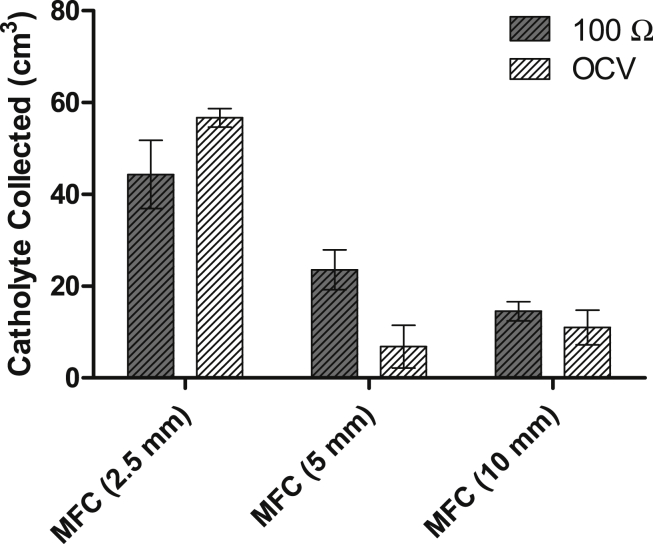
The use of ceramics as low cost membrane materials for Microbial Fuel Cells (MFCs) has gained increasing interest, due to improved performance levels in terms of power and catholyte production. The catholyte production in ceramic MFCs can be attributed to a combination of water or hydrogen peroxide formation from the oxygen reduction reaction in the cathode, water diffusion and electroosmotic drag through the ion exchange membrane. This study aims to evaluate, for the first time, the effect of ceramic wall/membrane thickness, in terms of power, as well as catholyte production from MFCs using urine as a feedstock. Cylindrical MFCs were assembled with fine fire clay of different thicknesses (2.5, 5 and 10 mm) as structural and membrane materials. The power generated increased when the membrane thickness decreased, reaching 2.1 ± 0.19 mW per single MFC (2.5 mm), which was 50% higher than that from the MFCs with the thickest membrane (10 mm). The amount of catholyte collected also decreased with the wall thickness, whereas the pH increased. Evidence shows that the catholyte composition varies with the wall thickness of the ceramic membrane. The possibility of producing different quality of catholyte from urine opens a new field of study in water reuse and resource recovery for practical implementation.
由于在功率和阴极电解液生产方面性能有所提高,将陶瓷用作微生物燃料电池(MFC)的低成本膜材料越来越受到关注。陶瓷MFC中的阴极电解液生产可归因于阴极中氧还原反应生成水或过氧化氢、水扩散以及通过离子交换膜的电渗拖拽的综合作用。本研究旨在首次评估陶瓷壁/膜厚度对以尿液为原料的MFC的功率以及阴极电解液生产的影响。使用不同厚度(2.5、5和10毫米)的细火黏土作为结构和膜材料组装圆柱形MFC。当膜厚度减小时,产生的功率增加,单个MFC(2.5毫米)达到2.1±0.19毫瓦,比膜最厚(10毫米)的MFC高出50%。收集的阴极电解液量也随壁厚减小,而pH值升高。有证据表明,阴极电解液成分随陶瓷膜壁厚而变化。从尿液中生产不同质量阴极电解液的可能性为实际应用中的水再利用和资源回收开辟了一个新的研究领域。