Zhang Ting, Tang Meng, Zhang Shanshan, Hu Yuanyuan, Li Han, Zhang Tao, Xue Yuying, Pu Yuepu
Key Laboratory of Environmental Medicine Engineering, Ministry of Education, School of Public Health, Southeast University, Nanjing, China; Jiangsu key Laboratory for Biomaterials and Devices, Southeast University, Nanjing, China; Collaborative Innovation Center of Suzhou Nano Science and Technology, Suzhou, China.
Department of Material Science and Engineering, National Key Laboratory of Solid State Microstructures, Nanjing University, Nanjing, China.
Int J Nanomedicine. 2017 Feb 27;12:1539-1554. doi: 10.2147/IJN.S123345. eCollection 2017.
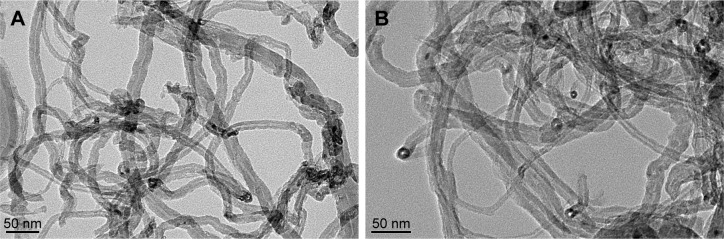
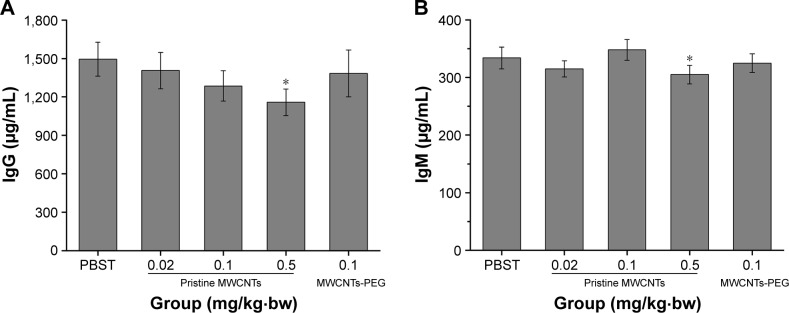
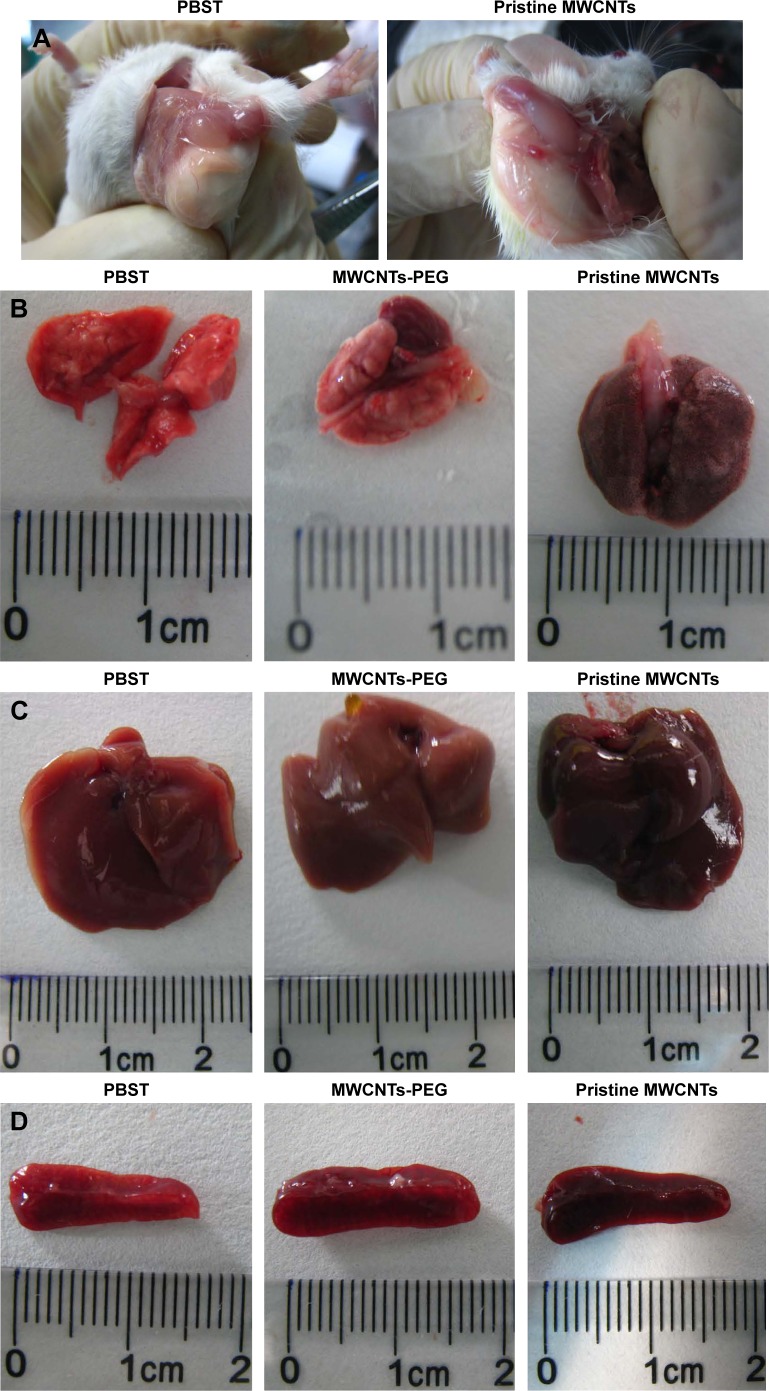
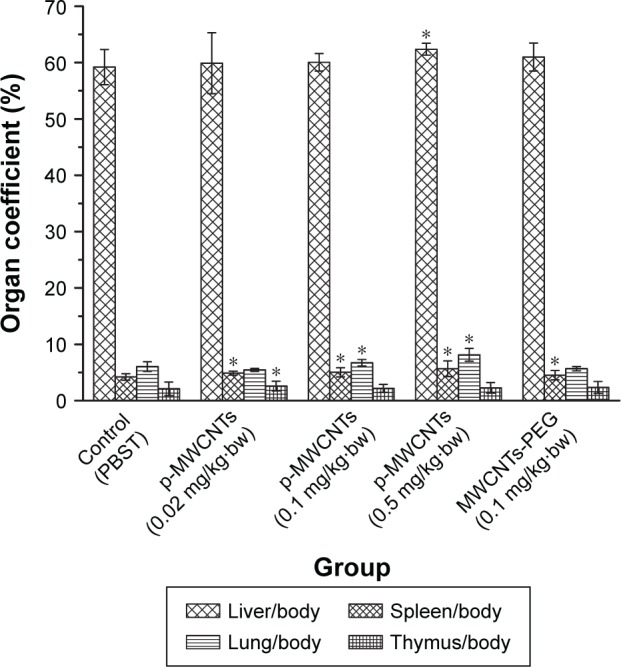
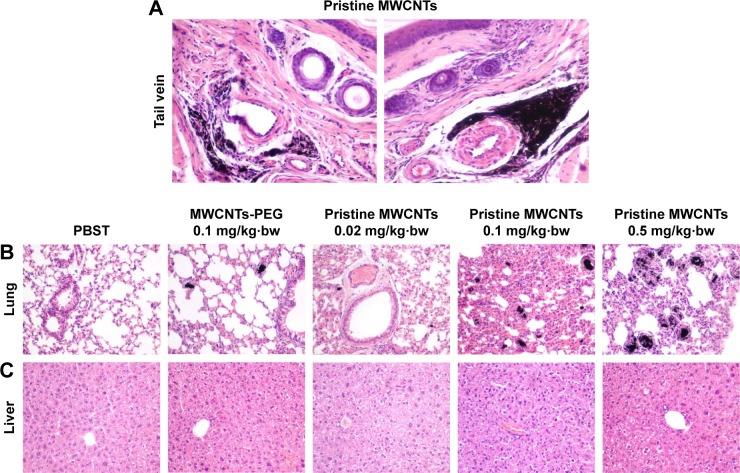
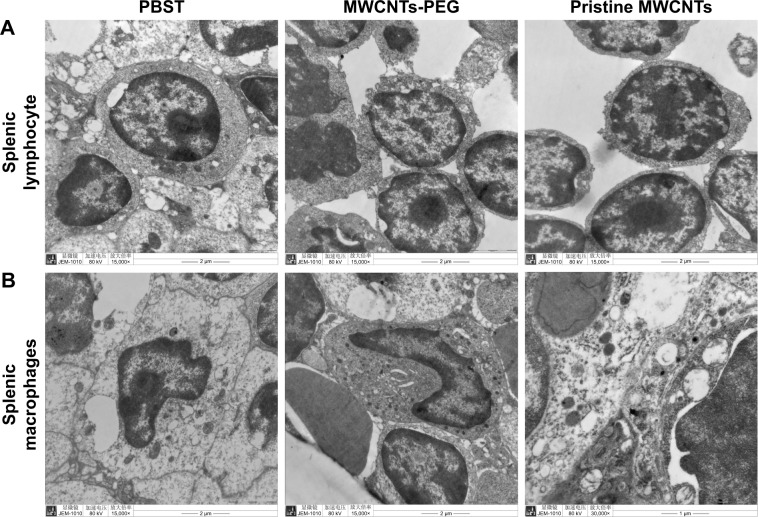
The numerous increasing use of carbon nanotubes (CNTs) derived from nanotechnology has raised concerns about their biosafety and potential toxicity. CNTs cause immunologic dysfunction and limit the application of CNTs in biomedicine. The immunological responses induced by pristine multi-walled carbon nanotubes (p-MWCNTs) and PEGylated multi-walled carbon nanotubes (MWCNTs-PEG) on BALB/c mice via an intravenous administration were investigated. The results reflect that the p-MWCNTs induced significant increases in spleen, thymus, and lung weight. Mice treated with p-MWCNTs showed altered lymphocyte populations (CD3, CD4, CD8, and CD19) in peripheral blood and increased serum IgM and IgG levels, and splenic macrophage ultrastructure indicated mitochondria swelling. p-MWCNTs inhibited humoral and cellular immunity function and were associated with decreased immune responses against sheep erythrocytes and serum hemolysis level. Natural killer (NK) activity was not modified by two types of MWCNTs. In comparison with two types of MWCNTs, for a same dose, p-MWCNTs caused higher levels of inflammation and immunosuppression than MWCNTs-PEG. The results of immunological function suggested that after intravenous administration with p-MWCNTs caused more damage to systemic immunity than MWCNTs-PEG. Here, we demonstrated that a surface functional modification on MWCNTs reduces their immune perturbations in vivo. The chemistry-modified MWCNTs change their preferred immune response in vivo and reduce the immunotoxicity of p-MWCNTs.
纳米技术衍生的碳纳米管(CNTs)的大量使用引发了人们对其生物安全性和潜在毒性的担忧。碳纳米管会导致免疫功能障碍,限制了其在生物医学中的应用。研究了原始多壁碳纳米管(p-MWCNTs)和聚乙二醇化多壁碳纳米管(MWCNTs-PEG)经静脉注射对BALB/c小鼠诱导的免疫反应。结果表明,p-MWCNTs可使脾脏、胸腺和肺重量显著增加。用p-MWCNTs处理的小鼠外周血淋巴细胞群体(CD3、CD4、CD8和CD19)发生改变,血清IgM和IgG水平升高,脾脏巨噬细胞超微结构显示线粒体肿胀。p-MWCNTs抑制体液免疫和细胞免疫功能,并与针对绵羊红细胞的免疫反应降低和血清溶血水平降低有关。两种类型的MWCNTs均未改变自然杀伤(NK)活性。与两种类型的MWCNTs相比,相同剂量下,p-MWCNTs比MWCNTs-PEG引起更高水平的炎症和免疫抑制。免疫功能结果表明,静脉注射p-MWCNTs比MWCNTs-PEG对全身免疫造成的损害更大。在此,我们证明了对MWCNTs进行表面功能修饰可降低其在体内的免疫干扰。化学修饰的MWCNTs改变了它们在体内的优先免疫反应,并降低了p-MWCNTs的免疫毒性。