Asweto Collins Otieno, Wu Jing, Hu Hejing, Feng Lin, Yang Xiaozhe, Duan Junchao, Sun Zhiwei
Department of Toxicology and Sanitary Chemistry, School of Public Health, Capital Medical University, Beijing 100069, China.
Beijing Key Laboratory of Environmental Toxicology, Capital Medical University, Beijing 100069, China.
Int J Environ Res Public Health. 2017 Mar 9;14(3):289. doi: 10.3390/ijerph14030289.
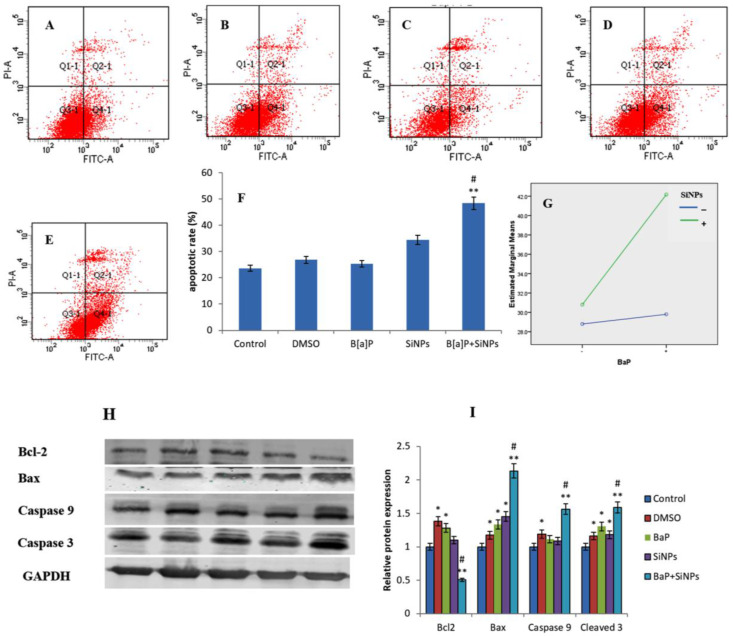
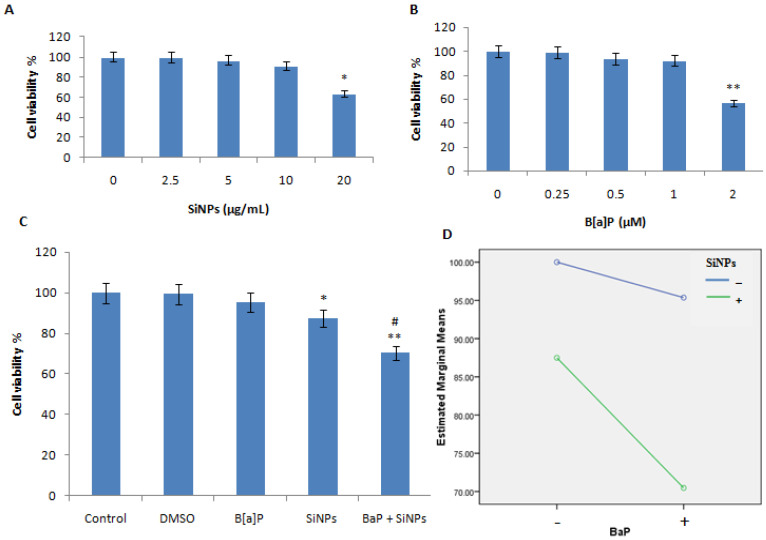
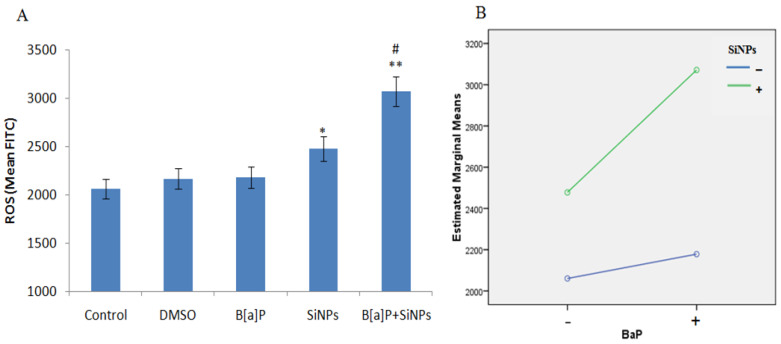
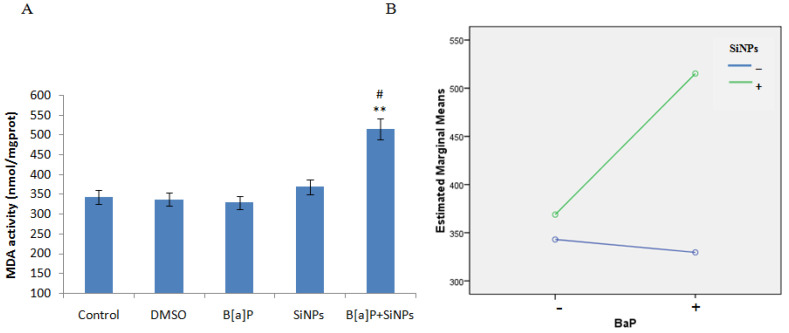
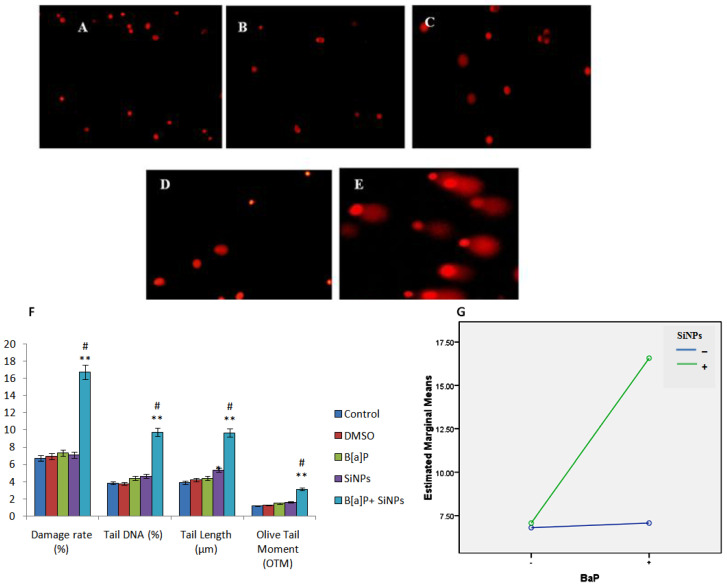
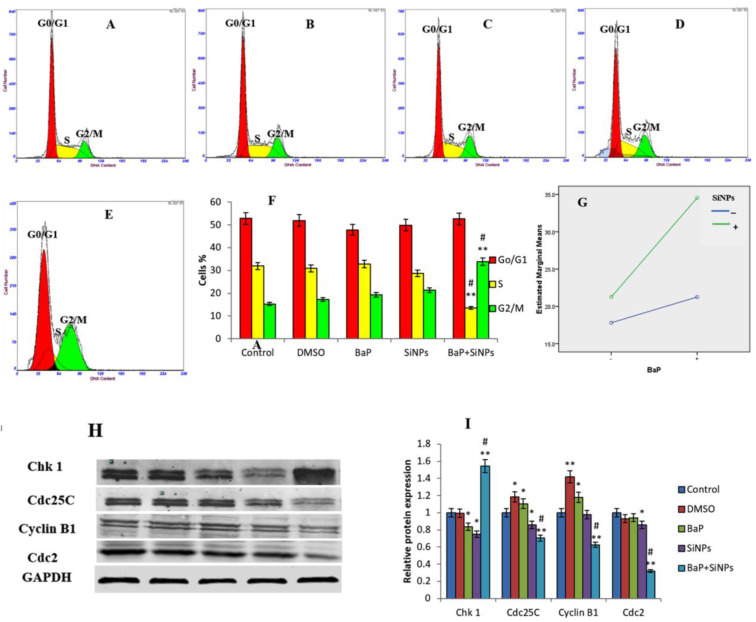
Particulate matter (PM) such as ultrafine particulate matter (UFP) and the organic compound pollutants such as polycyclic aromatic hydrocarbon (PAH) are widespread in the environment. UFP and PAH are present in the air, and their presence may enhance their individual adverse effects on human health. However, the mechanism and effect of their combined interactions on human cells are not well understood. We investigated the combined toxicity of silica nanoparticles (SiNPs) (UFP) and Benzo[a]pyrene (B[a]P) (PAH) on human endothelial cells. Human umbilical vascular endothelial cells (HUVECs) were exposed to SiNPs or B[a]P, or a combination of SiNPs and B[a]P. The toxicity was investigated by assessing cellular oxidative stress, DNA damage, cell cycle arrest, and apoptosis. Our results show that SiNPs were able to induce reactive oxygen species generation (ROS). B[a]P, when acting alone, had no toxicity effect. However, a co-exposure of SiNPs and B[a]P synergistically induced DNA damage, oxidative stress, cell cycle arrest at the G2/M check point, and apoptosis. The co-exposure induced G2/M arrest through the upregulation of Chk1 and downregulation of Cdc25C, cyclin B1. The co-exposure also upregulated bax, caspase-3, and caspase-9, the proapoptic proteins, while down-regulating bcl-2, which is an antiapoptotic protein. These results show that interactions between SiNPs and B[a]P synergistically potentiated toxicological effects on HUVECs. This information should help further our understanding of the combined toxicity of PAH and UFP.
超细颗粒物(UFP)等颗粒物以及多环芳烃(PAH)等有机化合物污染物在环境中广泛存在。UFP和PAH存在于空气中,它们的存在可能会增强其对人类健康的个体不良影响。然而,它们对人类细胞的联合相互作用的机制和影响尚未得到很好的理解。我们研究了二氧化硅纳米颗粒(SiNPs)(UFP)和苯并[a]芘(B[a]P)(PAH)对人内皮细胞的联合毒性。人脐静脉血管内皮细胞(HUVECs)暴露于SiNPs或B[a]P,或SiNPs和B[a]P的组合。通过评估细胞氧化应激、DNA损伤、细胞周期停滞和凋亡来研究毒性。我们的结果表明,SiNPs能够诱导活性氧生成(ROS)。单独作用时,B[a]P没有毒性作用。然而,SiNPs和B[a]P的共同暴露协同诱导DNA损伤、氧化应激、在G2/M检查点的细胞周期停滞和凋亡。共同暴露通过上调Chk1和下调Cdc25C、细胞周期蛋白B1诱导G2/M停滞。共同暴露还上调了促凋亡蛋白bax、半胱天冬酶-3和半胱天冬酶-9,同时下调了抗凋亡蛋白bcl-2。这些结果表明,SiNPs和B[a]P之间的相互作用协同增强了对HUVECs的毒理学效应。这些信息应有助于进一步了解PAH和UFP的联合毒性。