Oren-Suissa Meital, Gattegno Tamar, Kravtsov Veronika, Podbilewicz Benjamin
Department of Biology, Technion-Israel Institute of Technology, Haifa 32000, Israel.
Department of Biology, Technion-Israel Institute of Technology, Haifa 32000, Israel
Genetics. 2017 May;206(1):215-230. doi: 10.1534/genetics.116.196386. Epub 2017 Mar 10.
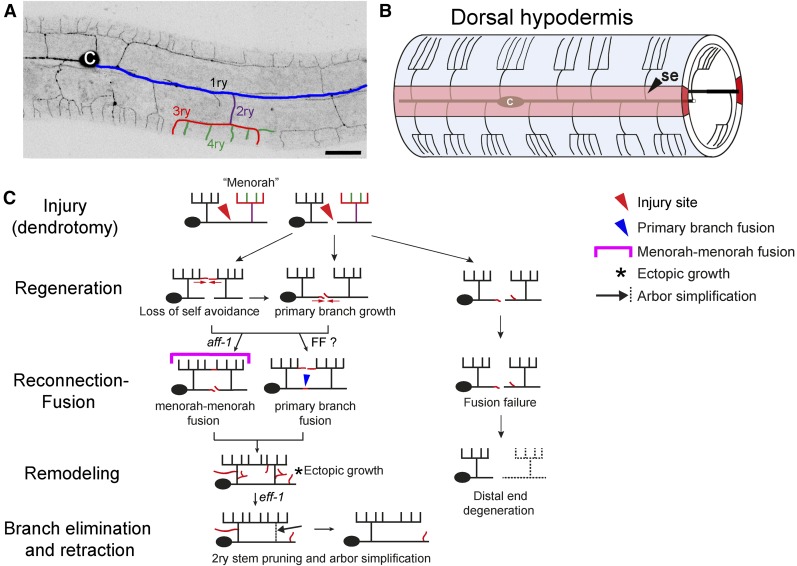
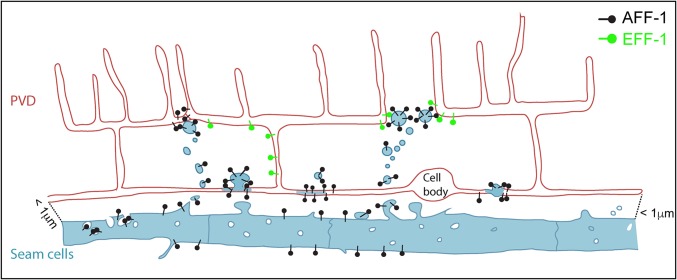
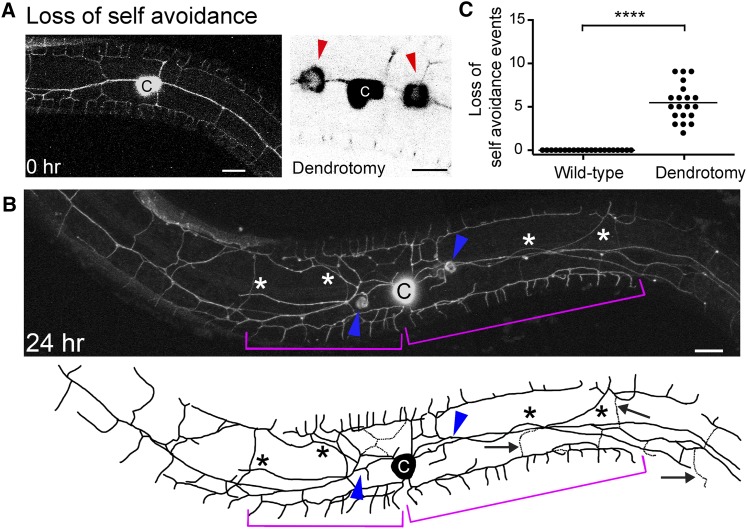
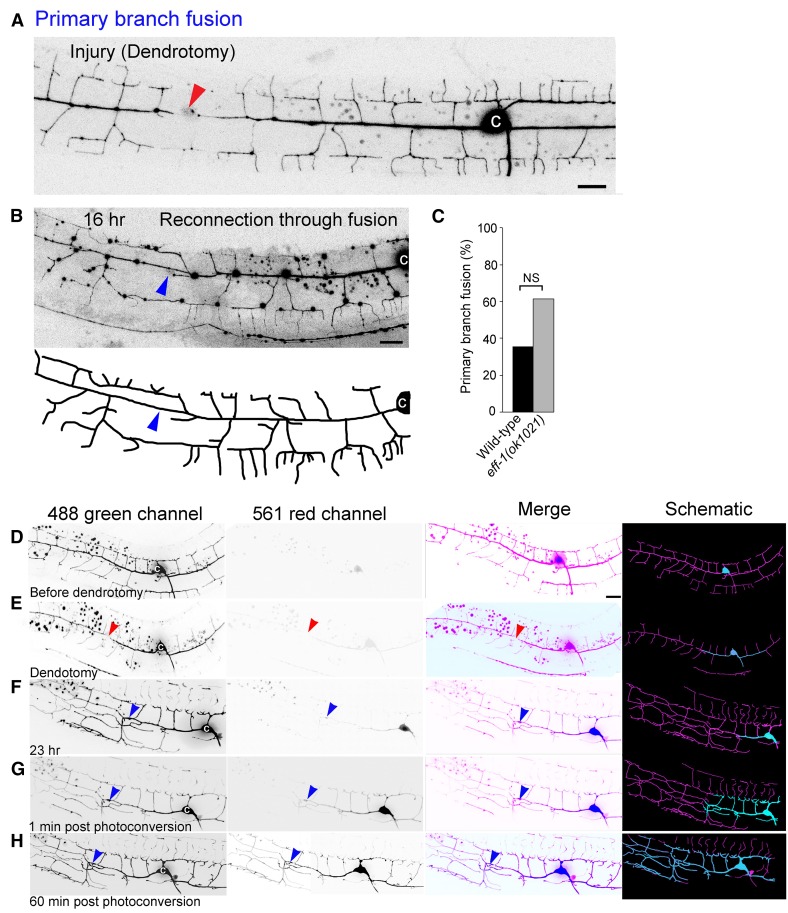
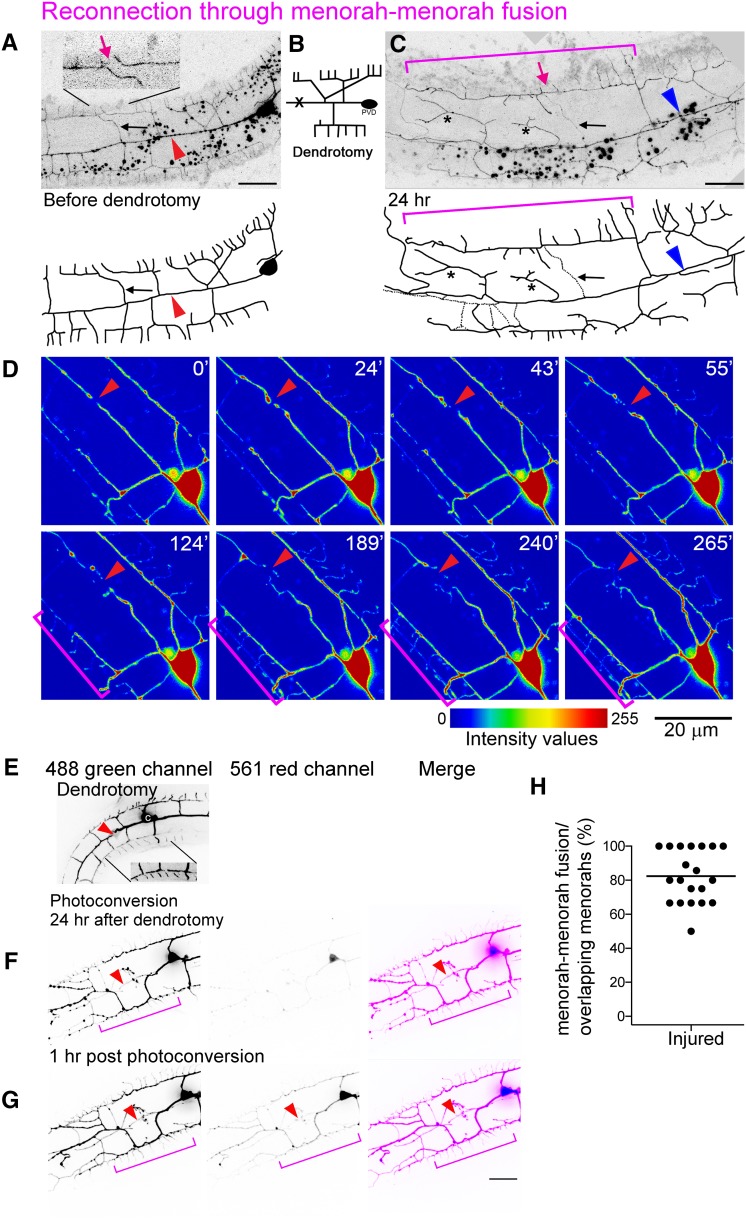
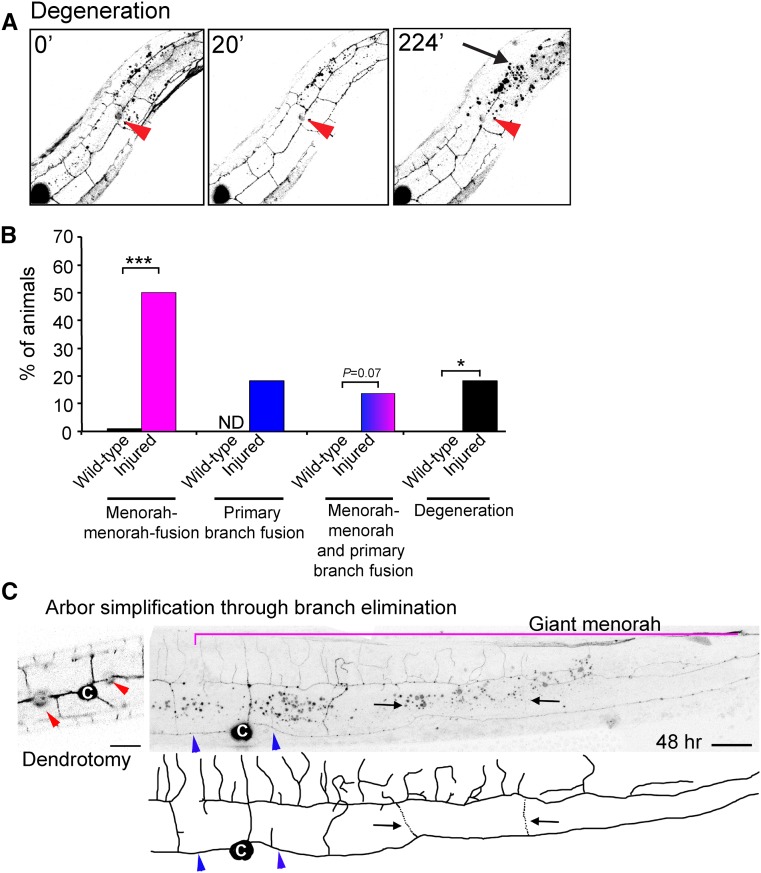
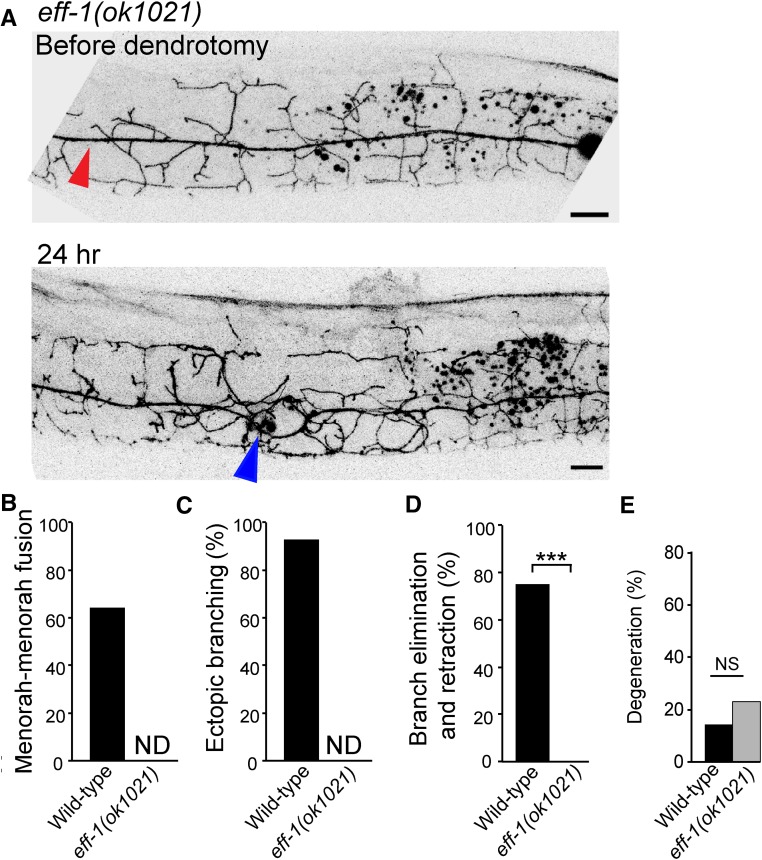
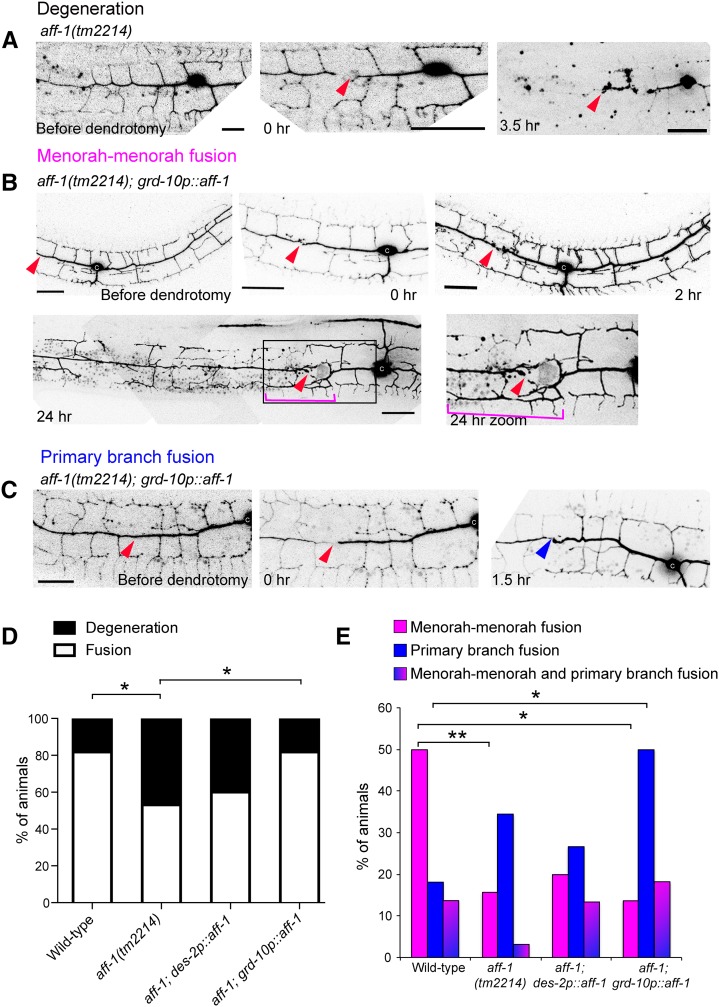
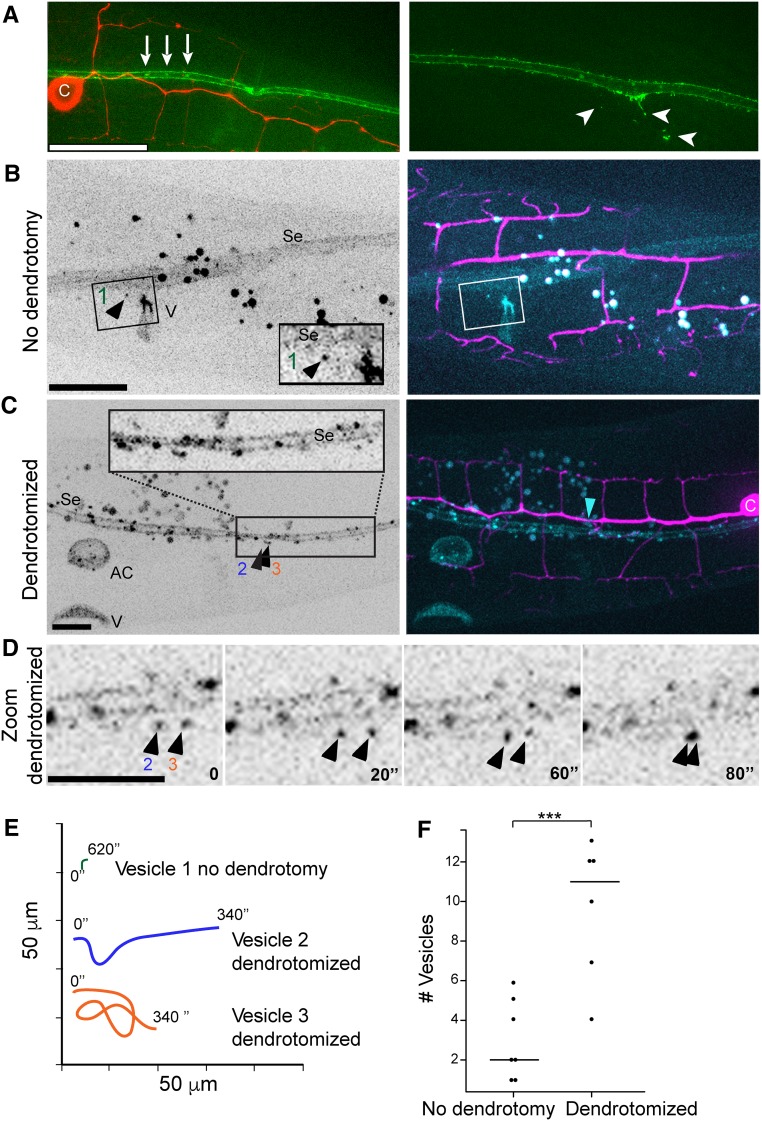
Injury triggers regeneration of axons and dendrites. Research has identified factors required for axonal regeneration outside the CNS, but little is known about regeneration triggered by dendrotomy. Here, we study neuronal plasticity triggered by dendrotomy and determine the fate of complex PVD arbors following laser surgery of dendrites. We find that severed primary dendrites grow toward each other and reconnect via branch fusion. Simultaneously, terminal branches lose self-avoidance and grow toward each other, meeting and fusing at the tips via an AFF-1-mediated process. Ectopic branch growth is identified as a step in the regeneration process required for bypassing the lesion site. Failure of reconnection to the severed dendrites results in degeneration of the distal end of the neuron. We discover pruning of excess branches via EFF-1 that acts to recover the original wild-type arborization pattern in a late stage of the process. In contrast, AFF-1 activity during dendritic auto-fusion is derived from the lateral seam cells and not autonomously from the PVD neuron. We propose a model in which AFF-1-vesicles derived from the epidermal seam cells fuse neuronal dendrites. Thus, EFF-1 and AFF-1 fusion proteins emerge as new players in neuronal arborization and maintenance of arbor connectivity following injury in Our results demonstrate that there is a genetically determined multi-step pathway to repair broken dendrites in which EFF-1 and AFF-1 act on different steps of the pathway. EFF-1 is essential for dendritic pruning after injury and extrinsic AFF-1 mediates dendrite fusion to bypass injuries.
损伤会触发轴突和树突的再生。研究已经确定了中枢神经系统外轴突再生所需的因素,但对于树突切断引发的再生却知之甚少。在这里,我们研究树突切断引发的神经元可塑性,并确定树突激光手术后复杂的PVD树突分支的命运。我们发现,被切断的初级树突会相互生长并通过分支融合重新连接。同时,末端分支失去自我回避能力并相互生长,通过AFF-1介导的过程在末端相遇并融合。异位分支生长被确定为绕过损伤部位的再生过程中的一个步骤。与切断的树突重新连接失败会导致神经元远端退化。我们发现通过EFF-1修剪多余的分支,其作用是在该过程的后期恢复原始的野生型分支模式。相比之下,树突自融合过程中的AFF-1活性来自侧缝细胞,而不是自主来自PVD神经元。我们提出了一个模型,其中来自表皮缝细胞的AFF-1囊泡与神经元树突融合。因此,EFF-1和AFF-1融合蛋白成为损伤后神经元分支形成和维持分支连接的新参与者。我们的结果表明,存在一条由基因决定的多步骤途径来修复断裂的树突,其中EFF-1和AFF-1在该途径的不同步骤中起作用。EFF-1对于损伤后的树突修剪至关重要,而外在的AFF-1介导树突融合以绕过损伤。