Filipsson Karl, Brijs Jeroen, Näslund Joacim, Wengström Niklas, Adamsson Marie, Závorka Libor, Österling E Martin, Höjesjö Johan
Department of Biological and Environmental Sciences, University of Gothenburg, SE 413 90, Gothenburg, Sweden.
Department for Environmental and Life Sciences, Karlstad University, SE 651 88, Karlstad, Sweden.
Parasitol Res. 2017 Apr;116(4):1353-1360. doi: 10.1007/s00436-017-5413-2. Epub 2017 Mar 10.
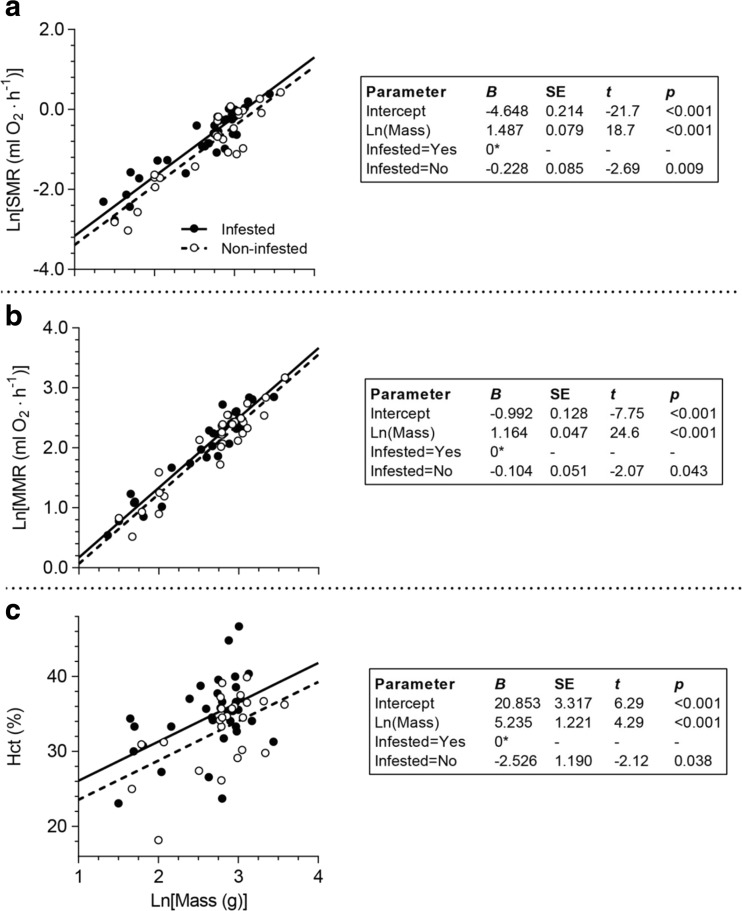
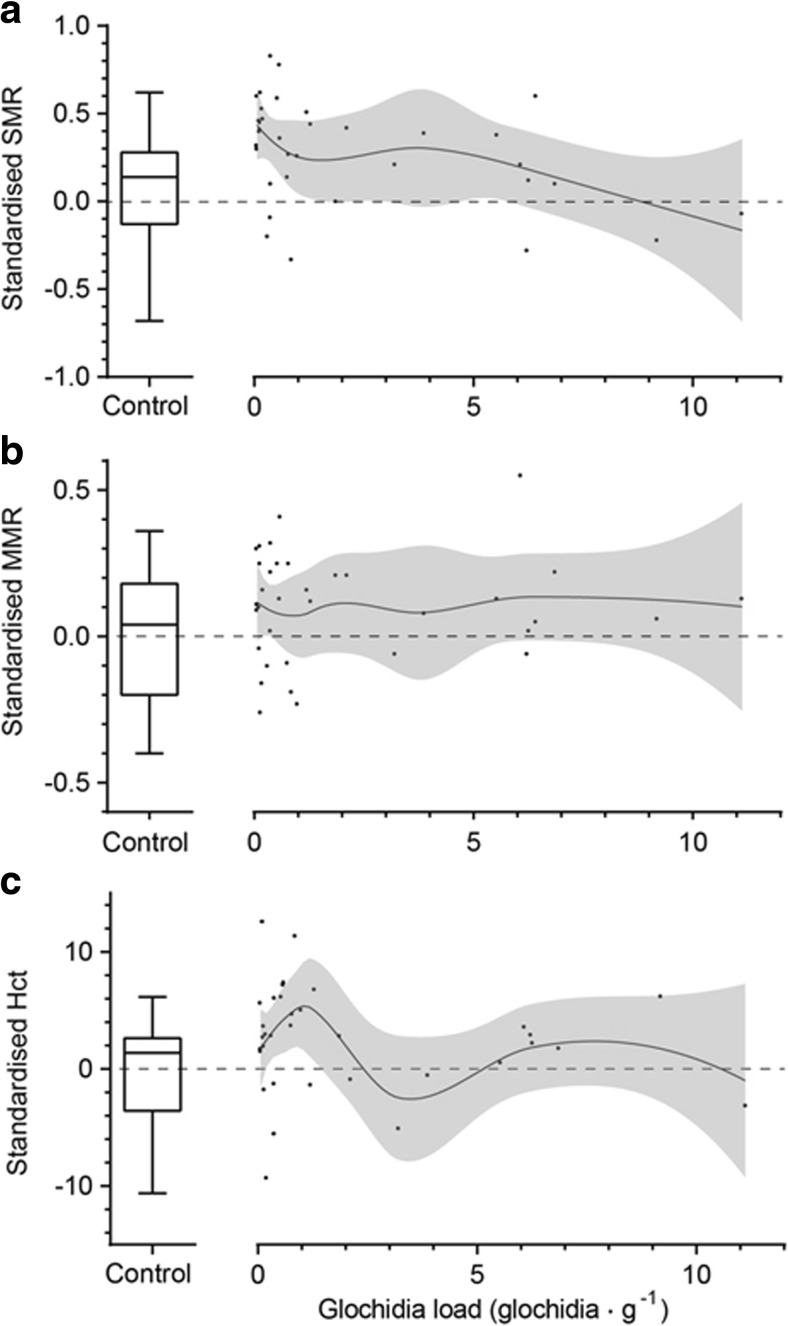
Gill parasites on fish are likely to negatively influence their host by inhibiting respiration, oxygen transport capacity and overall fitness. The glochidia larvae of the endangered freshwater pearl mussel (FPM, Margaritifera margaritifera (Linnaeus, 1758)) are obligate parasites on the gills of juvenile salmonid fish. We investigated the effects of FPM glochidia encystment on the metabolism and haematology of brown trout (Salmo trutta Linnaeus, 1758). Specifically, we measured whole-animal oxygen uptake rates at rest and following an exhaustive exercise protocol using intermittent flow-through respirometry, as well as haematocrit, in infested and uninfested trout. Glochidia encystment significantly affected whole-animal metabolic rate, as infested trout exhibited higher standard and maximum metabolic rates. Furthermore, glochidia-infested trout also had elevated levels of haematocrit. The combination of an increased metabolism and haematocrit in infested fish indicates that glochidia encystment has a physiological effect on the trout, perhaps as a compensatory response to the potential respiratory stress caused by the glochidia. When relating glochidia load to metabolism and haematocrit, fish with low numbers of encysted glochidia were the ones with particularly elevated metabolism and haematocrit. Standard metabolic rate decreased with substantial glochidia loads towards levels similar to those of uninfested fish. This suggests that initial effects visible at low levels of encystment may be countered by additional physiological effects at high loads, e.g. potential changes in energy utilization, and also that high numbers of glochidia may restrict oxygen uptake by the gills.
鱼类鳃上的寄生虫很可能通过抑制呼吸、氧气运输能力和整体健康状况对其宿主产生负面影响。濒危淡水珍珠蚌(Margaritifera margaritifera (Linnaeus, 1758),简称FPM)的钩介幼虫是幼年鲑科鱼类鳃上的专性寄生虫。我们研究了FPM钩介幼虫包囊对褐鳟(Salmo trutta Linnaeus, 1758)新陈代谢和血液学的影响。具体而言,我们使用间歇式流通呼吸测定法测量了受感染和未受感染的鳟鱼在静息状态下以及经过力竭运动方案后的全动物耗氧率,以及血细胞比容。钩介幼虫包囊显著影响全动物代谢率,因为受感染的鳟鱼表现出更高的标准代谢率和最大代谢率。此外,受钩介幼虫感染的鳟鱼血细胞比容水平也有所升高。受感染鱼类新陈代谢增加和血细胞比容升高表明钩介幼虫包囊对鳟鱼有生理影响,这可能是对钩介幼虫引起的潜在呼吸应激的一种补偿反应。当将钩介幼虫负荷与新陈代谢和血细胞比容相关联时,包囊钩介幼虫数量少的鱼新陈代谢和血细胞比容特别升高。随着钩介幼虫负荷大量增加,标准代谢率下降至与未受感染鱼类相似的水平。这表明在低包囊水平时可见的初始影响可能会被高负荷下的其他生理影响抵消,例如能量利用的潜在变化,而且大量的钩介幼虫可能会限制鳃对氧气的摄取。