Department of Biology, University of Bergen, Thormøhlens Gate 53A, 5006, Bergen, Norway.
Norwegian Institute for Nature Research (NINA), Postboks 5685 Torgarden, 7485, Trondheim, Norway.
Parasitol Res. 2021 Jul;120(7):2401-2413. doi: 10.1007/s00436-021-07145-4. Epub 2021 Apr 12.
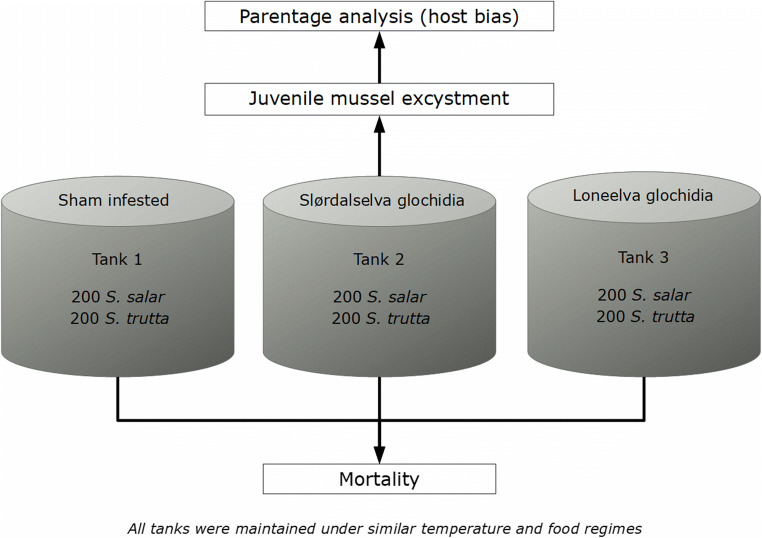
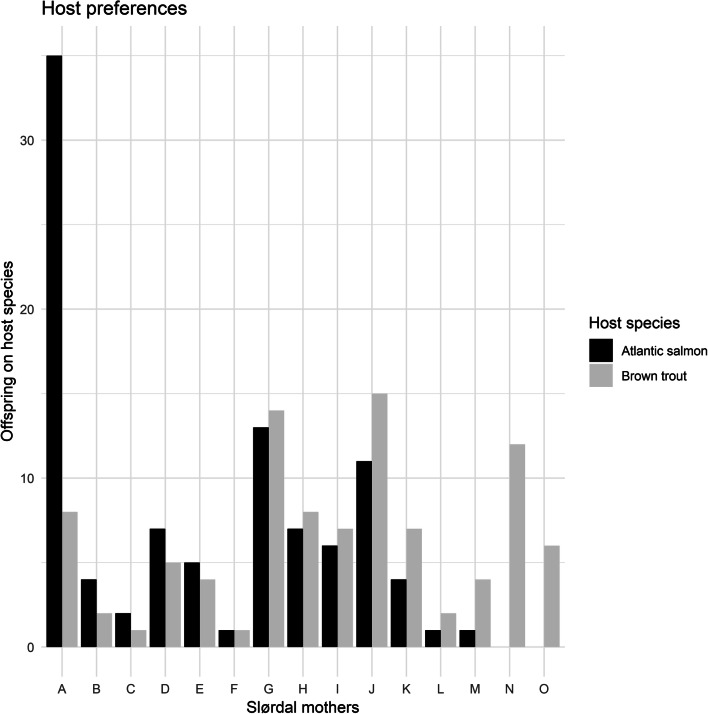
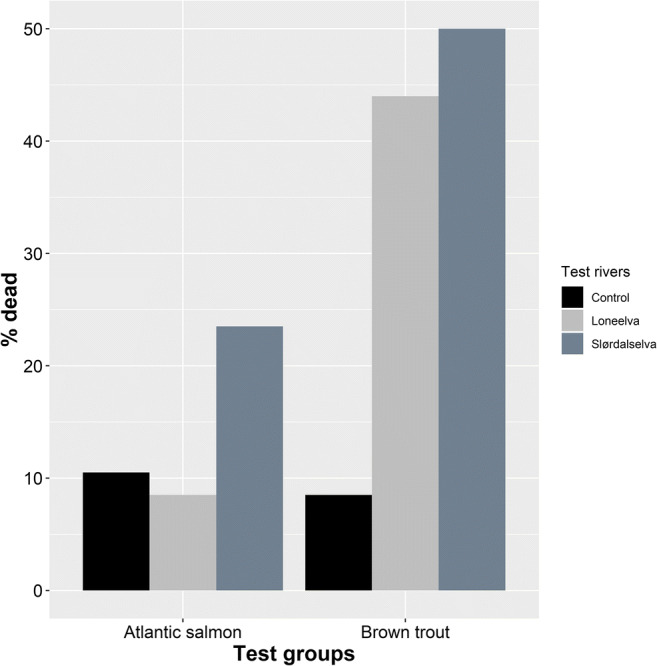
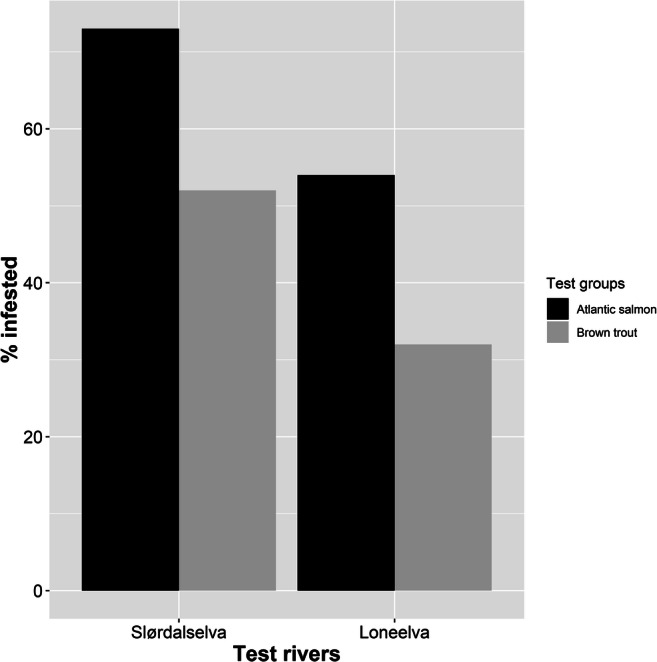
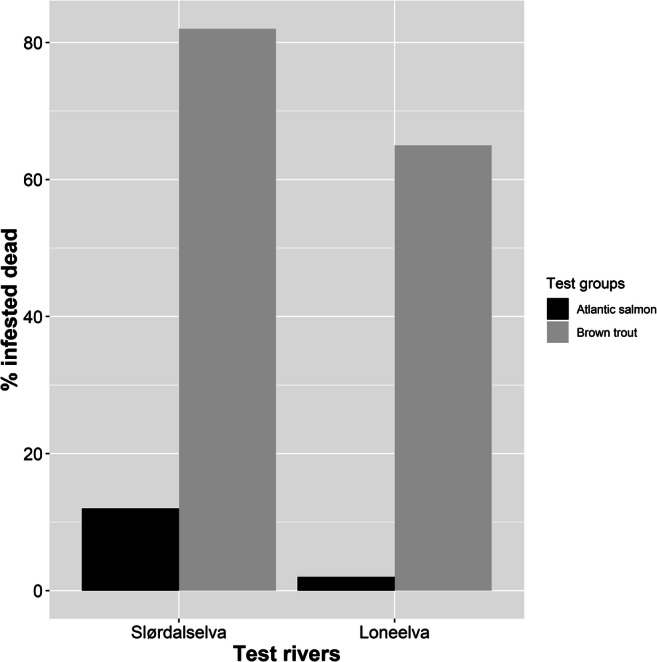
The freshwater pearl mussel (Margaritifera margaritifera) is a highly host-specific parasite, with an obligate parasitic stage on salmonid fish. Atlantic salmon (Salmo salar) and brown trout (Salmo trutta f. trutta and Salmo trutta f. fario) are the only hosts in their European distribution. Some M. margaritifera populations exclusively infest either Atlantic salmon or brown trout, while others infest both hosts with one salmonid species typically being the principal host and the other a less suitable host. Glochidial abundance, prevalence and growth are often used as parameters to measure host suitability, with the most suitable host species displaying the highest parameters. However, it is not known if the degree of host specialisation will negatively influence host fitness (virulence) among different host species. In this study we examined the hypothesis that glochidial infestation would result in differential virulence in two salmonid host species and that lower virulence would be observed on the most suitable host. Atlantic salmon and brown trout were infested with glochidia from two M. margaritifera populations that use Atlantic salmon as their principal host, and the difference in host mortality among infested and control (sham infested) fish was examined. Higher mortality was observed in infested brown trout (the less suitable host) groups, compared to the other test groups. Genetic assignment was used to identify offspring from individual mother mussels. We found that glochidia from individual mothers can infest both the salmonid hosts; however, some mothers displayed a bias towards either salmon or trout. We believe that the differences in host-dependent virulence and the host bias displayed by individual mothers were a result of genotype × genotype interactions between the glochidia and their hosts, indicating that there is an underlying genetic component for this parasite-host interaction.
淡水珍珠贻贝(Margaritifera margaritifera)是一种高度宿主特异性寄生虫,其在鲑鱼科鱼类上具有专性寄生阶段。大西洋鲑(Salmo salar)和虹鳟(Salmo trutta f. trutta 和 Salmo trutta f. fario)是其在欧洲分布范围内的唯一宿主。一些 M. margaritifera 种群仅感染大西洋鲑或虹鳟,而另一些则同时感染两种宿主,其中一种鲑鱼通常是主要宿主,另一种则是不太适合的宿主。附着期幼虫的丰度、流行率和生长通常被用作衡量宿主适宜性的参数,最适宜的宿主物种表现出最高的参数。然而,目前尚不清楚宿主特化的程度是否会对不同宿主物种的宿主适应性(毒力)产生负面影响。在这项研究中,我们检验了这样一个假设,即附着期幼虫的感染会导致两种鲑鱼宿主物种的毒力产生差异,而在最适宜的宿主上观察到的毒力较低。我们用来自两个主要以大西洋鲑为宿主的 M. margaritifera 种群的附着期幼虫感染大西洋鲑和虹鳟,并观察感染和对照(假感染)鱼之间的死亡率差异。与其他测试组相比,感染的虹鳟(较不适宜的宿主)组的死亡率更高。我们使用遗传分配来识别来自单个贻贝母亲的后代。我们发现,单个贻贝的附着期幼虫可以感染两种鲑鱼宿主;然而,一些贻贝母亲表现出对鲑鱼或鳟鱼的偏向。我们认为,宿主依赖性毒力的差异以及个别母亲表现出的宿主偏向是附着期幼虫与其宿主之间基因型×基因型相互作用的结果,表明这种寄生虫-宿主相互作用存在潜在的遗传成分。