Orlek Alex, Phan Hang, Sheppard Anna E, Doumith Michel, Ellington Matthew, Peto Tim, Crook Derrick, Walker A Sarah, Woodford Neil, Anjum Muna F, Stoesser Nicole
Nuffield Department of Medicine, University of Oxford, John Radcliffe Hospital, Oxford, UK; NIHR Health Protection Research Unit in Healthcare Associated Infections and Antimicrobial Resistance, University of Oxford, Oxford, UK.
Nuffield Department of Medicine, University of Oxford, John Radcliffe Hospital, Oxford, UK; NIHR Health Protection Research Unit in Healthcare Associated Infections and Antimicrobial Resistance, University of Oxford, Oxford, UK.
Plasmid. 2017 May;91:42-52. doi: 10.1016/j.plasmid.2017.03.002. Epub 2017 Mar 9.
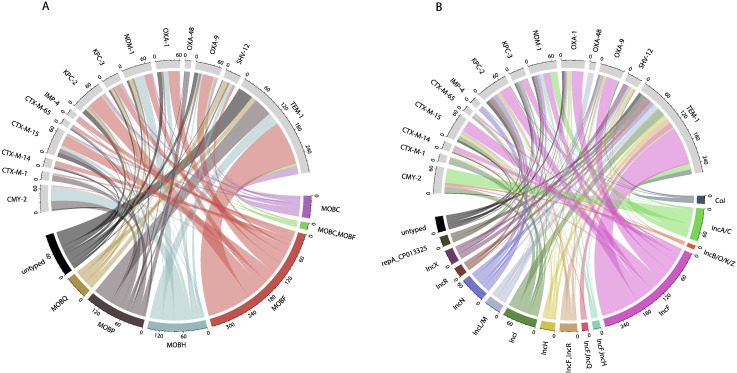
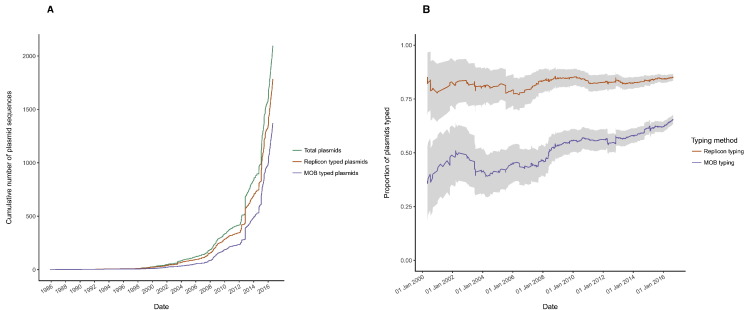
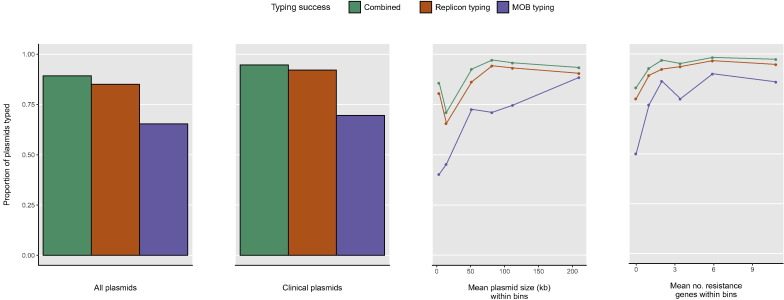
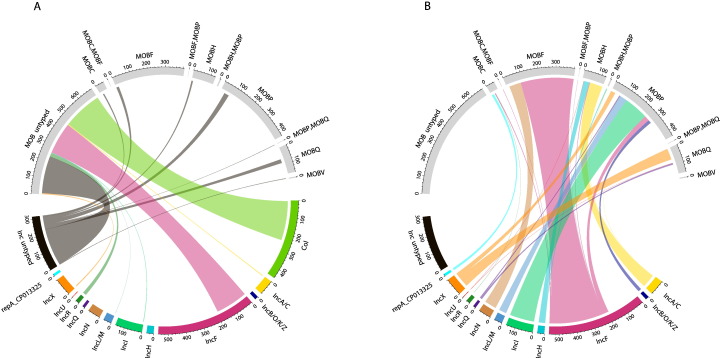
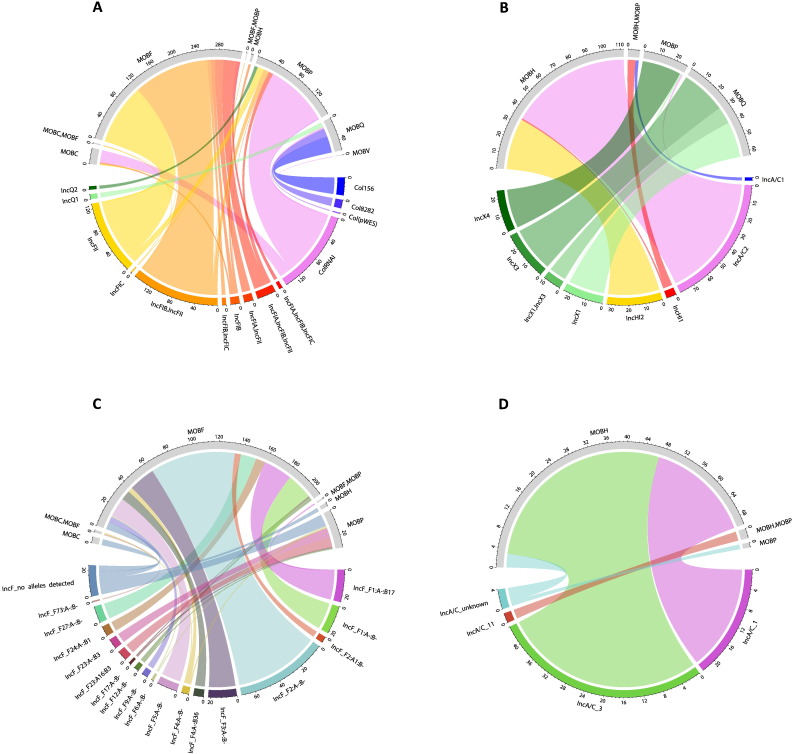
Plasmid typing can provide insights into the epidemiology and transmission of plasmid-mediated antibiotic resistance. The principal plasmid typing schemes are replicon typing and MOB typing, which utilize variation in replication loci and relaxase proteins respectively. Previous studies investigating the proportion of plasmids assigned a type by these schemes ('typeability') have yielded conflicting results; moreover, thousands of plasmid sequences have been added to NCBI in recent years, without consistent annotation to indicate which sequences represent complete plasmids. Here, a curated dataset of complete Enterobacteriaceae plasmids from NCBI was compiled, and used to assess the typeability and concordance of in silico replicon and MOB typing schemes. Concordance was assessed at hierarchical replicon type resolutions, from replicon family-level to plasmid multilocus sequence type (pMLST)-level, where available. We found that 85% and 65% of the curated plasmids could be replicon and MOB typed, respectively. Overall, plasmid size and the number of resistance genes were significant independent predictors of replicon and MOB typing success. We found some degree of non-concordance between replicon families and MOB types, which was only partly resolved when partitioning plasmids into finer-resolution groups (replicon and pMLST types). In some cases, non-concordance was attributed to ambiguous boundaries between MOBP and MOBQ types; in other cases, backbone mosaicism was considered a more plausible explanation. β-lactamase resistance genes tended not to show fidelity to a particular plasmid type, though some previously reported associations were supported. Overall, replicon and MOB typing schemes are likely to continue playing an important role in plasmid analysis, but their performance is constrained by the diverse and dynamic nature of plasmid genomes.
质粒分型有助于深入了解质粒介导的抗生素耐药性的流行病学和传播情况。主要的质粒分型方法是复制子分型和MOB分型,它们分别利用复制位点和松弛酶蛋白的变异。以往关于这些方法所确定的质粒类型比例(“可分型性”)的研究结果相互矛盾;此外,近年来有成千上万的质粒序列被添加到NCBI中,但没有统一的注释来表明哪些序列代表完整质粒。在此,我们从NCBI中整理了一个完整的肠杆菌科质粒数据集,并用于评估基于计算机模拟的复制子和MOB分型方法的可分型性和一致性。在可行的情况下,从复制子家族水平到质粒多位点序列类型(pMLST)水平的分层复制子类型分辨率下评估一致性。我们发现,分别有85%和65%的整理质粒可以进行复制子分型和MOB分型。总体而言,质粒大小和耐药基因数量是复制子和MOB分型成功的重要独立预测因素。我们发现复制子家族和MOB类型之间存在一定程度的不一致,当将质粒划分为更精细分辨率的组(复制子和pMLST类型)时,这种不一致仅得到部分解决。在某些情况下,不一致归因于MOBP和MOBQ类型之间的模糊界限;在其他情况下,主干镶嵌性被认为是一个更合理的解释。β-内酰胺酶耐药基因往往不忠实于特定的质粒类型,尽管一些先前报道的关联得到了支持。总体而言,复制子和MOB分型方法可能会继续在质粒分析中发挥重要作用,但它们的性能受到质粒基因组多样和动态性质的限制。