Ramírez Carolina, Romero Jaime
Unidad de Alimentos, Laboratorio de Biotecnología de los Alimentos, Instituto de Nutrición y Tecnología de los Alimentos, Universidad de Chile Santiago, Chile.
Front Microbiol. 2017 Feb 24;8:271. doi: 10.3389/fmicb.2017.00271. eCollection 2017.
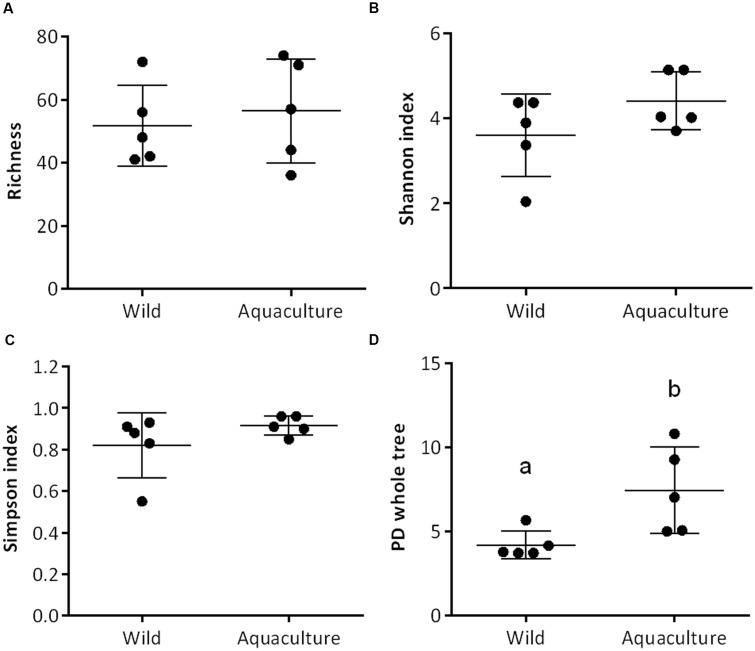
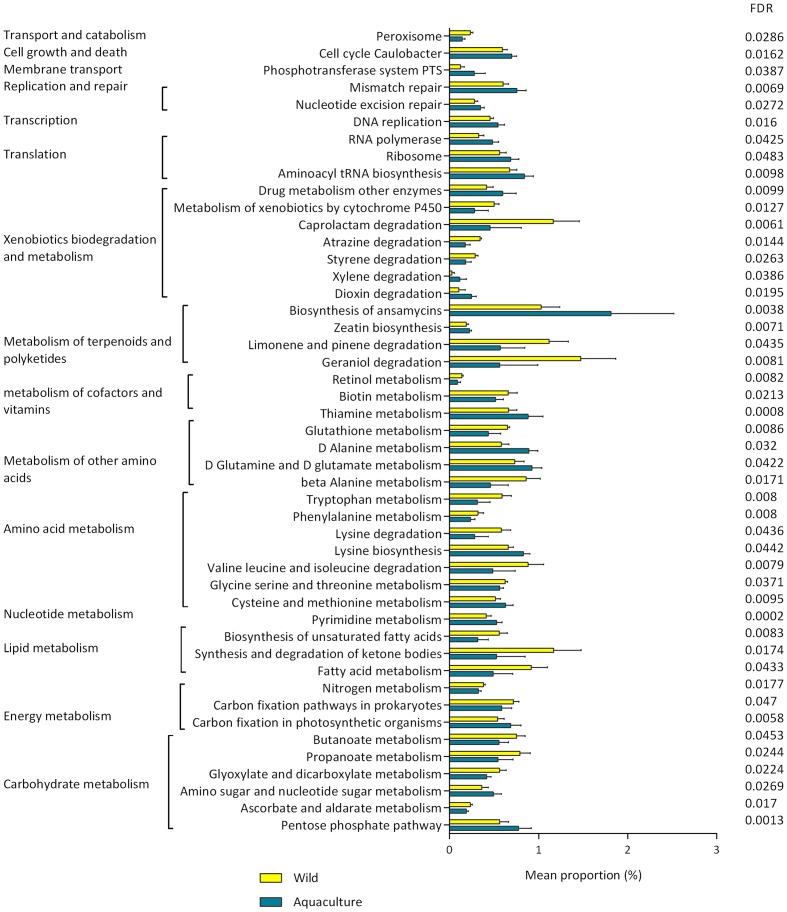
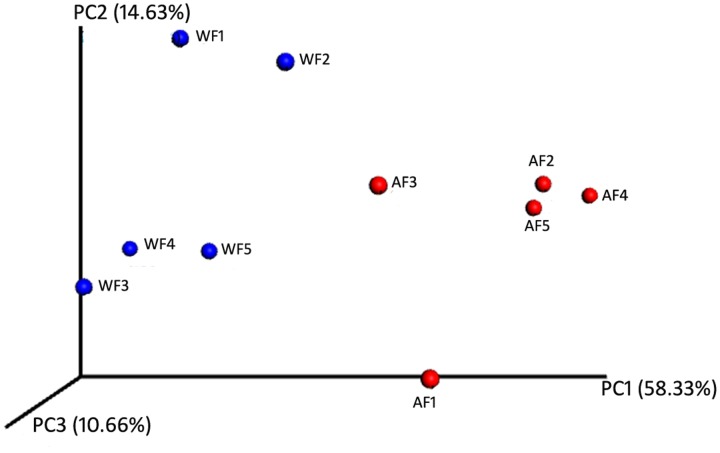
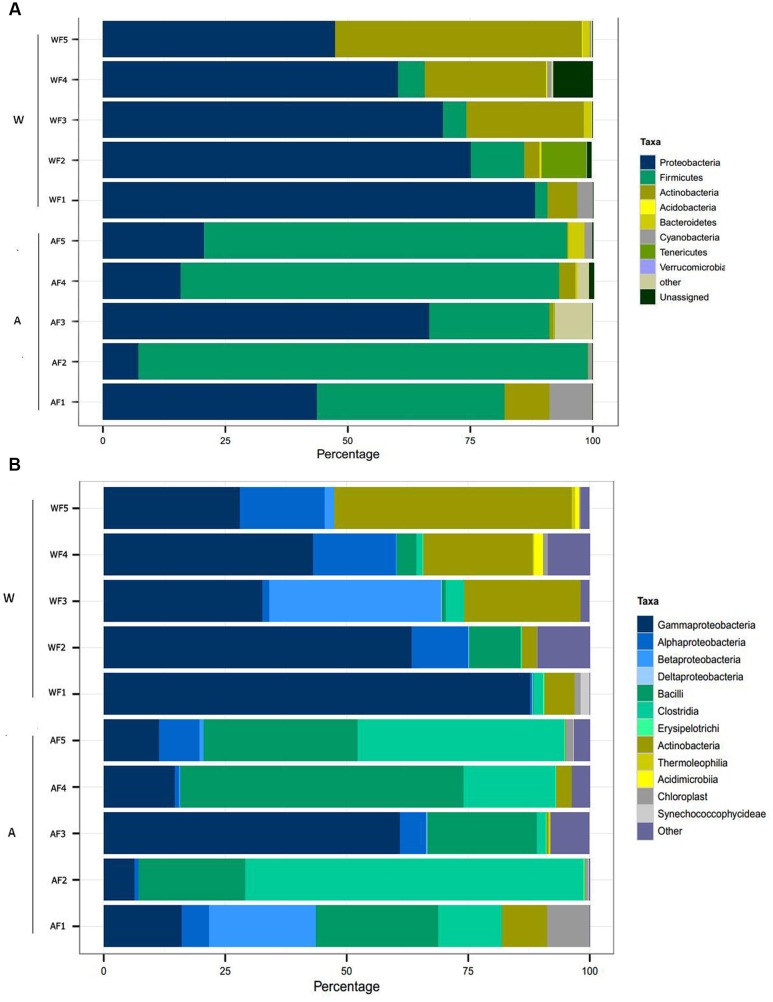
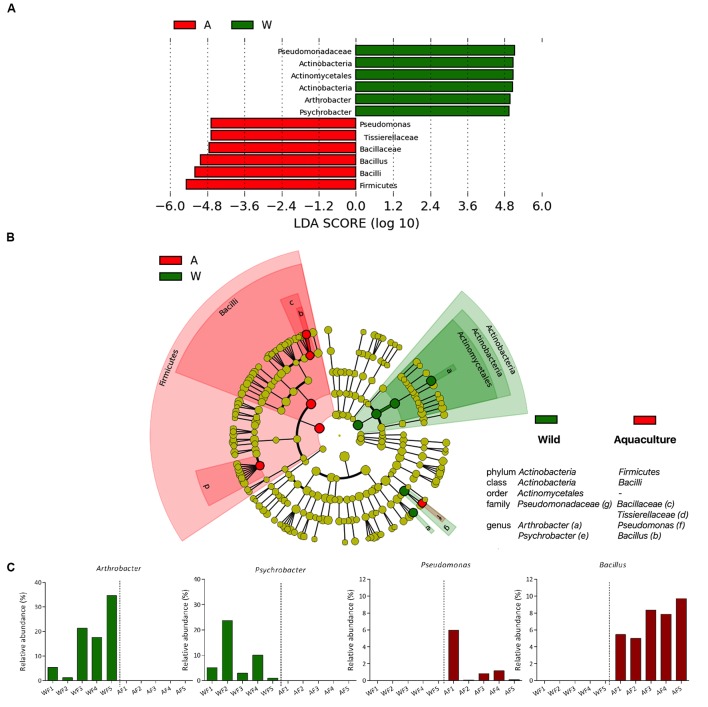
The intestinal microbiota is involved in a wide range of biological processes that benefit the host, including providing nutrition and modulating the immune system. Fine flounder () is a flatfish of commercial interest that is native to the Chilean coast. The high value of this flatfish has prompted the development of stock enhancement and aquaculture activities. Knowledge of microbiota may help to improve the cultivation of this species; however, few comparative studies have evaluated the intestinal microbiota composition in farmed versus wild fishes. Intestinal contents from wild and aquaculture fish were collected, and DNA was extracted. Subsequently, the V3-region of 16S rRNA was PCR amplified and sequenced using the Ion Torrent platform. The comparison between wild and aquaculture specimens revealed important differences in the composition of the microbiota. The most abundant phylum in wild flounder was , with an average relative abundance of 68.1 ± 15.4%; in contrast, in aquaculture flounder, this phylum had an average relative abundance of 30.8 ± 24.1%. Reciprocally, the most abundant phylum in flounder aquaculture was , averaging 61.2 ± 28.4%; in contrast, this phylum showed low abundance in wild flounder, in which it averaged 4.7 ± 4%. The phylum showed greater abundance in wild flounder, ranging from 21.7 ± 18.8%, whereas, it averaged only 2.7 ± 3.8% in aquaculture fish. Specific taxa that were differentially distributed between wild and aquaculture flounder were identified using a statistical approach. At the genus level, a total of four genera were differentially represented between the two conditions. and were more highly represented in aquaculture flounder, whereas and were observed in wild flounder. Furthermore, in both cases, predicted functions (metabolic pathways) indicated that those microbiota might provide beneficial effects for the host, but wild flounder showed more noteworthy pathways (EPA/DHA, SCFA, biotin). Our results highlight the differences in the microbiota composition between wild and reared fish. Knowing the composition of the intestinal microbiota of is the first step toward exploring the proper management of this species, as well as toward the development of probiotics and functional foods based on their requirements.
肠道微生物群参与了一系列有益于宿主的生物过程,包括提供营养和调节免疫系统。细纹牙鲆()是一种原产于智利海岸的具有商业价值的比目鱼。这种比目鱼的高价值促使了增殖放流和水产养殖活动的发展。了解微生物群可能有助于改善该物种的养殖;然而,很少有比较研究评估养殖鱼类与野生鱼类的肠道微生物群组成。收集了野生和养殖鱼类的肠道内容物,并提取了DNA。随后,使用Ion Torrent平台对16S rRNA的V3区域进行PCR扩增和测序。野生和养殖样本之间的比较揭示了微生物群组成的重要差异。野生牙鲆中最丰富的门是,平均相对丰度为68.1±15.4%;相比之下,在养殖牙鲆中,该门的平均相对丰度为30.8±24.1%。相反,牙鲆养殖中最丰富的门是,平均为61.2±28.4%;相比之下,该门在野生牙鲆中的丰度较低,平均为4.7±4%。门在野生牙鲆中丰度更高,范围为21.7±18.8%,而在养殖鱼类中平均仅为2.7±3.8%。使用统计方法鉴定了野生和养殖牙鲆之间差异分布的特定分类群。在属水平上,两种条件下共有四个属的代表性存在差异。和在养殖牙鲆中代表性更高,而和在野生牙鲆中观察到。此外,在两种情况下,预测的功能(代谢途径)表明这些微生物群可能为宿主提供有益作用,但野生牙鲆显示出更值得注意的途径(EPA/DHA、短链脂肪酸、生物素)。我们的结果突出了野生和养殖鱼类微生物群组成的差异。了解牙鲆肠道微生物群的组成是探索该物种适当管理以及根据其需求开发益生菌和功能性食品的第一步。