Yamashita Yusuke, Tamura Shinobu, Oiwa Takehiro, Kobata Hiroshi, Kuriyama Kodai, Mushino Toshiki, Murata Shogo, Hosoi Hiroki, Nishikawa Akinori, Hanaoka Nobuyoshi, Sonoki Takashi
Department of Hematology/Oncology, Wakayama Medical University , Wakayama, Japan.
Hematol Rep. 2017 Feb 23;9(1):6986. doi: 10.4081/hr.2017.6986.
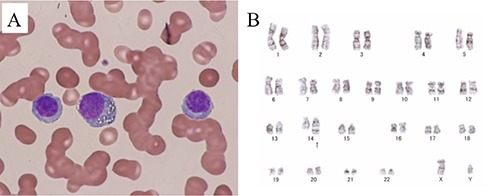
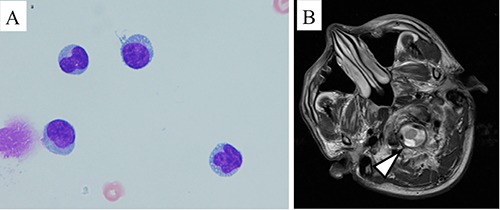
Primary plasma cell leukemia (PPCL) is a rare aggressive variant of plasma cell disorder and frequently presents with extramedullary disease. Central nervous system (CNS) involvement with PPCL has an extremely poor prognosis. We describe a 46-year-old man with PPCL treated with a combination of lenalidomide, bortezomib, and dexamethasone as induction therapy following upfront allogeneic stem cell transplantation (allo-SCT). Despite achieving a very good partial response, the patient suffered from an isolated CNS relapse 12 months after allo-SCT. He was immediately started on concurrent intrathecal chemotherapy (IT) and cranial irradiation (RT). Subsequently, pomalidomide and low-dose dexamethasone (Pd) were given as maintenance therapy. He has been without CNS recurrence for more than 18 months. Our case suggests that concurrent IT and RT followed by Pd maintenance therapy may be an effective option to control CNS relapse of PPCL after allo-SCT.
原发性浆细胞白血病(PPCL)是浆细胞疾病中一种罕见的侵袭性变异类型,常伴有髓外病变。PPCL累及中枢神经系统(CNS)时预后极差。我们描述了一名46岁的PPCL男性患者,在进行异基因造血干细胞移植(allo-SCT)后,接受来那度胺、硼替佐米和地塞米松联合治疗作为诱导治疗。尽管获得了非常好的部分缓解,但患者在allo-SCT后12个月出现了孤立性CNS复发。他立即开始接受鞘内化疗(IT)和颅脑照射(RT)。随后,给予泊马度胺和低剂量地塞米松(Pd)作为维持治疗。他已无CNS复发超过18个月。我们的病例表明,allo-SCT后采用IT和RT联合治疗,随后进行Pd维持治疗,可能是控制PPCL的CNS复发的有效选择。