Gupta R, Yang Q, Dogra S K, Wajapeyee N
Department of Pathology, Yale University School of Medicine, New Haven, CT, USA.
Singapore Institute of Clinical Sciences, Agency for Science Technology and Research (A*STAR), Brenner Center for Molecular Medicine, Singapore, Singapore.
Oncogene. 2017 Jul 13;36(28):4014-4024. doi: 10.1038/onc.2017.37. Epub 2017 Mar 13.
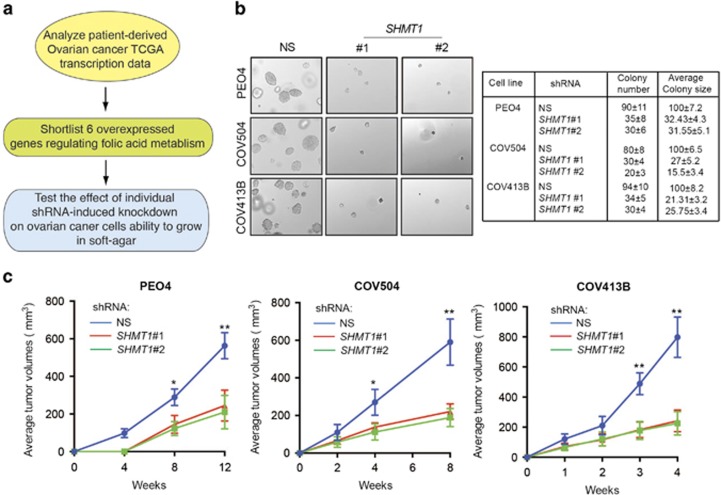
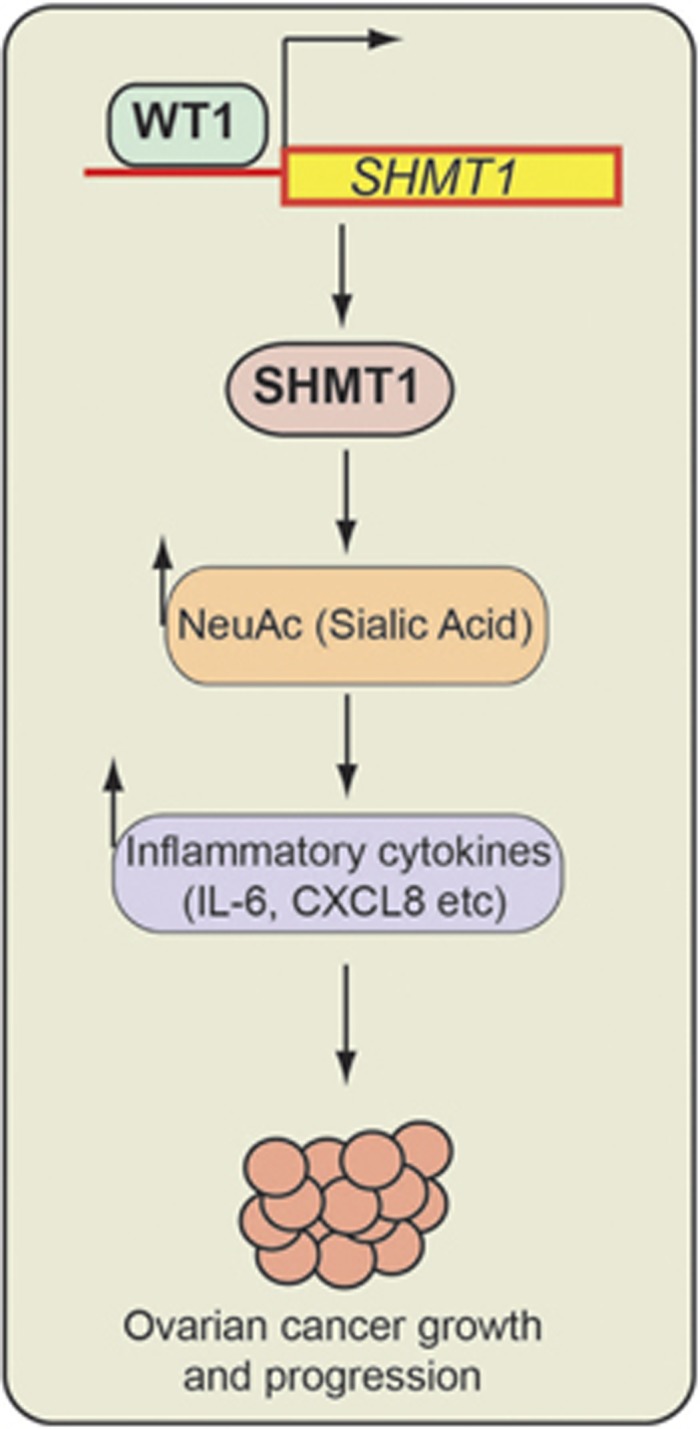
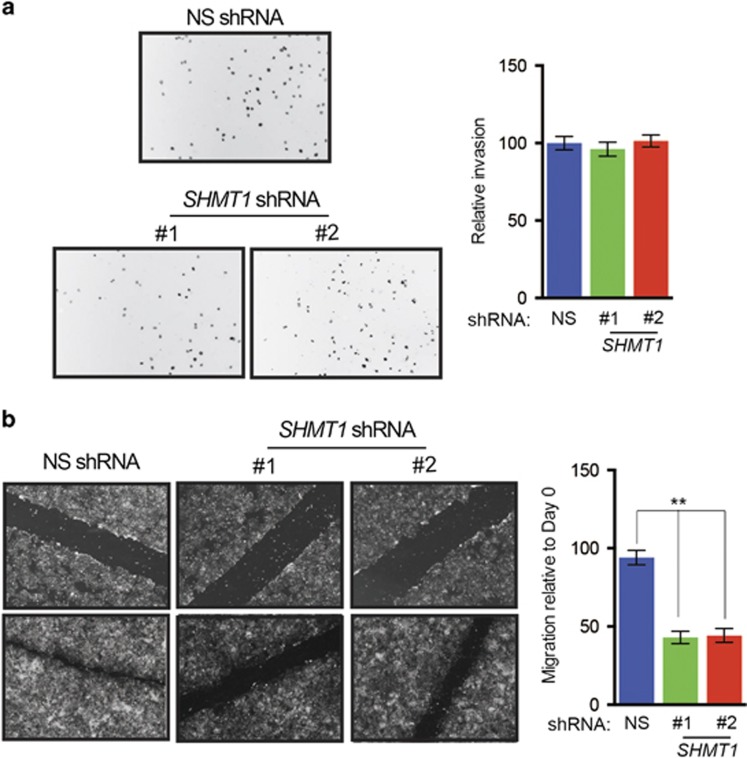
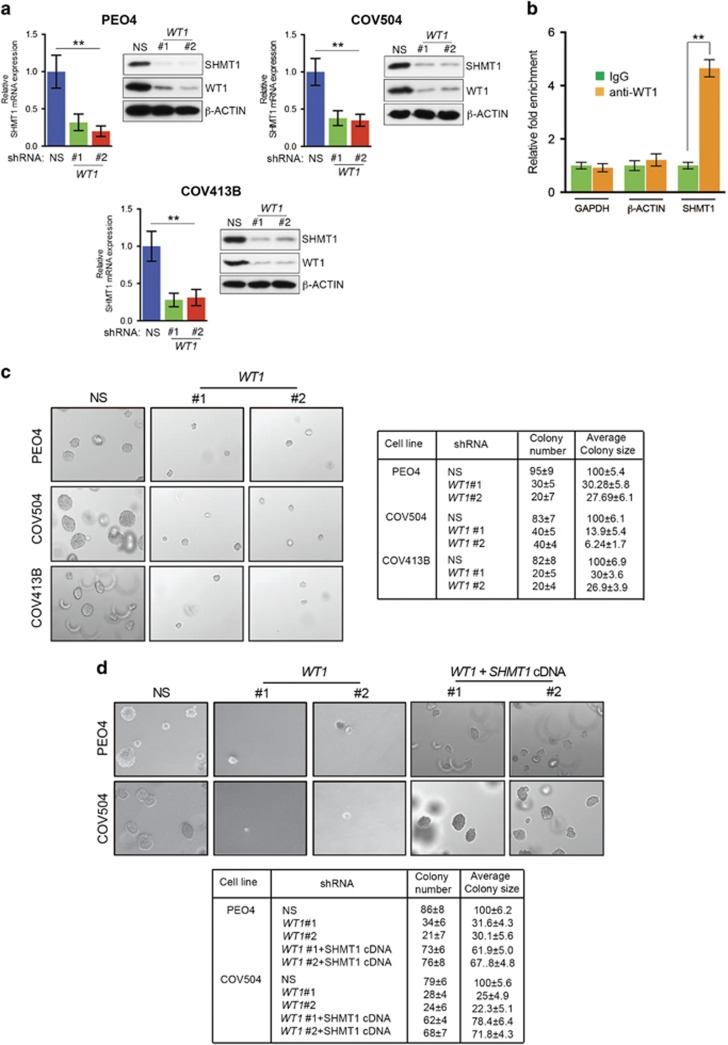
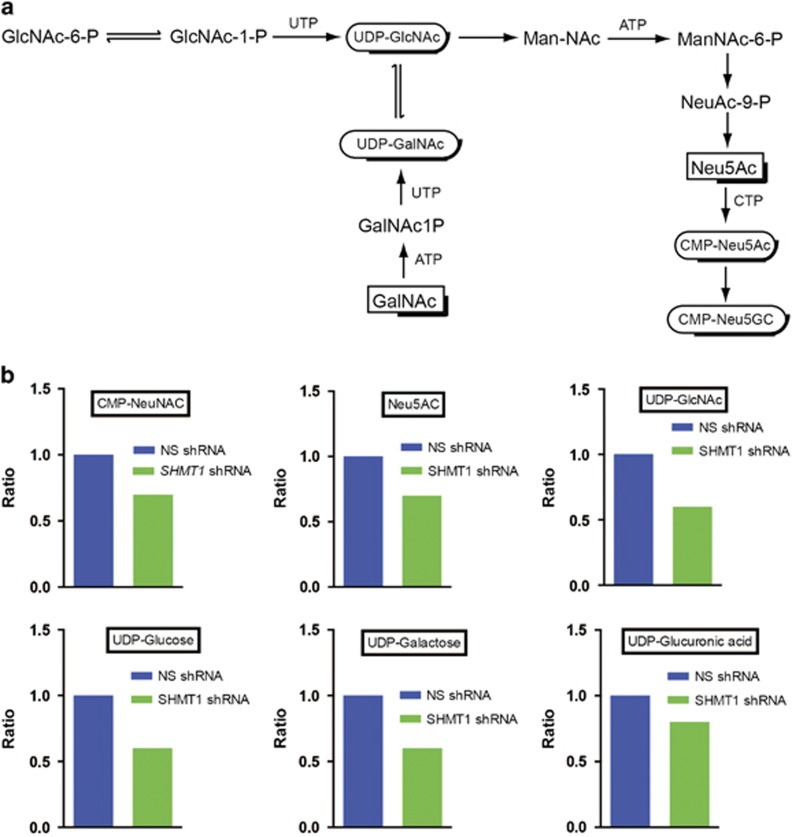
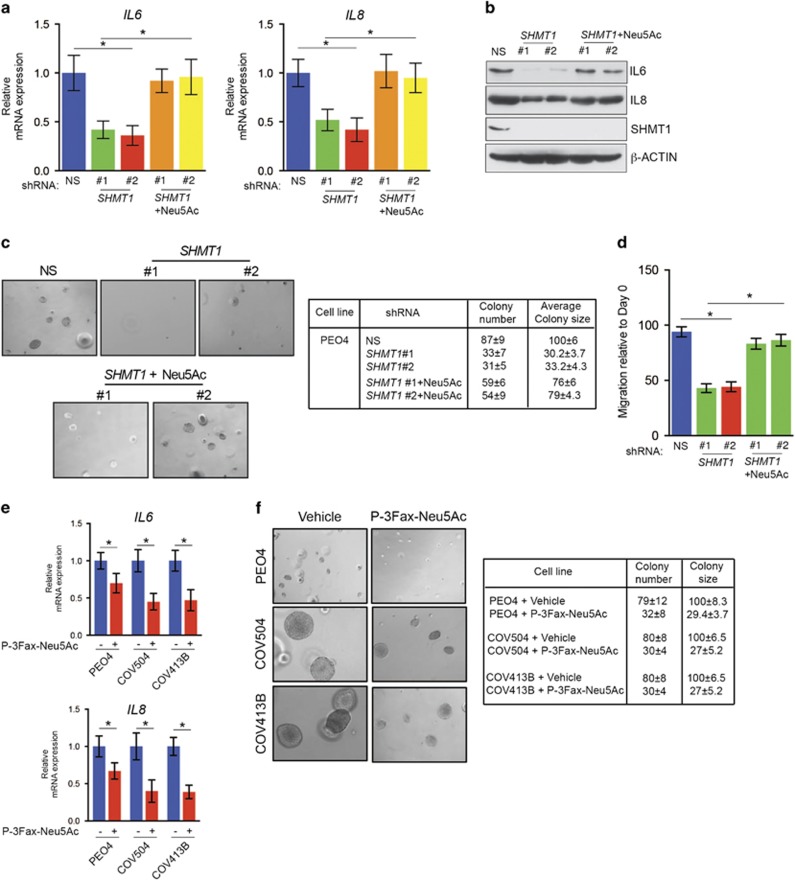
High-grade serous (HGS) ovarian cancer accounts for 90% of all ovarian cancer-related deaths. However, factors that drive HGS ovarian cancer tumor growth have not been fully elucidated. In particular, comprehensive analysis of the metabolic requirements of ovarian cancer tumor growth has not been performed. By analyzing The Cancer Genome Atlas mRNA expression data for HGS ovarian cancer patient samples, we observed that six enzymes of the folic acid metabolic pathway were overexpressed in HGS ovarian cancer samples compared with normal ovary samples. Systematic knockdown of all six genes using short hairpin RNAs (shRNAs) and follow-up functional studies demonstrated that serine hydroxymethyl transferase 1 (SHMT1) was necessary for ovarian cancer tumor growth and cell migration in culture and tumor formation in mice. SHMT1 promoter analysis identified transcription factor Wilms tumor 1 (WT1) binding sites, and WT1 knockdown resulted in reduced SHMT1 transcription in ovarian cancer cells. Unbiased large-scale metabolomic analysis and transcriptome-wide mRNA expression profiling identified reduced levels of several metabolites of the amino sugar and nucleotide sugar metabolic pathways, including sialic acid N-acetylneuraminic acid (Neu5Ac), and downregulation of pro-oncogenic cytokines interleukin-6 and 8 (IL-6 and IL-8) as unexpected outcomes of SHMT1 loss. Overexpression of either IL-6 or IL-8 partially rescued SHMT1 loss-induced tumor growth inhibition and migration. Supplementation of culture medium with Neu5Ac stimulated expression of IL-6 and IL-8 and rescued the tumor growth and migratory phenotypes of ovarian cancer cells expressing SHMT1 shRNAs. In agreement with the ovarian tumor-promoting role of Neu5Ac, treatment with Neu5Ac-targeting glycomimetic P-3Fax-Neu5Ac blocked ovarian cancer growth and migration. Collectively, these results demonstrate that SHMT1 controls the expression of pro-oncogenic inflammatory cytokines by regulating sialic acid Neu5Ac to promote ovarian cancer tumor growth and migration. Thus, targeting of SHMT1 and Neu5Ac represents a precision therapy opportunity for effective HGS ovarian cancer treatment.
高级别浆液性(HGS)卵巢癌占所有卵巢癌相关死亡的90%。然而,驱动HGS卵巢癌肿瘤生长的因素尚未完全阐明。特别是,尚未对卵巢癌肿瘤生长的代谢需求进行全面分析。通过分析HGS卵巢癌患者样本的癌症基因组图谱mRNA表达数据,我们观察到与正常卵巢样本相比,叶酸代谢途径的六种酶在HGS卵巢癌样本中过表达。使用短发夹RNA(shRNA)对所有六个基因进行系统性敲低,并进行后续功能研究,结果表明丝氨酸羟甲基转移酶1(SHMT1)是卵巢癌肿瘤生长、培养中的细胞迁移以及小鼠肿瘤形成所必需的。SHMT1启动子分析确定了转录因子威尔姆斯瘤1(WT1)的结合位点,WT1敲低导致卵巢癌细胞中SHMT1转录减少。无偏倚的大规模代谢组学分析和全转录组mRNA表达谱分析发现,氨基糖和核苷酸糖代谢途径的几种代谢物水平降低,包括唾液酸N-乙酰神经氨酸(Neu5Ac),并且促癌细胞因子白细胞介素-6和8(IL-6和IL-8)的下调是SHMT1缺失的意外结果。IL-6或IL-8的过表达部分挽救了SHMT1缺失诱导的肿瘤生长抑制和迁移。用Neu5Ac补充培养基刺激了IL-6和IL-8的表达,并挽救了表达SHMT1 shRNA的卵巢癌细胞的肿瘤生长和迁移表型。与Neu5Ac在卵巢肿瘤促进中的作用一致,用靶向Neu5Ac的糖模拟物P-3Fax-Neu5Ac治疗可阻断卵巢癌的生长和迁移。总体而言,这些结果表明SHMT1通过调节唾液酸Neu5Ac来控制促癌炎症细胞因子的表达,从而促进卵巢癌肿瘤生长和迁移。因此,靶向SHMT1和Neu5Ac为有效的HGS卵巢癌治疗提供了一种精准治疗机会。