Department of Anesthesiology, Wake Forest School of Medicine, Winston-Salem, NC 27157, USA; Department of Internal Medicine, Wake Forest School of Medicine, Winston-Salem, NC 27157, USA.
Department of Internal Medicine, Wake Forest School of Medicine, Winston-Salem, NC 27157, USA; Fudan University, Shanghai Public Health Clinical Center, Shanghai 201508, China.
J Immunol Res. 2016;2016:8167273. doi: 10.1155/2016/8167273. Epub 2016 Jan 20.
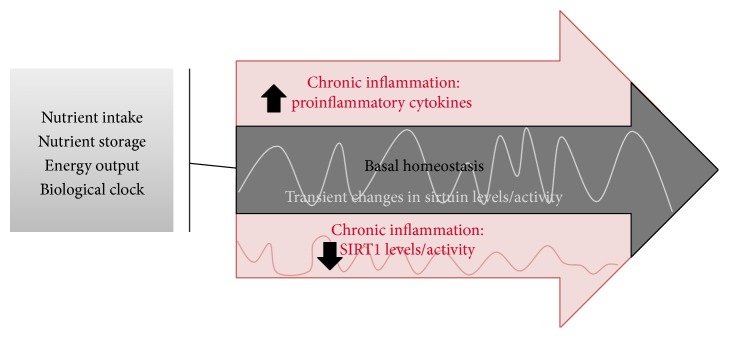
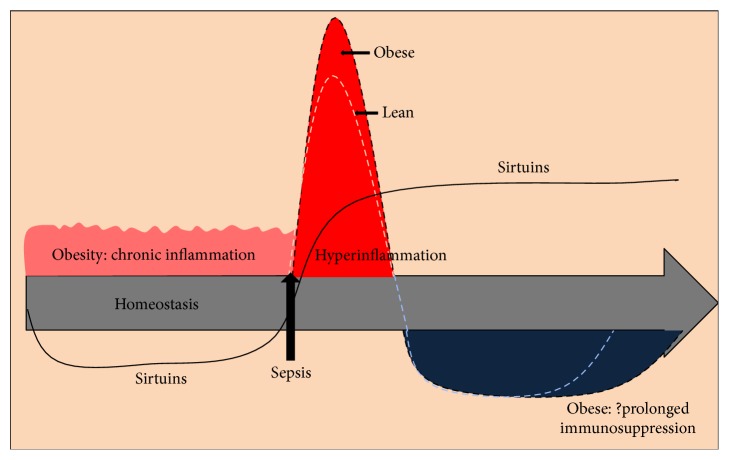
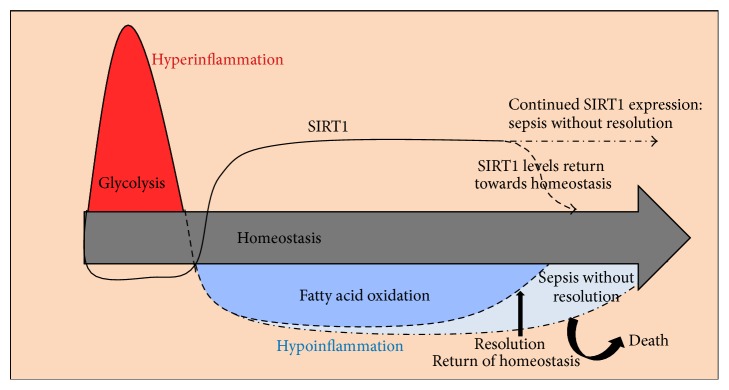
Sirtuins (SIRT), first discovered in yeast as NAD+ dependent epigenetic and metabolic regulators, have comparable activities in human physiology and disease. Mounting evidence supports that the seven-member mammalian sirtuin family (SIRT1-7) guard homeostasis by sensing bioenergy needs and responding by making alterations in the cell nutrients. Sirtuins play a critical role in restoring homeostasis during stress responses. Inflammation is designed to "defend and mend" against the invading organisms. Emerging evidence supports that metabolism and bioenergy reprogramming direct the sequential course of inflammation; failure of homeostasis retrieval results in many chronic and acute inflammatory diseases. Anabolic glycolysis quickly induced (compared to oxidative phosphorylation) for ROS and ATP generation is needed for immune activation to "defend" against invading microorganisms. Lipolysis/fatty acid oxidation, essential for cellular protection/hibernation and cell survival in order to "mend," leads to immune repression. Acute/chronic inflammations are linked to altered glycolysis and fatty acid oxidation, at least in part, by NAD+ dependent function of sirtuins. Therapeutically targeting sirtuins may provide a new class of inflammation and immune regulators. This review discusses how sirtuins integrate metabolism, bioenergetics, and immunity during inflammation and how sirtuin-directed treatment improves outcome in chronic inflammatory diseases and in the extreme stress response of sepsis.
Sirtuins(SIRT)最初在酵母中被发现为 NAD+ 依赖性表观遗传和代谢调节剂,在人类生理学和疾病中有类似的活性。越来越多的证据表明,哺乳动物中存在的七个成员的 Sirtuin 家族(SIRT1-7)通过感知生物能量需求并通过改变细胞营养物质来做出反应,从而维持体内平衡。Sirtuins 在应激反应中恢复体内平衡方面起着至关重要的作用。炎症旨在针对入侵生物体进行“防御和修复”。新出现的证据支持代谢和生物能量重编程指导炎症的顺序发生;体内平衡恢复失败会导致许多慢性和急性炎症性疾病。为了“防御”入侵的微生物,需要快速诱导(与氧化磷酸化相比)产生 ROS 和 ATP 的合成代谢糖酵解。脂解/脂肪酸氧化对于细胞保护/休眠和细胞存活至关重要,从而导致免疫抑制。急性/慢性炎症至少部分与糖酵解和脂肪酸氧化的改变有关,这与 SIRT 的 NAD+ 依赖性功能有关。靶向 Sirtuins 的治疗可能提供一类新的炎症和免疫调节剂。本综述讨论了 Sirtuins 如何在炎症过程中整合代谢、生物能量和免疫,以及 Sirtuin 靶向治疗如何改善慢性炎症性疾病和败血症的极端应激反应的结果。