Hauptmann Matthias, Burkhardt Nicole, Munderloh Ulrike, Kuehl Svenja, Richardt Ulricke, Krasemann Susanne, Hartmann Kristin, Krech Till, Fleischer Bernhard, Keller Christian, Osterloh Anke
Department of Immunology, Bernhard Nocht Institute for Tropical Medicine, Hamburg, Germany.
Department of Entomology, University of Minnesota, St. Paul, Minnesota, USA.
Infect Immun. 2017 May 23;85(6). doi: 10.1128/IAI.00156-17. Print 2017 Jun.
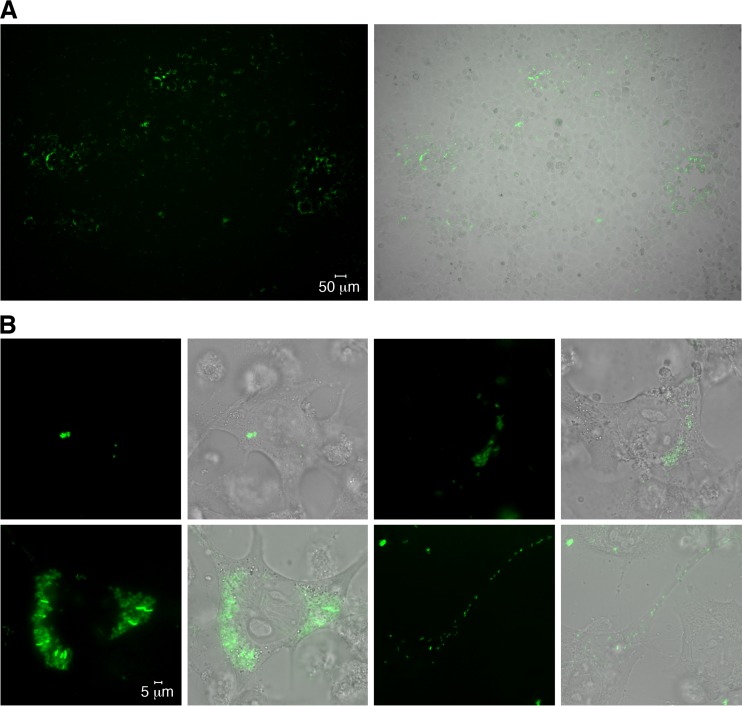
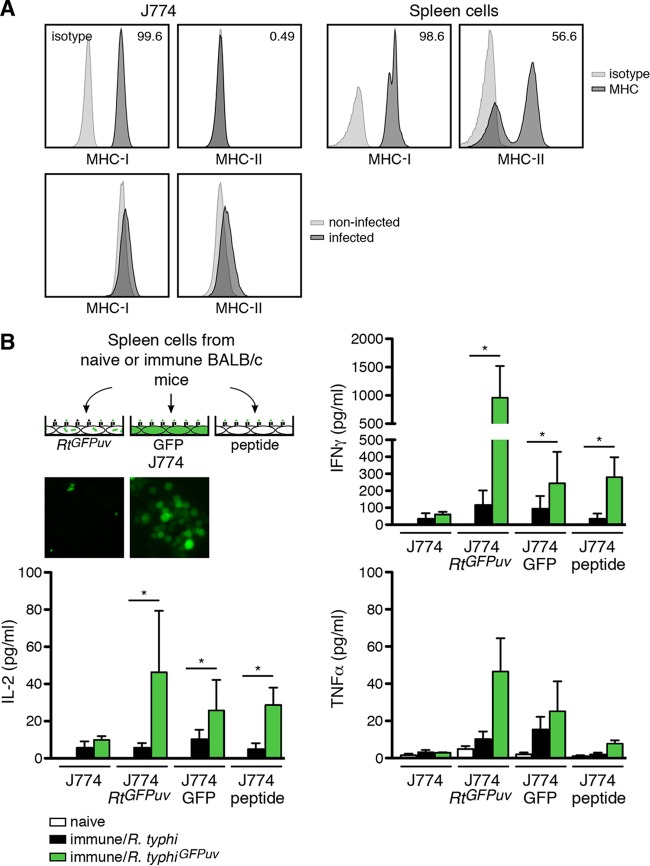
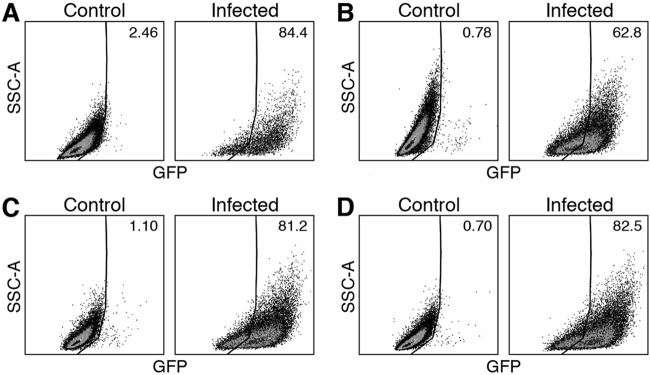
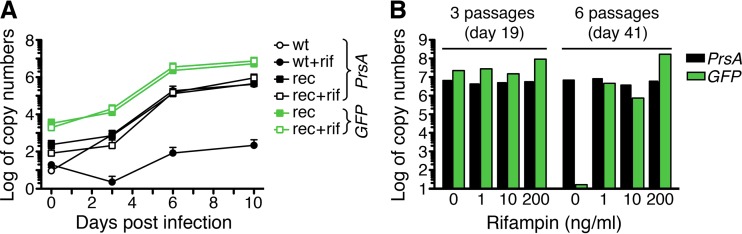
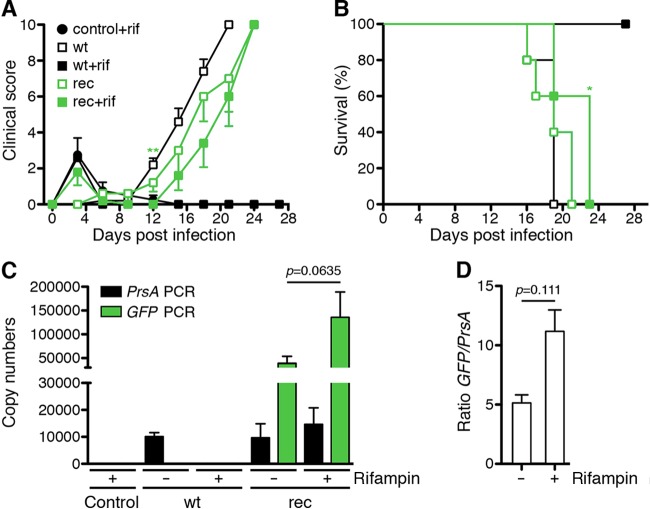
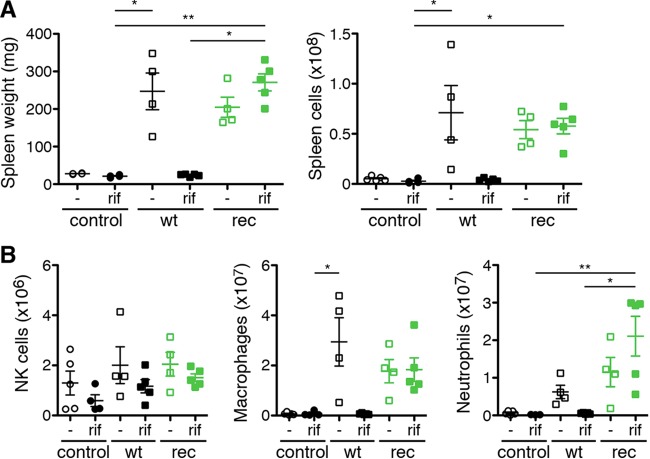
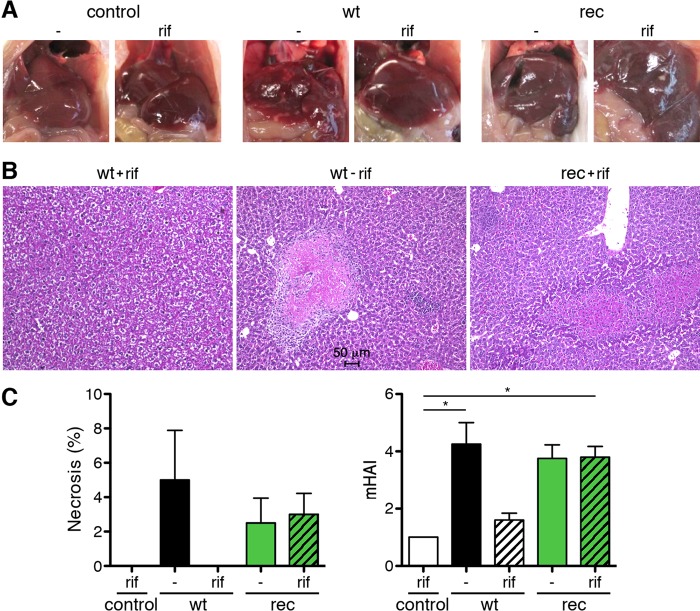
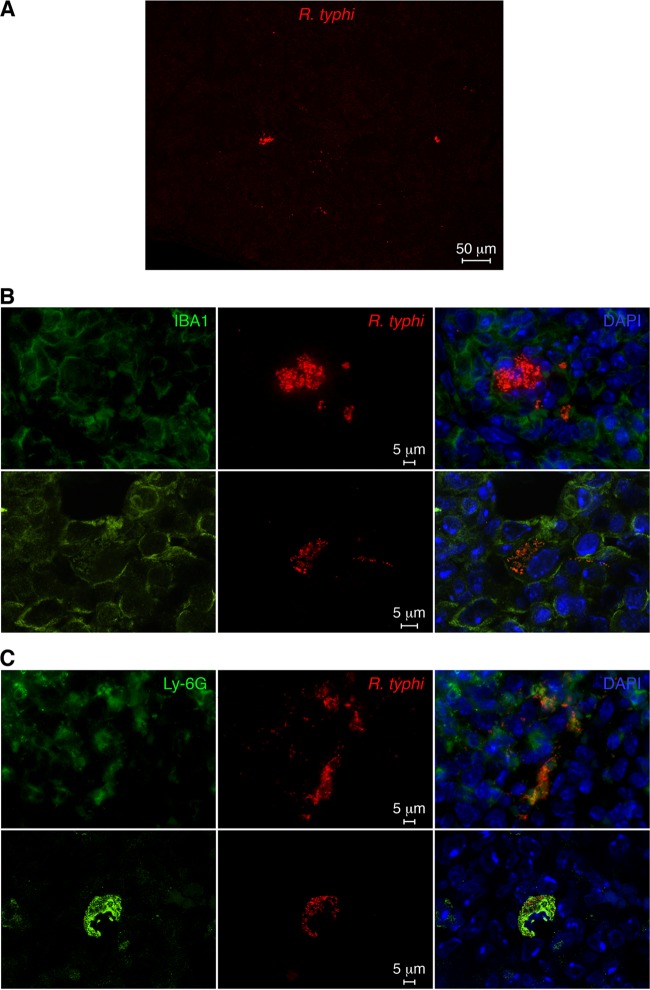
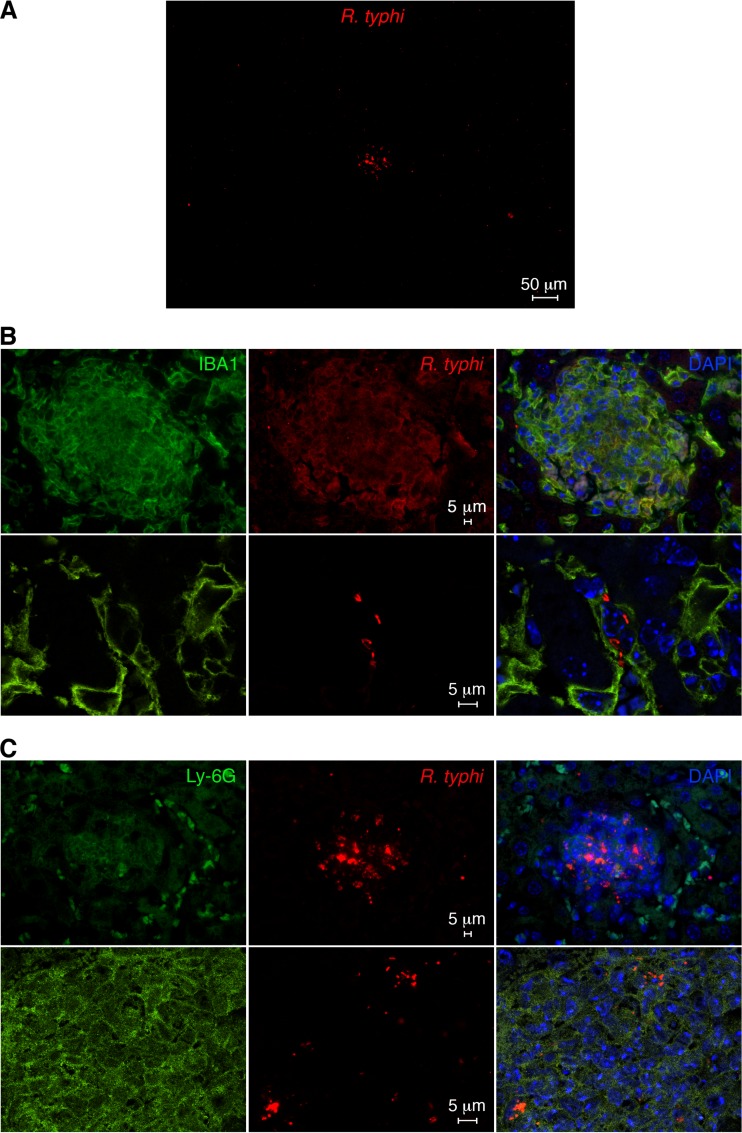
is the causative agent of endemic typhus, a disease with increasing incidence worldwide that can be fatal. Because of its obligate intracellular life style, genetic manipulation of the pathogen is difficult. Nonetheless, in recent years, genetic manipulation tools have been successfully applied to rickettsiae. We describe here for the first time the transformation of with the pRAM18dRGA plasmid that originally derives from and encodes the expression of GFPuv (green fluorescent protein with maximal fluorescence when excited by UV light). Transformed () bacteria are viable, replicate with kinetics similar to those of wild-type in cell culture, and stably maintain the plasmid and GFPuv expression under antibiotic treatment and during infection of mice. CB17 SCID mice infected with succumb to the infection with kinetics similar to those for animals infected with wild-type and develop comparable pathology and bacterial loads in the organs, demonstrating that the plasmid does not influence pathogenicity. In the spleen and liver of infected CB17 SCID mice, the bacteria are detectable by immunofluorescence microscopy in neutrophils and macrophages by histological staining. Finally, we show for the first time that transformed rickettsiae can be used for the detection of CD8 T cell responses. GFP-specific restimulation of spleen cells from -infected BALB/c mice elicits gamma interferon (IFN-γ), tumor necrosis factor alpha (TNF-α), and interleukin 2 (IL-2) secretion by CD8 T cells. Thus, bacteria are a novel, potent tool to study infection with the pathogen and and the immune response to these bacteria.
是地方性斑疹伤寒的病原体,这种疾病在全球范围内发病率不断上升,可能致命。由于其专性细胞内生活方式,对该病原体进行基因操作很困难。尽管如此,近年来,基因操作工具已成功应用于立克次氏体。我们在此首次描述了用最初源自并编码GFPuv(在紫外光激发下具有最大荧光的绿色荧光蛋白)表达的pRAM18dRGA质粒对进行转化。转化后的()细菌是有活力的,在细胞培养中以与野生型相似的动力学进行复制,并且在抗生素处理下以及在感染小鼠期间稳定维持质粒和GFPuv表达。感染的CB17 SCID小鼠以与感染野生型的动物相似的动力学死于感染,并在器官中出现类似的病理变化和细菌载量,表明该质粒不影响致病性。在感染的CB17 SCID小鼠的脾脏和肝脏中,通过免疫荧光显微镜在中性粒细胞和巨噬细胞中通过组织学染色可检测到细菌。最后,我们首次表明转化的立克次氏体可用于检测CD8 T细胞反应。对感染的BALB/c小鼠的脾细胞进行GFP特异性再刺激可引发CD8 T细胞分泌γ干扰素(IFN-γ)、肿瘤坏死因子α(TNF-α)和白细胞介素2(IL-2)。因此,细菌是研究病原体感染以及对这些细菌的免疫反应的一种新型有力工具。