Applied Immunobiology and Transplantation Group, Institute of Cellular Medicine, Medical School, University of Newcastle Upon Tyne, NE2 4HH, UK.
Faculty of Applied Science, University of Sunderland, Sunderland, SR1 3SD, UK.
Sci Rep. 2017 Mar 14;7:44384. doi: 10.1038/srep44384.
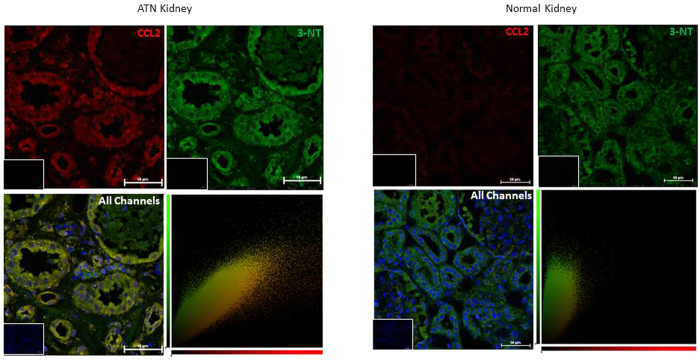
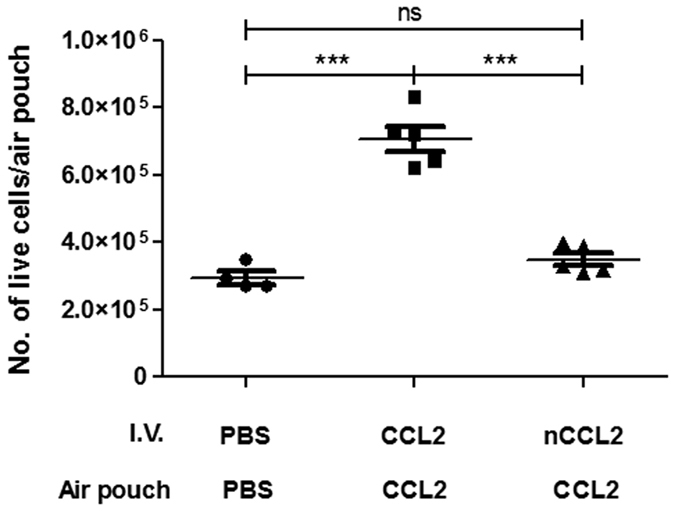
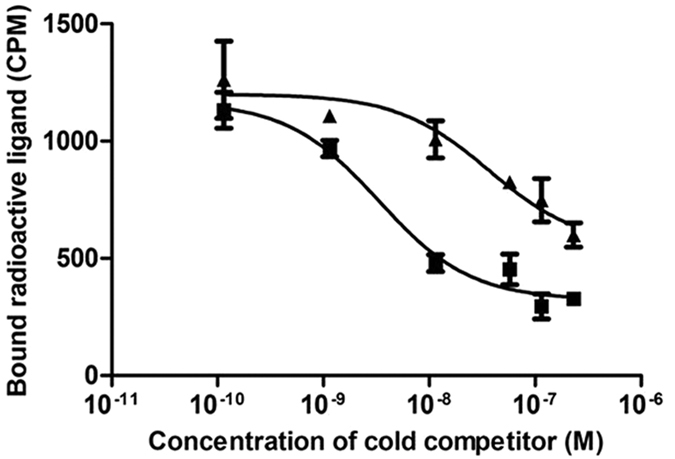
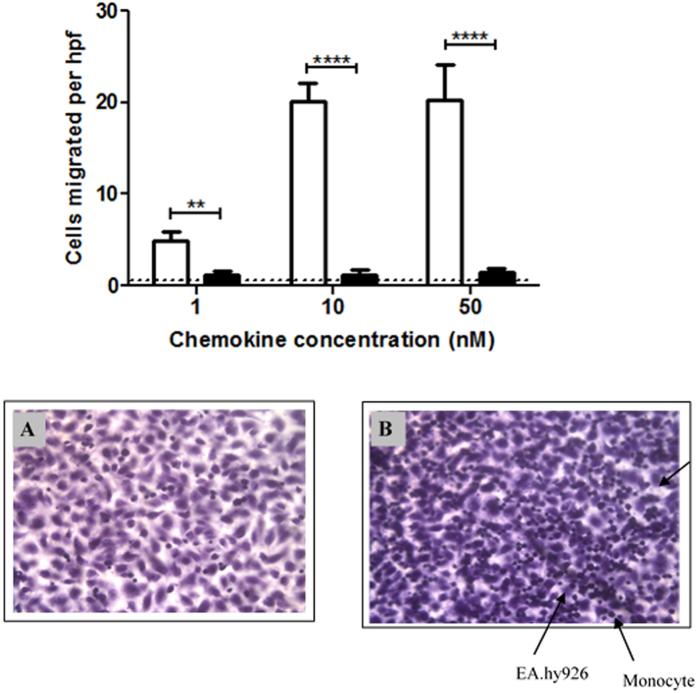
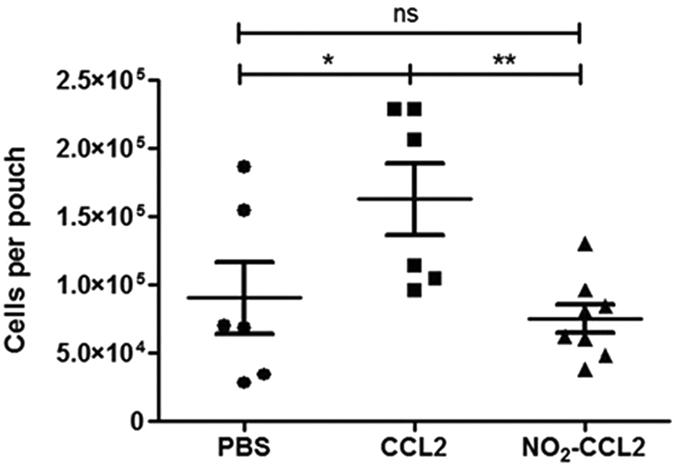
Chemokines promote leukocyte recruitment during inflammation. The oxidative burst is an important effector mechanism, this leads to the generation of reactive nitrogen species (RNS), including peroxynitrite (ONOO). The current study was performed to determine the potential for nitration to alter the chemical and biological properties of the prototypical CC chemokine, CCL2. Immunofluorescence was performed to assess the presence of RNS in kidney biopsies. Co-localisation was observed between RNS-modified tyrosine residues and the chemokine CCL2 in diseased kidneys. Nitration reduced the potential of CCL2 to stimulate monocyte migration in diffusion gradient chemotaxis assays (p < 0.05). This was consistent with a trend towards reduced affinity of the nitrated chemokine for its cognate receptor CCR2b. The nitrated chemokine was unable to induce transendothelial monocyte migration in vitro and failed to promote leukocyte recruitment when added to murine air pouches (p < 0.05). This could potentially be attributed to reduced glycosaminoglycan binding ability, as surface plasmon resonance spectroscopy showed that nitration reduced heparan sulphate binding by CCL2. Importantly, intravenous administration of nitrated CCL2 also inhibited the normal recruitment of leukocytes to murine air pouches filled with unmodified CCL2. Together these data suggest that nitration of CCL2 during inflammation provides a mechanism to limit and resolve acute inflammation.
趋化因子在炎症过程中促进白细胞募集。氧化爆发是一种重要的效应机制,导致活性氮物种(RNS)的产生,包括过氧亚硝酸盐(ONOO)。本研究旨在确定硝化作用改变典型 CC 趋化因子 CCL2 的化学和生物学特性的潜力。通过免疫荧光法评估肾脏活检中 RNS 的存在。在患病肾脏中观察到 RNS 修饰的酪氨酸残基与趋化因子 CCL2 之间的共定位。硝化作用降低了 CCL2 在扩散梯度趋化测定中刺激单核细胞迁移的潜力(p < 0.05)。这与硝化趋化因子与其同源受体 CCR2b 的亲和力降低趋势一致。硝化趋化因子无法在体外诱导跨内皮单核细胞迁移,并且在添加到鼠气囊中时无法促进白细胞募集(p < 0.05)。这可能归因于糖胺聚糖结合能力降低,因为表面等离子体共振光谱显示硝化作用降低了 CCL2 对肝素硫酸盐的结合。重要的是,静脉内给予硝化 CCL2 也抑制了白细胞正常募集到充满未修饰 CCL2 的鼠气囊中。这些数据表明,炎症期间 CCL2 的硝化作用提供了一种限制和解决急性炎症的机制。