Mendes Junior Dario, Domingues Juliana A, Hausen Moema A, Cattani Silvia M M, Aragones Aguedo, Oliveira Alexandre L R, Inácio Rodrigo F, Barbo Maria L P, Duek Eliana A R
Department of Physiological Sciences, Biomaterials Laboratory, Pontifical Catholic University, Sorocaba, São Paulo - Brazil.
Department of Cell Biology and Structural Biology, Biology Institute, University of Campinas, São Paulo - Brazil.
J Appl Biomater Funct Mater. 2017 Apr 26;15(2):e133-e141. doi: 10.5301/jabfm.5000338.
Tissue engineering is a promising alternative for the development of bone substitutes; for this purpose, three things are necessary: stem cells, a scaffold to allow tissue growth and factors that induce tissue regeneration.
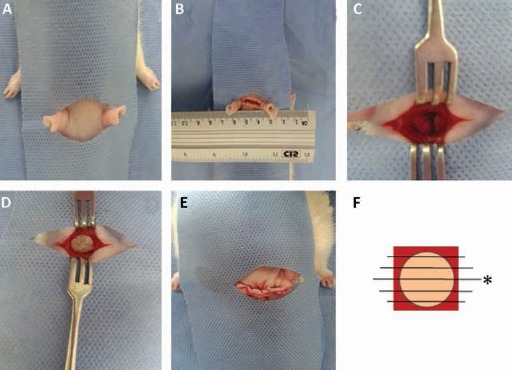
To congregate such efforts, we used the bioresorbable and biocompatible polymer poly(lactic-co-glycolic acid) (PLGA) as scaffold. For the osteoinductive factor, we used simvastatin (SIM), a drug with a pleiotropic effect on bone growth. Mesenchymal stem cells (MSCs) were cultured in PLGA containing SIM, and the bone substitute of PLGA/SIM/MSC was grafted into critical defects of rat calvaria.
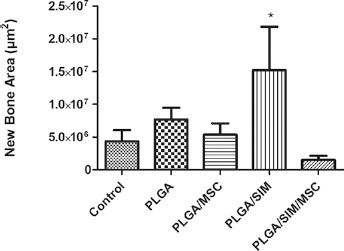
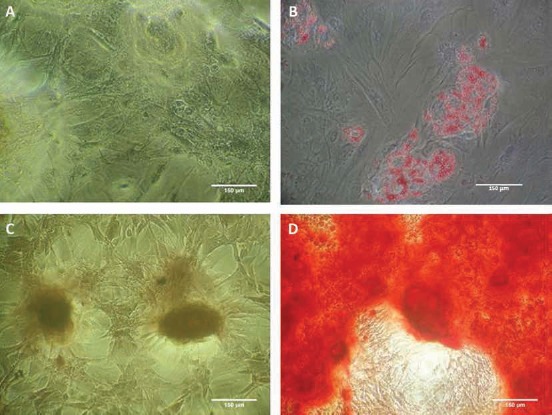
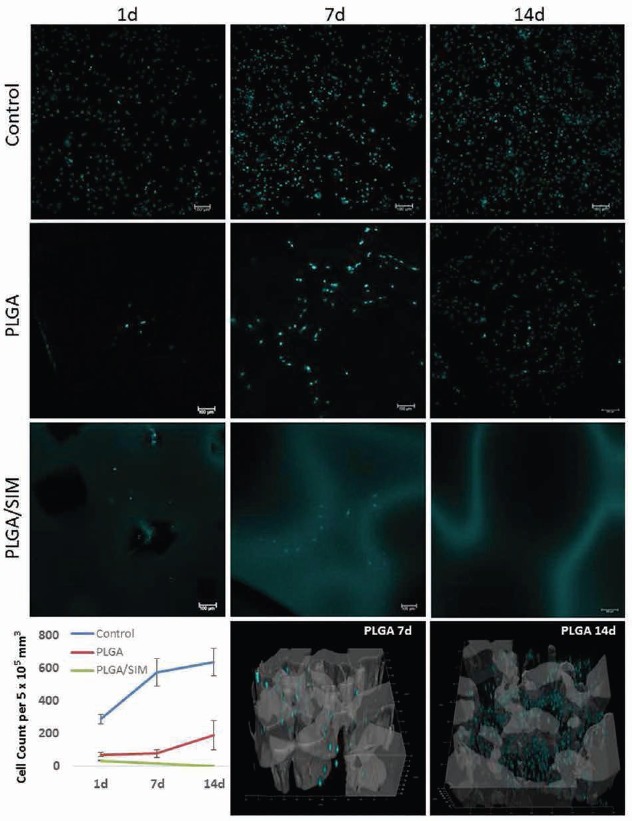
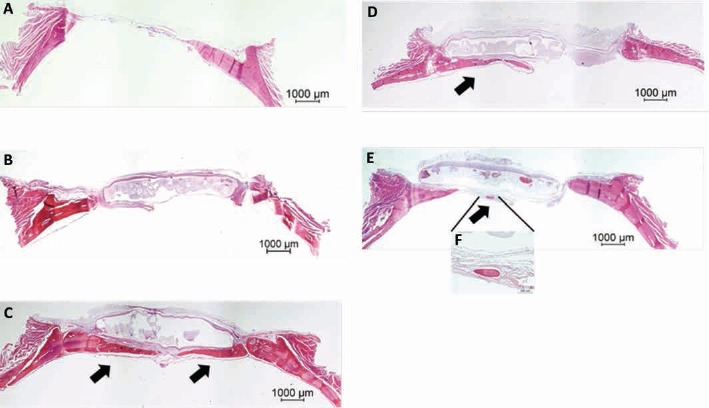
The in vitro results showed that SIM directly interfered with the proliferation of MSC promoting cell death, while in the pure PLGA scaffold the MSC grew continuously. Scaffolds were implanted in the calvaria of rats and separated into groups: control (empty defect), PLGA pure, PLGA/SIM, PLGA/MSC and PLGA/SIM/MSC. The increase in bone growth was higher in the PLGA/SIM group.
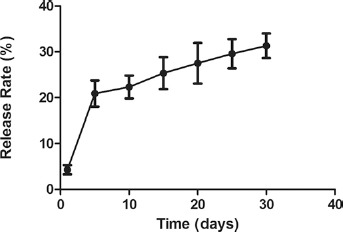
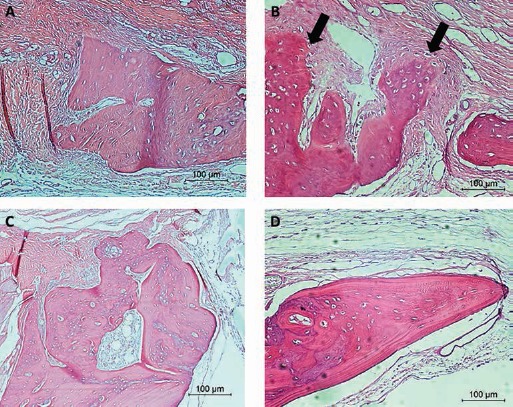
We observed no improvement in the growth of bone tissue after implantation of the PLGA/SIM/MSC scaffold. As compared with in vitro results, our main hypothesis is that the microarchitecture of PLGA associated with low SIM release would have created an in vivo microenvironment of concentrated SIM that might have induced MSC death. However, our findings indicate that once implanted, both PLGA/SIM and PLGA/MSC contributed to bone formation. We suggest that strategies to maintain the viability of MSCs after cultivation in PLGA/SIM will contribute to improvement of bone regeneration.
组织工程是开发骨替代物的一种有前景的替代方法;为此,需要三件事:干细胞、允许组织生长的支架以及诱导组织再生的因子。
为了整合这些努力,我们使用生物可吸收且生物相容的聚合物聚乳酸-乙醇酸共聚物(PLGA)作为支架。对于骨诱导因子,我们使用辛伐他汀(SIM),一种对骨生长具有多效性作用的药物。将间充质干细胞(MSC)在含有SIM的PLGA中培养,然后将PLGA/SIM/MSC骨替代物植入大鼠颅骨的关键缺损处。
体外结果表明,SIM直接干扰MSC的增殖,促进细胞死亡,而在纯PLGA支架中MSC持续生长。将支架植入大鼠颅骨并分为几组:对照组(空白缺损)、纯PLGA组、PLGA/SIM组、PLGA/MSC组和PLGA/SIM/MSC组。PLGA/SIM组的骨生长增加更高。
我们观察到植入PLGA/SIM/MSC支架后骨组织生长没有改善。与体外结果相比,我们的主要假设是与低SIM释放相关的PLGA微结构会在体内创造一个SIM浓缩的微环境,这可能诱导了MSC死亡。然而,我们的研究结果表明,一旦植入,PLGA/SIM和PLGA/MSC都有助于骨形成。我们建议在PLGA/SIM中培养后维持MSC活力的策略将有助于改善骨再生。