Varela Luis, Suyama Shigetomo, Huang Yan, Shanabrough Marya, Tschöp Matthias H, Gao Xiao-Bing, Giordano Frank J, Horvath Tamas L
Program in Integrative Cell Signaling and Neurobiology of Metabolism, Section of Comparative Medicine, Yale University School of Medicine, New Haven, CT
Program in Integrative Cell Signaling and Neurobiology of Metabolism, Section of Comparative Medicine, Yale University School of Medicine, New Haven, CT.
Diabetes. 2017 Jun;66(6):1511-1520. doi: 10.2337/db16-1106. Epub 2017 Mar 14.
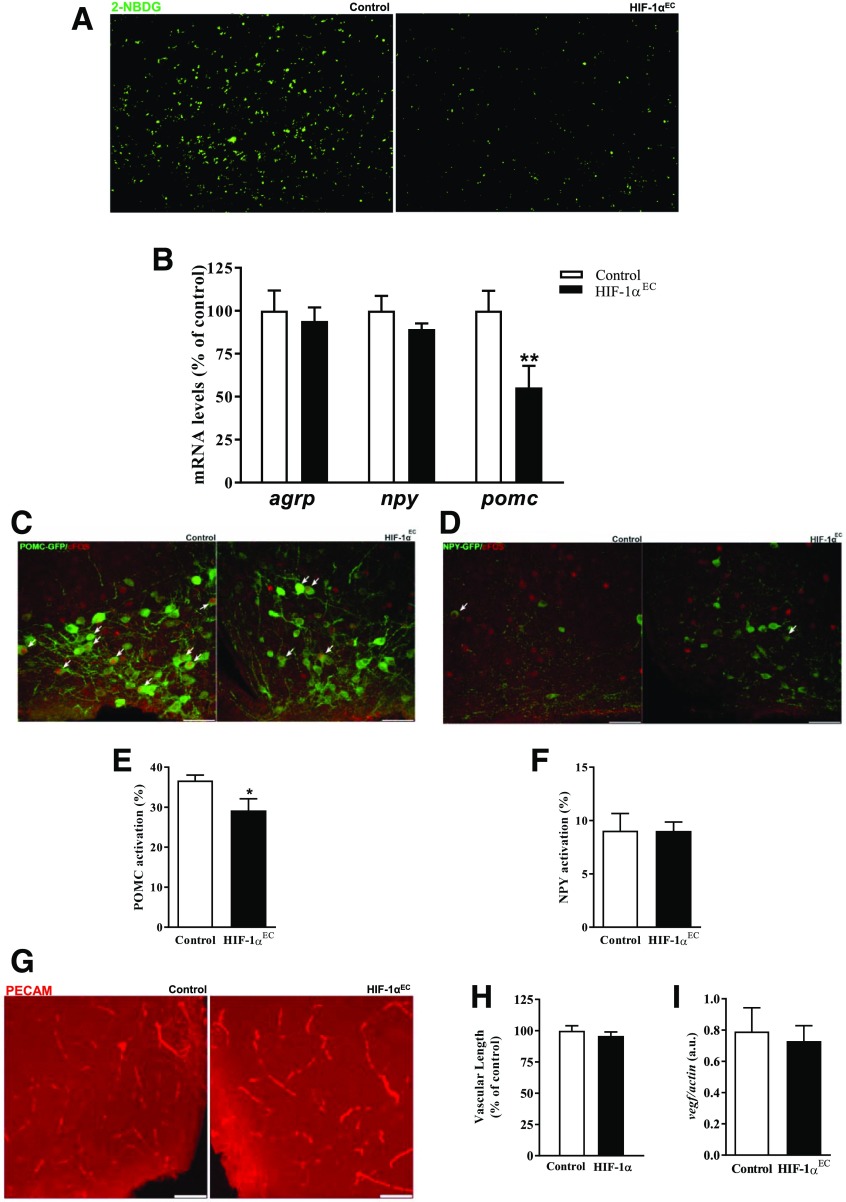
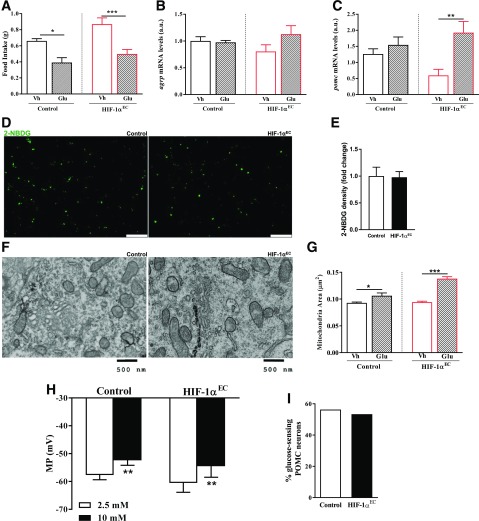
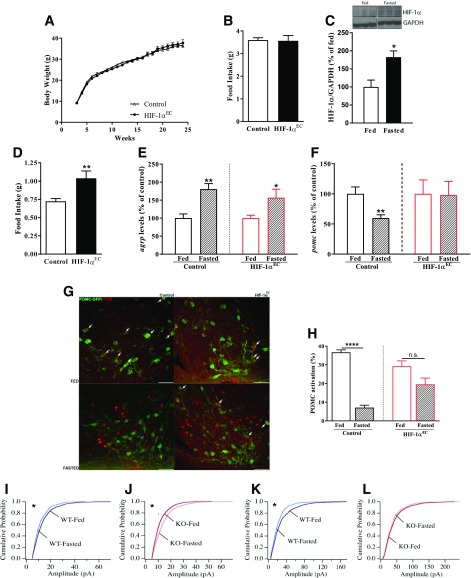
Glucose is the primary driver of hypothalamic proopiomelanocortin (POMC) neurons. We show that endothelial hypoxia-inducible factor 1α (HIF-1α) controls glucose uptake in the hypothalamus and that it is upregulated in conditions of undernourishment, during which POMC neuronal activity is decreased. Endothelium-specific knockdown of HIF-1α impairs the ability of POMC neurons to adapt to the changing metabolic environment in vivo, resulting in overeating after food deprivation in mice. The impaired functioning of POMC neurons was reversed ex vivo or by parenchymal glucose administration. These observations indicate an active role for endothelial cells in the central control of metabolism and suggest that central vascular impairments may cause metabolic disorders.
葡萄糖是下丘脑阿黑皮素原(POMC)神经元的主要驱动因素。我们发现,内皮细胞缺氧诱导因子1α(HIF-1α)控制下丘脑的葡萄糖摄取,并且在营养不良状态下其表达上调,在此期间POMC神经元活性降低。内皮细胞特异性敲低HIF-1α会损害POMC神经元在体内适应不断变化的代谢环境的能力,导致小鼠禁食后暴饮暴食。POMC神经元功能受损在体外或通过实质内给予葡萄糖得以逆转。这些观察结果表明内皮细胞在代谢的中枢控制中发挥积极作用,并提示中枢血管损伤可能导致代谢紊乱。