Han Ling, Sugiyama Hideaki, Zhang Qi, Yan Kexiang, Fang Xu, McCormick Thomas S, Cooper Kevin D, Huang Qiong
Department of Dermatology, Huashan Hospital, Shanghai, China.
Department of Dermatology, Case Western Reserve University, Cleveland, Ohio, USA.
Australas J Dermatol. 2018 Feb;59(1):e31-e38. doi: 10.1111/ajd.12561. Epub 2017 Mar 15.
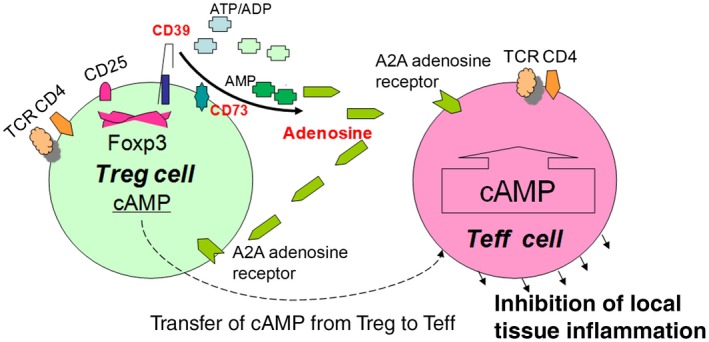
CD39 and CD73 are two novel cell surface markers of CD25 Foxp3 regulatory T-cells (Tregs). Concordant expression of these two ectoenzymes not only discriminate Tregs from other cell populations, but also generates pericellular adenosine, which has been reported to suppress proliferation of activated T effector (Teff) cells. Because it is currently unclear whether human ectoenzymes (CD39/CD73) are involved in the impaired suppressive activity of Tregs in psoriasis, we examined the frequencies and phenotypes of CD39/CD73-expressing Tregs and related receptor adenosine receptor 2A (A R) in peripheral blood of patients with different types of psoriasis.
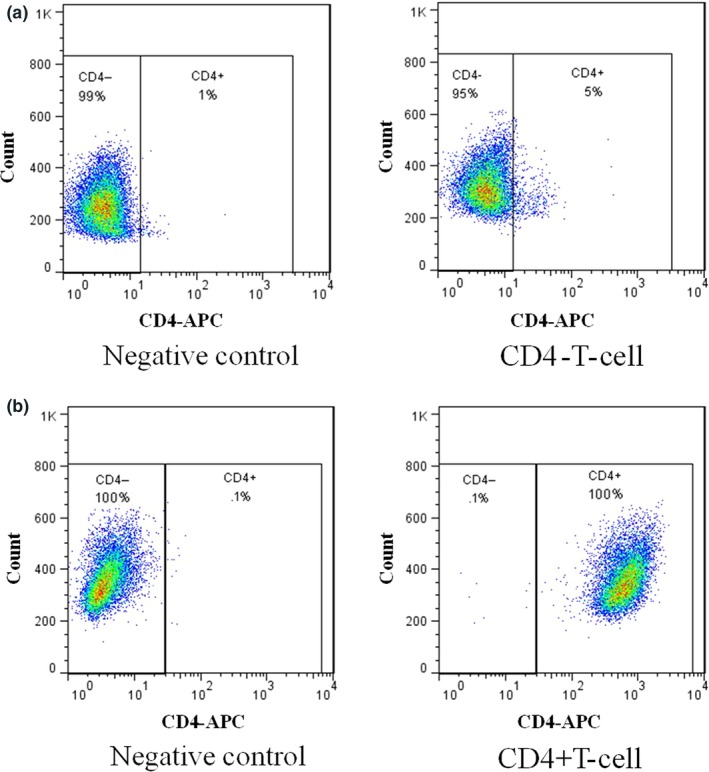
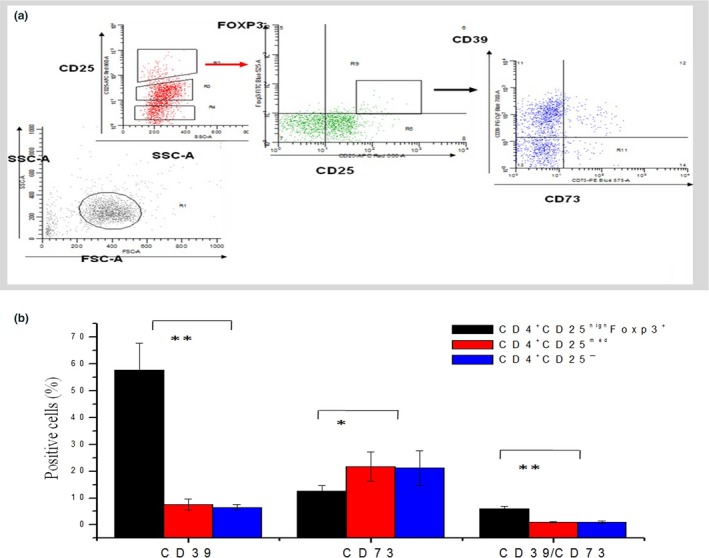
Peripheral blood mononuclear cells (PMBC) were prepared from patients with three different types of psoriasis (psoriasis vulgaris, pustular psoriasis and erythrodermic psoriasis). CD4 cells were separated from PBMC by negative selection on midiMACS columns, and the frequencies and phenotypes of CD39 and CD73 expressing Tregs, and A R expressing Teff were all determined by flow cytometry analysis. Blood from healthy volunteers served as controls.
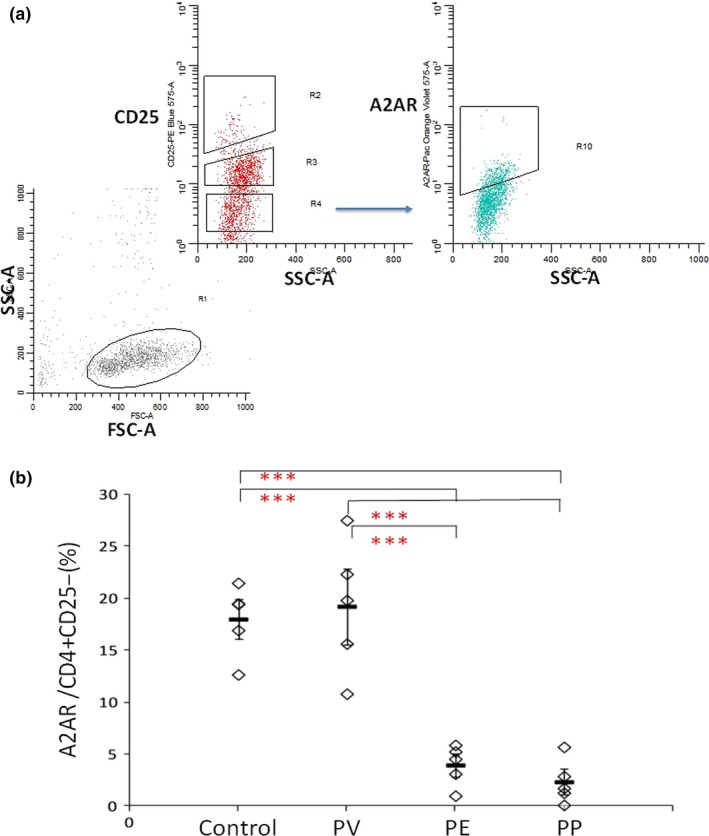
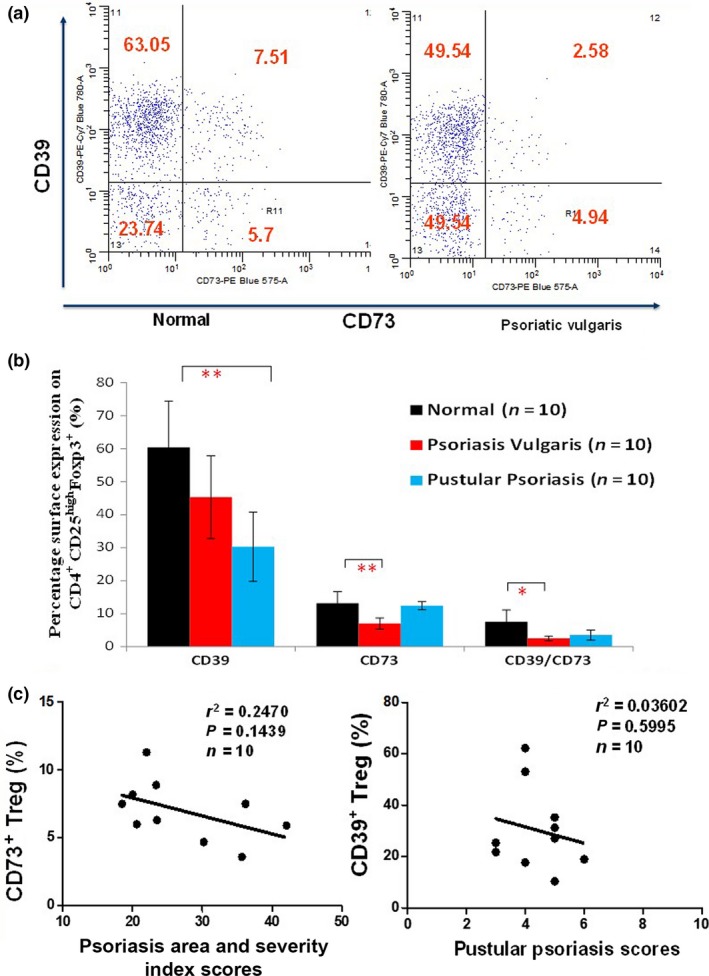
The expression of single CD73 Tregs was markedly reduced (approximately 50%) in psoriasis vulgaris, compared to normal controls. In pustular psoriasis, the mean numbers of CD39 Tregs and A R Teff was significantly lower than in normal controls. Among three different types of psoriasis, CD39 expression was strikingly reduced in the blood Treg population of pustular psoriasis patients. Decreased CD73 Tregs levels were observed in psoriasis vulgaris compared to pustular psoriasis and erythrodermic psoriasis.
The differences in the expression of CD39 and CD73 Tregs may be a factor in the pathogenesis of psoriasis.
CD39和CD73是CD25 Foxp3调节性T细胞(Tregs)的两种新型细胞表面标志物。这两种胞外酶的协同表达不仅能将Tregs与其他细胞群体区分开来,还能产生细胞周围腺苷,据报道该物质可抑制活化的T效应细胞(Teff)的增殖。由于目前尚不清楚人类胞外酶(CD39/CD73)是否参与银屑病中Tregs抑制活性受损的过程,我们检测了不同类型银屑病患者外周血中表达CD39/CD73的Tregs及相关受体腺苷受体2A(AR)的频率和表型。
从三种不同类型的银屑病(寻常型银屑病、脓疱型银屑病和红皮病型银屑病)患者中制备外周血单个核细胞(PMBC)。通过在midiMACS柱上进行阴性选择从PBMC中分离出CD4细胞,并用流式细胞术分析确定表达CD39和CD73的Tregs以及表达AR的Teff的频率和表型。来自健康志愿者的血液用作对照。
与正常对照相比,寻常型银屑病中单一CD73 Tregs的表达明显降低(约50%)。在脓疱型银屑病中,CD39 Tregs和AR Teff的平均数量显著低于正常对照。在三种不同类型的银屑病中,脓疱型银屑病患者血液Treg群体中CD39的表达显著降低。与脓疱型银屑病和红皮病型银屑病相比,寻常型银屑病中观察到CD73 Tregs水平降低。
CD39和CD73 Tregs表达的差异可能是银屑病发病机制中的一个因素。