Suzuki Miyako, Millecamps Magali, Naso Lina, Ohtori Seiji, Mori Chisato, Stone Laura S
Center for Preventive Medical Sciences, Chiba University, Chiba, Japan.
Faculty of Dentistry, McGill University, 2001 McGill College Avenue, Suite 500, Montreal, QC, Canada H3A 1G1; The Alan Edwards Centre for Research on Pain, McGill University, 740 Dr. Penfield Avenue, Suite 3200, Montreal, QC, Canada H3G 0G1.
J Osteoporos. 2017;2017:7582716. doi: 10.1155/2017/7582716. Epub 2017 Feb 19.
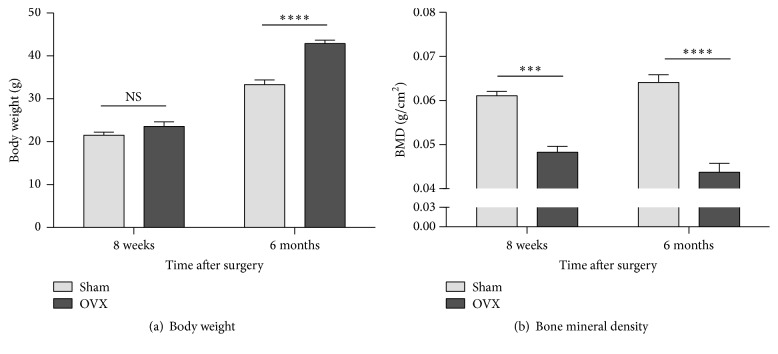
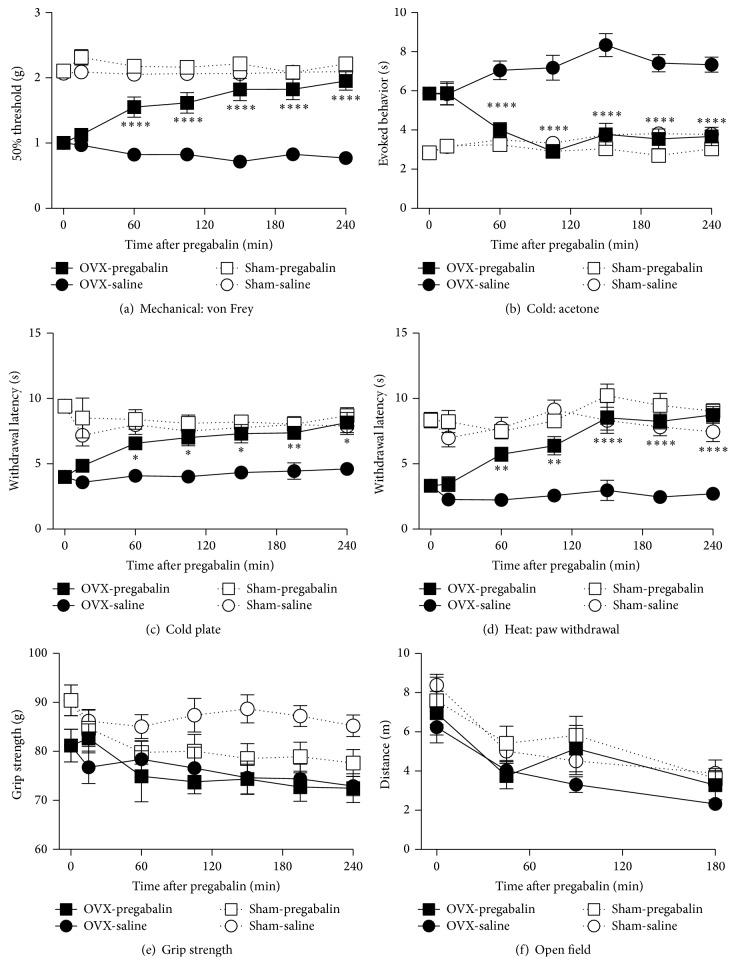
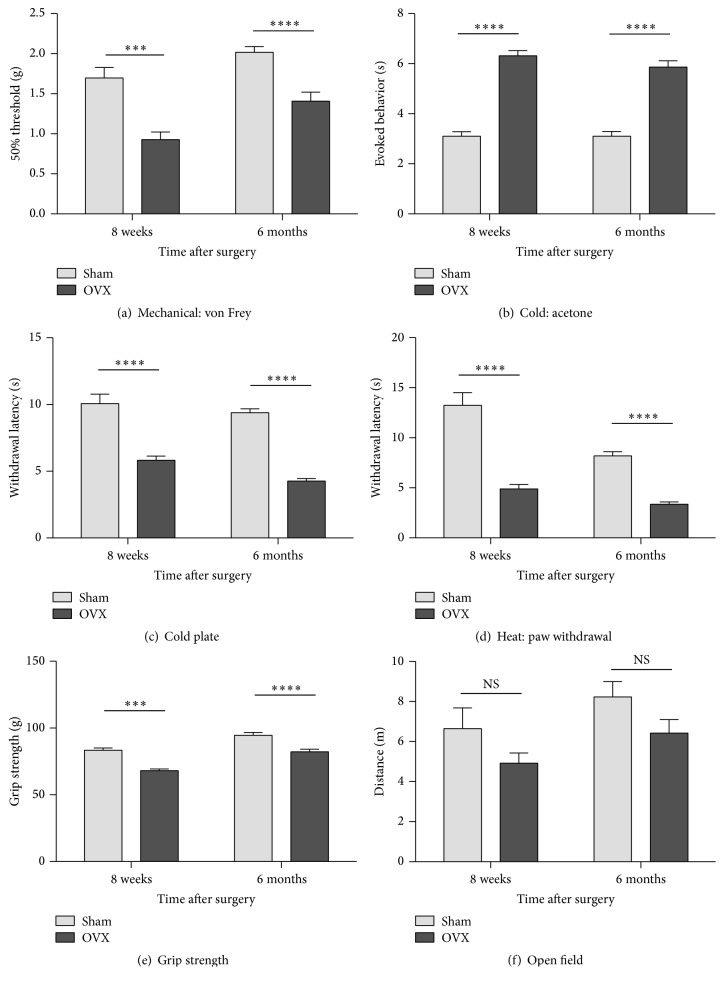
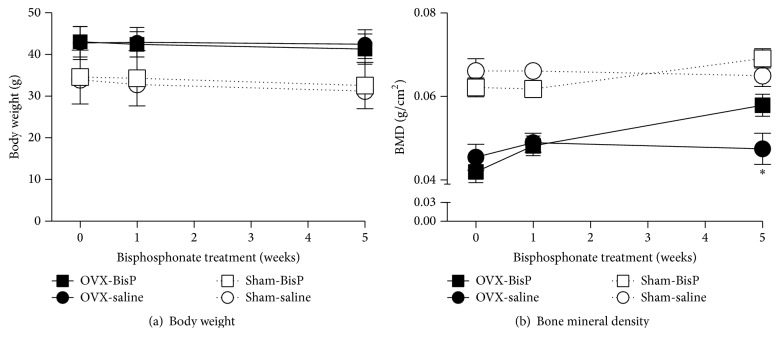
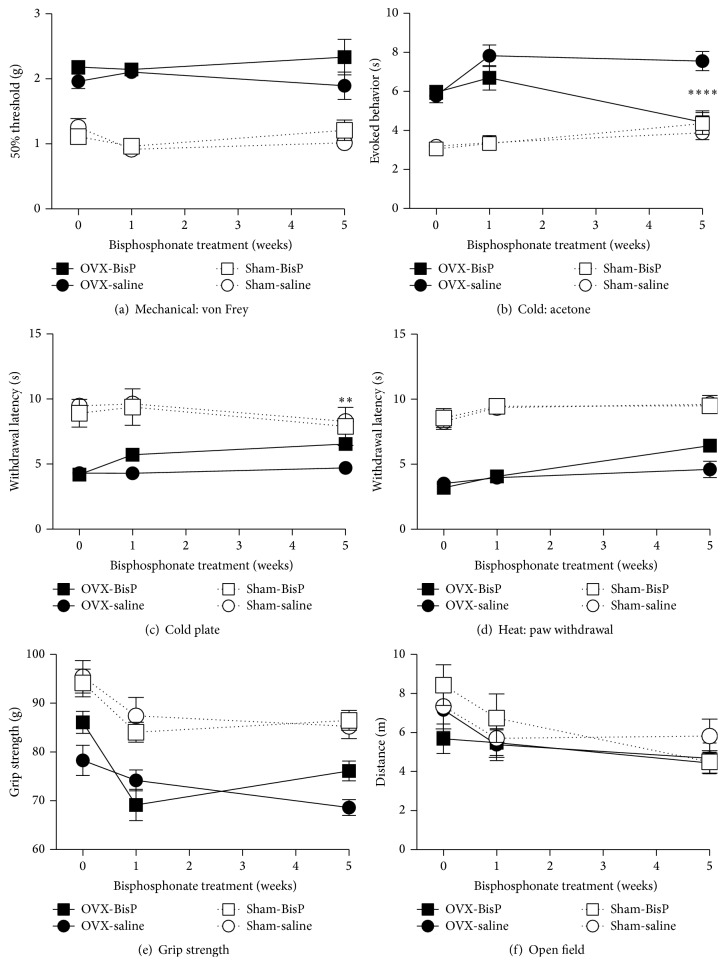
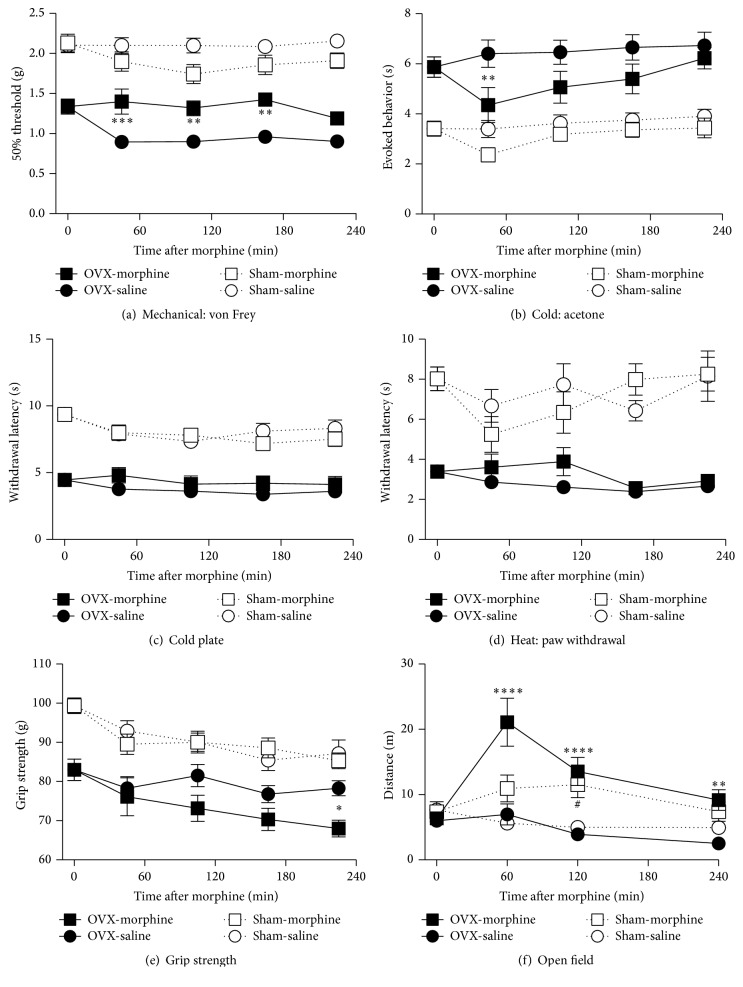
Although the pathological changes in osteoporotic bones are well established, the characterization of the osteoporotic pain and its appropriate treatment are not fully elucidated. We investigated the behavioral signs of cutaneous and deep musculoskeletal pain and physical function; time-dependent changes in bone mineral density (BMD) and the emergence of the behavioral phenotype; and the effects of pharmacological interventions having different mechanisms of action (chronic intraperitoneal administration of pamidronate [0.25 mg/kg, 5x/week for 5 weeks] versus acute treatment with intraperitoneal morphine [10 mg/kg] and pregabalin [100 mg/kg]) in a mouse model of ovariectomized or sham-operated mice 6 months following surgery. We observed reduced BMD associated with weight gain, referred cutaneous hypersensitivity, and deep musculoskeletal pain that persisted for 6 months. Chronic bisphosphonate treatment, 6 months after ovariectomy, reversed bone loss and hypersensitivity to cold, but other behavioral indices of osteoporotic pain were unchanged. While the efficacy of acute morphine on cutaneous pain was weak, pregabalin was highly effective; deep musculoskeletal pain was intractable. In conclusion, the reversal of bone loss alone is insufficient to manage pain in chronic osteoporosis. Additional treatments, both pharmacological and nonpharmacological, should be implemented to improve quality of life for osteoporosis patients.
尽管骨质疏松性骨骼的病理变化已得到充分证实,但骨质疏松性疼痛的特征及其恰当治疗仍未完全阐明。我们研究了皮肤和深部肌肉骨骼疼痛的行为体征以及身体功能;骨矿物质密度(BMD)随时间的变化以及行为表型的出现;以及在卵巢切除或假手术小鼠术后6个月的小鼠模型中,具有不同作用机制的药物干预措施(腹腔内慢性给予帕米膦酸盐[0.25mg/kg,每周5次,共5周]与腹腔内注射吗啡[10mg/kg]和普瑞巴林[100mg/kg]的急性治疗)的效果。我们观察到BMD降低与体重增加、牵涉性皮肤超敏反应以及持续6个月的深部肌肉骨骼疼痛有关。卵巢切除术后6个月进行慢性双膦酸盐治疗可逆转骨质流失和对寒冷的超敏反应,但骨质疏松性疼痛的其他行为指标未改变。虽然急性吗啡对皮肤疼痛的疗效较弱,但普瑞巴林非常有效;深部肌肉骨骼疼痛难以治疗。总之,仅逆转骨质流失不足以控制慢性骨质疏松症的疼痛。应实施额外的药物和非药物治疗,以改善骨质疏松症患者的生活质量。