
通过翅测量鉴定具有法医重要性的蝇科(双翅目)昆虫。
Identification of Muscidae (Diptera) of medico-legal importance by means of wing measurements.
作者信息
Grzywacz Andrzej, Ogiela Jakub, Tofilski Adam
机构信息
Chair of Ecology and Biogeography, Nicolaus Copernicus University, Lwowska 1, 87-100, Toruń, Poland.
Department of Pomology and Apiculture, Agricultural University, 29 Listopada 54, 31-425, Kraków, Poland.
出版信息
Parasitol Res. 2017 May;116(5):1495-1504. doi: 10.1007/s00436-017-5426-x. Epub 2017 Mar 16.
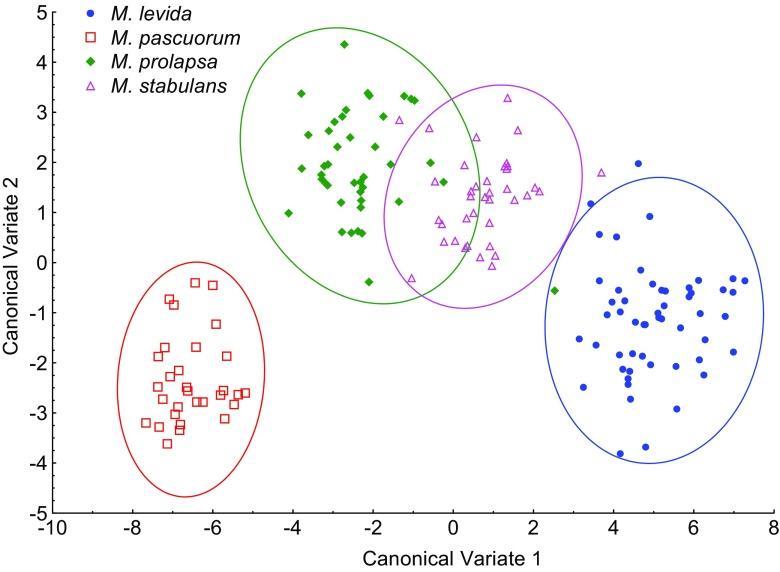
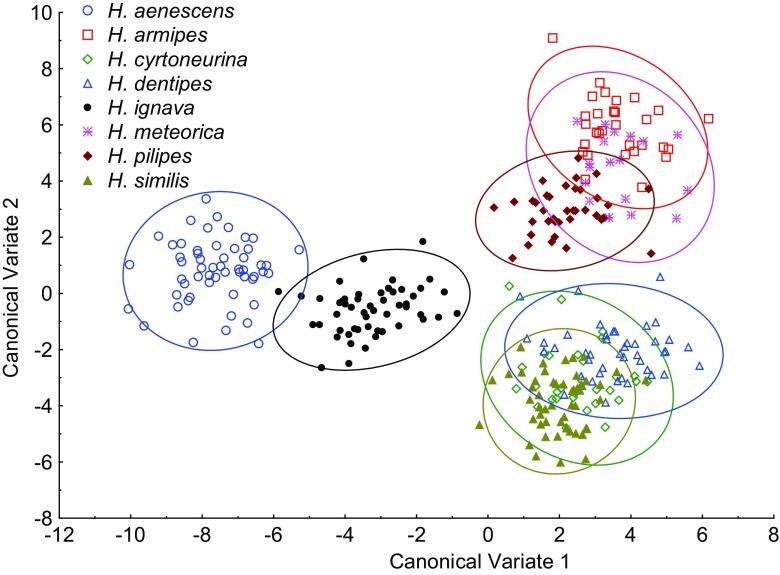
Cadavers attract numerous species and genera of Muscidae, both regular elements of carrion insect assemblages, and accidental visitors. Identification of adult Muscidae may be considered difficult, particularly by non-experts. Since species identification is a vital first step in the analysis of entomological material in any forensic entomology orientated experiment and real cases, various alternative methods of species identification have been proposed. We investigated possibility of semiautomated identification by means of wing measurements as an alternative for classic morphology and DNA-based approaches. We examined genus-level identification success for 790 specimens representing 13 genera of the most common European cadavers visiting Muscidae. We found 99.8% of examined specimens correctly identified to the genus-level. Without error, the following were identified: Azelia, Eudasyphora, Graphomya, Hydrotaea, Musca, Muscina, Mydaea, Neomyia, Polietes, Stomoxys and Thricops. Genus-level misidentifications were found only in Helina and Phaonia. Discrimination of examined material on the species level within Hydrotaea (318 specimens representing eight species) and Muscina (163 specimens representing four species) showed lower, yet still high average identification success, 97.2 and 98.8%, respectively. Our results revealed relatively high success in both genus and species identification of Muscidae of medico-legal importance. Semiautomated identification by means of wing measurements can be used by non-experts and does not require sophisticated equipment. This method will facilitate the identification of forensically relevant muscids in comparison to more difficult and more time-consuming identification approaches based on taxonomic keys or DNA-based methods. However, for unambiguous identification of some taxa, we recommend complementary use of identification keys.
尸体吸引了众多蝇科的物种和属,它们既是腐肉昆虫群落的常见组成部分,也是偶然访客。成年蝇科昆虫的鉴定可能被认为是困难的,尤其是对于非专业人士来说。由于物种鉴定是任何法医昆虫学相关实验和实际案例中昆虫材料分析的关键第一步,因此人们提出了各种替代的物种鉴定方法。我们研究了通过翅测量进行半自动鉴定的可能性,以此作为传统形态学和基于DNA方法的替代方法。我们检查了代表欧洲最常见的访问尸体的蝇科13个属的790个标本的属级鉴定成功率。我们发现99.8%的被检查标本被正确鉴定到属级。以下属被无误鉴定:阿泽蝇属、优达蝇属、图斑蝇属、齿股蝇属、家蝇属、腐蝇属、米蝇属、新黑蝇属、多鬃蝇属、厩螫蝇属和三鬃蝇属。仅在黑蝇属和秆蝇属中发现了属级误鉴定。在齿股蝇属(代表8个物种的318个标本)和腐蝇属(代表4个物种的163个标本)内对被检查材料进行物种水平的区分,显示平均鉴定成功率较低,但仍然很高,分别为97.2%和98.8%。我们的结果表明,在具有法医重要性的蝇科的属和物种鉴定方面都取得了较高的成功率。通过翅测量进行的半自动鉴定非专业人士也可以使用,并且不需要复杂的设备。与基于分类检索表或基于DNA的方法等更困难、更耗时的鉴定方法相比,这种方法将有助于鉴定与法医相关的蝇类。然而,为了明确鉴定某些分类单元,我们建议补充使用鉴定检索表。



 Zotero 插件