Biradi Mahesh, Hullatti Kirankumar
a Department of Pharmaconosy , KLE University's College of Pharmacy , Belagavi , India.
Pharm Biol. 2017 Dec;55(1):1375-1379. doi: 10.1080/13880209.2017.1301491.
Despite several phytochemical studies of Premna serratifolia Linn. (Verbenaceae), the isolation of active constituents of this plant remains to be explored.
The study isolates cytotoxic terpenoids and steroids from the leaves of Premna serratifolia.
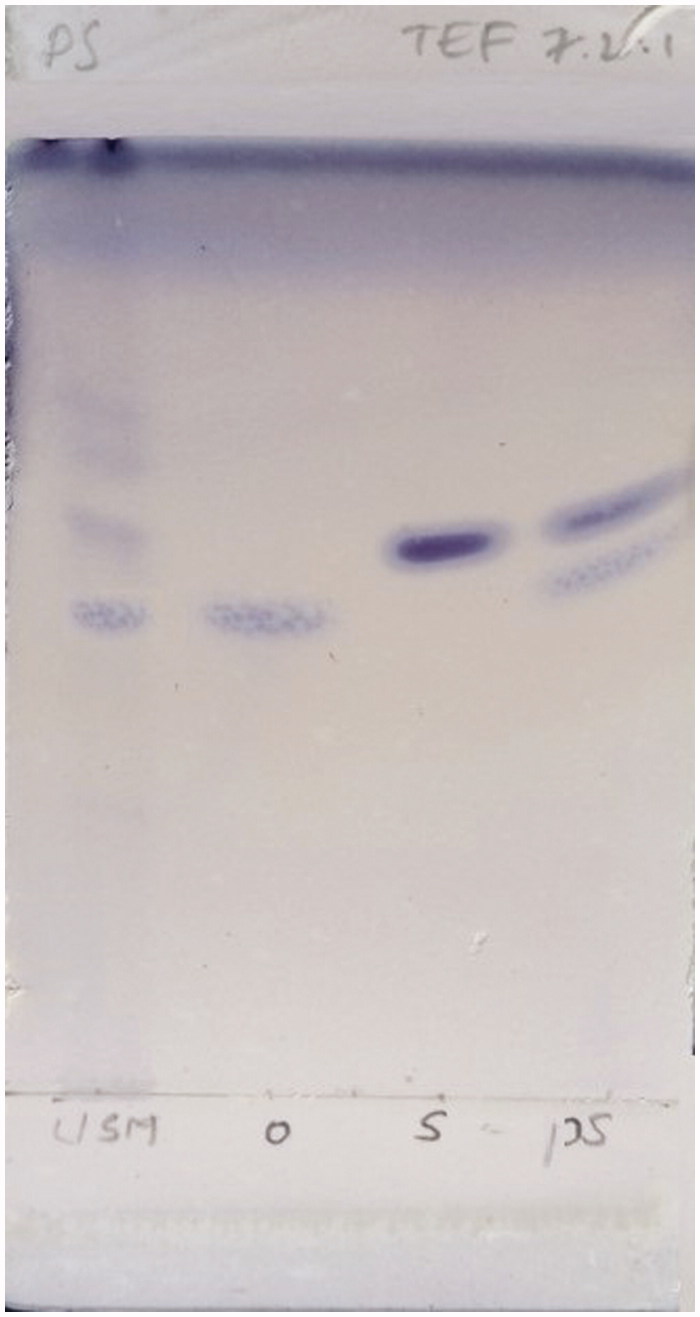
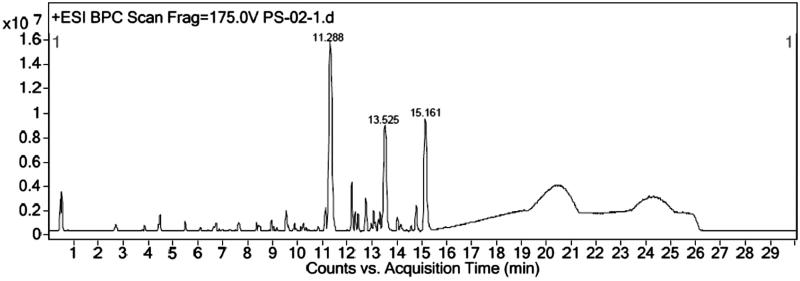
Unsaponifiable matter of hexane soluble fraction obtained from methanol extract was subjected to isolation by column chromatography and preparative TLC. Three compounds PS-01 A, PS-01B and PS-02 A were isolated. PS-01 A and PS-01B were identified by comparative TLC with authentic marker compounds followed by NMR analysis. Further PS-01B was analyzed by HR-GCMS. PS-02 A was subjected to HR-LCMS. All isolated compounds/fractions were evaluated for cytotoxic activity by BSL bioassay and using cell lines A549, HepG2 and L6.
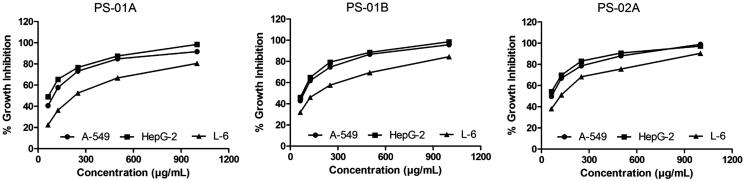
Three compounds were isolated from the leaf extract by bioactivity-guided fractionation. Two of which, namely, PS-01 A (oleanolic acid) and PS-02 A (unknown) were found to be terpenoids and PS-01B was identified as steroid (stigmasterol). PS-02 A compound is to be purified and characterized further. All three compounds PS-01 A, PS-01B, PS-02 A showed cytotoxicity by BSL bioassay (LC value of 54.49, 30.83, 16.32 ppm, respectively) and by cell line study where isolate PS-02 A has shown more cytotoxicity with LC values of 66.77 and 53.72 μg/mL with A549 and HepG2 cells, respectively, when compared with other isolates.
Bioactivity guided fractionation of Premna serratifolia leaves succeeded into isolation of two terpenoids and one steroid compound with significant cytotoxic activity. Here we report the isolation of these cytotoxic terpenoids/steroids from this plant for the first time which could be developed as anticancer agents.
尽管对锯齿叶豆腐柴(马鞭草科)进行了多项植物化学研究,但该植物活性成分的分离仍有待探索。
本研究从锯齿叶豆腐柴的叶子中分离出具有细胞毒性的萜类化合物和甾体化合物。
对甲醇提取物中己烷可溶部分的不皂化物进行柱色谱和制备薄层色谱分离。分离出三种化合物PS-01 A、PS-01B和PS-02 A。通过与标准对照品的比较薄层色谱法,随后进行核磁共振分析,鉴定出PS-01 A和PS-01B。进一步通过高分辨气相色谱-质谱联用仪对PS-01B进行分析。对PS-02 A进行高分辨液相色谱-质谱联用分析。通过BSL生物测定法并使用A549、HepG2和L6细胞系对所有分离得到的化合物/组分进行细胞毒性活性评估。
通过生物活性导向分级分离从叶提取物中分离出三种化合物。其中两种,即PS-01 A(齐墩果酸)和PS-02 A(未知物)被发现是萜类化合物,PS-01B被鉴定为甾体化合物(豆甾醇)。PS-02 A化合物有待进一步纯化和表征。所有三种化合物PS-01 A、PS-01B、PS-02 A通过BSL生物测定法均显示出细胞毒性(LC值分别为54.49、30.83、16.32 ppm),并且通过细胞系研究表明,与其他分离物相比,分离物PS-02 A对A549和HepG2细胞的细胞毒性更强,LC值分别为66.77和53.72 μg/mL。
锯齿叶豆腐柴叶的生物活性导向分级分离成功分离出两种具有显著细胞毒性活性的萜类化合物和一种甾体化合物。在此我们首次报道从该植物中分离出这些具有细胞毒性的萜类化合物/甾体化合物,它们有望被开发为抗癌药物。