Smith Maria W, Herfort Lydie, Fortunato Caroline S, Crump Byron C, Simon Holly M
Center for Coastal Margin Observation & Prediction, Oregon Health & Science University, Portland, OR, USA.
Institute of Environmental Health, Oregon Health & Science University, Portland, OR, USA.
Microbiologyopen. 2017 Aug;6(4). doi: 10.1002/mbo3.467. Epub 2017 Mar 20.
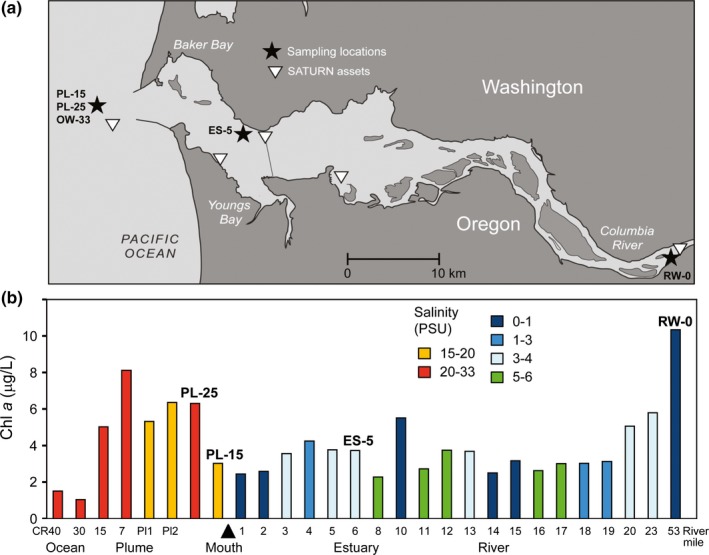
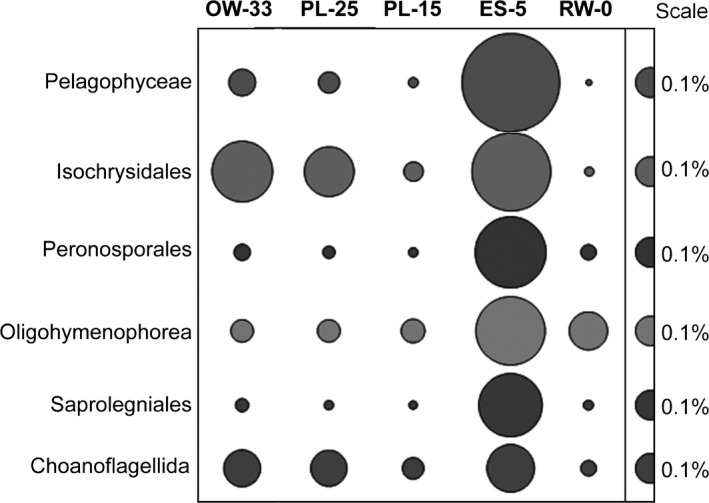
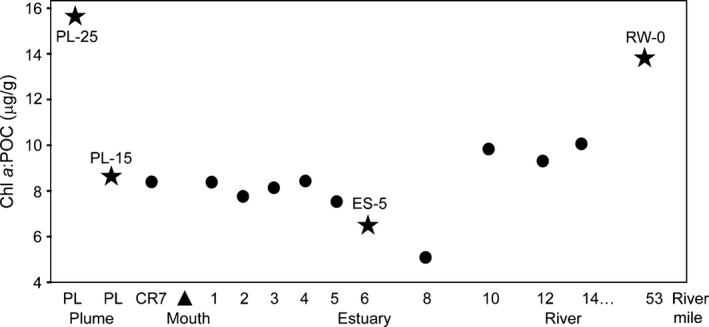
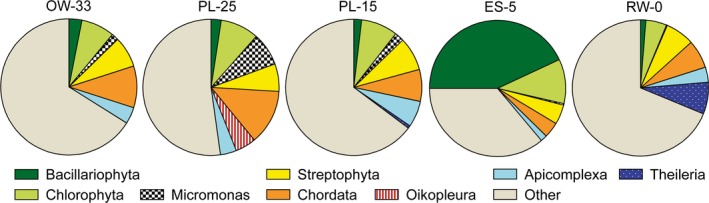
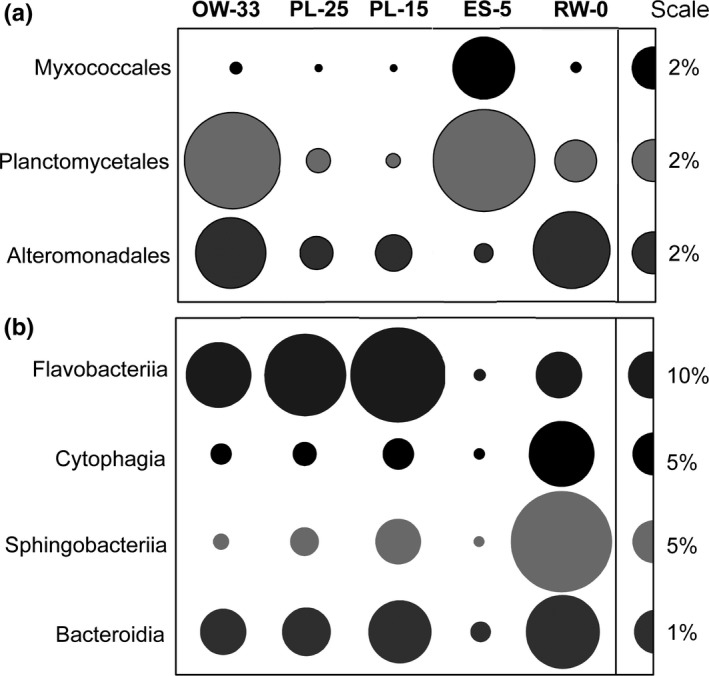
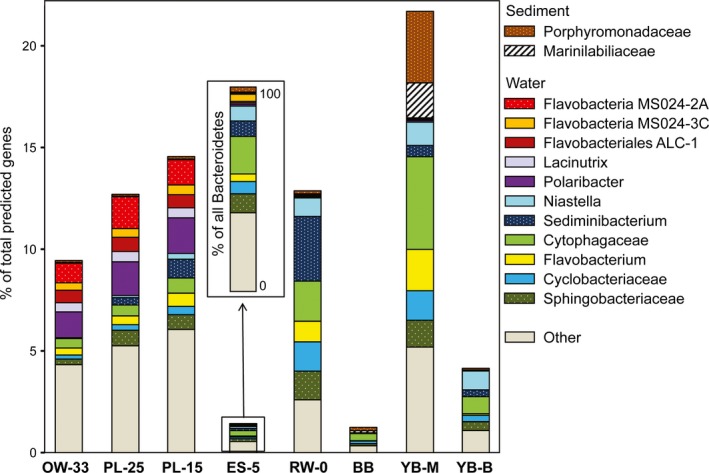
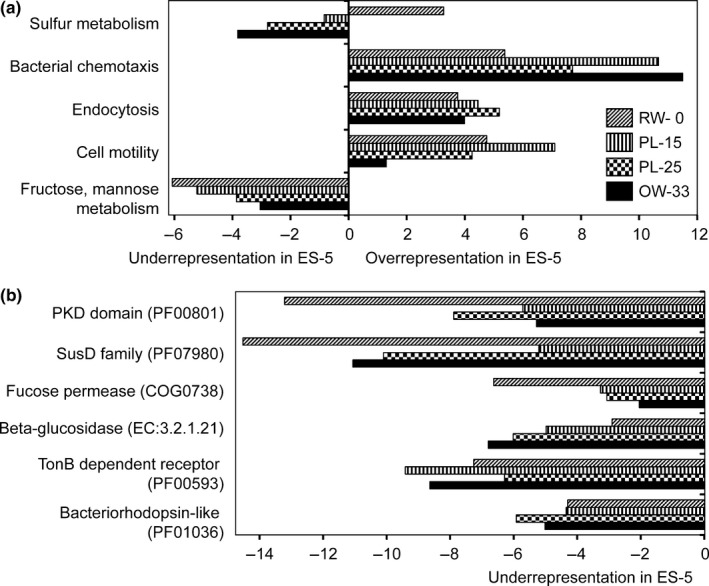
Fueled by seasonal phytoplankton blooms, the Columbia River estuary is a natural bioreactor for organic matter transformations. Prior metagenome analyses indicated high abundances of diverse Bacteroidetes taxa in estuarine samples containing phytoplankton. To examine the hypothesis that Bacteroidetes taxa have important roles in phytoplankton turnover, we further analyzed metagenomes from water collected along a salinity gradient at 0, 5, 15, 25, and 33 PSU during bloom events. Size fractions were obtained by using a 3-μm prefilter and 0.2-μm collection filter. Although this approach targeted bacteria by removing comparatively large eukaryotic cells, the metagenome from the ES-5 sample (5 PSU) nevertheless contained an abundance of diatom DNA. Biogeochemical measurements and prior studies indicated that this finding resulted from the leakage of cellular material due to freshwater diatom lysis at low salinity. Relative to the other metagenomes, the bacterial fraction of ES-5 was dramatically depleted of genes annotated as Bacteroidetes and lysogenic bacteriophages, but was overrepresented in DNA of protists and Myxococcales bacterivores. We suggest the following equally plausible scenarios for the microbial response to phytoplankton lysis: (1) Bacteroidetes depletion in the free-living fraction may at least in part be caused by their attachment to fluvial diatoms as the latter are lysed upon contact with low-salinity estuarine waters; (2) diatom particle colonization is likely followed by rapid bacterial growth and lytic phage infection, resulting in depletion of lysogenic bacteriophages and host bacteria; and (3) the subsequent availability of labile organic matter attracted both grazers and predators to feed in this estuarine biogeochemical "hotspot," which may have additionally depleted Bacteroidetes populations. These results represent the first detailed molecular analysis of the microbial response to phytoplankton lysis at the freshwater-brackish water interface in the fast-flowing Columbia River estuary.
在季节性浮游植物大量繁殖的推动下,哥伦比亚河河口是进行有机物转化的天然生物反应器。先前的宏基因组分析表明,在含有浮游植物的河口样本中,多种拟杆菌类群的丰度很高。为了检验拟杆菌类群在浮游植物周转中起重要作用这一假设,我们进一步分析了在水华事件期间,沿盐度梯度在0、5、15、25和33 PSU采集的水样的宏基因组。通过使用3μm的预过滤器和0.2μm的收集过滤器获得不同大小的组分。尽管这种方法通过去除相对较大的真核细胞来靶向细菌,但ES - 5样本(5 PSU)的宏基因组中仍然含有大量的硅藻DNA。生物地球化学测量和先前的研究表明,这一发现是由于低盐度下淡水硅藻裂解导致细胞物质泄漏所致。相对于其他宏基因组,ES - 5的细菌组分中注释为拟杆菌和溶原性噬菌体的基因显著减少,但原生生物和粘球菌食细菌者的DNA含量过高。我们针对微生物对浮游植物裂解的反应提出以下同样合理的设想:(1)自由生活部分中拟杆菌的减少可能至少部分是由于它们附着在河流硅藻上,因为后者在与低盐度河口海水接触时会裂解;(2)硅藻颗粒定殖后可能紧接着细菌快速生长和裂解性噬菌体感染,导致溶原性噬菌体和宿主细菌减少;(3)随后易分解有机物的存在吸引了食草动物和捕食者在这个河口生物地球化学“热点”觅食,这可能进一步减少了拟杆菌种群。这些结果代表了对快速流动的哥伦比亚河河口淡水 - 微咸水界面处微生物对浮游植物裂解反应的首次详细分子分析。