Bazin Pauline, Jouenne Fabien, Friedl Thomas, Deton-Cabanillas Anne-Flore, Le Roy Bertrand, Véron Benoît
Université de Caen Basse-Normandie, UMR BOREA "Biologie des Organismes et Ecosystèmes Aquatiques," Caen, France; Centre National de la Recherche Scientifique (CNRS), Institut Ecologie et Environnement (INEE), UMR BOREA, Caen, France.
Algobank-Caen, Université de Caen Basse-Normandie, Caen, France.
PLoS One. 2014 Apr 9;9(4):e94110. doi: 10.1371/journal.pone.0094110. eCollection 2014.
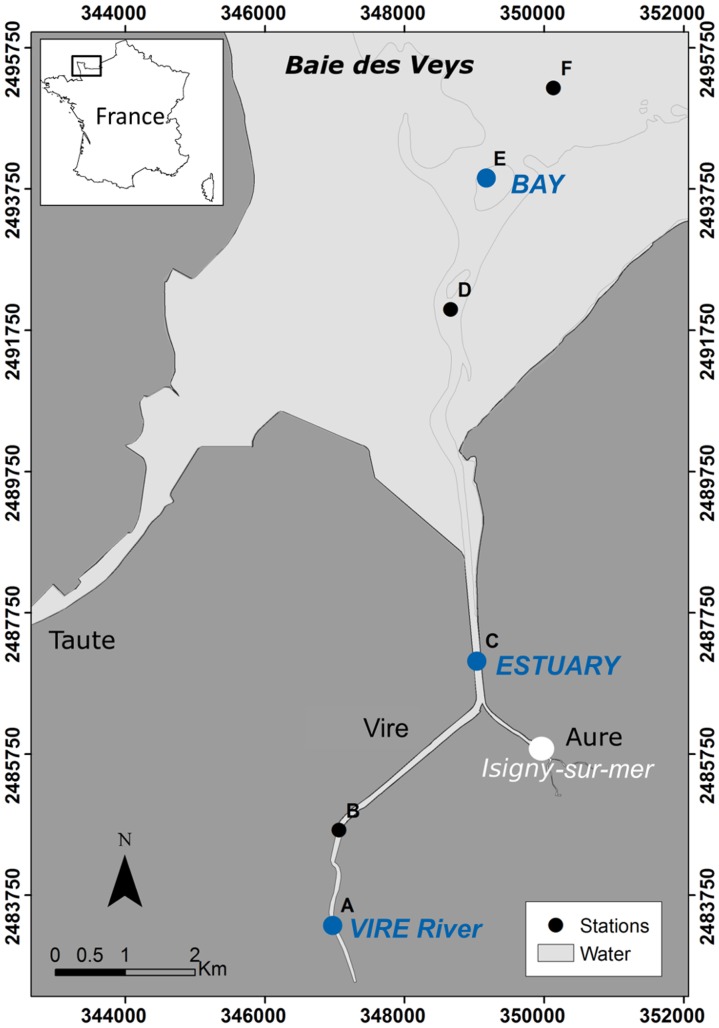
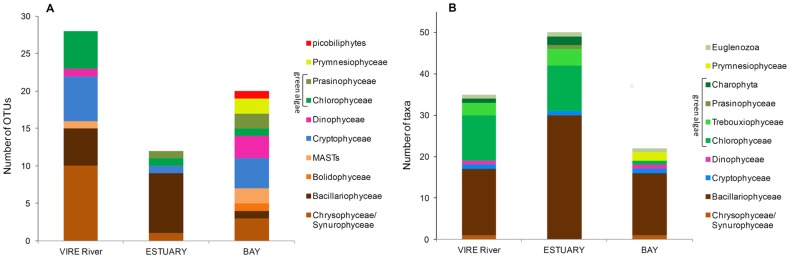
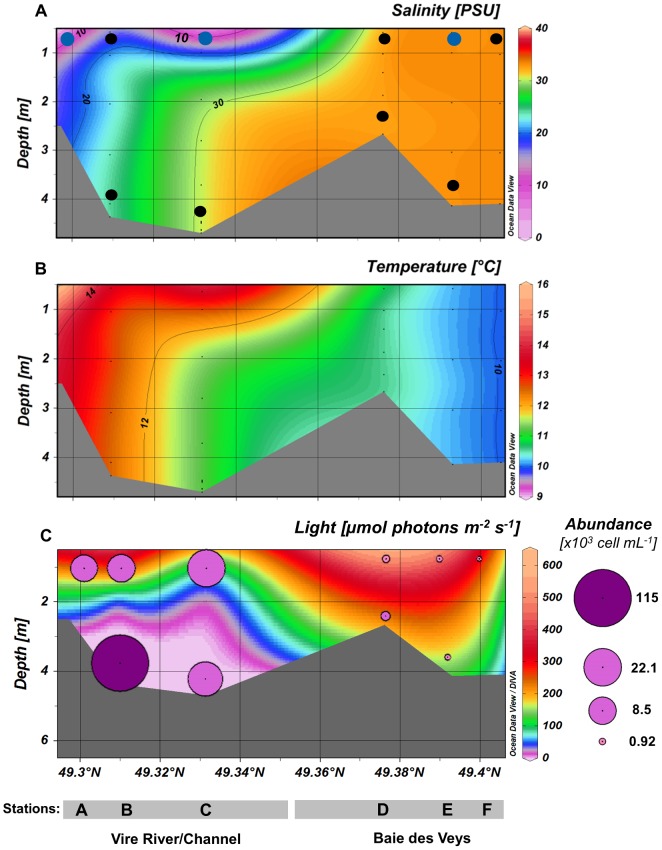
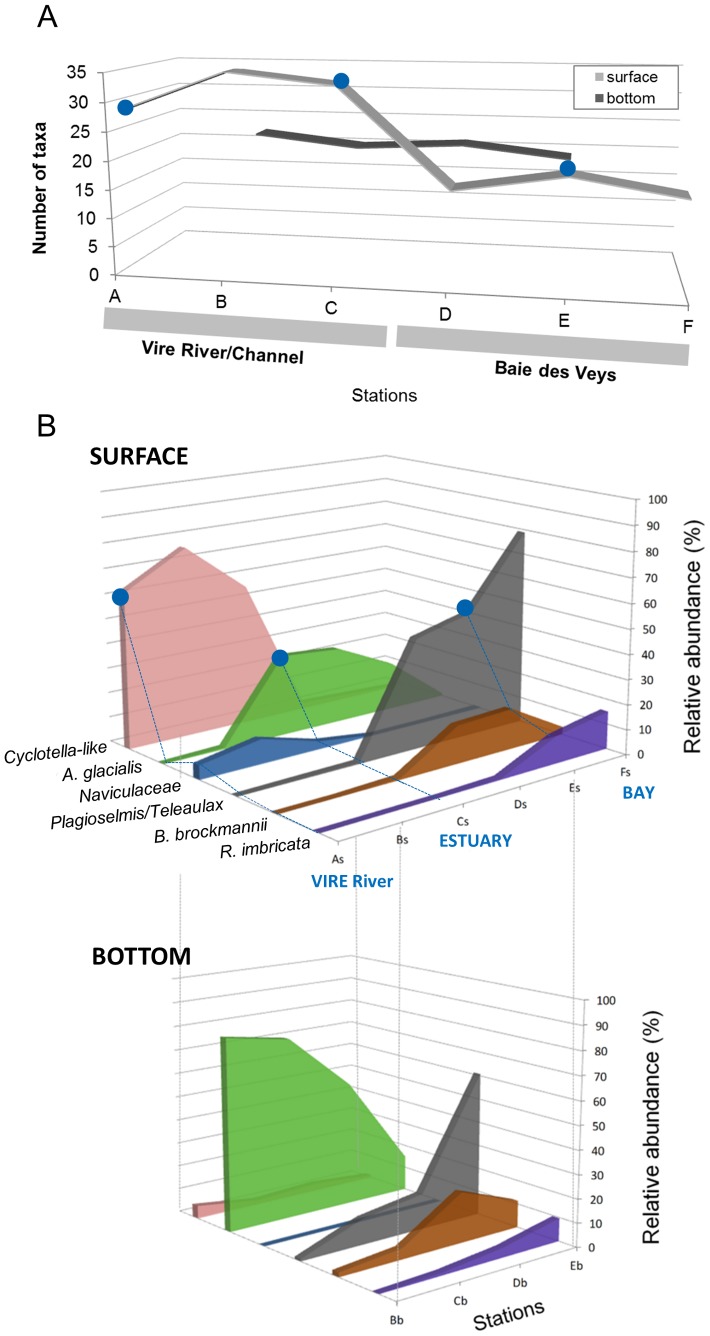
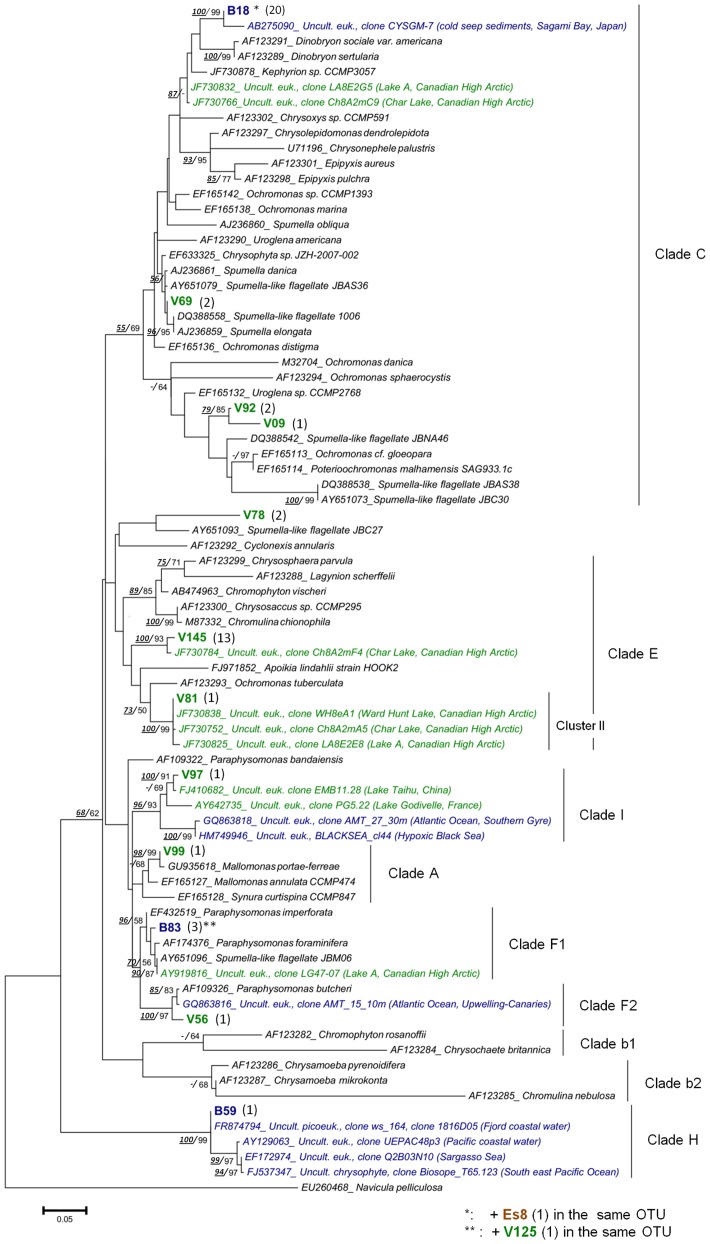
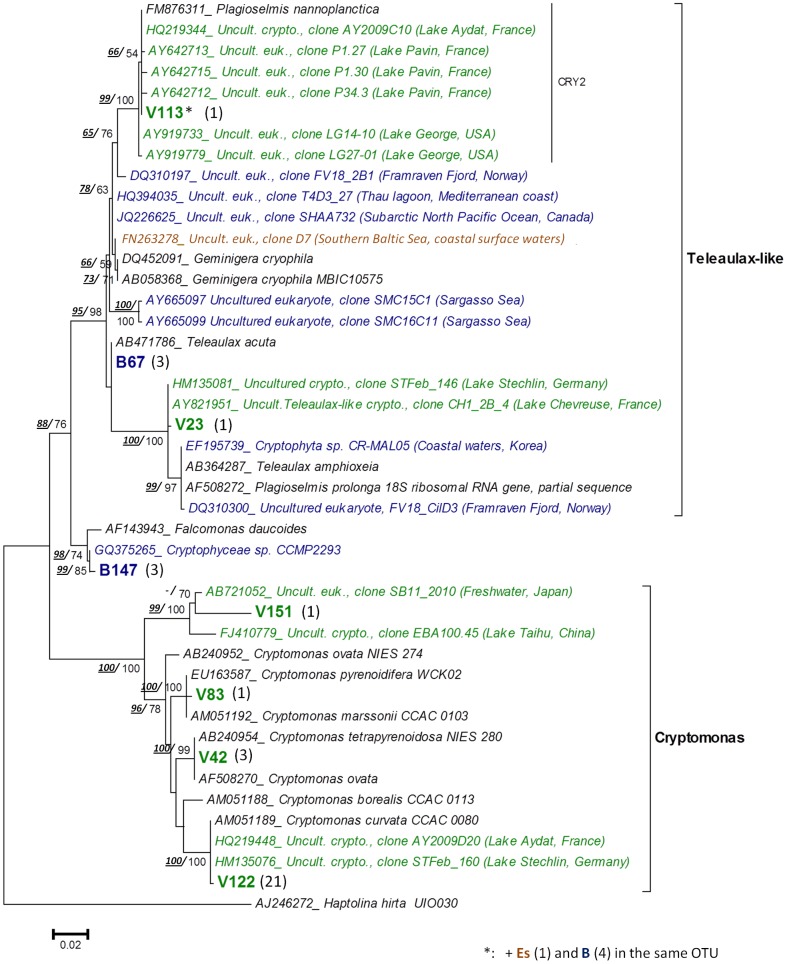
Microscopical and molecular analyses were used to investigate the diversity and spatial community structure of spring phytoplankton all along the estuarine gradient in a macrotidal ecosystem, the Baie des Veys (eastern English Channel). Taxa distribution at high tide in the water column appeared to be mainly driven by the tidal force which superimposed on the natural salinity gradient, resulting in a two-layer flow within the channel. Lowest taxa richness and abundance were found in the bay where Teleaulax-like cryptophytes dominated. A shift in species composition occurred towards the mouth of the river, with the diatom Asterionellopsis glacialis dramatically accumulating in the bottom waters of the upstream brackish reach. Small thalassiosiroid diatoms dominated the upper layer river community, where taxa richness was higher. Through the construction of partial 18S rDNA clone libraries, the microeukaryotic diversity was further explored for three samples selected along the surface salinity gradient (freshwater - brackish - marine). Clone libraries revealed a high diversity among heterotrophic and/or small-sized protists which were undetected by microscopy. Among them, a rich variety of Chrysophyceae and other lineages (e.g. novel marine stramenopiles) are reported here for the first time in this transition area. However, conventional microscopy remains more efficient in revealing the high diversity of phototrophic taxa, low in abundances but morphologically distinct, that is overlooked by the molecular approach. The differences between microscopical and molecular analyses and their limitations are discussed here, pointing out the complementarities of both approaches, for a thorough phytoplankton community description.
利用显微镜和分子分析方法,研究了大潮差生态系统——韦伊湾(英吉利海峡东部)沿河口梯度分布的春季浮游植物的多样性和空间群落结构。水柱中涨潮时的分类群分布似乎主要受潮汐力驱动,潮汐力叠加在自然盐度梯度上,导致海峡内形成两层水流。在以类泰勒藻隐藻为主的海湾中,分类群丰富度和丰度最低。随着向河口方向移动,物种组成发生了变化,硅藻冰河星脐藻在上游咸淡水区域的底部水域大量积累。小型海链藻硅藻主导了河流上层群落,该区域的分类群丰富度更高。通过构建部分18S rDNA克隆文库,进一步探索了沿表层盐度梯度(淡水 - 咸淡水 - 海洋)选取的三个样本中的微型真核生物多样性。克隆文库揭示了异养和/或小型原生生物中存在高度多样性,而这些在显微镜观察中未被发现。其中,金藻纲和其他谱系(如新型海洋不等鞭毛藻)在这个过渡区域首次被报道。然而,传统显微镜在揭示光合分类群的高度多样性方面仍然更有效,这些光合分类群丰度低但形态独特,而分子方法却忽略了它们。本文讨论了显微镜分析和分子分析之间的差异及其局限性,指出了两种方法的互补性,以便全面描述浮游植物群落。