Tel Aviv University, Israel and University of Warwick, UK.
Department of Health Care Policy, Harvard Medical School and NBER, United States.
J Health Econ. 2017 Dec;56:281-291. doi: 10.1016/j.jhealeco.2016.12.004. Epub 2016 Dec 29.
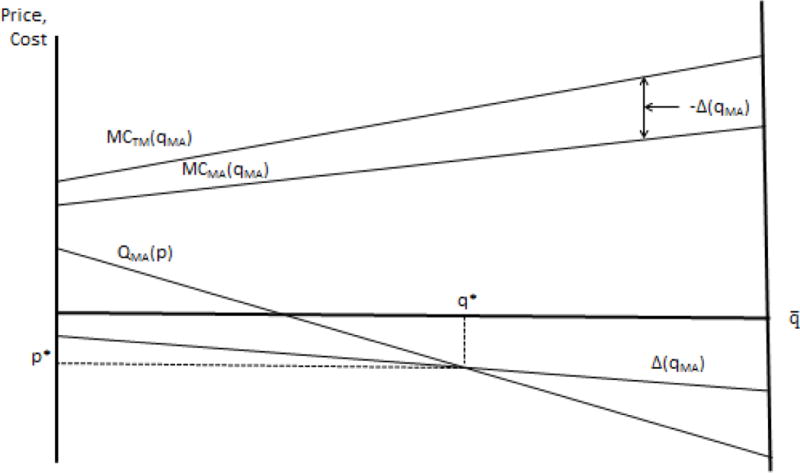
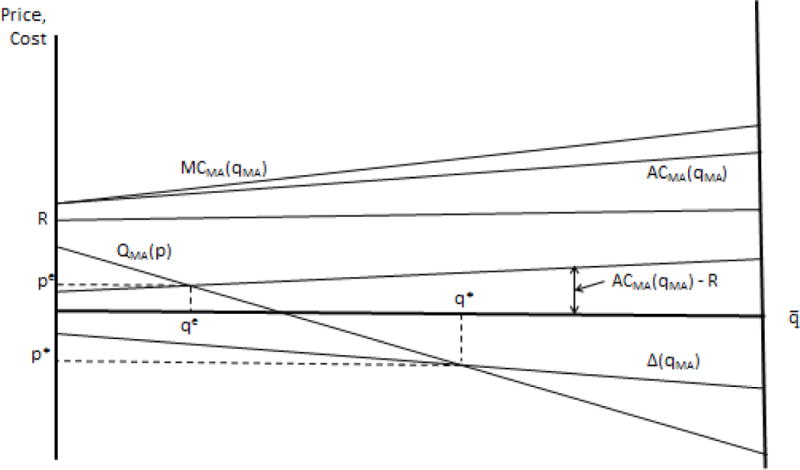
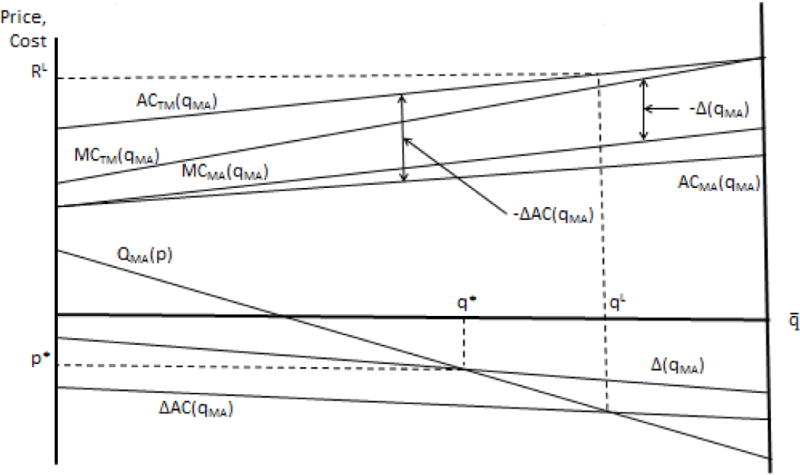
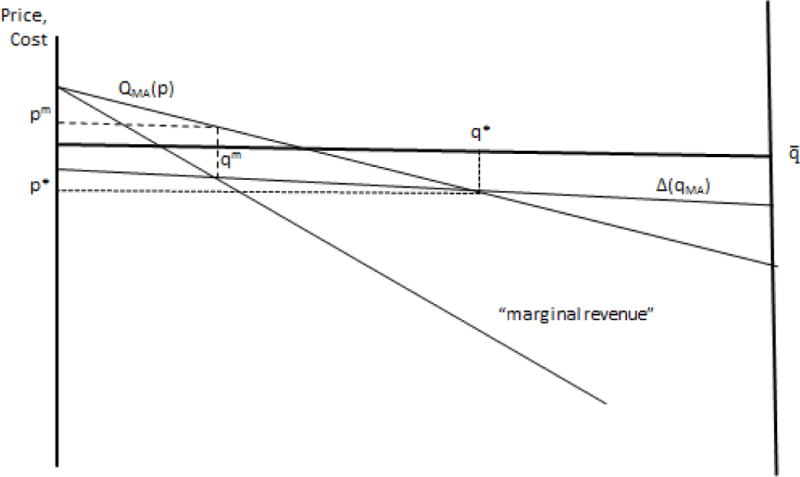
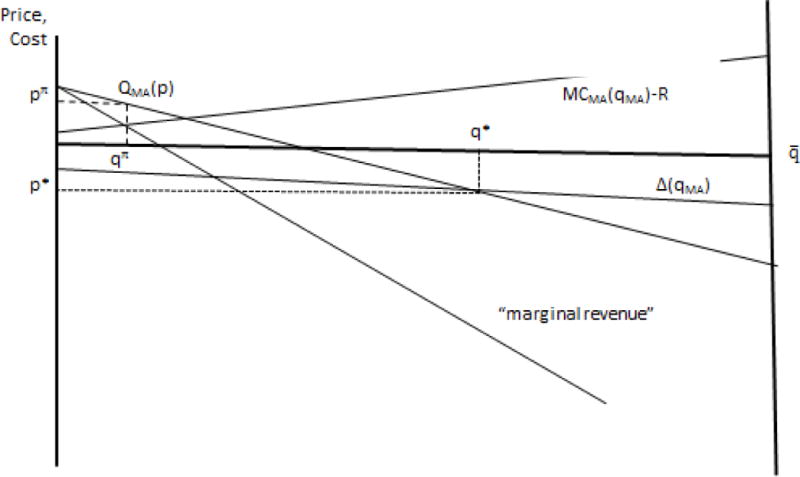
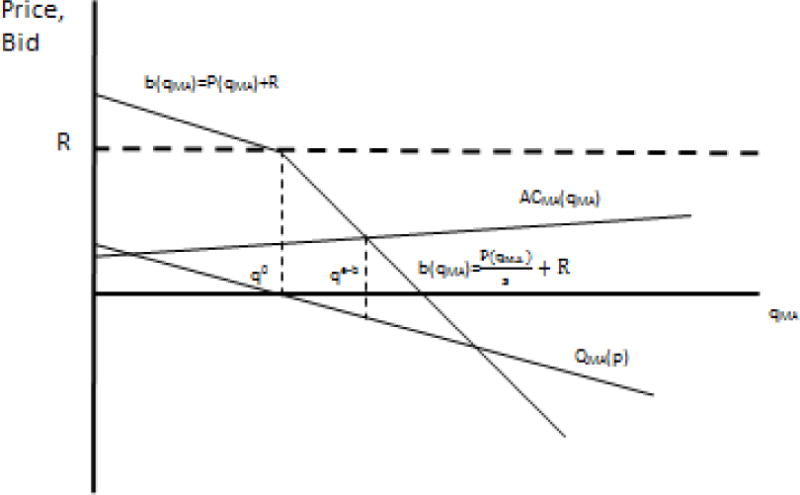
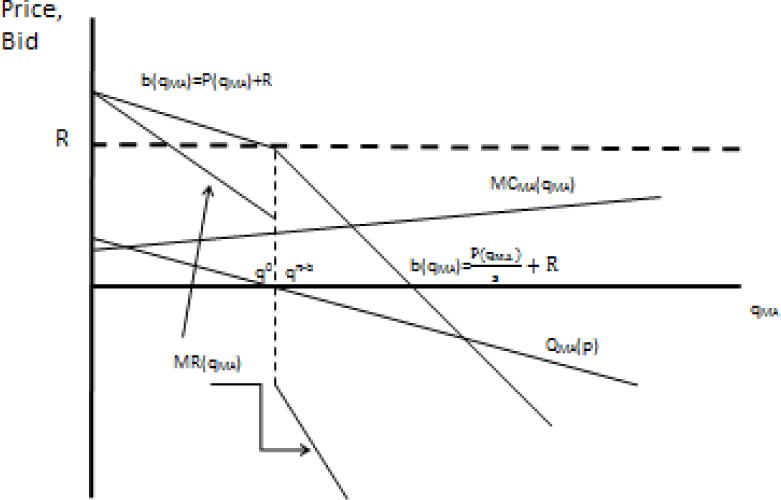
Medicare beneficiaries are eligible for health insurance through the public option of traditional Medicare (TM) or may join a private Medicare Advantage (MA) plan. Both are highly subsidized but in different ways. Medicare pays for most of costs directly in TM, and subsidizes MA plans based on a "benchmark" for each beneficiary choosing a private plan. The level of this benchmark is arguably the most important policy decision Medicare makes about the MA program. Many analysts recommend equalizing Medicare's subsidy across the options - referred to in policy circles as a "level playing field." This paper studies the normative question of how to set the level of the benchmark, applying the versatile model developed by Einav and Finkelstein (EF) to Medicare. The EF framework implies unequal subsidies to counteract risk selection across plan types. We also study other reasons to tilt the field: the relative efficiency of MA vs. TM, market power of MA plans, and institutional features of the way Medicare determines subsidies and premiums. After review of the empirical and policy literature, we conclude that in areas where the MA market is competitive, the benchmark should be set below average costs in TM, but in areas characterized by imperfect competition in MA, it should be raised in order to offset output (enrollment) restrictions by plans with market power. We also recommend specific modifications of Medicare rules to make demand for MA more price elastic.
医疗保险受益人有资格通过传统医疗保险(TM)的公共选项或加入私人医疗保险优势(MA)计划获得健康保险。两者都有高额补贴,但方式不同。TM 直接支付大部分费用,而根据选择私人计划的每位受益人的“基准”补贴 MA 计划。基准的水平可以说是医疗保险对 MA 计划做出的最重要的政策决策。许多分析师建议在各种方案中实现医疗保险补贴的均等化——在政策圈中称为“公平竞争环境”。本文应用 Einav 和 Finkelstein(EF)为医疗保险开发的多功能模型,研究了如何设定基准水平的规范性问题。EF 框架意味着需要进行不平等补贴,以抵消不同计划类型之间的风险选择。我们还研究了其他倾斜竞争环境的原因:MA 与 TM 的相对效率、MA 计划的市场力量以及医疗保险确定补贴和保费的方式的制度特征。在审查了实证和政策文献后,我们得出结论,在 MA 市场具有竞争力的领域,基准应设定在 TM 的平均成本以下,但在 MA 中存在不完善竞争的领域,应提高基准以抵消具有市场力量的计划对产出(注册)的限制。我们还建议对医疗保险规则进行具体修改,以提高 MA 的需求价格弹性。