Department of Metabolic Biology, John Innes Centre, Norwich NR4 7UH, UK.
National Key Laboratory of Crop Genetic Improvement and National Center of Plant Gene Research (Wuhan), Huazhong Agricultural University, Wuhan 430070, China.
Curr Biol. 2017 Apr 3;27(7):945-957. doi: 10.1016/j.cub.2017.02.027. Epub 2017 Mar 16.
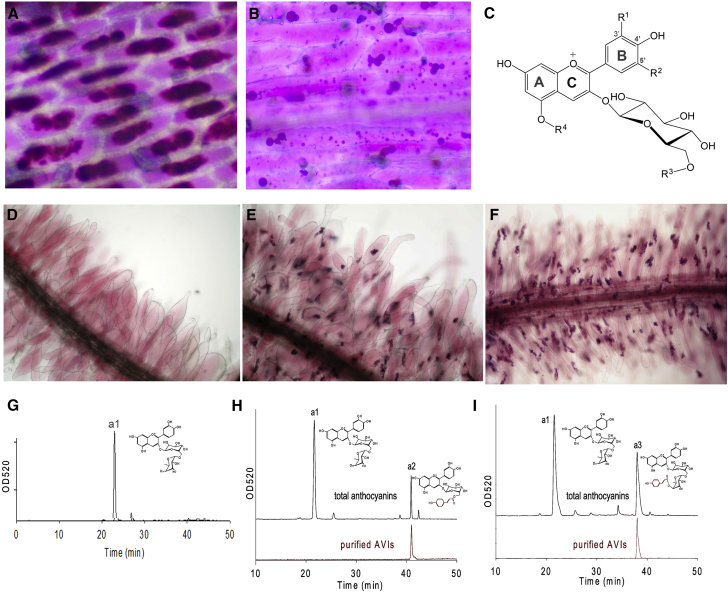
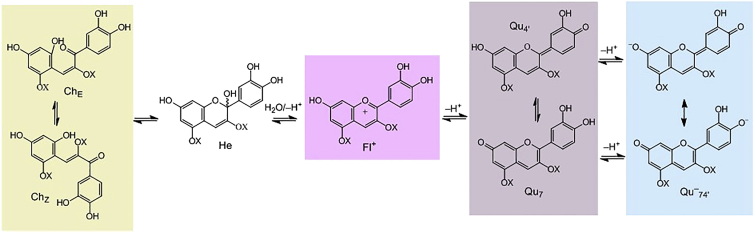
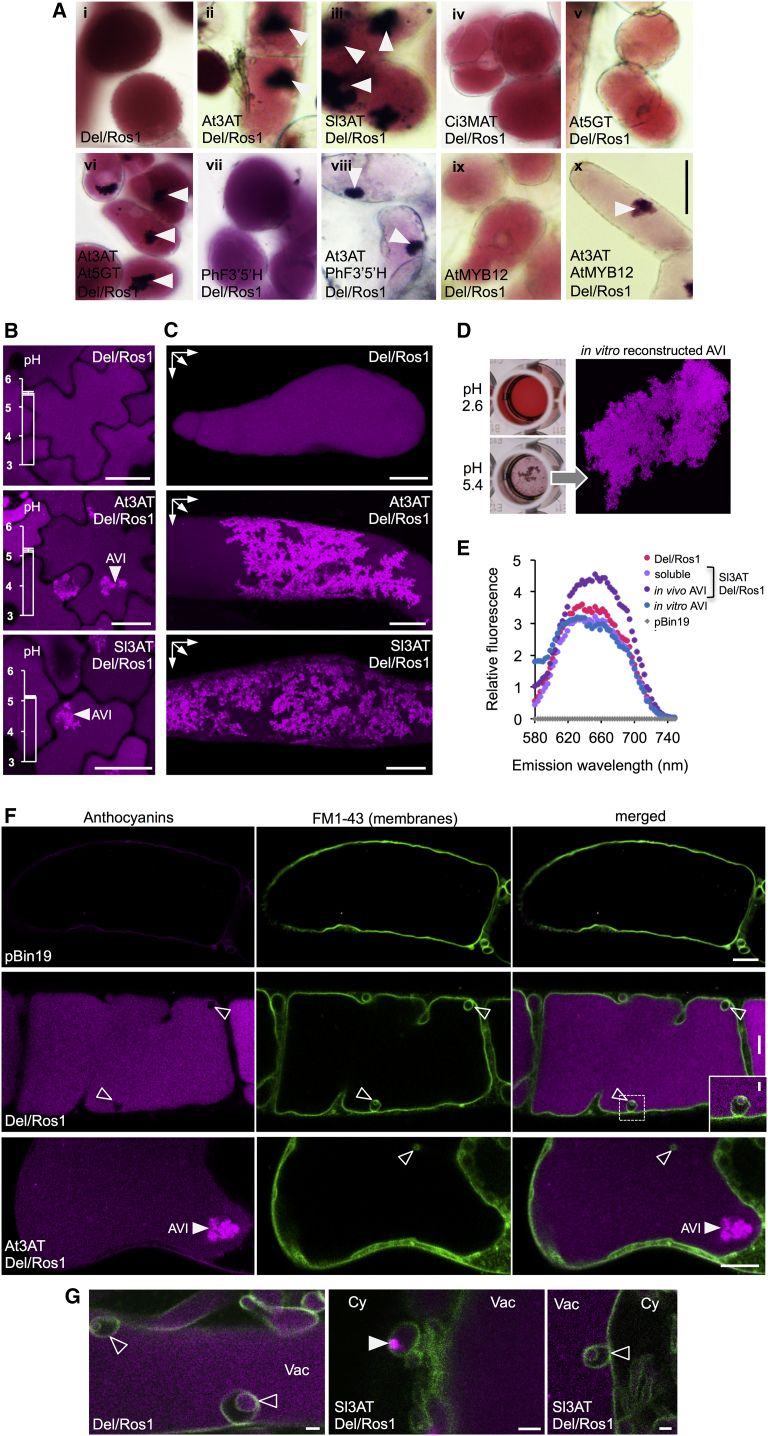
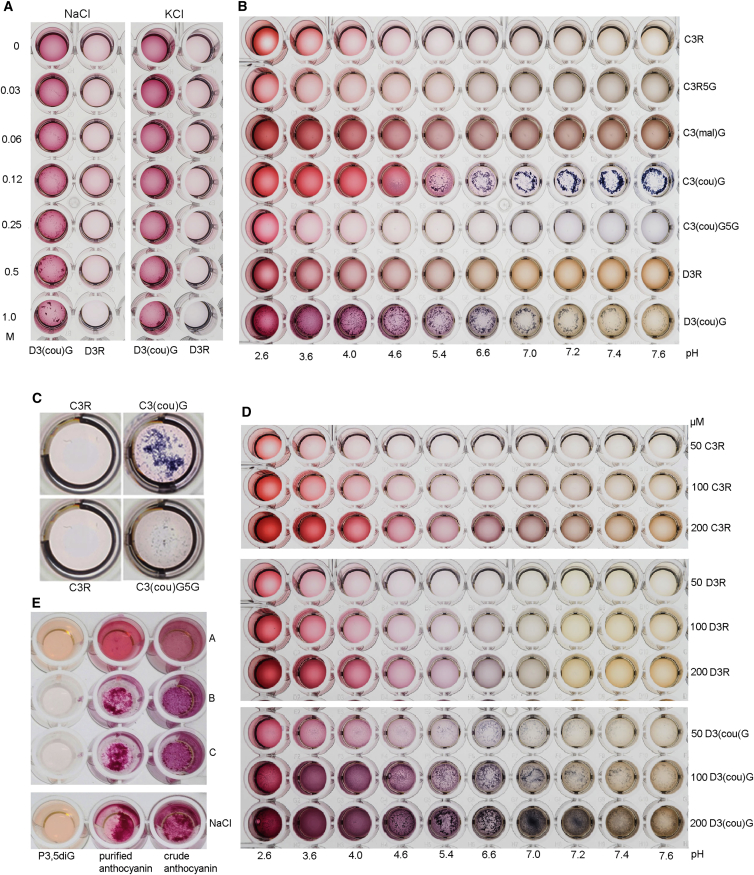
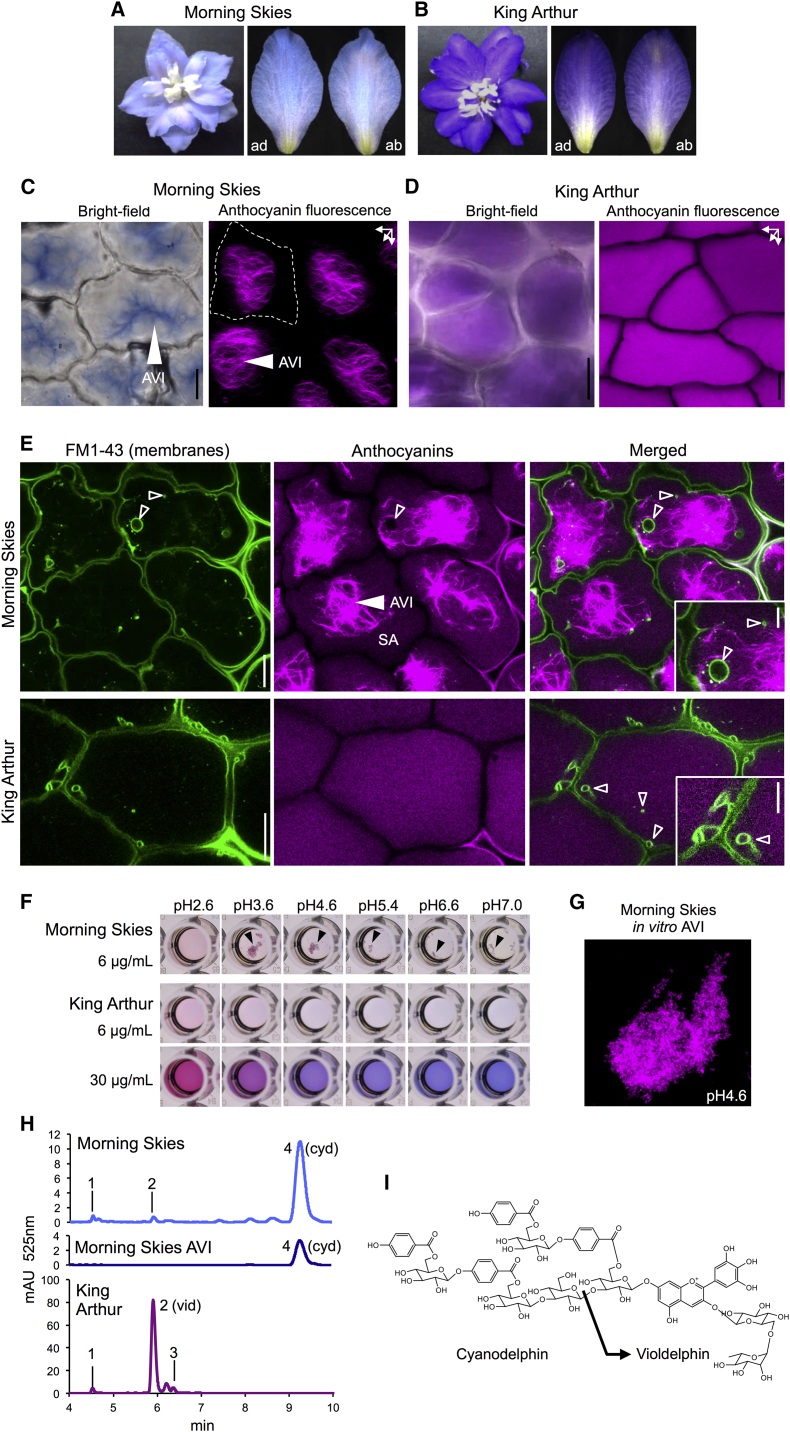
Anthocyanins are some of the most widely occurring secondary metabolites in plants, responsible for the orange, red, purple, and blue colors of flowers and fruits and red colors of autumn leaves. These pigments accumulate in vacuoles, and their color is influenced by chemical decorations, vacuolar pH, the presence of copigments, and metal ions. Anthocyanins are usually soluble in the vacuole, but in some plants, they accumulate as discrete sub-vacuolar structures. Studies have distinguished intensely colored intra-vacuolar bodies observed in the cells of highly colored tissues, termed anthocyanic vacuolar inclusions (AVIs), from more globular, membrane-bound anthocyanoplasts. We describe a system in tobacco that adds additional decorations to the basic anthocyanin, cyanidin 3-O-rutinoside, normally formed by this species. Using this system, we have been able to establish which decorations underpin the formation of AVIs, the conditions promoting AVI formation, and, consequently, the mechanism by which they form.
花色苷是植物中分布最广泛的次生代谢物之一,它们使花、果实呈现橙色、红色、紫色和蓝色,使秋叶呈现红色。这些色素积累在液泡中,其颜色受化学修饰、液泡 pH 值、共色素和金属离子的影响。花色苷通常在液泡中溶解,但在一些植物中,它们作为离散的亚液泡结构积累。研究已经区分了在高度有色组织的细胞中观察到的强烈着色的胞内体,称为花色苷液泡内含物(AVI),与更球形的、膜结合的花色素体。我们描述了一个烟草系统,该系统为该物种通常形成的基本花色苷矢车菊素 3-O-芸香糖苷添加了额外的修饰。使用该系统,我们已经能够确定哪些修饰物是形成 AVI 的基础,促进 AVI 形成的条件,以及它们形成的机制。