Liu Jianghua, Xiao Xinhua, Shen Yingying, Chen Ling, Xu Canxin, Zhao Heng, Wu Ying, Zhang Qinghai, Zhong Jing, Tang Zhenwang, Liu Changhui, Zhao Qiang, Zheng Yi, Cao Renxian, Zu Xuyu
Institute of Clinical Medicine, the First Affiliated Hospital of University of South China, Hengyang, People's Republic of China (PRC).
Department of Metabolism and Endocrinology, the First Affiliated Hospital of University of South China, Hengyang, PRC.
PLoS One. 2017 Mar 20;12(3):e0174138. doi: 10.1371/journal.pone.0174138. eCollection 2017.
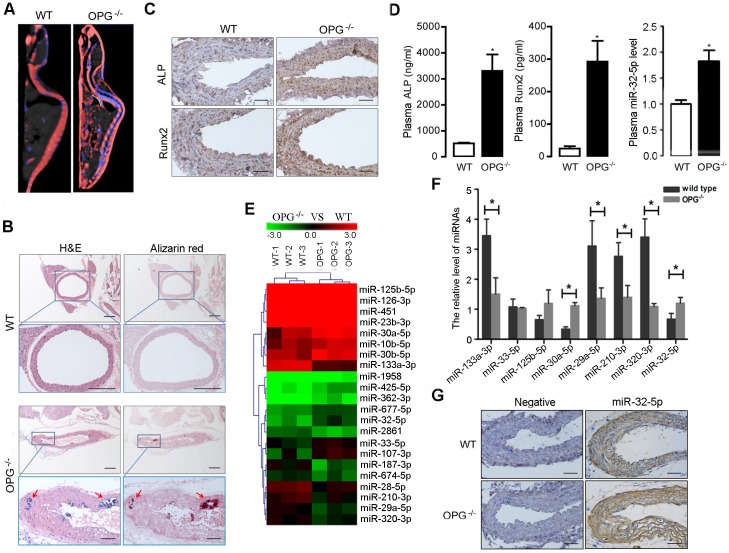
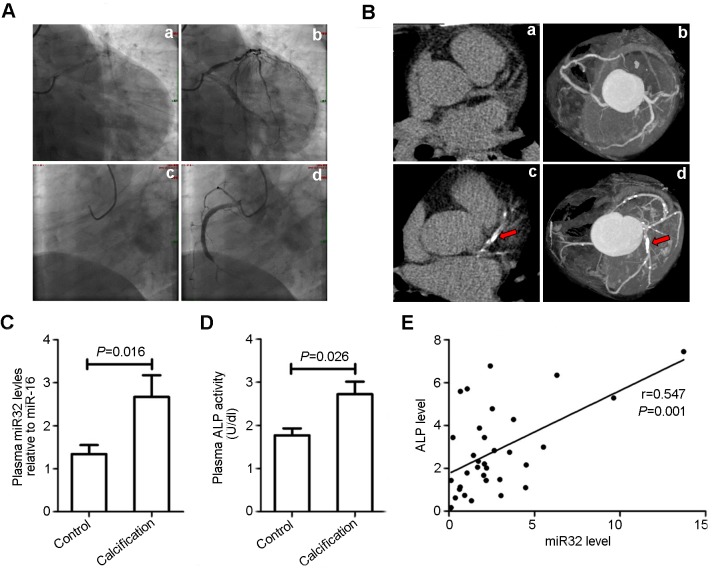
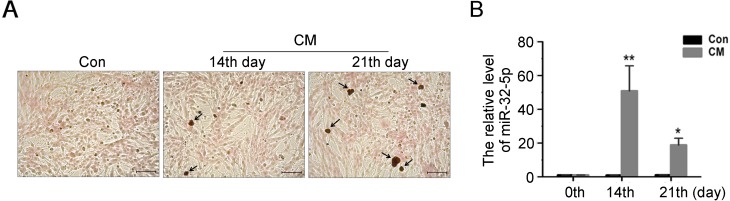
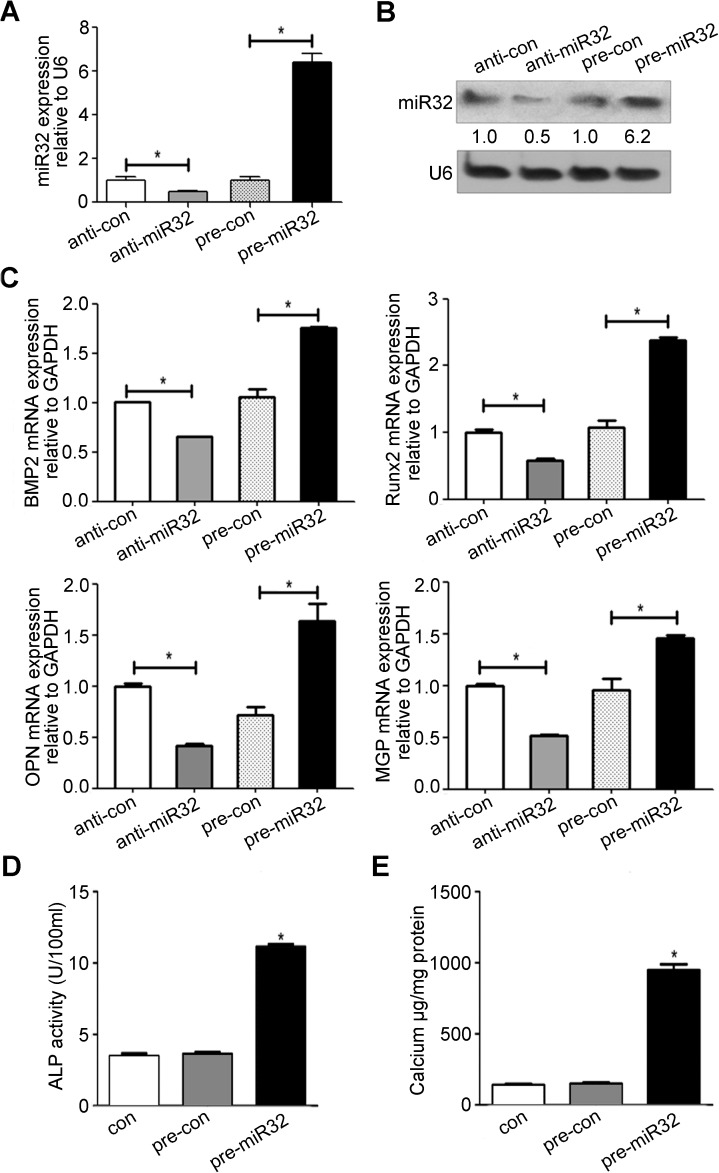
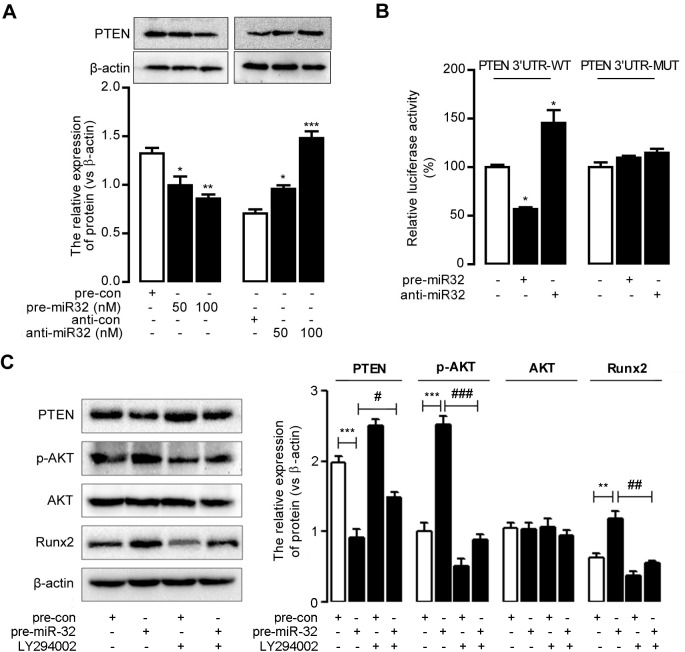
Cardiovascular calcification is one of the most severe outcomes associated with cardiovascular disease and often results in significant morbidity and mortality. Previous reports indicated that epigenomic regulation of microRNAs (miRNAs) might play important roles in vascular smooth muscle cell (VSMC) calcification. Here, we identified potential key miRNAs involved in vascular calcification in vivo and investigated the role of miR-32-5p (miR-32). According to microarray analysis, we observed increased expression of miR-125b, miR-30a, and miR-32 and decreased expression of miR-29a, miR-210, and miR-320 during the progression of vascularcalcification. Additionally, gain- and loss-of-function studies of miR-32 confirmed promotion of VSMC calcification in mice through the enhanced expression of bonemorphogenetic protein-2, runt-related transcription factor-2(RUNX2), osteopontin, and the bone-specific phosphoprotein matrix GLA protein in vitro. Moreover, miR-32 modulated vascularcalcification progression by activating phosphoinositide 3-kinase (PI3K)signaling and increasing RUNX2 expression and phosphorylation by targeting the 3'-untranslated region of phosphatase and tensin homolog Mrna (PTEN) in mouse VSMCs. Furthermore, we detected higher miR-32 levels in plasmafrom patients with coronary artery disease with coronary artery calcification (CAC) as compared with levels observed in non-CAC patients (P = 0.016), further confirming miR-32 as a critical modulator and potential diagnostic marker for CAC.
心血管钙化是与心血管疾病相关的最严重后果之一,常导致显著的发病率和死亡率。先前的报告表明,微小RNA(miRNA)的表观遗传调控可能在血管平滑肌细胞(VSMC)钙化中起重要作用。在此,我们确定了体内参与血管钙化的潜在关键miRNA,并研究了miR-32-5p(miR-32)的作用。根据微阵列分析,我们观察到在血管钙化进展过程中,miR-125b、miR-30a和miR-32的表达增加,而miR-29a、miR-210和miR-320的表达降低。此外,miR-32的功能获得和缺失研究证实,通过体外增强骨形态发生蛋白-2、 runt相关转录因子-2(RUNX2)、骨桥蛋白和骨特异性磷蛋白基质GLA蛋白的表达,促进小鼠VSMC钙化。此外,miR-32通过激活磷酸肌醇3激酶(PI3K)信号通路,并通过靶向小鼠VSMC中磷酸酶和张力蛋白同源物mRNA(PTEN)的3'-非翻译区增加RUNX2的表达和磷酸化,从而调节血管钙化进展。此外,我们检测到冠状动脉钙化(CAC)的冠心病患者血浆中的miR-32水平高于非CAC患者(P = 0.016),进一步证实miR-32是CAC的关键调节因子和潜在诊断标志物。