Sozen Erdi, Ozer Nesrin Kartal
Department of Biochemistry, Faculty of Medicine, Genetic and Metabolic Diseases Research and Investigation Center (GEMHAM), Marmara University, 34854, Maltepe, Istanbul, Turkey.
Department of Biochemistry, Faculty of Medicine, Genetic and Metabolic Diseases Research and Investigation Center (GEMHAM), Marmara University, 34854, Maltepe, Istanbul, Turkey.
Redox Biol. 2017 Aug;12:456-461. doi: 10.1016/j.redox.2017.02.025. Epub 2017 Mar 6.
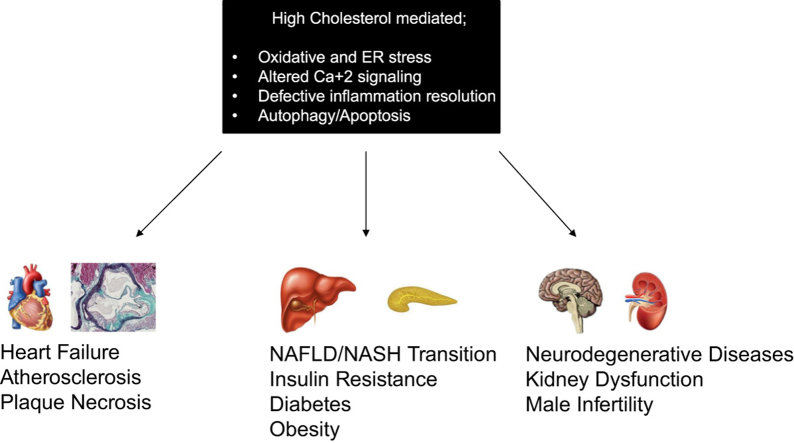
Endoplasmic reticulum (ER) is the major site of protein folding and calcium storage. Beside the role of ER in protein homeostasis, it controls the cholesterol production and lipid-membrane biosynthesis as well as surviving and cell death signaling mechanisms in the cell. It is well-documented that elevated plasma cholesterol induces adverse effects in cardiovascular diseases (CVDs), liver disorders, such as non-alcoholic fatty liver disease (NAFLD), non-alcoholic steatosis hepatitis (NASH), and metabolic diseases which are associated with oxidative and ER stress. Recent animal model and human studies have showed high cholesterol and ER stress as an emerging factors involved in the development of many metabolic diseases. In this review, we will summarize the crucial effects of hypercholesterolemia and ER stress response in the pathogenesis of CVDs, NAFLD/NASH, diabetes and obesity which are major health problems in western countries.
内质网(ER)是蛋白质折叠和钙储存的主要场所。除了在内质网在蛋白质稳态中的作用外,它还控制胆固醇的产生、脂质膜的生物合成以及细胞中的存活和细胞死亡信号机制。有充分的文献记载,血浆胆固醇升高会在心血管疾病(CVD)、肝脏疾病(如非酒精性脂肪性肝病(NAFLD)、非酒精性脂肪性肝炎(NASH))以及与氧化应激和内质网应激相关的代谢疾病中产生不良影响。最近的动物模型和人体研究表明,高胆固醇和内质网应激是许多代谢疾病发展过程中的新兴因素。在这篇综述中,我们将总结高胆固醇血症和内质网应激反应在CVD、NAFLD/NASH、糖尿病和肥胖症发病机制中的关键作用,这些疾病是西方国家的主要健康问题。