Department of Pathology, Zhongshan Hospital, Fudan University, Shanghai 200032, P. R. China.
Department of Thoracic surgery, Zhongshan Hospital, Fudan University, Shanghai 200032, P. R. China.
Sci Rep. 2017 Mar 21;7:44823. doi: 10.1038/srep44823.
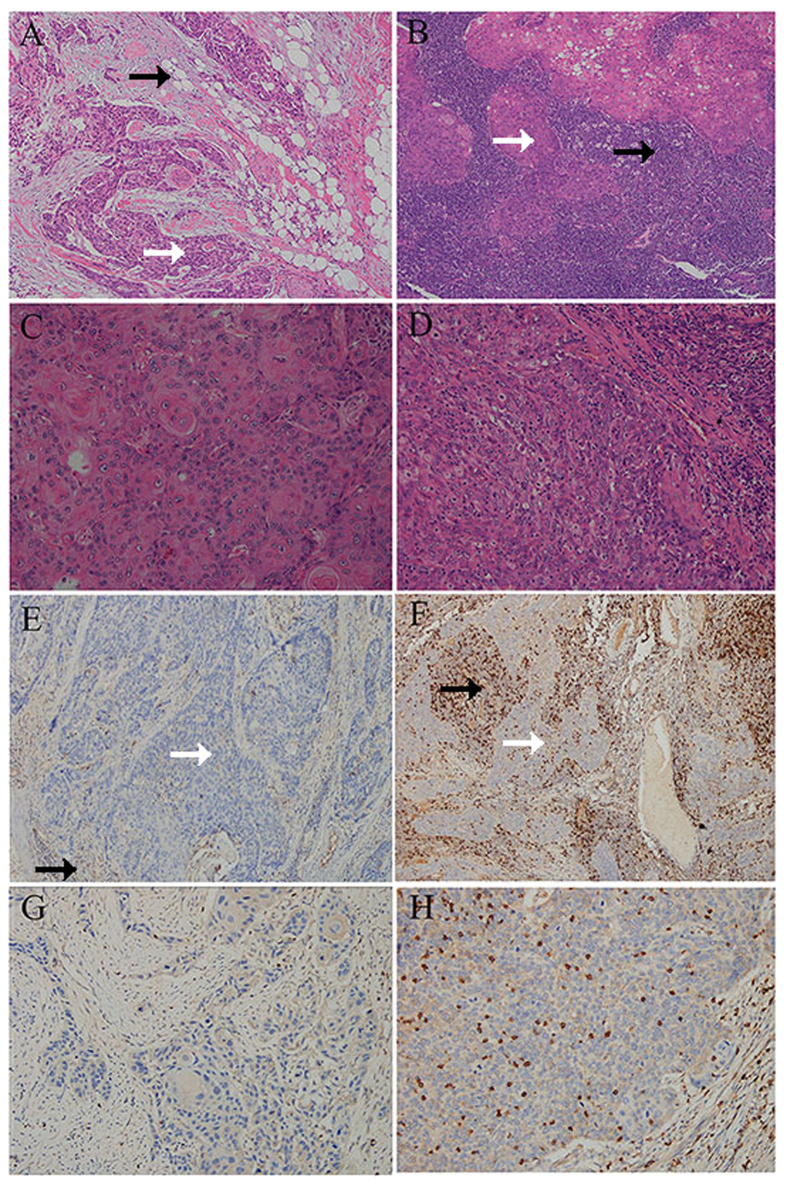
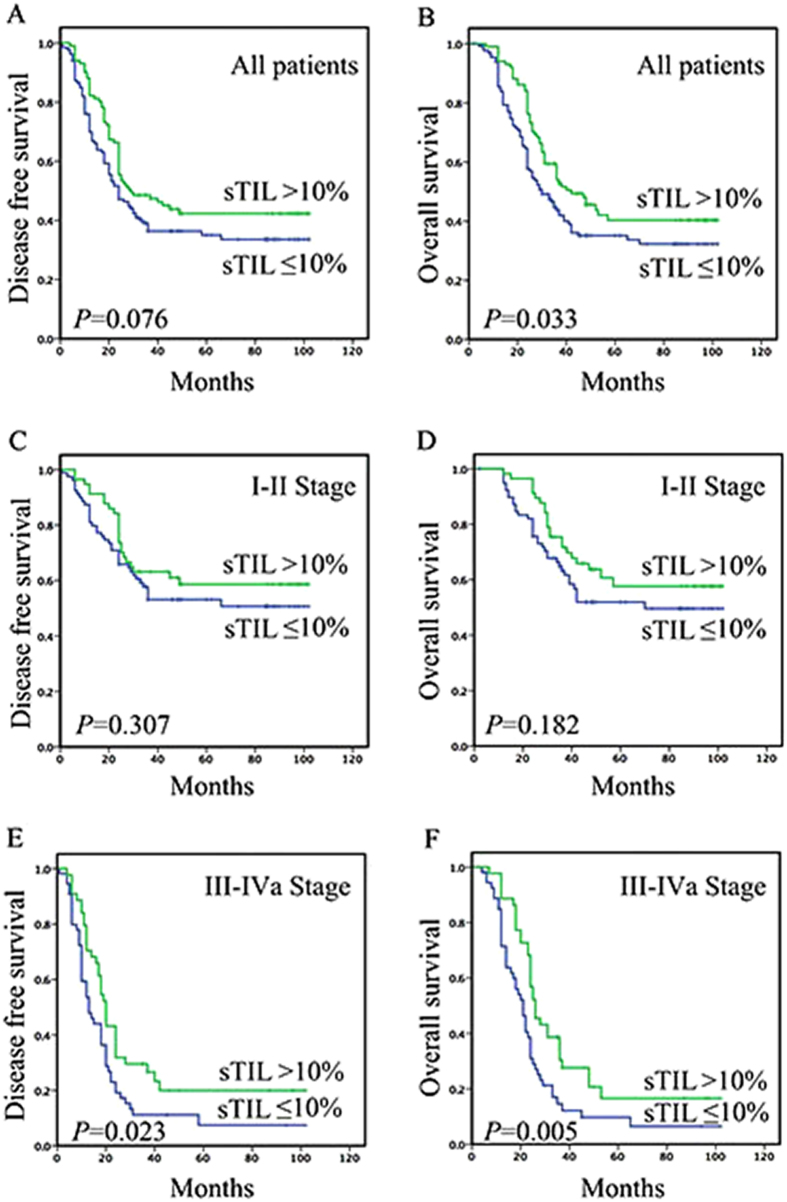
We undertook a study of tumour infiltrating lymphocytes (TILs) in a large and relatively homogeneous group of patients with completely resected esophageal squamous cell carcinoma (ESCC). Hematoxylin and eosin-stained sections of 235 ESCC tumours were evaluated for density of TILs in intratumoural (iTIL) and stromal compartments (sTIL). Foxp3+, CD4+, and CD8+ T cells in tumoural and stromal areas were evaluated by immunohistochemistry. Of the 235 tumours, high sTIL (>10%), and iTIL (>10%) were observed in 101 (43.0%) and 98 (41.7%), respectively. The median follow-up period was 36.0 months (95% CI 29.929-42.071). Univariate analysis revealed that sTIL (>10%), iTIL (>20%), vessels involvement, lymph node metastasis, and clinical stage were significantly associated with postoperative outcome. In multivariate analysis, high sTIL (HR: 0.664, P = 0.019 for Disease free survival; HR: 0.608, P = 0.005 for Overall survival) was identified as independent better prognostic factor. Further analysis, sTIL was identified as independently prognostic factor in Stage III-IVa disease, which was not found in Stage I-II disease. Our study demonstrated that sTIL was associated with better ESCC patients' survival, especially in Stage III-IVa disease. Assessment of sTIL could be useful to discriminate biological behavior for ESCC patients.
我们对 235 例完全切除的食管鳞状细胞癌(ESCC)患者的肿瘤浸润淋巴细胞(TILs)进行了研究。对 235 例 ESCC 肿瘤的苏木精和伊红染色切片进行了肿瘤内(iTIL)和基质区(sTIL)TIL 密度评估。采用免疫组织化学法评估肿瘤和基质区的 Foxp3+、CD4+和 CD8+T 细胞。在 235 例肿瘤中,分别有 101 例(43.0%)和 98 例(41.7%)观察到高 sTIL(>10%)和 iTIL(>10%)。中位随访时间为 36.0 个月(95%CI 29.929-42.071)。单因素分析显示,sTIL(>10%)、iTIL(>20%)、血管侵犯、淋巴结转移和临床分期与术后结果显著相关。多因素分析显示,高 sTIL(无病生存率的 HR:0.664,P=0.019;总生存率的 HR:0.608,P=0.005)是独立的预后较好的因素。进一步分析表明,sTIL 是 III-IVa 期疾病的独立预后因素,但在 I-II 期疾病中未发现。本研究表明,sTIL 与 ESCC 患者的生存相关,尤其是在 III-IVa 期疾病中。sTIL 的评估可能有助于区分 ESCC 患者的生物学行为。