Blacktop Jordan M, Todd Ryan P, Sorg Barbara A
Department of Integrative Physiology and Neuroscience, Washington State University, Vancouver, WA, United States.
Department of Integrative Physiology and Neuroscience, Washington State University, Vancouver, WA, United States.
Neuropharmacology. 2017 May 15;118:124-136. doi: 10.1016/j.neuropharm.2017.03.018. Epub 2017 Mar 18.
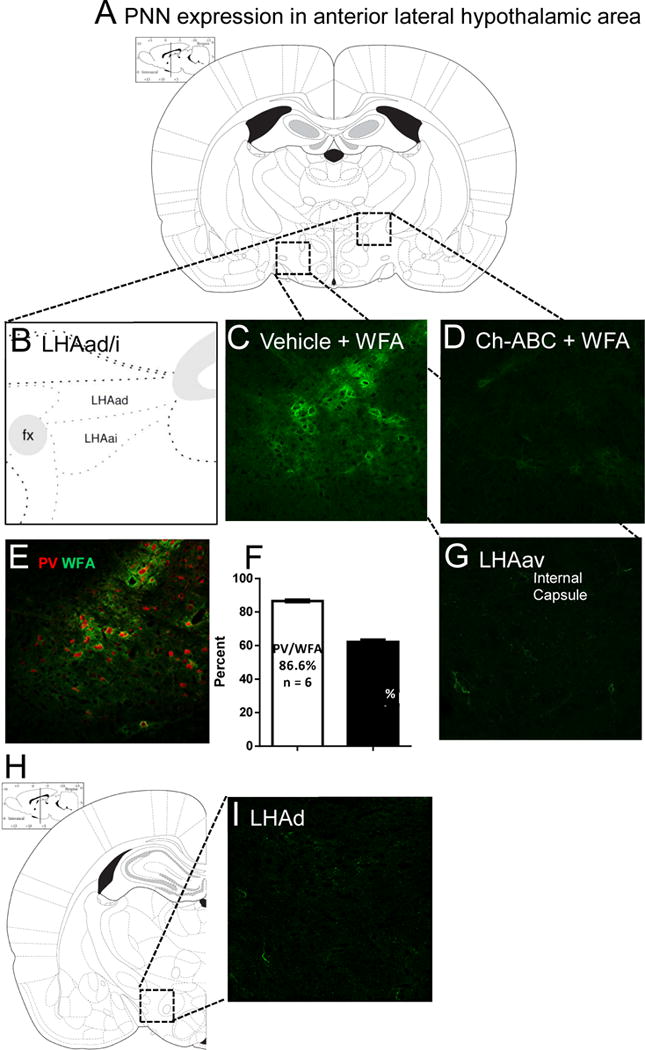
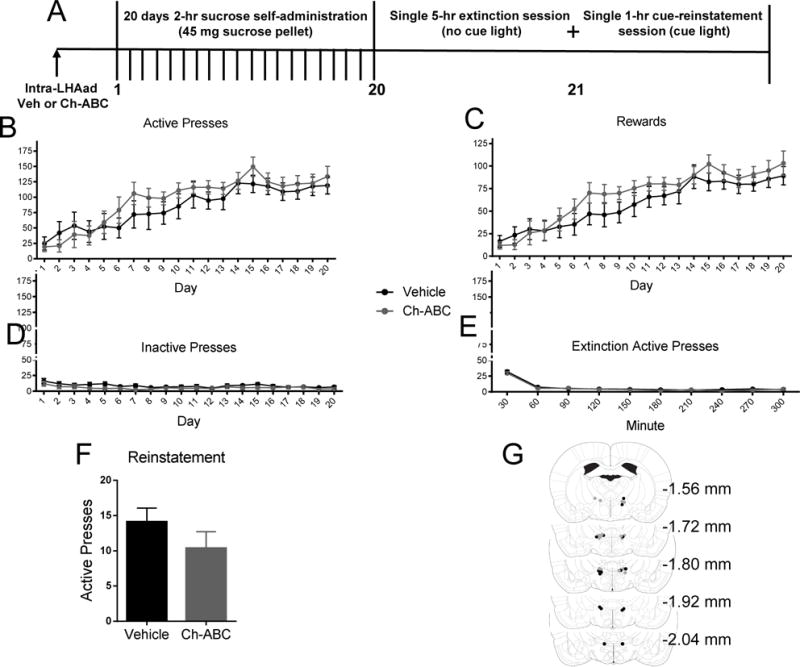
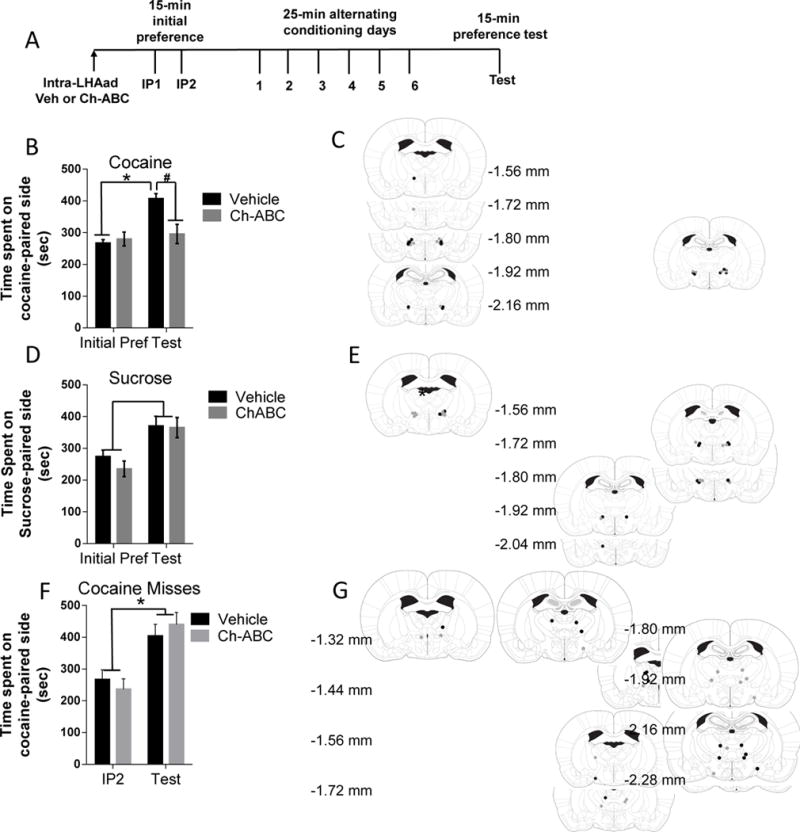
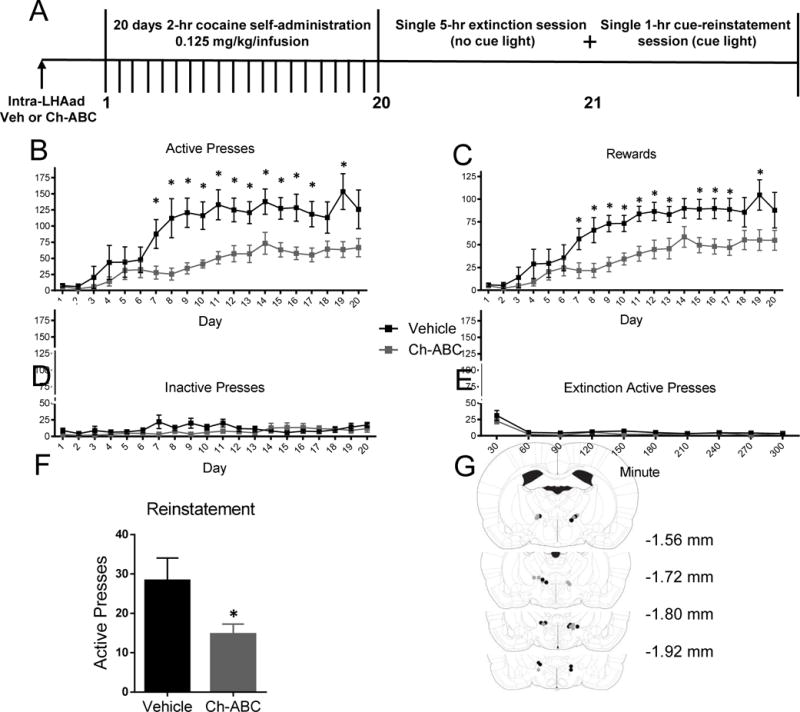
Addiction involves drug-induced neuroplasticity in the circuitry of motivated behavior, which includes the medial forebrain bundle and the lateral hypothalamic area. Emerging at the forefront of neuroplasticity regulation are specialized extracellular matrix (ECM) structures that form perineuronal nets (PNNs) around certain neurons, mainly parvalbumin positive (PV), fast-spiking interneurons (FSINs), making them a promising target for the regulation of drug-induced neuroplasticity. Despite the emerging significance of PNNs in drug-induced neuroplasticity and the well-established role of the lateral hypothalamic area (LHA) in reward, reinforcement, and motivation, very little is known about how PNN-expressing neurons control drug-seeking behavior. We found that a discrete region of the anterior dorsal LHA (LHAad) exhibited robust PNN and dense ECM expression. Approximately 87% of parvalbumin positive (PV) neurons co-expressed the PNN marker Wisteria floribunda agglutinin (WFA), while 62% of WFA positive (WFA) neurons co-expressed PV in the LHAad of drug naïve rats. Removal of PNNs within this brain region via chrondroitinase ABC (Ch-ABC) administration abolished acquisition of cocaine-induced CPP and significantly attenuated the acquisition of cocaine self-administration (SA). Removal of LHAad PNNs did not affect locomotor activity, sucrose intake, sucrose-induced CPP, or acquisition of sucrose SA in separate groups of cocaine naïve animals. These data suggest that PNN-dependent neuroplasticity within the LHAad is critical for the acquisition of both cocaine-induced CPP and SA but is not general to all rewards, and that PNN degradation may have utility for the management of drug-associated behavioral plasticity and memory in cocaine addicts.
成瘾涉及药物诱导的动机行为神经回路中的神经可塑性,其中包括内侧前脑束和外侧下丘脑区域。在神经可塑性调节前沿出现的是专门的细胞外基质(ECM)结构,这些结构在某些神经元周围形成神经元周围网(PNN),主要是小白蛋白阳性(PV)、快速放电中间神经元(FSIN),使其成为调节药物诱导神经可塑性的一个有前景的靶点。尽管PNN在药物诱导的神经可塑性中的重要性日益凸显,且外侧下丘脑区域(LHA)在奖赏、强化和动机方面的作用已得到充分证实,但关于表达PNN的神经元如何控制觅药行为却知之甚少。我们发现,前背侧LHA(LHAad)的一个离散区域表现出强大的PNN和密集的ECM表达。在未接触过药物的大鼠的LHAad中,约87%的小白蛋白阳性(PV)神经元共表达PNN标记物紫藤凝集素(WFA),而62%的WFA阳性(WFA)神经元共表达PV。通过施用软骨素酶ABC(Ch-ABC)去除该脑区内的PNN,可消除可卡因诱导的条件性位置偏爱(CPP)的获得,并显著减弱可卡因自我给药(SA)的获得。在单独的未接触过可卡因的动物组中,去除LHAad的PNN并不影响运动活动、蔗糖摄入、蔗糖诱导的CPP或蔗糖SA的获得。这些数据表明,LHAad内依赖PNN的神经可塑性对于可卡因诱导的CPP和SA的获得至关重要,但并非对所有奖赏都普遍适用,并且PNN降解可能对可卡因成瘾者药物相关行为可塑性和记忆的管理具有实用价值。