Zhang Daoliang, Chen Xiaoqing, Wang Qian, Wu Shaohui, Zheng Yue, Liu Xu
Department of Cardiology, Shanghai Chest Hospital, Shanghai Jiaotong University, Shanghai, People's Republic of China.
Department of Cardiology, Shanghai First People's Hospital, Shanghai, People's Republic of China.
PLoS One. 2017 Mar 21;12(3):e0173759. doi: 10.1371/journal.pone.0173759. eCollection 2017.
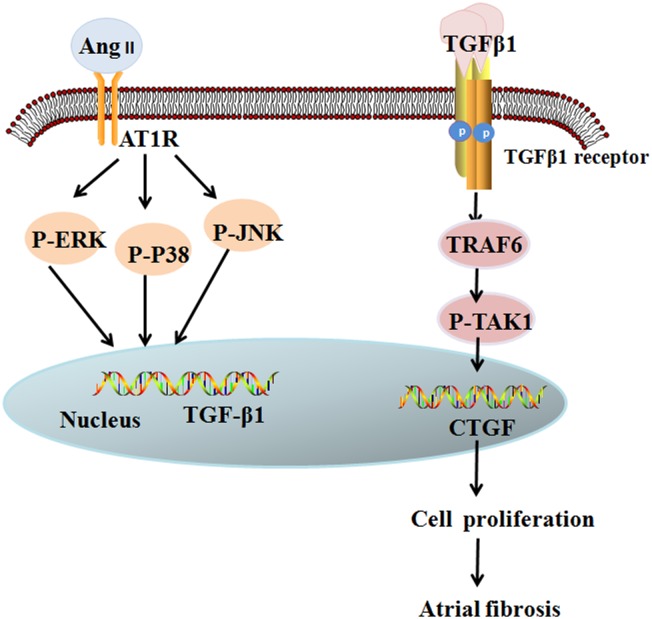
To explore the relationship between the MAPKs/TGF-β1/TRAF6 signaling pathway and atrial fibrosis in patients with rheumatic heart disease (RHD) and its role in atrial fibrillation (AF) after cardiac surgery on the basis of our previous animal study of the MAPKs/TGF-β1/TRAF6 signaling pathway in atrial fibrosis.
A total of 57 patients with RHD without a history of AF consented to left atrial biopsy. Histopathology quantified the percentage of fibrosis, and real-time PCR and western blot assessed the mRNA and protein expression of TGF-β1, TRAF6, and connective tissue growth factor (CTGF), respectively. Western blot was also used to measure the protein expression of phosphorylated MAPKs and TGF-β-activated kinase 1 (TAK1). Serum angiotensin II (Ang II) levels were assayed using enzyme-linked immunosorbent assay (ELISA).
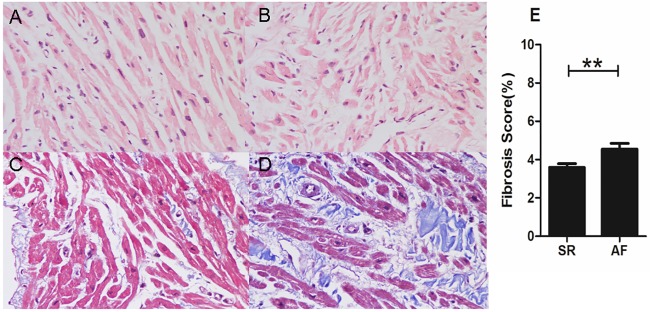
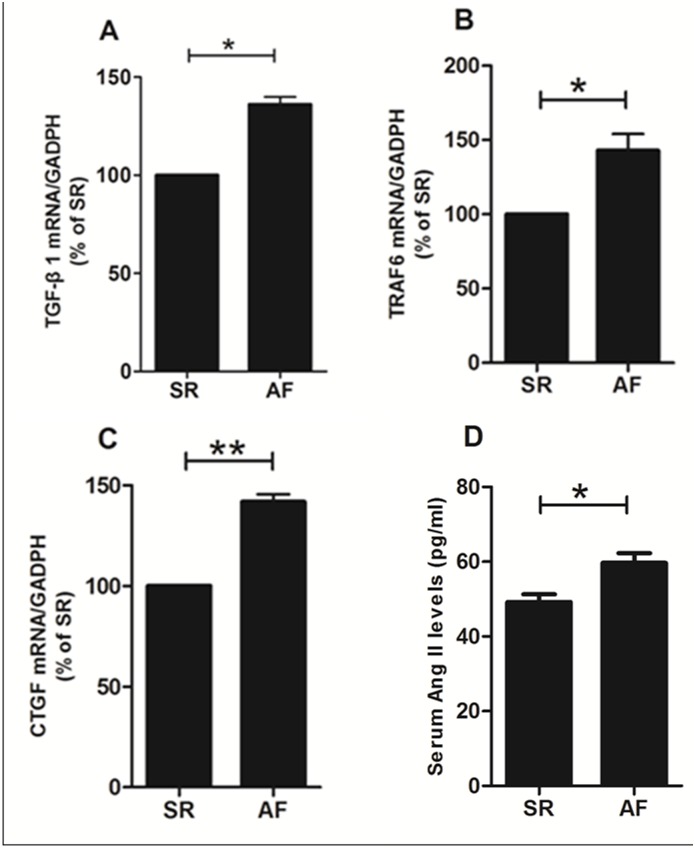
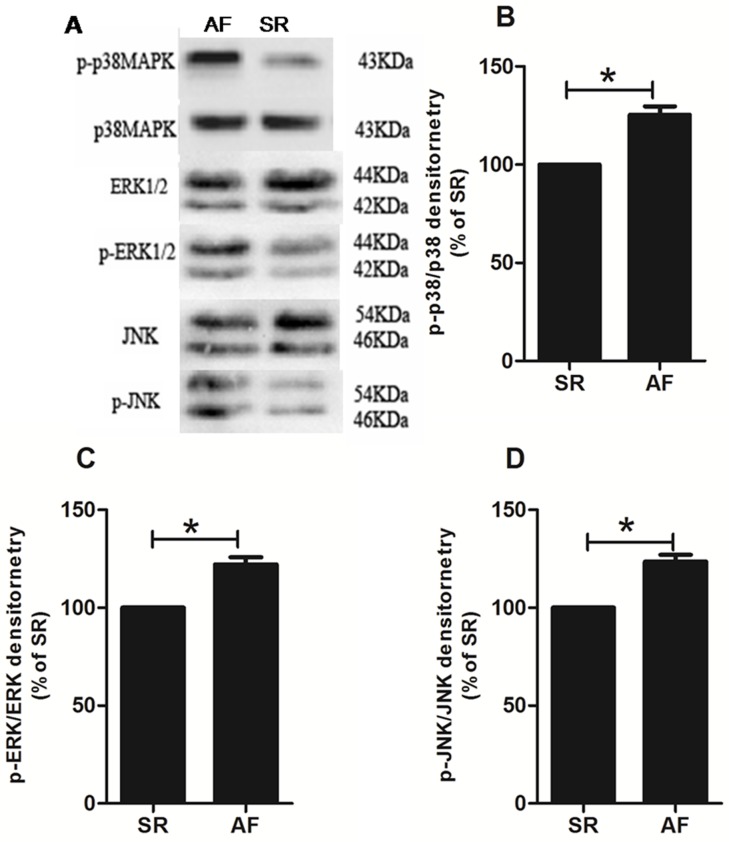
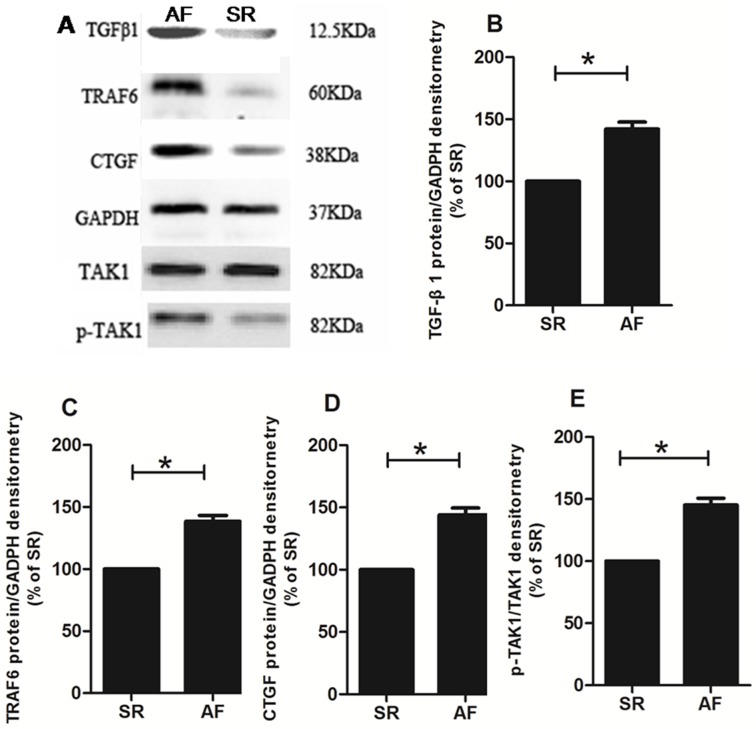
Eighteen patients developed AF, whereas 39 remained in sinus rhythm (SR). The severity of atrial fibrosis was significantly higher in patients who developed AF versus those who remained in SR; the mRNA and protein expression of TGF-β1, TRAF6 and CTGF were significantly higher in patients with AF. The protein expression of phosphorylated MAPKs and TAK1 was significantly increased in patients who developed AF compared with the patients who remained in SR. Serum Ang II levels were significantly higher in patients who developed AF versus those who remained in SR.
The MAPKs/TGF-β1/TRAF6 signaling pathway is involved in atrial fibrosis in patients with RHD, which results in the occurrence of AF after cardiac surgery.
基于我们之前关于丝裂原活化蛋白激酶(MAPKs)/转化生长因子-β1(TGF-β1)/肿瘤坏死因子受体相关因子6(TRAF6)信号通路在心房纤维化中的动物研究,探讨该信号通路与风湿性心脏病(RHD)患者心房纤维化之间的关系及其在心脏手术后房颤(AF)中的作用。
共有57例无房颤病史的RHD患者同意接受左心房活检。组织病理学对纤维化百分比进行量化,实时聚合酶链反应(PCR)和蛋白质印迹法分别评估TGF-β1、TRAF6和结缔组织生长因子(CTGF)的mRNA和蛋白表达。蛋白质印迹法还用于检测磷酸化MAPKs和TGF-β激活激酶1(TAK1)的蛋白表达。采用酶联免疫吸附测定(ELISA)法检测血清血管紧张素II(Ang II)水平。
18例患者发生房颤,39例维持窦性心律(SR)。发生房颤的患者心房纤维化严重程度显著高于维持SR的患者;房颤患者中TGF-β1、TRAF6和CTGF的mRNA和蛋白表达显著更高。与维持SR的患者相比,发生房颤的患者磷酸化MAPKs和TAK1的蛋白表达显著增加。发生房颤的患者血清Ang II水平显著高于维持SR的患者。
MAPKs/TGF-β1/TRAF6信号通路参与RHD患者的心房纤维化,导致心脏手术后发生AF。