Raschig Judith, Mailänder-Sánchez Daniela, Berscheid Anne, Berger Jürgen, Strömstedt Adam A, Courth Lioba F, Malek Nisar P, Brötz-Oesterhelt Heike, Wehkamp Jan
Internal Medicine I, University Hospital Tuebingen, Tuebingen, Germany.
Department for Microbial Bioactive Compounds, Interfaculty Institute for Microbiology and Infection Medicine, University of Tuebingen, Tuebingen, Germany.
PLoS Pathog. 2017 Mar 21;13(3):e1006261. doi: 10.1371/journal.ppat.1006261. eCollection 2017 Mar.
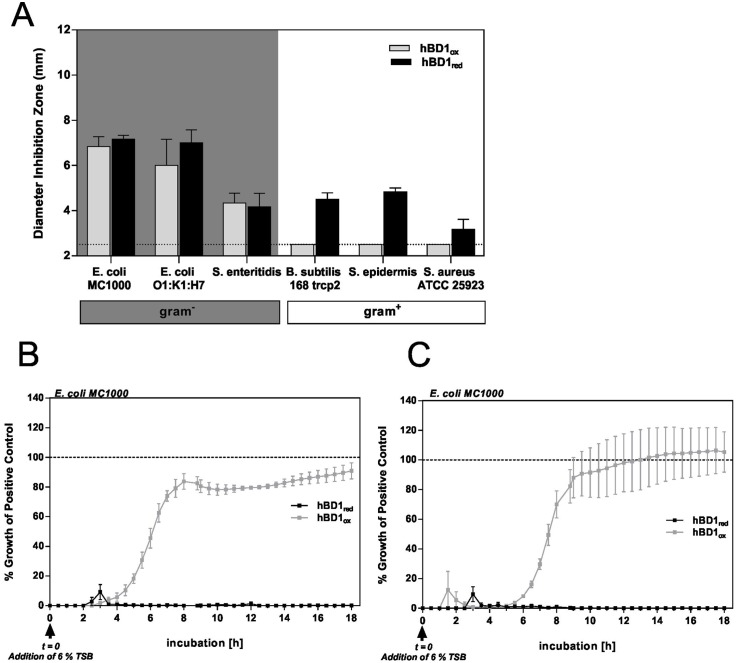
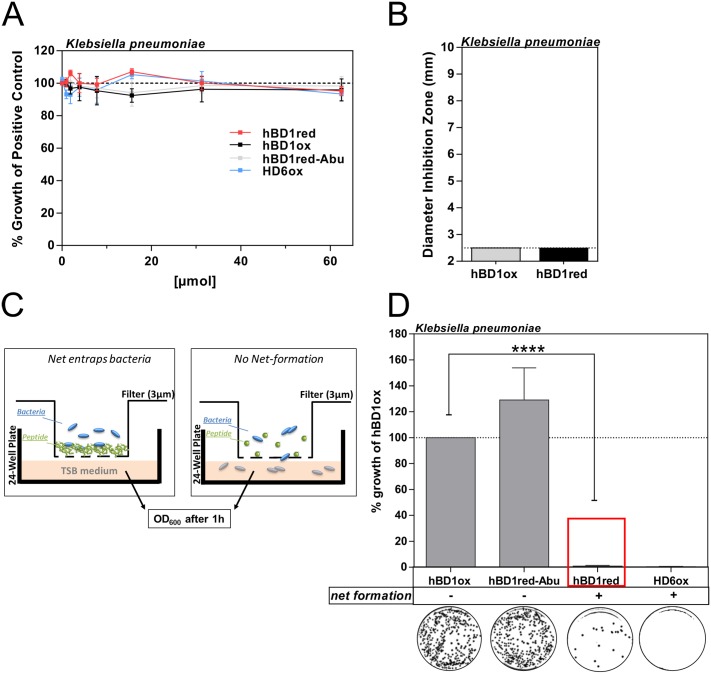
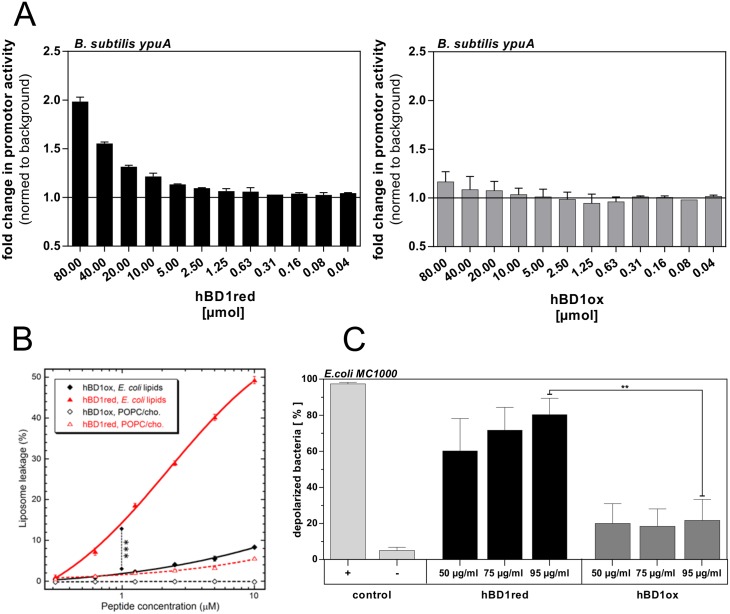
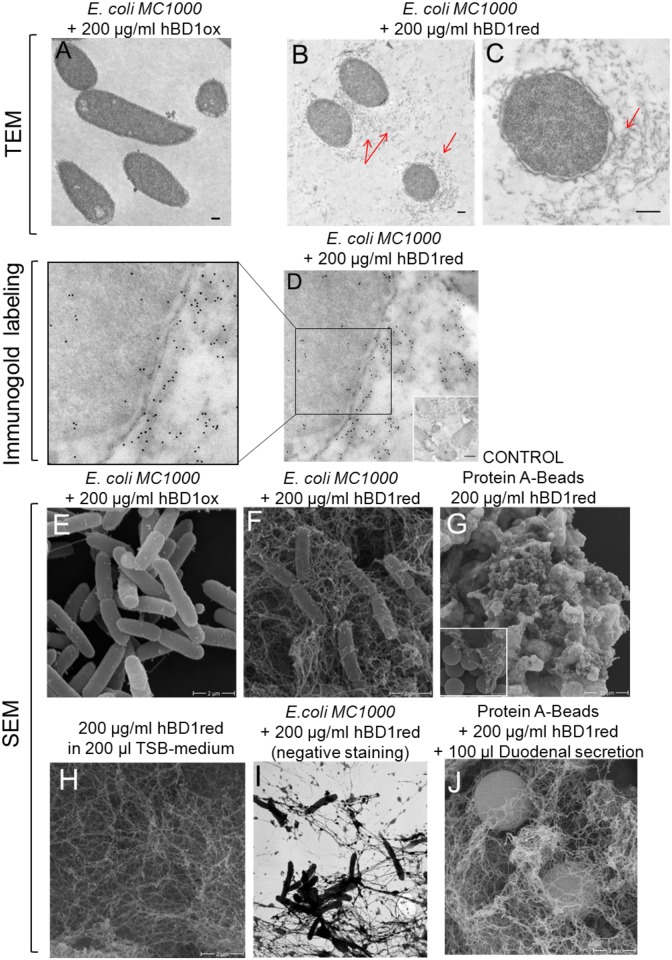
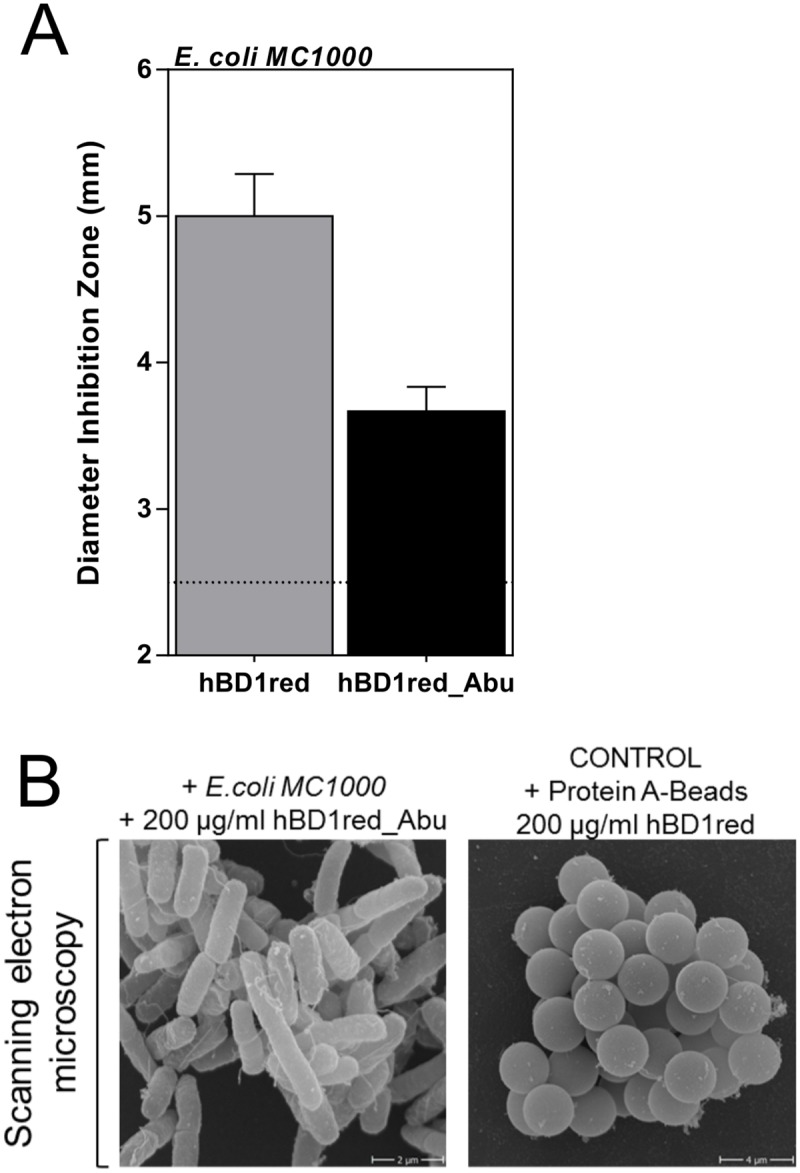
Ever since the discovery of endogenous host defense antimicrobial peptides it has been discussed how these evolutionary conserved molecules avoid to induce resistance and to remain effective. Human ß-defensin 1 (hBD1) is an ubiquitously expressed endogenous antimicrobial peptide that exhibits qualitatively distinct activities between its oxidized and reduced forms. Here, we explore these antimicrobial mechanisms. Surprisingly, using electron microscopy we detected a so far unknown net-like structure surrounding bacteria, which were treated with the reduced but not the oxidized form of hBD1. A transmigration assay demonstrated that hBD1-derived nets capture bacteria and inhibit bacterial transmigration independent of bacterial killing. The presence of nets could completely prevent migration of hBD1 resistant pathogens and are stable in the presence of human duodenal secretion with a high amount of proteases. In contrast to HD6, cysteins are necessary for net formation. This redox-dependent function serves as an additional mechanism of action for hBD1 and differs from net formation by other defensins such as Paneth cell-derived human α-defensin 6 (HD6). While hBD1red and hBD1ox have distinct antimicrobial profiles and functions, only the reduced form provides additional host protection by entrapping bacteria in extracellular net structures preventing bacterial invasion. Better understanding of the modes of action of endogenous host peptides will help to find new antimicrobial strategies.
自从发现内源性宿主防御抗菌肽以来,人们一直在讨论这些进化上保守的分子如何避免诱导耐药性并保持有效性。人β-防御素1(hBD1)是一种广泛表达的内源性抗菌肽,其氧化形式和还原形式表现出质的不同活性。在此,我们探索这些抗菌机制。令人惊讶的是,通过电子显微镜我们检测到一种迄今为止未知的围绕细菌的网状结构,这些细菌用hBD1的还原形式而非氧化形式处理。迁移试验表明,hBD1衍生的网状物捕获细菌并抑制细菌迁移,而与细菌杀伤无关。网状物的存在可以完全阻止hBD1耐药病原体的迁移,并且在含有大量蛋白酶的人十二指肠分泌物存在下是稳定的。与HD6不同,半胱氨酸是形成网状物所必需的。这种氧化还原依赖性功能作为hBD1的一种额外作用机制,不同于其他防御素如潘氏细胞衍生的人α-防御素6(HD6)形成网状物的方式。虽然hBD1red和hBD1ox具有不同的抗菌谱和功能,但只有还原形式通过将细菌捕获在细胞外网状结构中防止细菌入侵来提供额外的宿主保护。更好地理解内源性宿主肽的作用模式将有助于找到新的抗菌策略。