Chen Fei, Zhang Yuan, Daugherty Ashley B, Yang Zunyi, Shaw Ryan, Dong Mengxing, Lutz Stefan, Benner Steven A
CAS Key Laboratory of Genome Sciences & Information, Beijing Institute of Genomics, Chinese Academy of Sciences, Beijing, China.
University of Chinese Academy of Sciences, Beijing, China.
PLoS One. 2017 Mar 21;12(3):e0174163. doi: 10.1371/journal.pone.0174163. eCollection 2017.
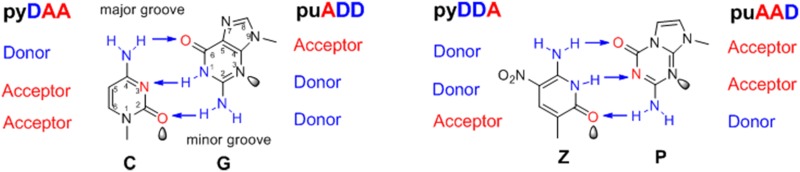
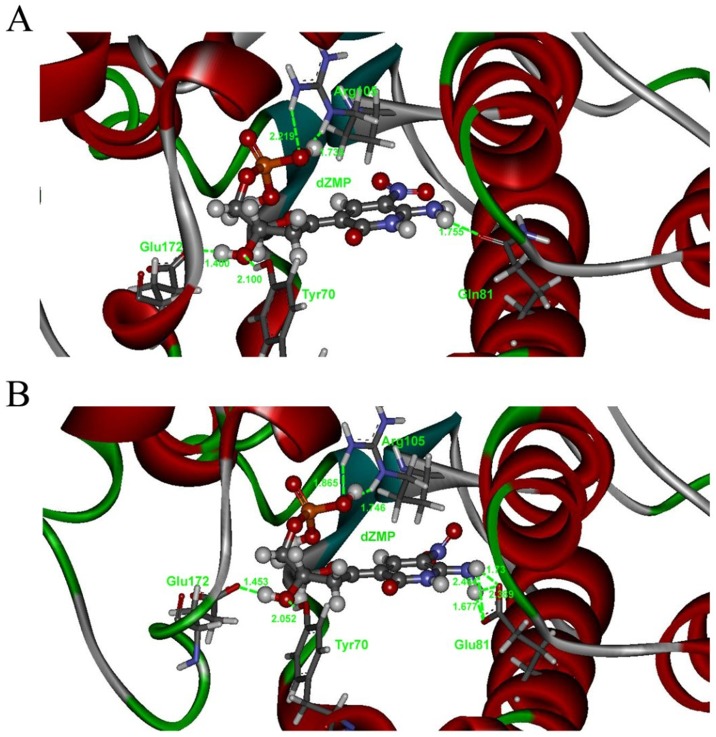
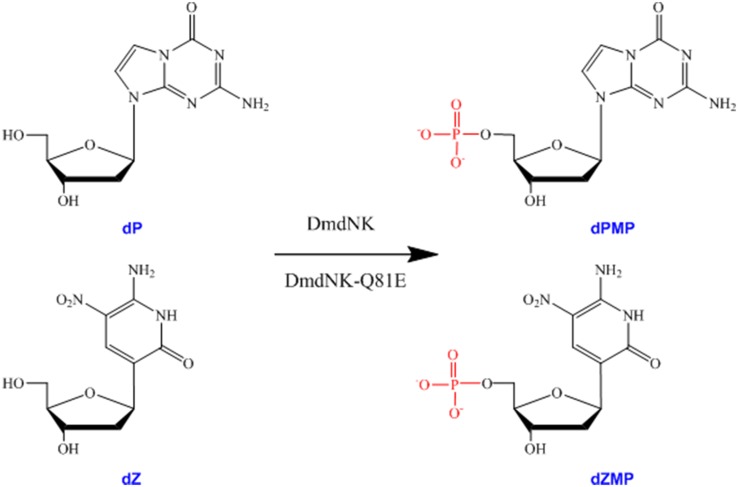
One research goal for unnatural base pair (UBP) is to replicate, transcribe and translate them in vivo. Accordingly, the corresponding unnatural nucleoside triphosphates must be available at sufficient concentrations within the cell. To achieve this goal, the unnatural nucleoside analogues must be phosphorylated to the corresponding nucleoside triphosphates by a cascade of three kinases. The first step is the monophosphorylation of unnatural deoxynucleoside catalyzed by deoxynucleoside kinases (dNK), which is generally considered the rate limiting step because of the high specificity of dNKs. Here, we applied a Drosophila melanogaster deoxyribonucleoside kinase (DmdNK) to the phosphorylation of an UBP (a pyrimidine analogue (6-amino-5-nitro-3-(1'-b-d-2'-deoxyribofuranosyl)-2(1H)-pyridone, Z) and its complementary purine analogue (2-amino-8-(1'-b-d-2'-deoxyribofuranosyl)-imidazo[1,2-a]-1,3,5-triazin-4(8H)-one, P). The results showed that DmdNK could efficiently phosphorylate only the dP nucleoside. To improve the catalytic efficiency, a DmdNK-Q81E mutant was created based on rational design and structural analyses. This mutant could efficiently phosphorylate both dZ and dP nucleoside. Structural modeling indicated that the increased efficiency of dZ phosphorylation by the DmdNK-Q81E mutant might be related to the three additional hydrogen bonds formed between E81 and the dZ base. Overall, this study provides a groundwork for the biological phosphorylation and synthesis of unnatural base pair in vivo.
非天然碱基对(UBP)的一个研究目标是在体内对其进行复制、转录和翻译。因此,相应的非天然核苷三磷酸必须在细胞内以足够的浓度存在。为实现这一目标,非天然核苷类似物必须通过一系列三种激酶磷酸化为相应的核苷三磷酸。第一步是由脱氧核苷激酶(dNK)催化非天然脱氧核苷的单磷酸化,由于dNK的高特异性,这一步通常被认为是限速步骤。在此,我们将果蝇脱氧核糖核苷激酶(DmdNK)应用于一种非天然碱基对(嘧啶类似物(6-氨基-5-硝基-3-(1'-β-D-2'-脱氧呋喃核糖基)-2(1H)-吡啶酮,Z)及其互补嘌呤类似物(2-氨基-8-(1'-β-D-2'-脱氧呋喃核糖基)-咪唑并[1,2-a]-1,3,5-三嗪-4(8H)-酮,P)的磷酸化。结果表明,DmdNK只能有效地磷酸化dP核苷。为提高催化效率,基于合理设计和结构分析构建了DmdNK-Q81E突变体。该突变体能够有效地磷酸化dZ和dP核苷。结构建模表明,DmdNK-Q81E突变体对dZ磷酸化效率的提高可能与E81和dZ碱基之间形成的三个额外氢键有关。总体而言,本研究为体内非天然碱基对的生物磷酸化和合成奠定了基础。