Dash Prasanta K
NRC on Plant Biotechnology, IARI, LBS Building, PUSA Campus, New Delhi, 110012, India.
3 Biotech. 2013 Apr;3(2):109-114. doi: 10.1007/s13205-012-0075-3. Epub 2012 Jun 24.
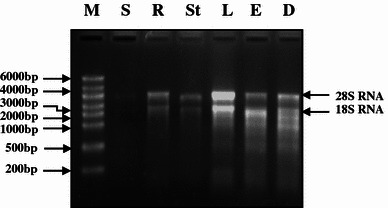
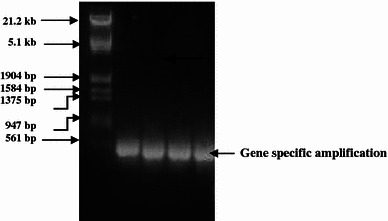
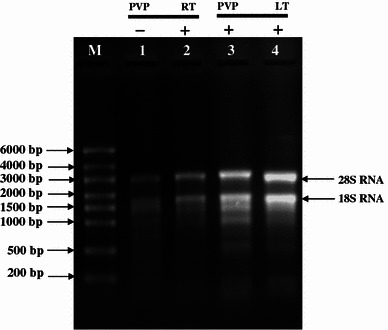
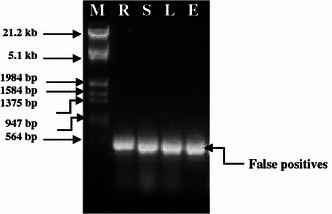
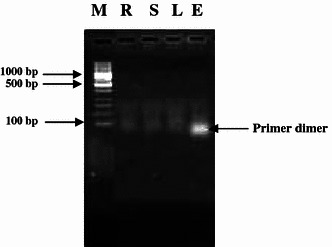
Current RNA isolation methods have limitations in their ability to yield good quality and quantity of RNA from plants that have high content of phenols, polysaccharides and storage proteins. Existing methods also do not eliminate accompanying chromosomal DNA in RNA preparation that causes false positives in gene expression studies. Standard isolation technique was modified for rapid and quick extraction of RNA, and lentil tissue most appropriate to extract good quality RNA was determined. The concentration of the phenol blocker polyvinylpyrrolidone in the extraction buffer was determined, DNase I was added to eliminate chromosomal DNA and the timing of this step was optimized. RNA up to 568 μg of RNA from 1 g of tissue was isolated from four different tissues of lentil in less than half the time typically required by reported methods. The method avoids the use of toxic phenol-chloroform, hazardous guanidinium thiocyanate (GTC) and laborious CsCl ultracentrifugation. Absorbance A260/A280 ratio of 1.9 and A260/A230 ratio of 2.7 reveal RNA to be of high purity. Modified method yielded RNA that was free from contaminants and suitable for RT-PCR and cDNA library construction.
目前的RNA分离方法在从富含酚类、多糖和贮藏蛋白的植物中获取高质量和高产量RNA方面存在局限性。现有方法在RNA制备过程中也无法去除伴随的染色体DNA,而这会在基因表达研究中导致假阳性结果。对标准分离技术进行了改进,以实现RNA的快速提取,并确定了最适合提取高质量RNA的小扁豆组织。确定了提取缓冲液中酚类阻滞剂聚乙烯吡咯烷酮的浓度,添加了DNase I以去除染色体DNA,并优化了该步骤的时间。从1克小扁豆组织中可分离出高达568微克的RNA,该方法所需时间不到报道方法通常所需时间的一半,且可从四种不同的小扁豆组织中提取。该方法避免了使用有毒的酚 - 氯仿、危险的硫氰酸胍(GTC)以及繁琐的CsCl超速离心。260/280吸光度比值为1.9以及260/230吸光度比值为2.7表明RNA具有高纯度。改进后的方法所获得的RNA无污染物,适用于RT-PCR和cDNA文库构建。