Cuello Raúl Andrés, Flores Montero Karina Johana, Mercado Laura Analía, Combina Mariana, Ciklic Iván Francisco
Consejo Nacional de Investigaciones Científicas y Tecnológicas (CONICET), Buenos Aires, Argentina.
Laboratorio de Biotecnología, Estación Experimental Agropecuaria Mendoza, Instituto Nacional de Tecnología Agropecuaria (INTA), San Martín 3853, Luján de Cuyo, Mendoza, Argentina.
AMB Express. 2017 Dec;7(1):67. doi: 10.1186/s13568-017-0369-2. Epub 2017 Mar 21.
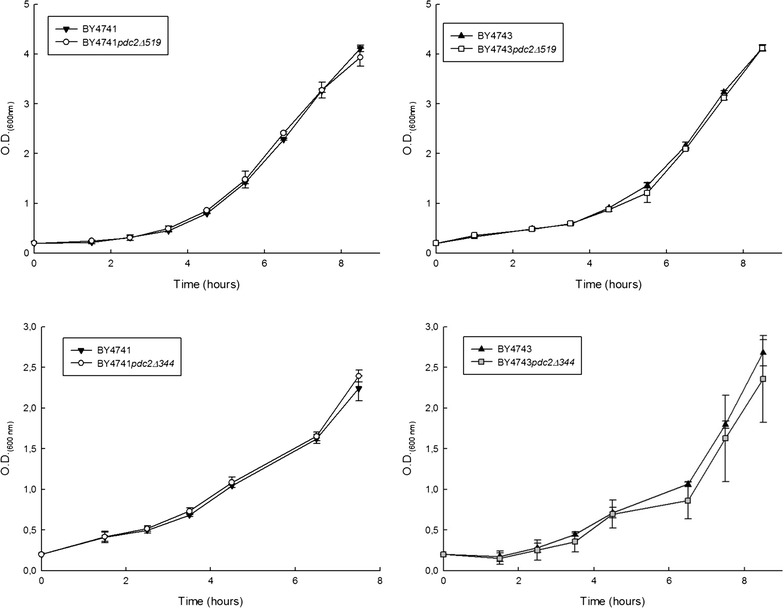
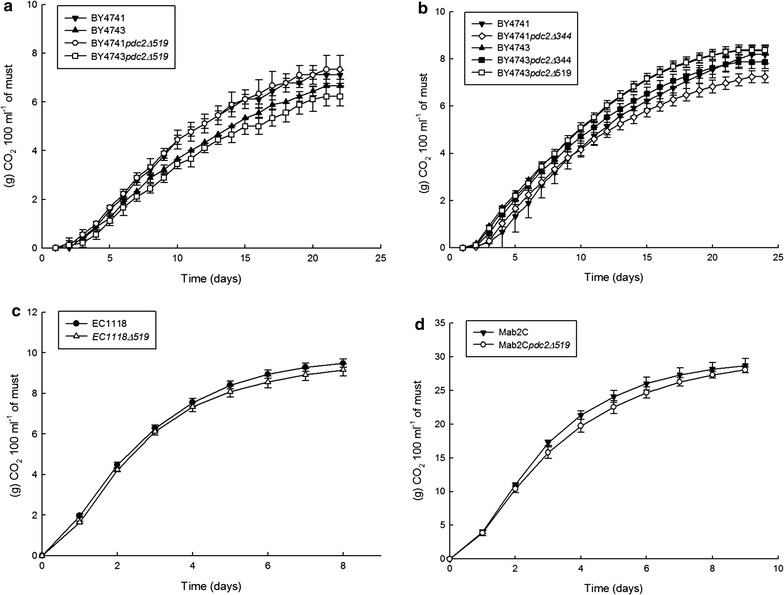
We propose an alternative GMO based strategy to obtain Saccharomyces cerevisiae mutant strains with a slight reduction in their ability to produce ethanol, but with a moderate impact on the yeast metabolism. Through homologous recombination, two truncated Pdc2p proteins Pdc2pΔ344 and Pdc2pΔ519 were obtained and transformed into haploid and diploid lab yeast strains. In the pdc2Δ344 mutants the DNA-binding and transactivation site of the protein remain intact, whereas in pdc2Δ519 only the DNA-binding site is conserved. Compared to the control, the diploid BY4743pdc2Δ519 mutant strain reduced up to 7.4% the total ethanol content in lab scale-vinifications. The residual sugar and volatile acidity was not significantly affected by this ethanol reduction. Remarkably, we got a much higher ethanol reduction of 10 and 15% when the pdc2Δ519 mutation was tested in a native and a commercial wine yeast strain against their respective controls. Our results demonstrate that the insertion of the pdc2Δ519 mutation in wine yeast strains can reduce the ethanol concentration up to 1.89% (v/v) without affecting the fermentation performance. In contrast to non-GMO based strategies, our approach permits the insertion of the pdc2Δ519 mutation in any locally selected wine strain, making possible to produce quality wines with regional characteristics and lower alcohol content. Thus, we consider our work a valuable contribution to the problem of high ethanol concentration in wine.
我们提出了一种基于转基因的替代策略,以获得酿酒酵母突变菌株,这些菌株产生乙醇的能力略有降低,但对酵母代谢的影响适中。通过同源重组,获得了两种截短的Pdc2p蛋白Pdc2pΔ344和Pdc2pΔ519,并将其转化到单倍体和二倍体实验室酵母菌株中。在pdc2Δ344突变体中,蛋白质的DNA结合和反式激活位点保持完整,而在pdc2Δ519中只有DNA结合位点保守。与对照相比,二倍体BY4743pdc2Δ519突变菌株在实验室规模的葡萄酒酿造中使总乙醇含量降低了7.4%。这种乙醇含量的降低对残余糖和挥发酸没有显著影响。值得注意的是,当在本地和商业葡萄酒酵母菌株中测试pdc2Δ519突变体相对于其各自对照时,我们得到了更高的乙醇含量降低,分别为10%和15%。我们的结果表明,在葡萄酒酵母菌株中插入pdc2Δ519突变可使乙醇浓度降低高达1.89%(v/v),而不影响发酵性能。与基于非转基因的策略相比,我们的方法允许在任何本地选择的葡萄酒菌株中插入pdc2Δ519突变,从而有可能生产具有区域特色和较低酒精含量的优质葡萄酒。因此,我们认为我们的工作对葡萄酒中乙醇浓度过高的问题做出了有价值的贡献。