Patrício Maria I, Barnard Alun R, Orlans Harry O, McClements Michelle E, MacLaren Robert E
Nuffield Laboratory of Ophthalmology, Nuffield Department of Clinical Neurosciences, University of Oxford, Oxford OX3 9DU, UK; NIHR Oxford Biomedical Research Centre, University of Oxford, Oxford OX3 9DU, UK; Oxford Eye Hospital, Oxford University Hospitals NHS Foundation Trust, Oxford OX3 9DU, UK.
Nuffield Laboratory of Ophthalmology, Nuffield Department of Clinical Neurosciences, University of Oxford, Oxford OX3 9DU, UK; NIHR Oxford Biomedical Research Centre, University of Oxford, Oxford OX3 9DU, UK; Oxford Eye Hospital, Oxford University Hospitals NHS Foundation Trust, Oxford OX3 9DU, UK; Moorfields Eye Hospital, NHS Foundation Trust, London EC1V 2PD, UK.
Mol Ther Nucleic Acids. 2017 Mar 17;6:198-208. doi: 10.1016/j.omtn.2016.12.006. Epub 2016 Dec 31.
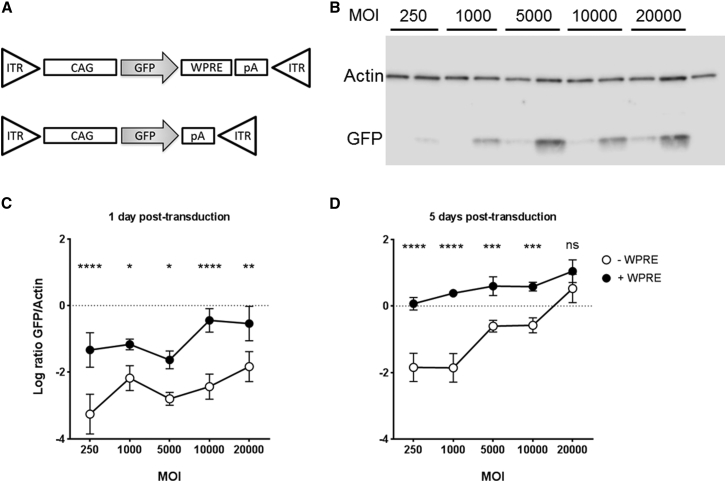
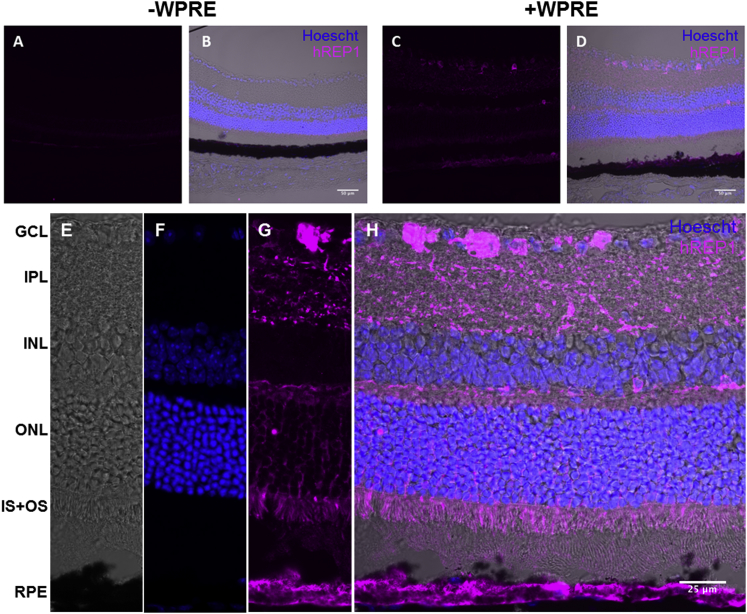
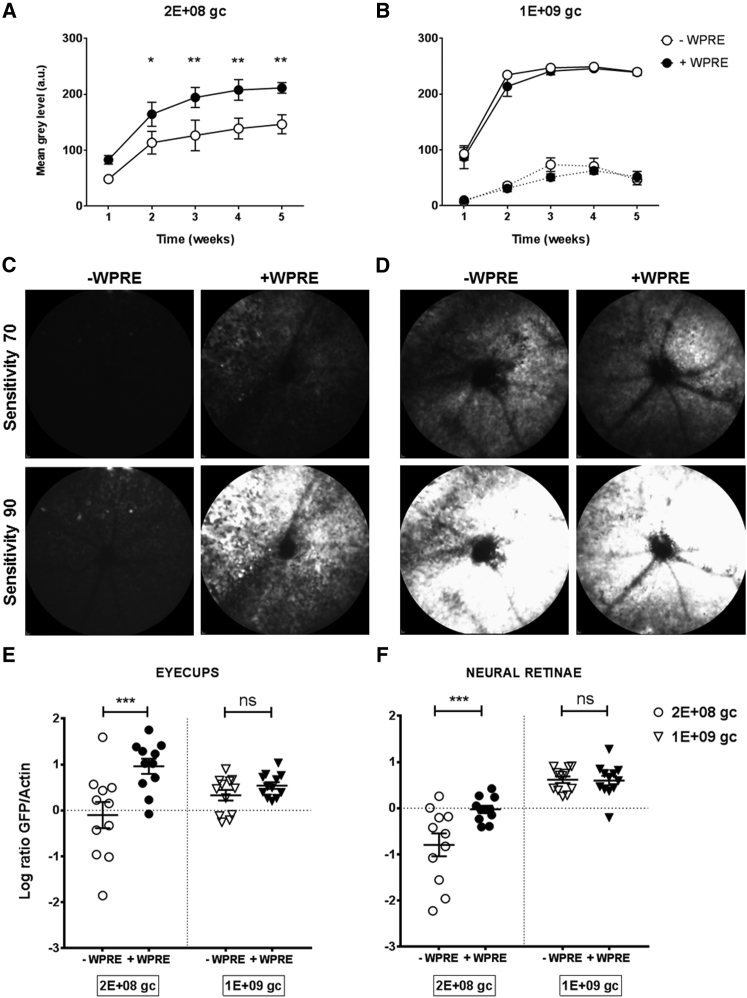
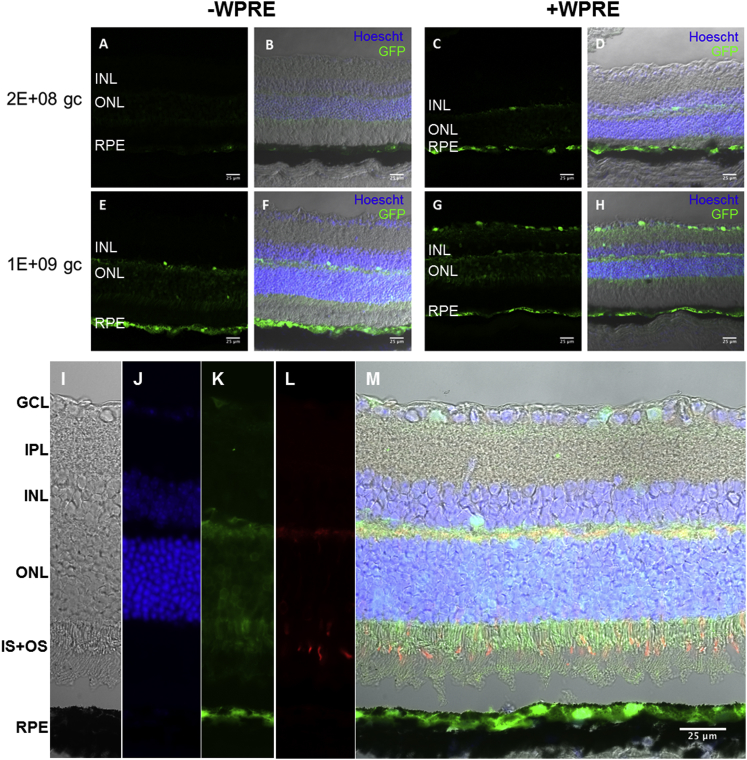
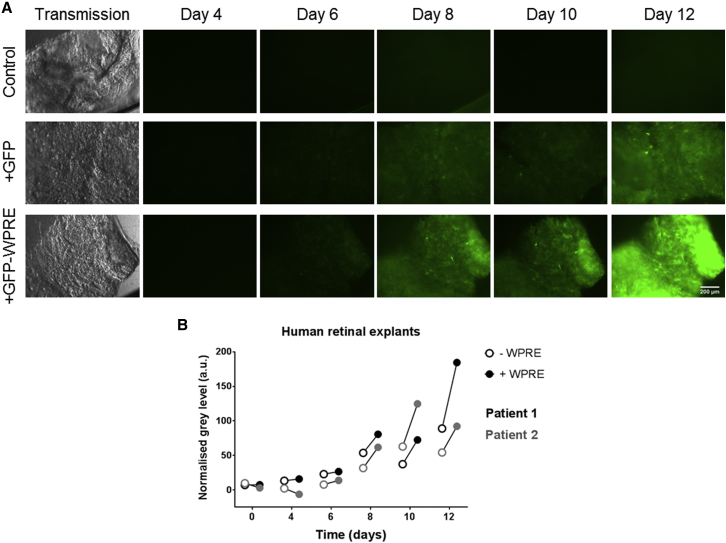
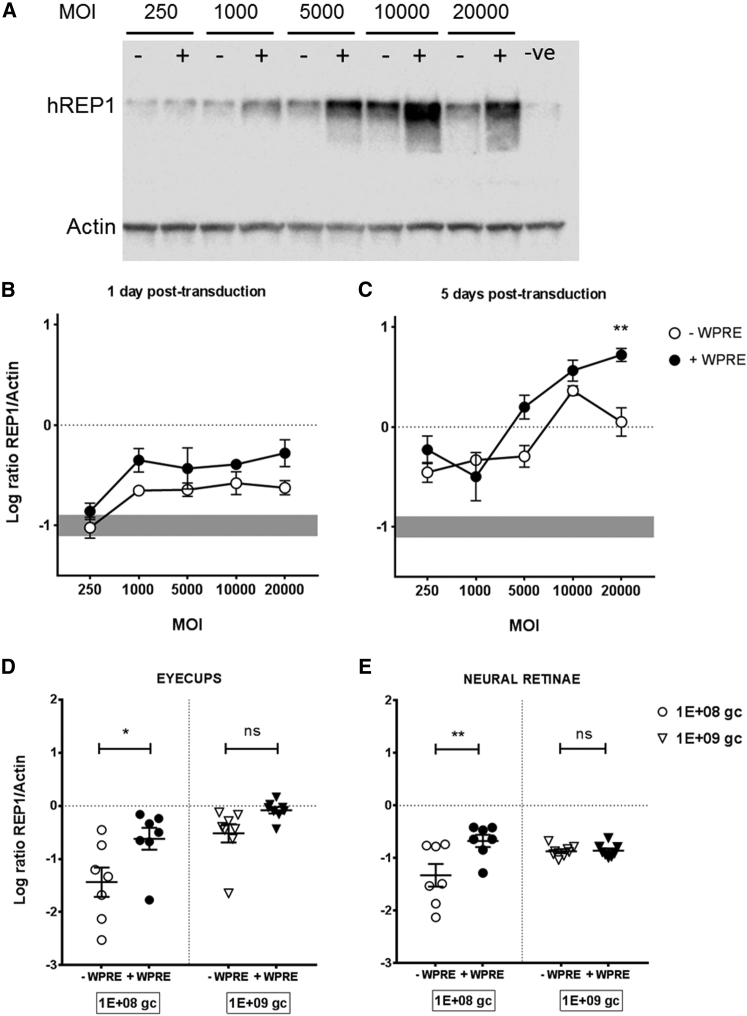
The woodchuck hepatitis virus posttranscriptional regulatory element (WPRE) has been included in the transgene cassette of adeno-associated virus (AAV) in several gene therapy clinical trials, including those for inherited retinal diseases. However, the extent to which WPRE increases transgene expression in the retina is still unclear. To address this question, AAV2 vectors containing a reporter gene with and without WPRE were initially compared in vitro and subsequently in vivo by subretinal delivery in mice. In both instances, the presence of WPRE led to significantly higher levels of transgene expression as measured by fundus fluorescence, western blot, and immunohistochemistry. The two vectors were further compared in human retinal explants derived from patients undergoing clinically indicated retinectomy, where again the presence of WPRE resulted in an enhancement of reporter gene expression. Finally, an analogous approach using a transgene currently employed in a clinical trial for choroideremia delivered similar results both in vitro and in vivo, confirming that the WPRE effect is transgene independent. Our data fully support the inclusion of WPRE in ongoing and future AAV retinal gene therapy trials, where it may allow a therapeutic effect to be achieved at an overall lower dose of vector.
在包括遗传性视网膜疾病的多项基因治疗临床试验中,土拨鼠肝炎病毒转录后调控元件(WPRE)已被纳入腺相关病毒(AAV)的转基因盒中。然而,WPRE在视网膜中增加转基因表达的程度仍不清楚。为了解决这个问题,最初在体外比较了含有和不含WPRE的报告基因的AAV2载体,随后通过小鼠视网膜下注射在体内进行了比较。在这两种情况下,通过眼底荧光、蛋白质印迹和免疫组织化学测量,WPRE的存在导致转基因表达水平显著更高。在接受临床指示视网膜切除术患者的人视网膜外植体中进一步比较了这两种载体,WPRE的存在再次导致报告基因表达增强。最后,使用目前在一项针对无脉络膜症的临床试验中使用的转基因的类似方法在体外和体内均产生了类似结果,证实WPRE的作用不依赖于转基因。我们的数据完全支持在正在进行的和未来的AAV视网膜基因治疗试验中纳入WPRE,在这些试验中,它可能允许以总体较低剂量的载体实现治疗效果。