Xiao Xi, Chen Changyan, Yu Tian-Ming, Ou Jiayao, Rui Menglong, Zhai Yuanfen, He Yijing, Xue Lei, Ho Margaret S
Research Center for Translational Medicine, Shanghai East Hospital, Tongji University School of MedicineShanghai, China; Key Laboratory of Arrhythmias of the Ministry of Education of China, Shanghai East Hospital, Tongji University School of MedicineShanghai, China; Department of Anatomy and Neurobiology, Tongji University School of MedicineShanghai, China.
Shanghai Key Laboratory of Signaling and Diseases Research, School of Life Science and Technology, Institute of Intervention Vessel, Shanghai 10th People's Hospital, Tongji University Shanghai, China.
Front Mol Neurosci. 2017 Mar 7;10:57. doi: 10.3389/fnmol.2017.00057. eCollection 2017.
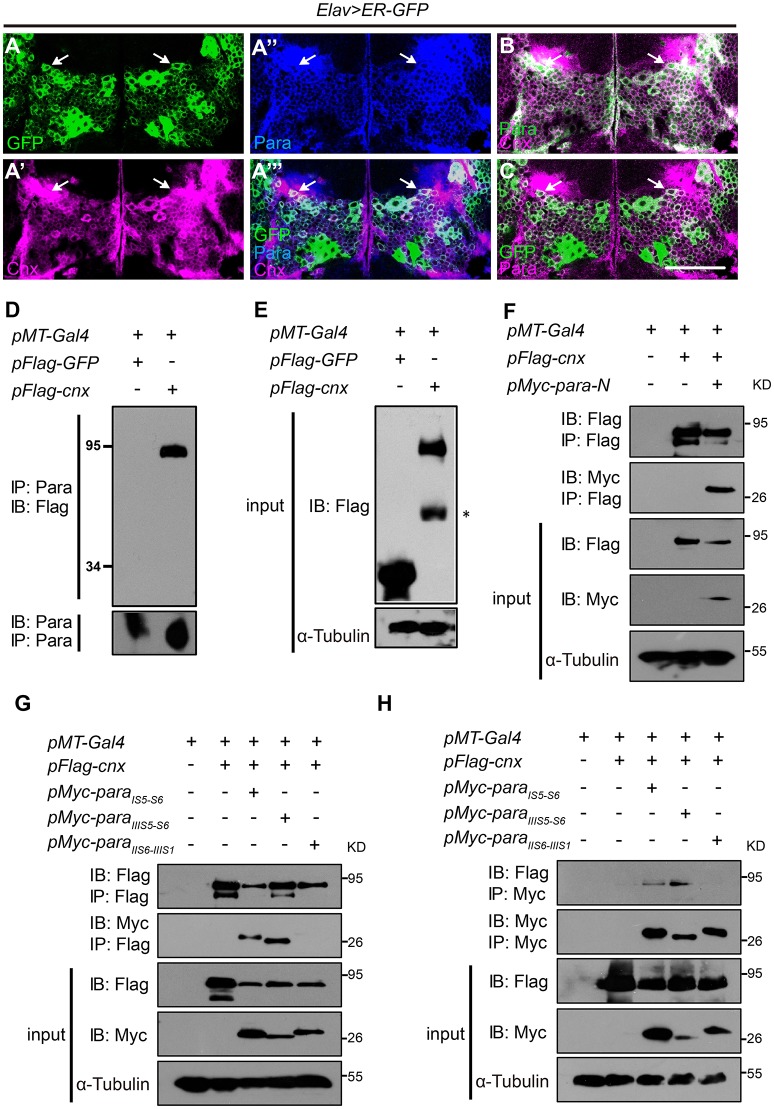
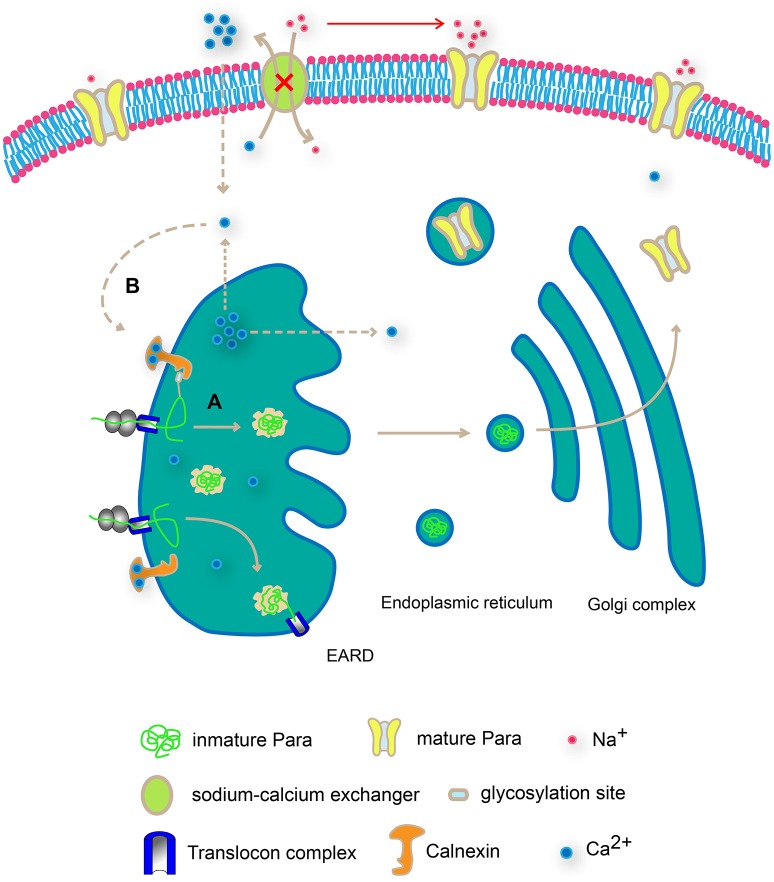
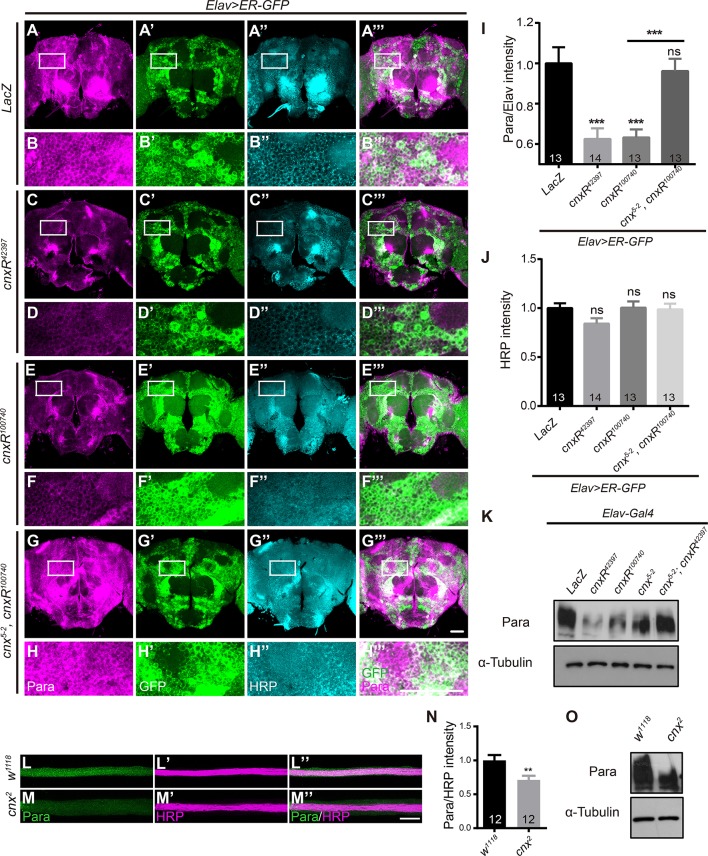
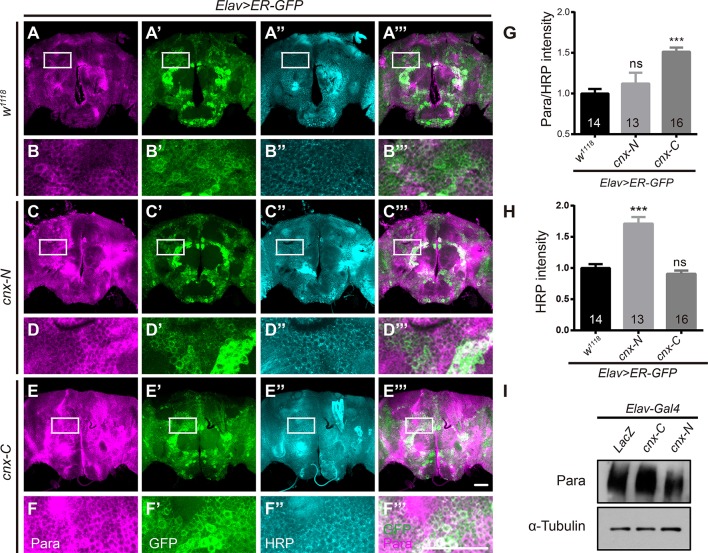
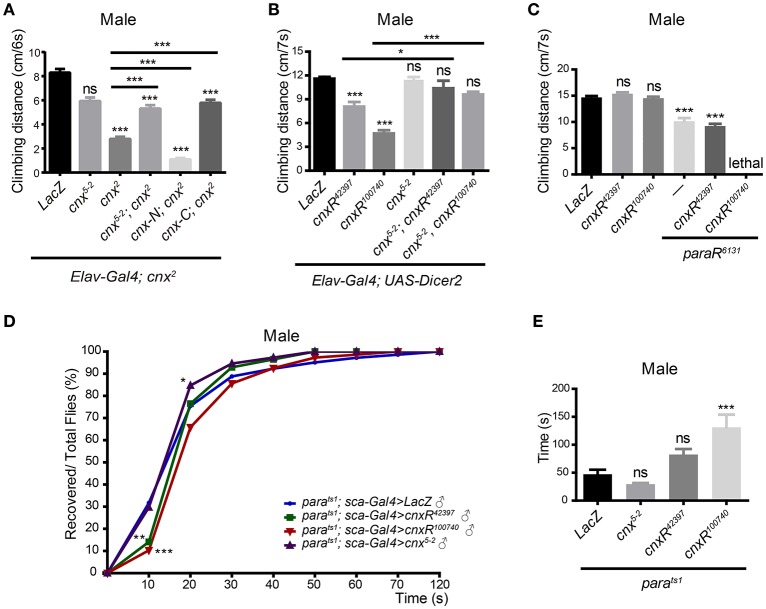
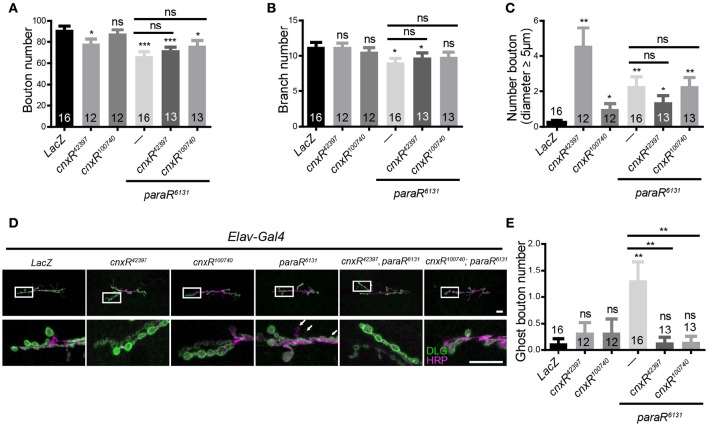
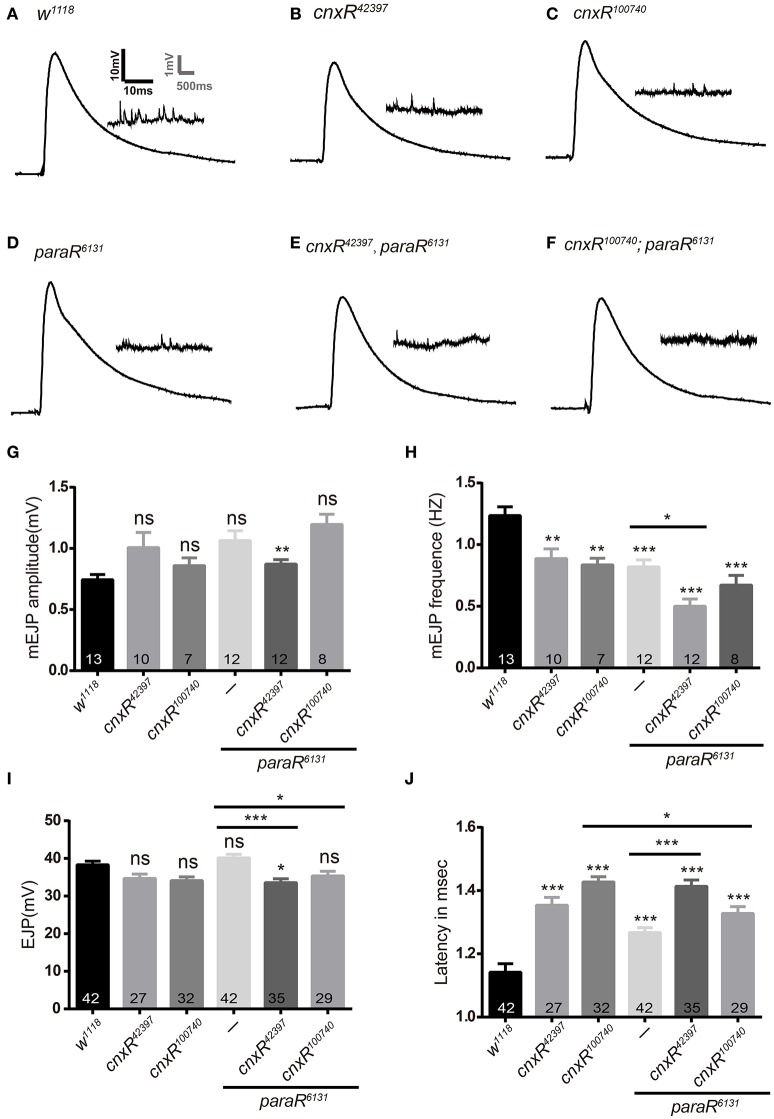
Neuronal activity mediated by voltage-gated channels provides the basis for higher-order behavioral tasks that orchestrate life. Chaperone-mediated regulation, one of the major means to control protein quality and function, is an essential route for controlling channel activity. Here we present evidence that ER chaperone Calnexin colocalizes and interacts with the α subunit of sodium channel Paralytic. Co-immunoprecipitation analysis indicates that Calnexin interacts with Paralytic protein variants that contain glycosylation sites Asn313, 325, 343, 1463, and 1482. Downregulation of Calnexin expression results in a decrease in Paralytic protein levels, whereas overexpression of the Calnexin C-terminal calcium-binding domain triggers an increase reversely. Genetic analysis using adult climbing, seizure-induced paralysis, and neuromuscular junction indicates that lack of Calnexin expression enhances Paralytic-mediated locomotor deficits, suppresses Paralytic-mediated ghost bouton formation, and regulates minature excitatory junction potentials (mEJP) frequency and latency time. Taken together, our findings demonstrate a need for chaperone-mediated regulation on channel activity during locomotor control, providing the molecular basis for channlopathies such as epilepsy.
由电压门控通道介导的神经元活动为协调生命的高阶行为任务提供了基础。伴侣蛋白介导的调节是控制蛋白质质量和功能的主要手段之一,是控制通道活性的重要途径。在此,我们提供证据表明内质网伴侣蛋白钙连接蛋白与钠通道麻痹蛋白的α亚基共定位并相互作用。免疫共沉淀分析表明,钙连接蛋白与含有糖基化位点Asn313、325、343、1463和1482的麻痹蛋白变体相互作用。钙连接蛋白表达的下调导致麻痹蛋白水平降低,而钙连接蛋白C末端钙结合结构域的过表达则相反地导致增加。使用成年攀爬、癫痫诱发麻痹和神经肌肉接头进行的遗传分析表明,缺乏钙连接蛋白表达会增强麻痹蛋白介导的运动缺陷,抑制麻痹蛋白介导的空泡形成,并调节微小兴奋性突触后电位(mEJP)频率和潜伏期。综上所述,我们的研究结果表明在运动控制过程中需要伴侣蛋白介导的对通道活性的调节,为癫痫等通道病提供了分子基础。