Lu Wenjie, Zhu Yongjian, Han Zhanying, Wang Xi, Wang Xule, Qiu Chunguang
Department of Cardiology, The First Affiliated Hospital of Zhengzhou University, Zhengzhou, Henan, China.
Medicine (Baltimore). 2017 Mar;96(12):e6397. doi: 10.1097/MD.0000000000006397.
Studies examining the efficiency of drug-coated balloon (DCB) + bare metal stent (BMS) compared with stents alone for de novo lesions have reported inconsistent results. The present comprehensive meta-analysis of randomized controlled trials (RCTs) assessed and compared the clinical efficacy and safety of DCB + BMS with those of stents alone for de novo coronary artery disease.
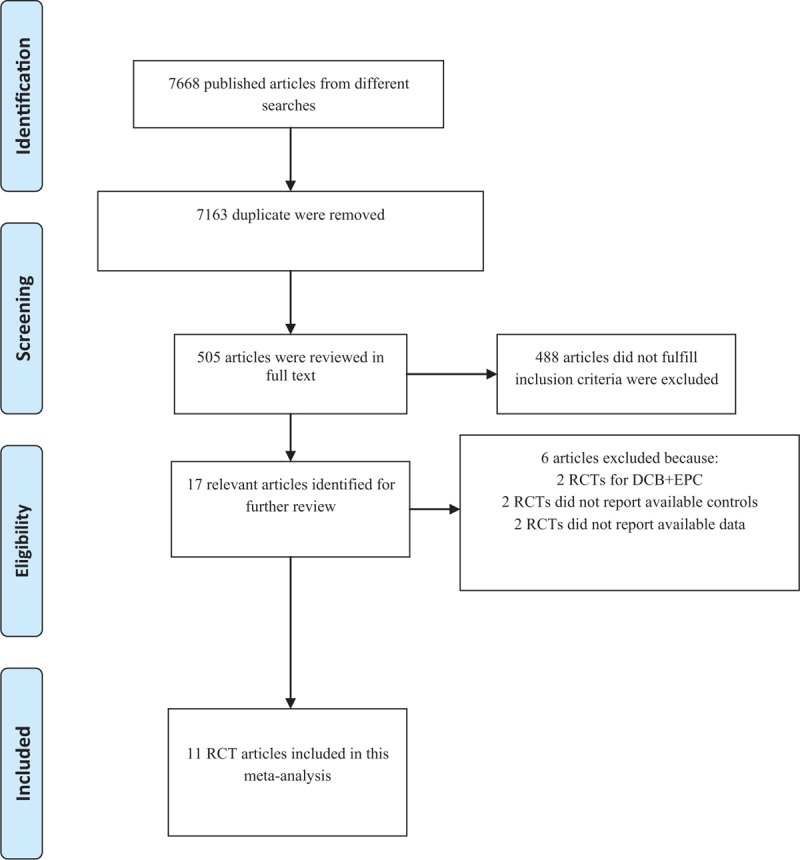
We formally searched electronic databases before September 2016 to identify potential studies. All RCTs were eligible for inclusion if they compared DCB + BMS with a control treatment (drug-eluting stent [DES] alone or BMS alone) in patients with de novo coronary artery disease.
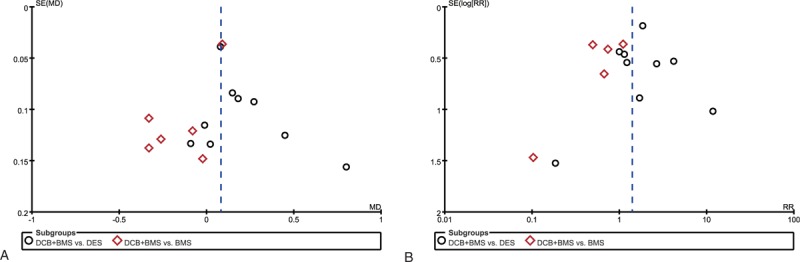
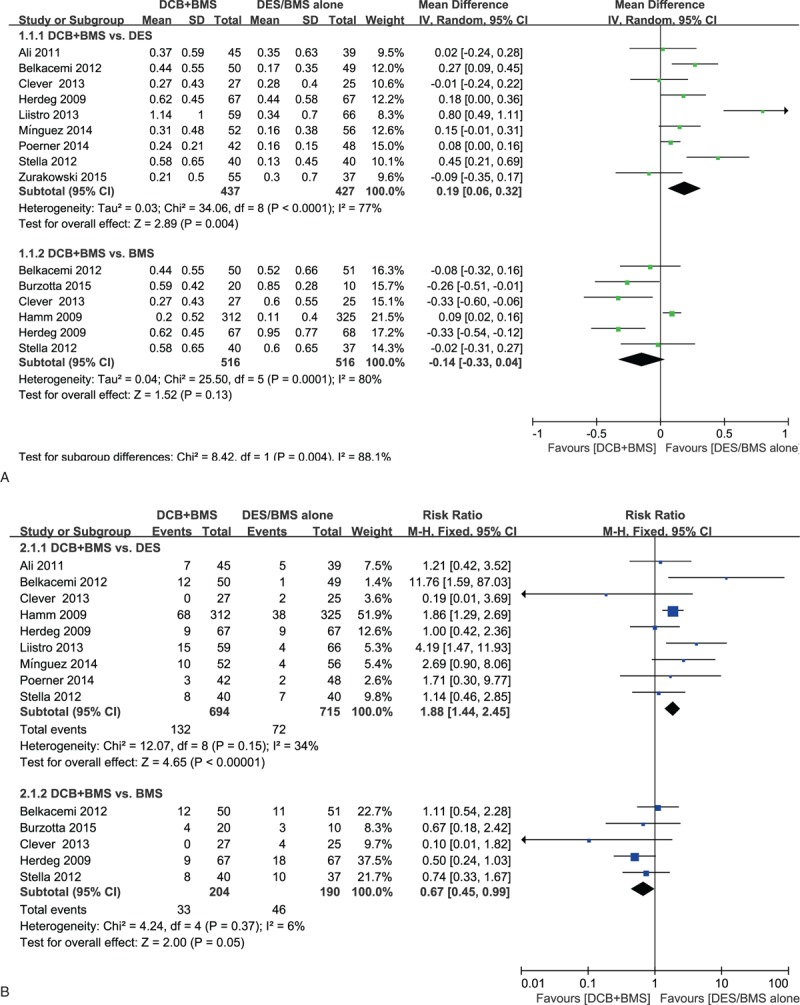
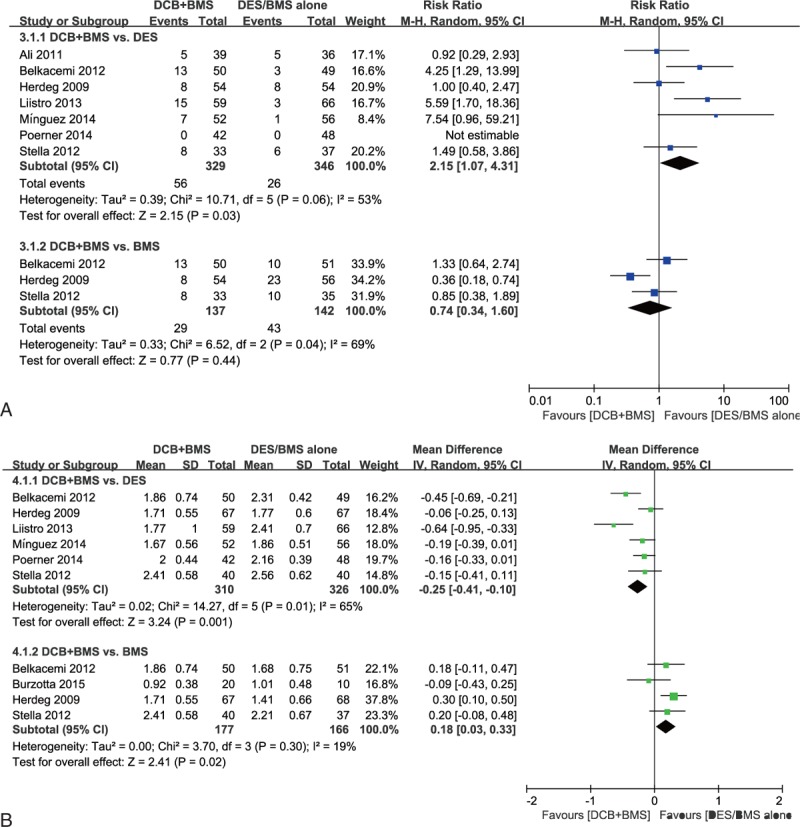
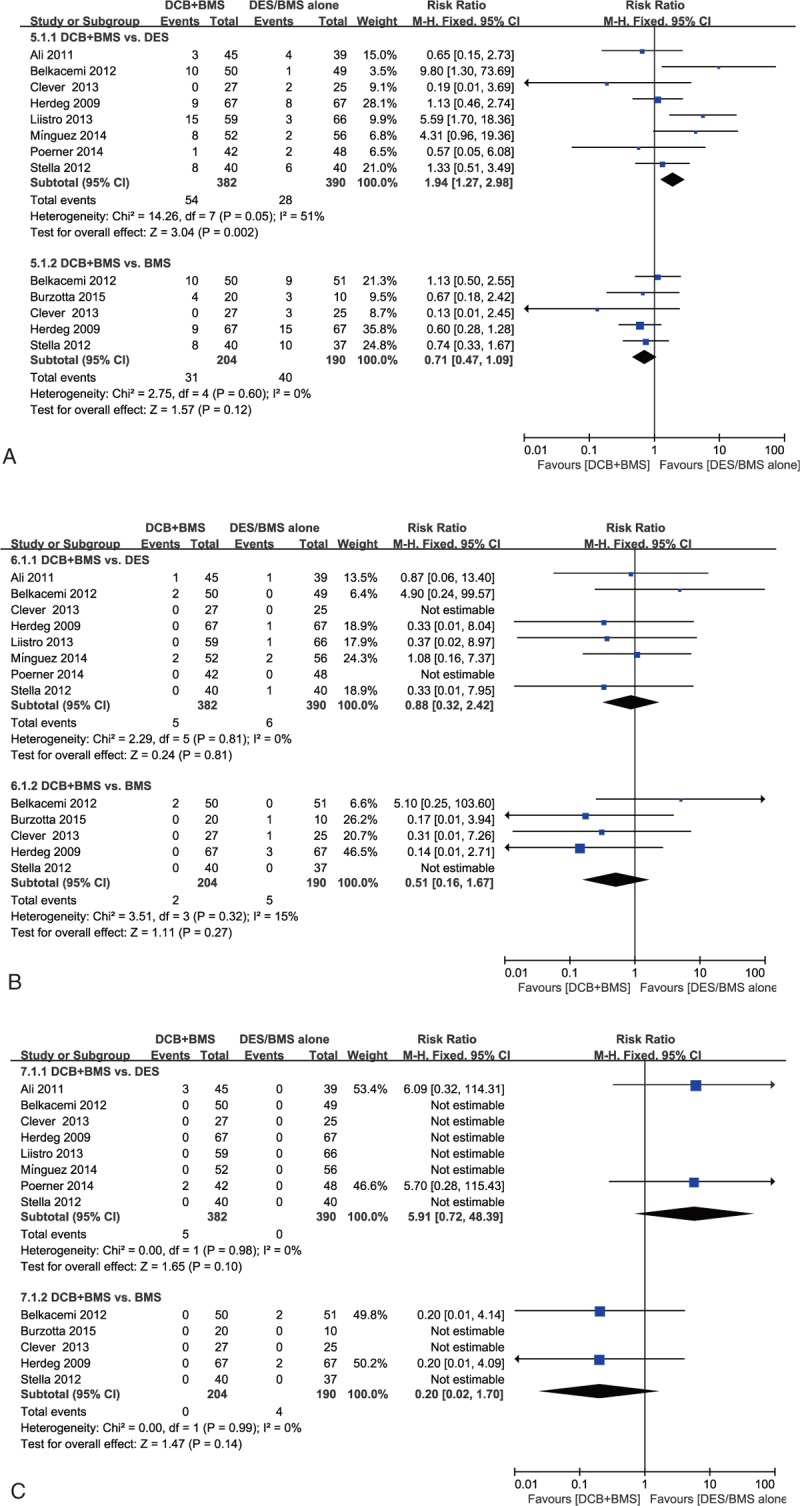
Eleven RCTs with a total of 2196 patients met the inclusion criteria were included in our meta-analysis. Subgroup analysis indicated DCB plus BMS was associated with poorer outcomes when compared with DES alone in primary endpoint {(in-segment late lumen loss [LLL]: mean difference [MD], 0.19; 95% confidence interval [CI], 0.06-0.32; P = 0.0042) and (major adverse cardiovascular events [MACEs]: risk ratio [RR], 1.88; 95% CI, 1.44-2.45; P < 0.0001)}. However, DCB + BMS had nonsignificantly lower LLL than BMS alone (in-segment LLL: MD, -0.14; 95% CI, -0.33-0.04; P = 0.24), and was more advantageous in reducing MACE incidence, with borderline significance (MACEs: RR, 0.67; 95% CI, 0.45-0.99; P = 0.05).
In summary, the present results do not favor the DCB + BMS strategy as an alternative therapeutic method to DES implantation for de novo coronary artery lesions in percutaneous coronary intervention (PCI). Additional well-designed large RCTs with long-follow-up periods are required to clarify the inconsistent results.
关于药物涂层球囊(DCB)联合裸金属支架(BMS)与单纯支架治疗初发病变的疗效研究结果并不一致。本项对随机对照试验(RCT)的全面荟萃分析评估并比较了DCB联合BMS与单纯支架治疗初发冠状动脉疾病的临床疗效和安全性。
我们在2016年9月之前正式检索了电子数据库以识别潜在研究。所有RCT若将DCB联合BMS与初发冠状动脉疾病患者的对照治疗(单纯药物洗脱支架[DES]或单纯BMS)进行比较,则符合纳入标准。
我们的荟萃分析纳入了11项共2196例患者的RCT,这些研究符合纳入标准。亚组分析表明,与单纯DES相比,DCB联合BMS在主要终点方面结局较差{(节段内晚期管腔丢失[LLL]:平均差[MD],0.19;95%置信区间[CI],0.06 - 0.32;P = 0.0042)以及(主要不良心血管事件[MACE]:风险比[RR],1.88;95% CI,1.44 - 2.45;P < 0.0001)}。然而,DCB联合BMS的节段内LLL比单纯BMS略低但无显著差异(节段内LLL:MD, - 0.14;95% CI, - 0.33 - 0.04;P = 0.24),且在降低MACE发生率方面更具优势,具有临界显著性(MACE:RR,0.67;95% CI,0.45 - 0.99;P = 0.05)。
总之,目前的结果不支持将DCB联合BMS策略作为经皮冠状动脉介入治疗(PCI)中初发冠状动脉病变DES植入的替代治疗方法。需要更多设计良好、随访期长的大型RCT来阐明这些不一致的结果。